Many ad campaigns fail, not because of poor creative or bad targeting, but because they misread intent.
Understanding how intent works — how it shifts, how it influences behavior, and how platforms respond to it — can help you stop guessing and start optimizing.
Intent is not a feeling. It’s a behavior pattern. It shows up in signals like clicks, video views, or repeat visits. And it determines how likely someone is to take action, not just whether they see your ad.
If you know how to detect and respond to intent on platforms like Facebook and Instagram, you can stop wasting budget and start getting better results from the same audiences.
What Does Intent Actually Mean?
In advertising, intent is a measure of a user’s readiness to take a specific action. That action might be clicking, signing up, or making a purchase.
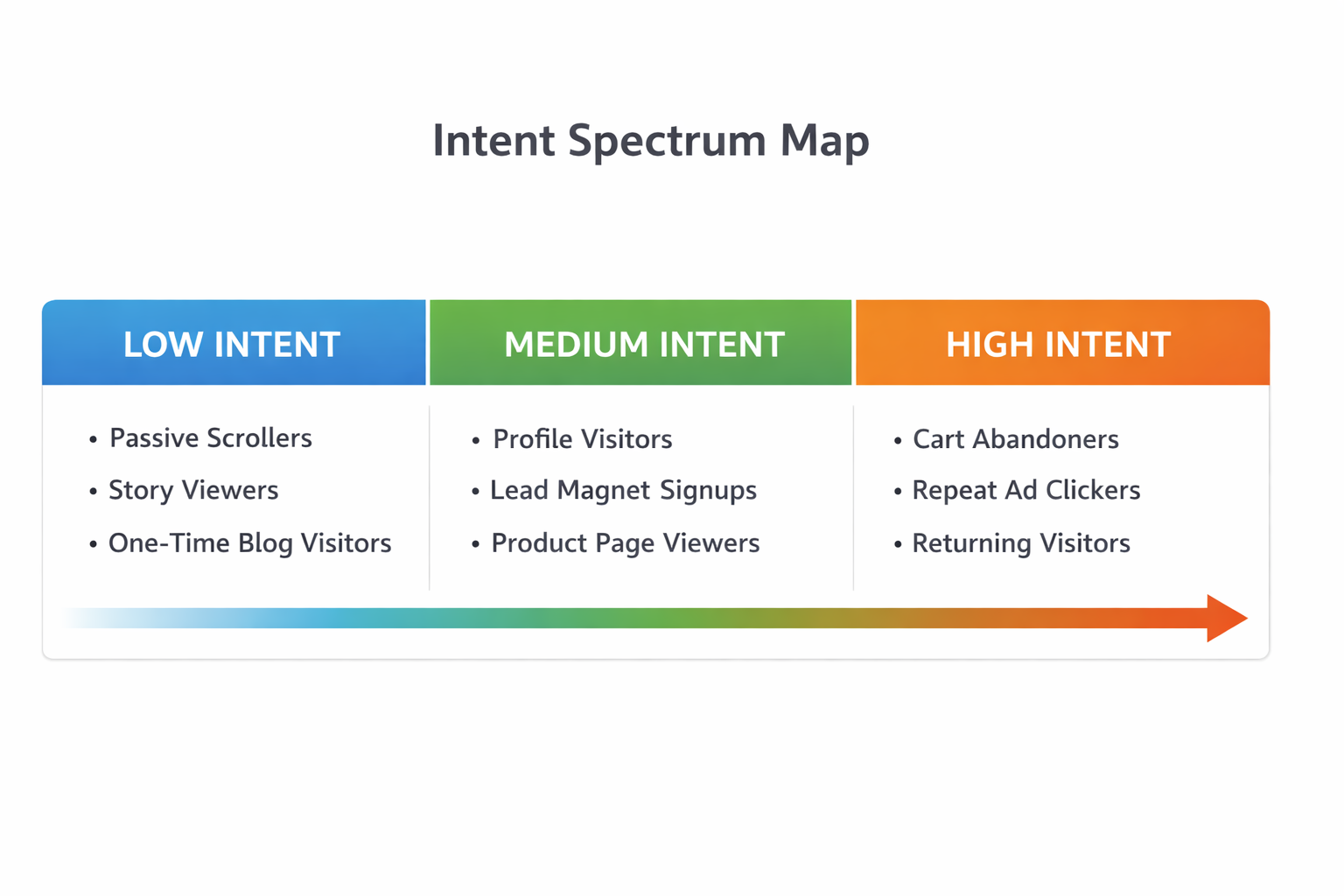
But intent is not binary. It exists on a spectrum:
-
High intent means the user already wants something specific. They’re actively looking for it and likely to act quickly.
-
Medium intent means the user is interested but still exploring. They may be comparing offers or waiting for the right moment.
-
Low intent means the user is not looking for a solution right now. They're browsing, distracted, or unaware of a need.
You can’t treat all of these users the same way. Knowing how to recognize these levels helps you build more effective campaigns from the start.
To dive deeper into identifying high-intent signals, read How to Identify High-Intent Audiences Using Facebook Insights.
Why Intent Behaves Differently on Facebook and Instagram
People rarely open Instagram with the goal of buying a product. They scroll for entertainment, connection, or inspiration.
This makes intent harder to spot. There’s no search bar where users type in “new running shoes.” That’s why most social advertisers aren’t capturing intent — they’re creating it.
What works in that environment is different. The goal isn’t just visibility. It’s to build interest fast and guide the user toward action.
What Happens When You Ignore Intent?
When you skip this step, your campaign becomes guesswork. Most often, that results in:
-
Irrelevant messaging: You push a discount to someone who doesn’t yet know what your product is.
-
Wrong offers at the wrong time: You ask someone to buy before they understand why they should care.
-
Disjointed journeys: You use a conversion CTA, but send people to an informational page.
Each of these issues leads to wasted spend and poor data for optimization. Your campaign may still generate traffic, but it won’t convert reliably.
For a deeper look at how mismatched intent hurts performance, see Why Your Ads Get Clicks But No Sales: Fixing the Audience Misalignment.
Aligning Your Message to Match Intent
To build a more responsive system, you need to plan for different levels of intent. That means adjusting not just the creative, but also the offer and the call to action.
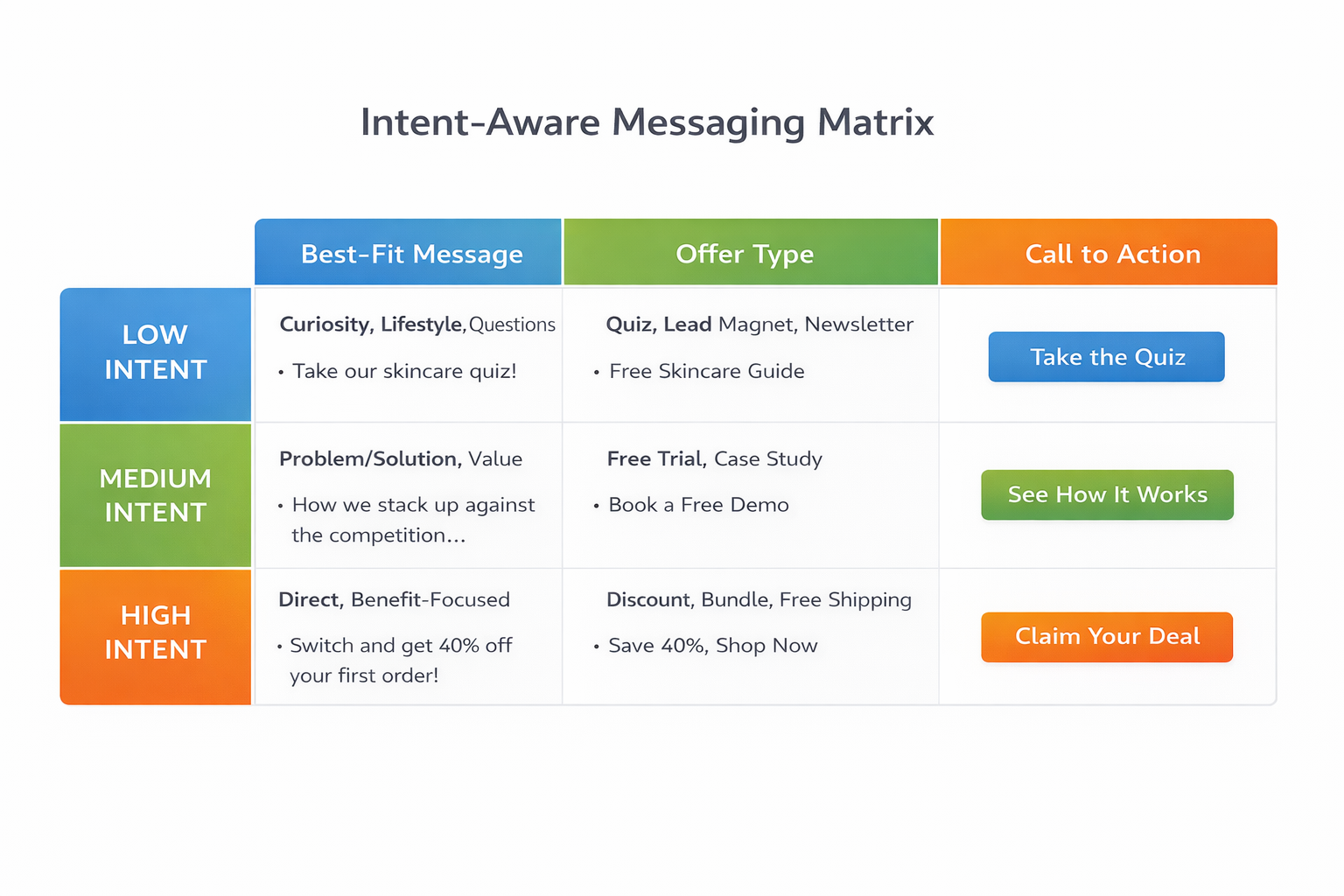
Here’s a simplified structure to follow:
If you're speaking to high-intent users:
-
Message: Direct, benefit-driven, with specific outcomes.
-
Offer: Discounts, bundles, or limited-time deals.
-
CTA: "Buy Now," "Start Today," or "Claim Your Offer."
These users are ready. All they need is a clear and confident path to purchase — not extra steps or vague promises.
If you're targeting medium-intent users:
-
Message: Focus on problem-solution framing. Help them compare options or understand value.
-
Offer: Free trials, customer stories, or product walkthroughs.
-
CTA: "See How It Works," "Compare Plans," or "Why Choose Us?"
These users are open to buying, but they need more clarity before they decide. Give them reasons to trust you.
For low-intent or cold audiences:
-
Message: Spark curiosity. Connect to lifestyle, emotion, or everyday challenges.
-
Offer: Quizzes, lead magnets, or soft conversion paths.
-
CTA: "Take the Quiz," "Discover More," or "Explore Ideas."
With these users, you’re not selling a product — you’re starting a conversation.
A Better Example: Intent Shifts During a Product Launch
Launching a new product or feature? That’s when intent patterns become clearer.
In the first few days of launch, you’ll likely see:
-
High engagement but low conversions: People are curious but still processing the offer.
-
More top-of-funnel clicks: Users explore without commitment.
-
Sharp drop-offs between ad and page: A mismatch between curiosity and clarity.
These signals show that intent is forming — not fully developed. The mistake is treating that early attention as purchase-ready traffic. Let the message evolve with the audience.
For guidance, see Facebook Ads Best Practices for Promoting a New Product Launch.
A More Intent-Aware Framework for Campaign Planning
To build stronger campaigns, start with intent — not just demographics or interests.
This gives you a structure that adapts to how people really behave.
Here’s a simplified process to follow:
Step 1: Segment your audience by behavior, not just traits
Move beyond age, location, or interest. Instead:
-
Group by site visits, product views, or cart activity.
-
Use Instagram engagement (saves, shares, replies) as mid-intent signals.
-
Exclude cold audiences from retargeting-style messaging.
This lets you design messages that meet people where they are, rather than assuming they’re all ready to buy.
Explore advanced strategies in Behavior-Based Facebook Targeting: The Secret Weapon of Top E-commerce Brands.
Step 2: Design ads for where the user is in the funnel
One-size messaging doesn’t work. For example:
-
A cold user should not see a “Last Chance to Buy” ad.
-
A high-intent visitor shouldn’t get a vague lifestyle message.
-
A returning lead should not be offered “Learn More” for the third time.
Tailoring your message to each funnel stage helps users move forward instead of dropping off.
Step 3: Make sure your landing pages align with intent
Even great ads fail if the landing page feels like a mismatch.
Make sure:
-
The CTA is consistent.
-
The promise in the ad is delivered early.
-
The user doesn’t need to hunt for key information like pricing or features.
Small misalignments at this stage can derail conversions completely. Consistency earns trust and keeps users moving.
For practical tips, see Creating a Seamless Experience Between Ads and Landing Pages.
Final Thoughts: Why Intent Is a Strategy, Not a Tactic
Intent is not a checkbox. It's a strategy that guides how you plan, build, and evaluate campaigns.
When your offer, message, and targeting work in sync with user intent, you get:
-
Better cost efficiency;
-
Lower drop-off at each stage of the funnel;
-
Stronger signals for Meta's optimization systems.
Most importantly, you stop running ads that hope for results and start running ads that earn them.