Audience relevance is about how well your ad matches the person seeing it. It goes beyond basic demographics or interests. It depends on timing, context, and whether the viewer actually cares about what you're offering.
Even a strong ad won’t perform well if it’s shown to the wrong person. But when relevance is high, your ad feels timely and useful — and people respond.
If you're still figuring out how to define your ideal audience, start with this guide on Facebook Ad Targeting 101.
Why Relevance Affects Your Results
Audience relevance directly influences your campaign's performance. It affects the most important metrics:
-
Click-through rate (CTR);
-
Cost per click (CPC);
-
Cost per result or lead;
-
Return on ad spend (ROAS).
Low relevance often leads to poor engagement, wasted budget, and declining results. On the other hand, a well-matched audience improves results without requiring more ad spend.
For a deeper look at this concept, explore why audience quality matters more than audience size.
How to Know If You're Reaching the Right Audience
You can spot relevance issues early by looking at how people respond to your ads.
Start with these indicators:
Low CTR
If your CTR is under 0.7%, the ad probably isn’t landing with the right people. Either the targeting is too broad, or the message doesn’t reflect what they care about.
High Drop-Off After Click
If users click but leave right away, they likely weren’t qualified. Maybe the ad got their attention, but the landing page didn’t match their expectations or intent.
Below-Average Meta Rankings
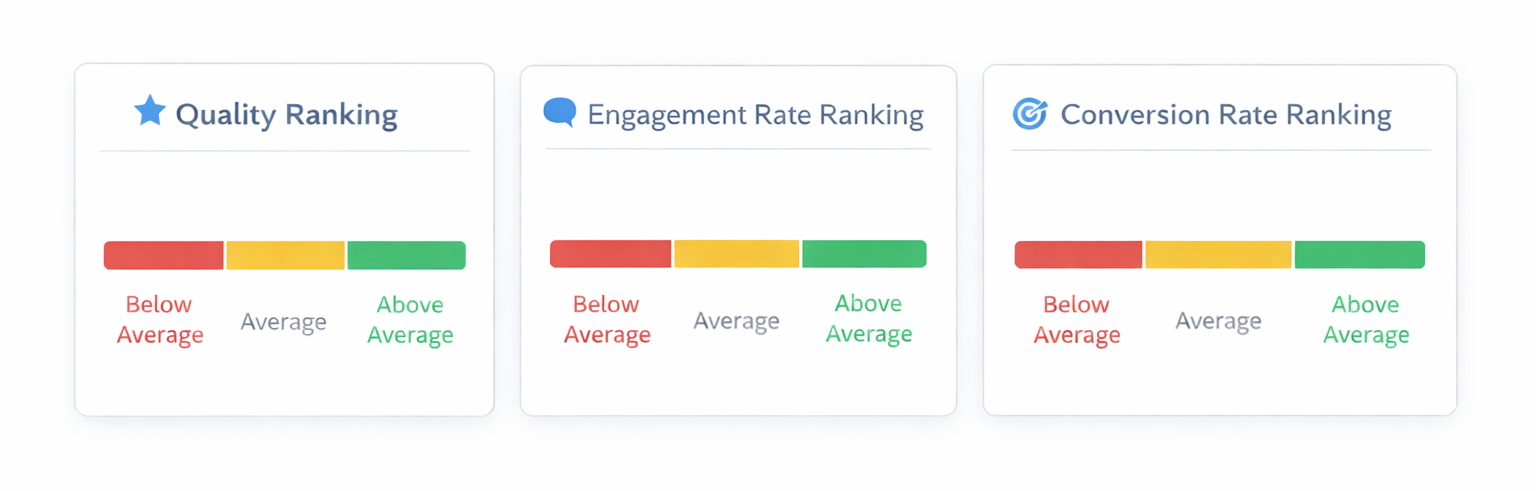
Meta Ads Manager shows three relevance-related diagnostics:
-
Quality ranking (perceived value of the ad);
-
Engagement rate ranking (likelihood of clicks or comments);
-
Conversion rate ranking (expected performance vs competitors).
If two or more of these are below average, your audience or messaging may be off. Here's a helpful guide on how to interpret these rankings.
How to Measure Relevance More Effectively
It’s not enough to look at surface metrics like CPC or impressions. To evaluate relevance, look deeper into user behavior and campaign structure.
1. Review how people move through your funnel:
-
Are users clicking at all?
-
Are they staying on the landing page?
-
Are they converting or bouncing?
Each stage helps you isolate whether the problem is creative, audience, or offer.
2. Compare audience segments side by side:
Build separate ad sets for cold traffic, warm leads, and returning customers. Then compare metrics like:
-
Cost per click;
-
Time on page;
-
Scroll depth;
-
Conversion rate.
3. Use UTM tracking for better visibility:
Add UTM tags to your ads and monitor post-click behavior in Google Analytics. If traffic from one audience segment bounces faster than others, the ad may not feel relevant to them.
If you’re getting clicks but no conversions, take a look at this breakdown: Why Your Ads Get Clicks but No Sales.
How to Improve Audience Relevance
Once you've found the weak spots, improving audience relevance is often straightforward.
Build Intent-Based Custom Audiences
Move beyond broad interests and use behavior-based targeting. Start with:
-
People who visited product pages;
-
Users who viewed 50% or more of your video ads;
-
People who interacted with your lead forms or shopping ads.
These signals show intent, not just general curiosity.
Align the Message to the Stage
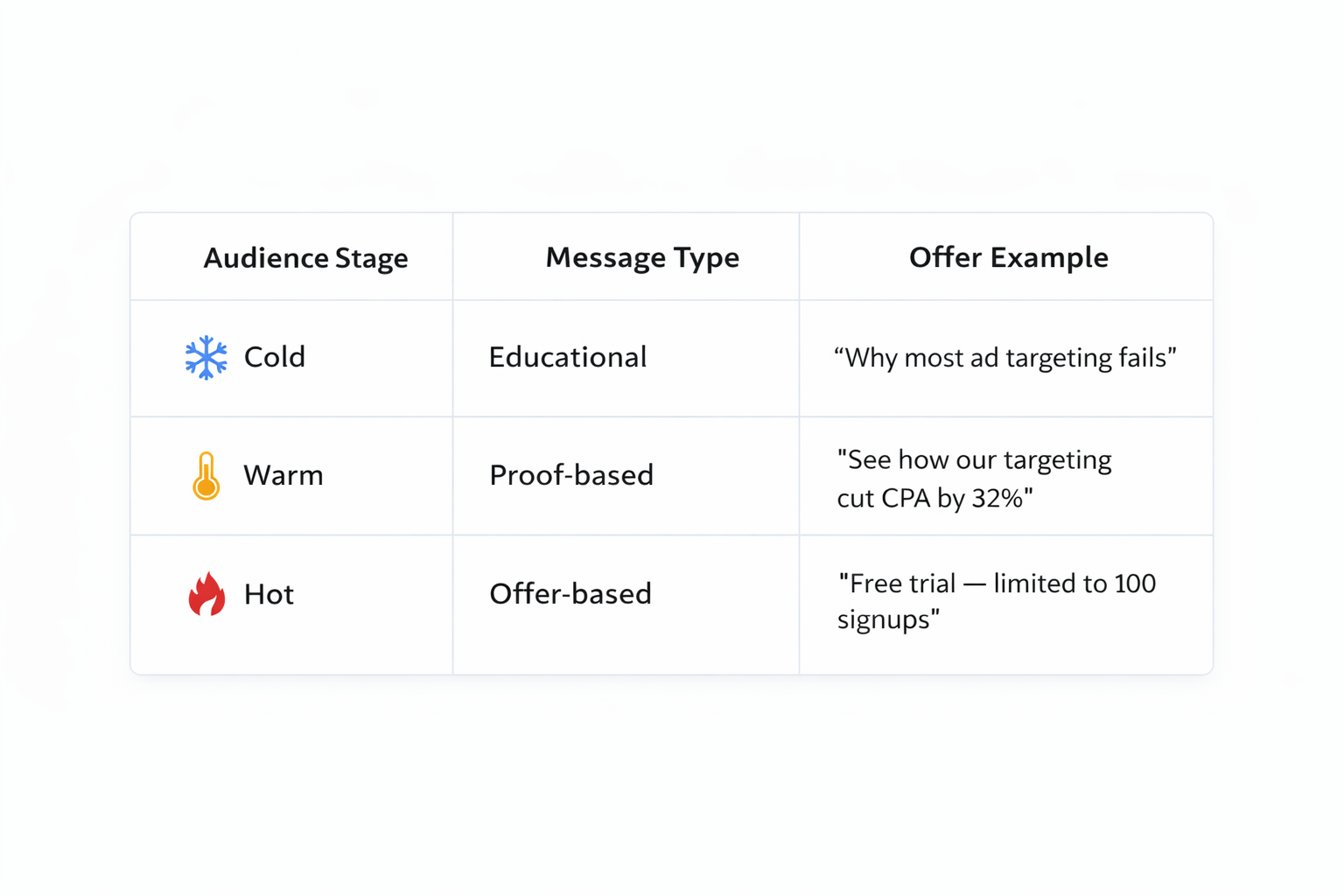
Cold, warm, and hot audiences need different messaging.
For example:
-
Cold users respond to insights or curiosity-based hooks;
-
Warm users need social proof, product value, or comparisons;
-
Hot users are looking for a reason to act today.
Not sure how to structure these groups? Use this guide to warm, cold, and custom audiences to plan your message.
Watch for Fatigue and Overlap
If you see rising frequency and falling performance, your audience may be oversaturated. Check for:
-
Overlap between ad sets;
-
Repeated delivery to the same users;
-
Drops in engagement after week two.
To fix this, learn how audience overlap can quietly ruin your campaign.
Final Thoughts
Audience relevance isn’t something you check once. It shifts constantly — based on seasonality, platform behavior, and your own ad history.
To stay sharp:
-
Review Meta diagnostics weekly;
-
Compare audience segments often;
-
Track engagement beyond the click;
-
Refresh creatives before results drop.
Highly relevant ads don’t just cost less. They also build trust faster and convert more effectively.