In 2026, Facebook Ads still deliver strong results for one reason: they’re built for real-world outcomes, not just digital impressions.
While other platforms rely on isolated data or narrow placements, Facebook continues to provide a full-cycle advertising system — from discovery to conversion — that’s hard to match.
This article breaks down the real reasons Facebook Ads remain effective, especially for marketers and business owners who rely on paid traffic to grow.
1. Facebook still tracks behavior better than most platforms
Even after privacy changes like iOS14 and tighter regulations, Facebook remains one of the few platforms with access to consistent, high-quality behavioral data.
That’s because users spend time across Meta-owned apps — Facebook, Instagram, and Messenger — while logged in. And with tools like the Conversions API (CAPI), advertisers can feed reliable, server-side event data back into the system.
Why this gives Facebook an edge:
-
It connects ad views to actions like purchases, leads, and subscriptions;
-
It tracks user behavior across devices and apps — not just within a browser;
-
It supports accurate targeting and optimization, even with limited third-party data.
This depth of behavioral data helps Facebook serve ads to people who are more likely to take action — and improves campaign efficiency over time.
For more, check out The Ultimate Guide to Facebook Audience Targeting.
2. Ads are part of the experience, not separate from it
On Facebook and Instagram, ads appear where people already scroll — in their Feed, Stories, or Reels — without interrupting the experience.
This native placement gives Facebook Ads a major advantage over platforms that rely on banner ads, pre-roll video, or other intrusive formats.
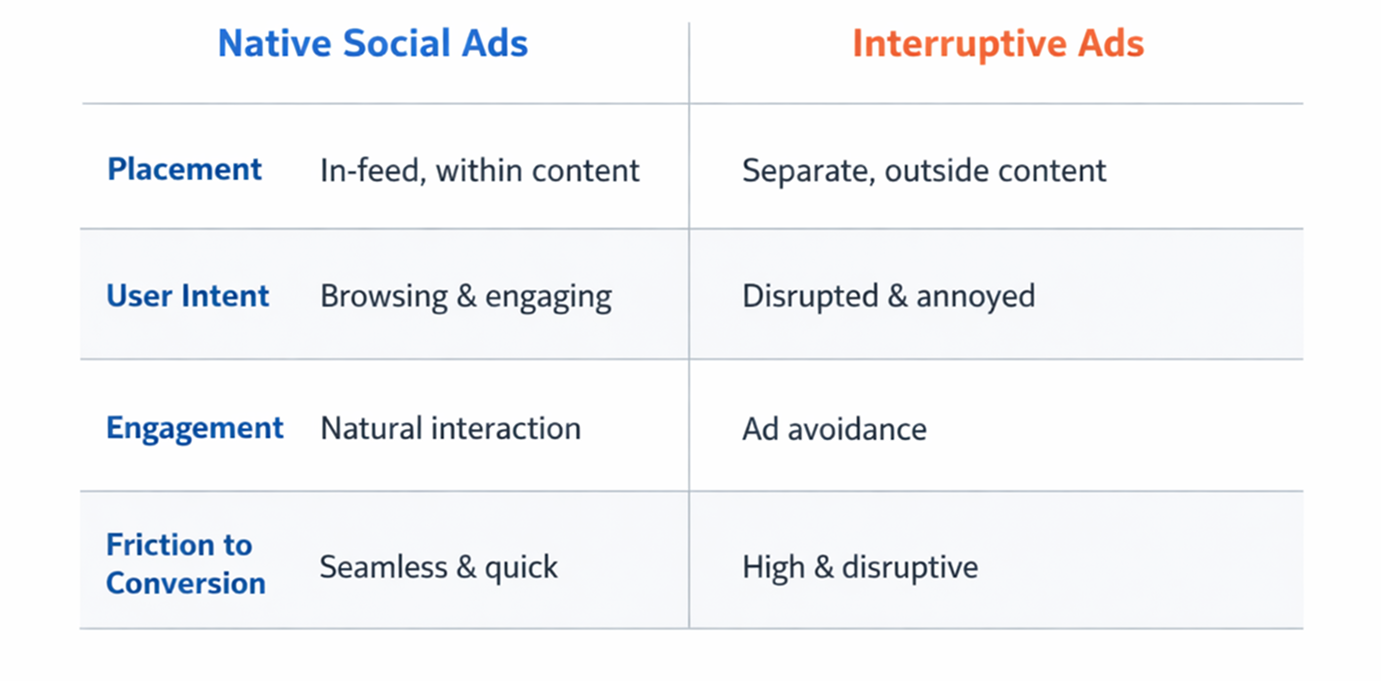
Benefits of native ad placement:
-
Users engage with ads more naturally because they look like organic content;
-
Facebook supports flexible formats like vertical video, carousel, and static image — optimized by placement;
-
Built-in tools like lead forms and instant experiences keep users in-app, reducing friction.
When ads blend into the content environment, performance metrics — like click-through rates and conversion rates — tend to improve.
3. One campaign gives you access to all of Meta
A single Facebook campaign can reach users across Facebook, Instagram, Messenger, and the Audience Network.
You don’t need to manage four separate campaigns — the system handles cross-app delivery automatically.
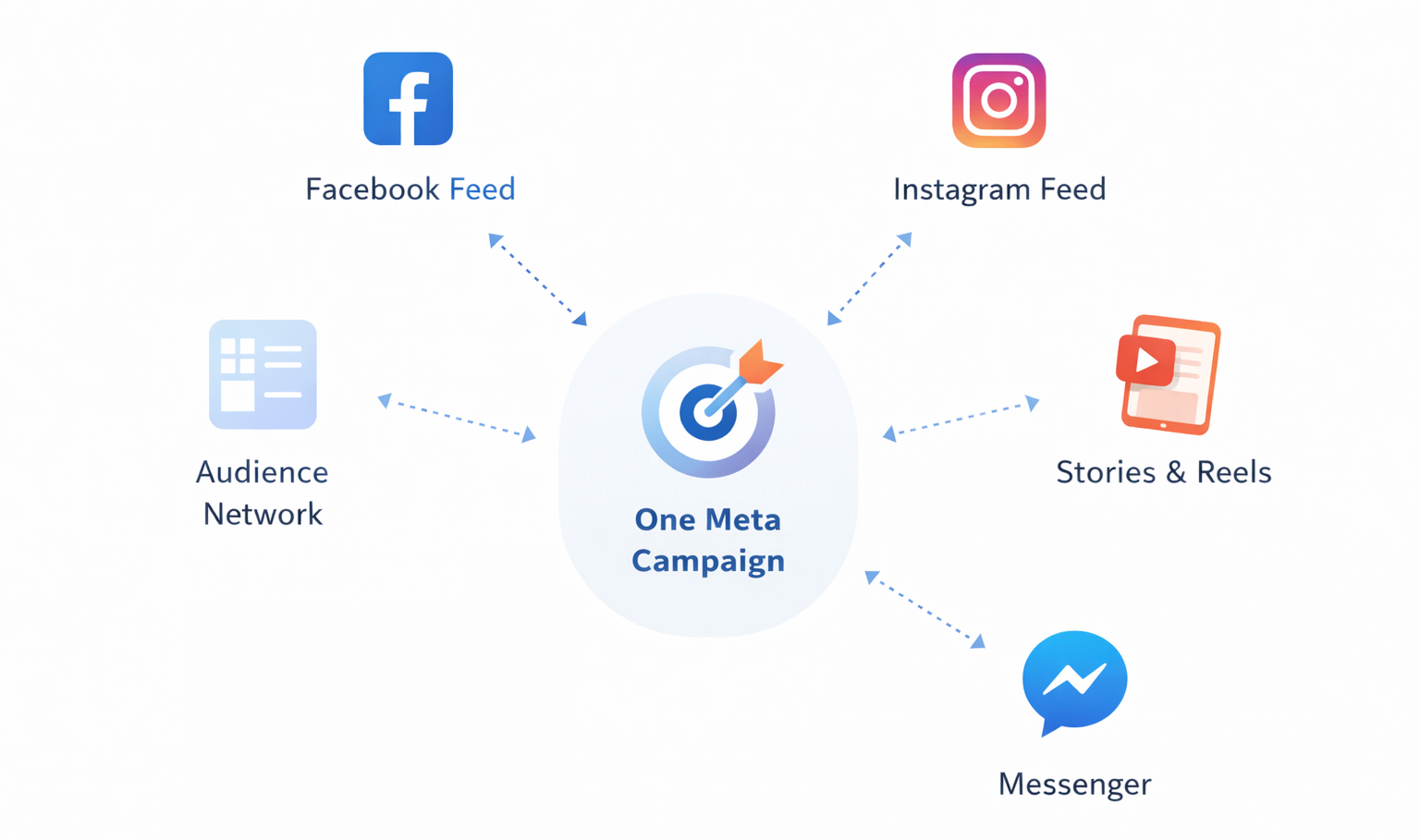
What this unified system means:
-
Broader reach without extra setup or duplication;
-
More efficient budget use across placements and devices;
-
Easier testing and reporting across all Meta surfaces.
This cross-platform reach is a big reason why Facebook campaigns remain more scalable than those on siloed platforms.
4. Smart automation actually helps advertisers — not just Facebook
Many platforms claim to “automate” your ads, but Facebook’s system goes further by letting you define your business goals and then optimizing toward those outcomes — not just impressions or engagement.
With Advantage Campaign Budget (ACB) and Advantage+ targeting, Facebook allocates spend where it performs best, without needing daily micro-management.
Why automation on Facebook works well in 2026:
-
You can use broad targeting and let the system learn who’s converting;
-
You don’t need to split audiences into dozens of small ad sets;
-
Campaigns learn faster when signals and structure are clean.
Advertisers who trust the system — and give it enough data to work with — see faster optimization, better delivery, and more consistent results.
See How to Optimize Advantage Campaign Budget for Scalable Facebook Ads.
5. Facebook sees conversions — and learns from them
Unlike platforms that send traffic elsewhere and lose track, Facebook’s ad system tracks the entire user journey, from click to conversion.
Using the pixel, CAPI, or lead forms, it connects campaign performance to business outcomes — which helps the system improve delivery and cost efficiency.
What Facebook tracks and uses:
-
Website conversions: purchases, leads, form fills;
-
Value-based events: revenue, lifetime value, customer type;
-
In-app activity: ad clicks, comments, profile views.
When you optimize for the right outcomes — not vanity metrics — Facebook’s system becomes more accurate and scalable.
6. Creative is modular and easy to scale
You don’t need to create dozens of completely new ads every month. Instead, the most effective brands in 2026 use modular creative systems: building blocks they can remix.
How modular creative works:
-
Hooks: Attention-grabbing intros like “Still wasting time doing X?” or “Here’s why 40,000 marketers use Y.”
-
Value props: Clear benefits like price savings, speed, social proof, or ease of use.
-
CTAs: Strong but varied calls to action — “Start your trial” vs. “See how it works.”
By combining and rotating these parts, you can generate dozens of creative variations without rebuilding from scratch — and track which combinations work best.
7. Clear measurement beyond just ROAS
Facebook gives you more than a view count or click-through rate. You can track purchases, LTV, cost per acquisition, lead quality — and more — depending on how your data is connected.
More importantly, you can compare Facebook’s numbers with your own — via post-purchase surveys, Google Analytics, or attribution tools — to check accuracy and make smarter budget decisions.
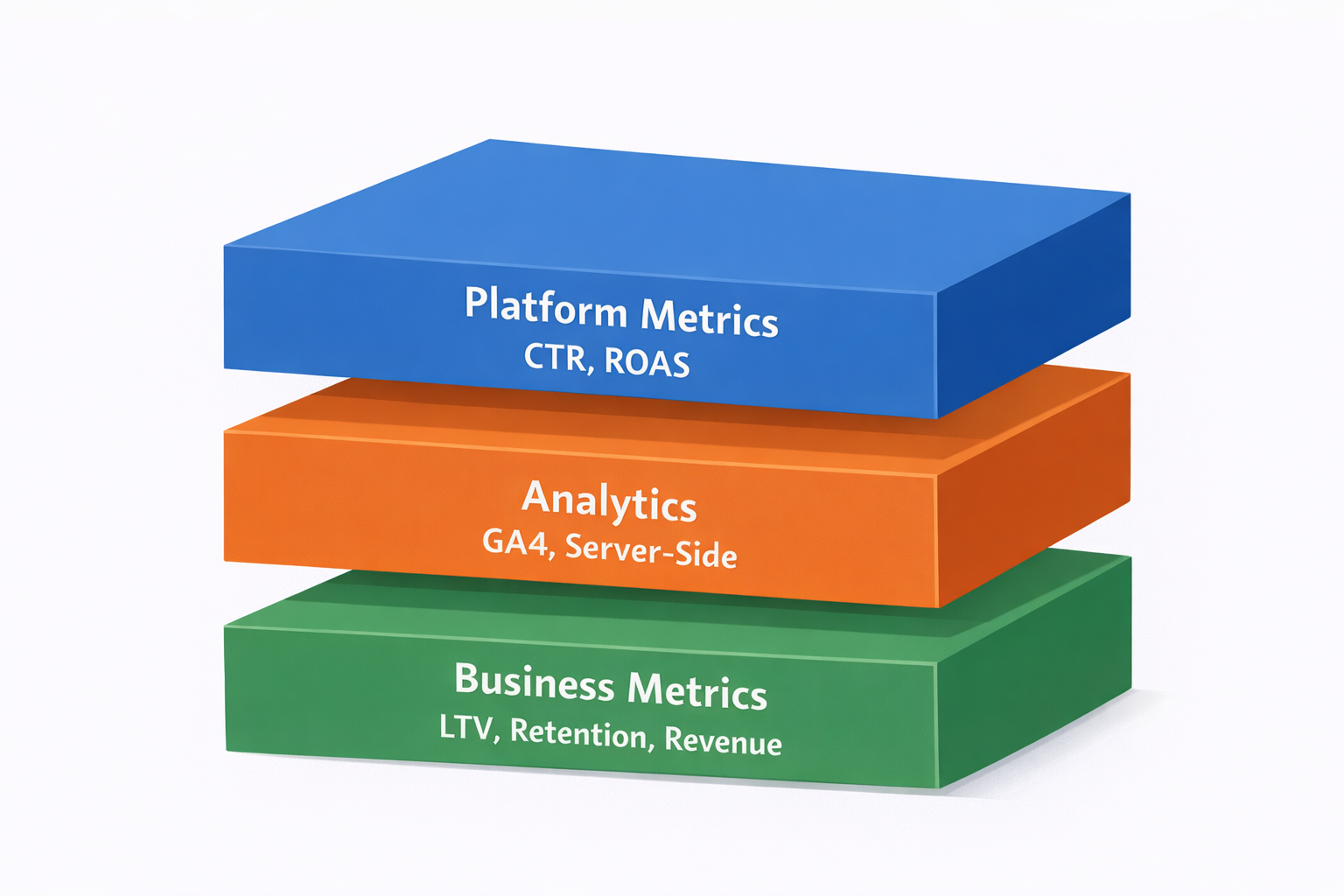
Why this matters:
-
You avoid over-trusting Meta’s in-platform ROAS;
-
You can match campaign spend to real revenue outcomes;
-
You gain better control of performance at scale.
Good Facebook advertisers don’t just optimize campaigns — they optimize reporting too.
Why Facebook ads still work in 2026
In short: Facebook Ads still work because the system is built to support advertisers who want results — not just reach.
To recap, here’s what makes the platform effective:
-
It uses high-quality behavioral and conversion data;
-
Ads blend into where users already spend time;
-
Campaigns reach all Meta platforms from one place;
-
Automation improves performance, not just efficiency;
-
Performance feedback is real, not guesswork;
-
Creative can be tested and scaled without high cost;
-
You can track success using your own business metrics.
If you build your ads to match how the system works, Facebook Ads in 2026 remain one of the best tools for profitable, measurable growth.
Need help structuring smarter campaigns? Start with this resource: Meta Campaigns Explained: How to Structure High-Performance Campaigns.