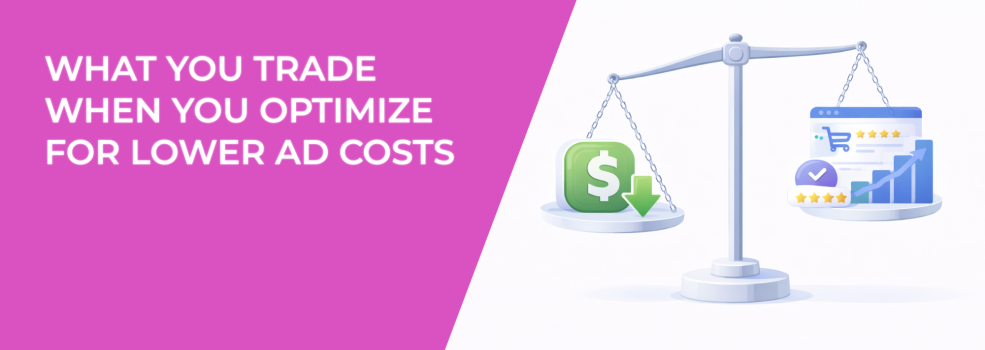
A drop in CPL almost always feels like progress. Campaigns stabilize, results look cleaner, and scaling seems easier.
But a few weeks later, something starts to break. Sales conversations slow down, qualification gets inconsistent, and pipeline quality becomes unpredictable.
Nothing actually “went wrong” in the ad account. The system simply optimized for a different outcome than the one you care about.
If you’ve ever seen strong metrics but weak business results, you’ve already experienced this tradeoff.
Lower Costs Come From Easier Auctions
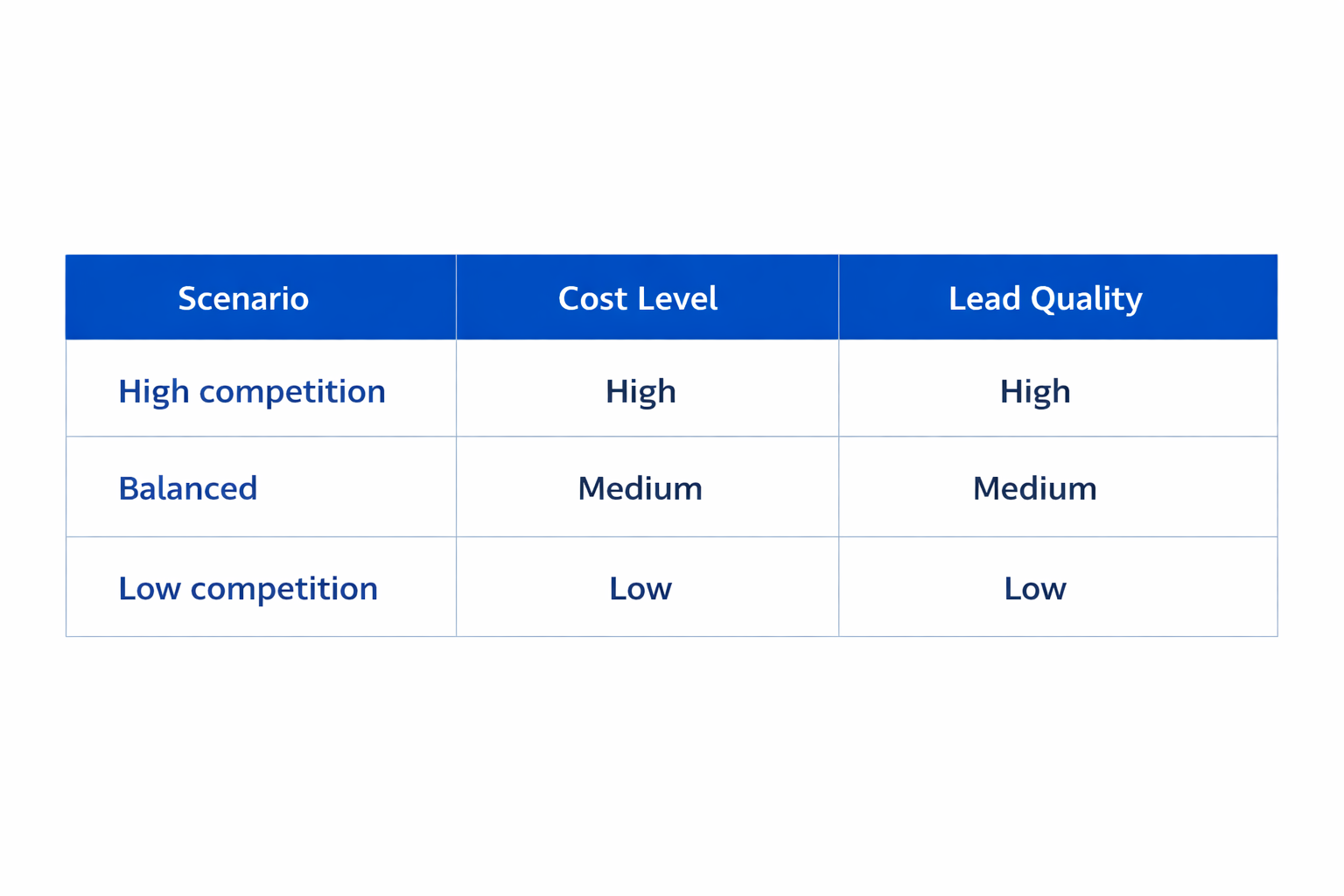
When costs decrease without a meaningful change in creative or offer, Meta is not making your ads more effective. It is shifting delivery into cheaper auction environments.
This usually means reaching users who are less contested — and often less valuable.
You can validate this shift through a few patterns inside Ads Manager:
-
CPM declines without a lift in CTR — you are paying less for impressions, not generating stronger engagement.
-
Audience expansion increases silently — the system broadens delivery to maintain cheaper reach.
-
Placement mix changes — more spend flows into lower-quality inventory.
Lower cost here is not efficiency. It is a signal that the system found cheaper, less competitive attention.
The Algorithm Starts Prioritizing Low-Resistance Users
When you push for cheaper conversions, the algorithm adapts by finding users who are easiest to convert.
That sounds efficient — but it shifts the type of behavior being optimized.
Instead of identifying strong buying intent, the system starts clustering around convenience:
-
Users who submit quickly without evaluating the offer — high conversion rate, low follow-through.
-
Frequent form-fillers across advertisers — behavior driven by habit, not demand.
-
Low-effort engagement patterns — clicks and submissions that do not translate into real interest.
This is why cheap leads often feel “empty” once they reach sales.
If you’ve seen clicks without meaningful outcomes, the underlying issue is similar to what’s covered in What to Do When Your CPC Is Low But Conversions Are Flat.
Cost Reduction Often Removes the Filters You Actually Needed
Most cost improvements come from reducing friction in the conversion process.
Shorter forms. Fewer steps. Faster submission.
That increases volume — but it also removes qualification.
You typically see this through a combination of changes:
-
Fewer form fields — removing budget or timeline questions increases submissions but weakens lead quality.
-
Switching to instant forms — reduces effort, but also reduces commitment.
-
Broader offers — attract more users, but dilute intent.
These changes don’t just affect conversion rate. They change what a conversion represents.
When submitting becomes too easy, the system can no longer separate serious prospects from casual interactions.
More Conversions Can Weaken the System
Higher conversion volume is often treated as better data. In reality, it depends on the quality of the signal.
When you optimize for low CPL, you increase signal quantity but reduce signal reliability.
This creates a misleading feedback loop:
-
CPL improves while pipeline quality drops — the platform sees progress, the business does not.
-
Learning stabilizes faster — but based on weaker behavioral patterns.
-
Lookalike audiences lose precision over time — because the seed data becomes diluted.
The system is not becoming smarter. It is becoming more confident in lower-quality inputs.
Cheap Acquisition Can Quietly Limit Scale
Lower costs don’t just affect quality — they also affect how campaigns grow.
When the algorithm finds a pocket of cheap conversions, it tends to stay there instead of exploring further.
You’ll typically see:
-
Frequency increasing earlier than expected.
-
Performance plateauing without clear reason.
-
Higher-value segments remaining underexposed.
At that point, the campaign is efficient — but only within a narrow slice of the market.
This is one of the core reasons scaling becomes difficult, even when metrics look stable, as explained in The Science of Scaling Facebook Ads Without Killing Performance.
Ads Manager Metrics Stop Telling the Full Story
Once you push aggressively on cost efficiency, platform metrics become incomplete.
CPL, CTR, and CVR may still look healthy, but they no longer reflect real outcomes.
You need external signals to understand what’s actually happening:
-
Lead acceptance rate — are leads actually qualified?
-
Contact rate — do they respond when reached?
-
Opportunity rate — do they turn into real pipeline?
-
Sales velocity — are deals slowing down?
Without these inputs, optimization becomes disconnected from revenue.
When Lower Costs Actually Make Sense
Lowering costs is not inherently wrong. It becomes risky when it happens without control.
It works when:
-
You have strong downstream qualification
-
Your offer naturally filters for intent
-
You are in a testing phase
-
Budget constraints require efficiency
In these cases, cost reduction supports learning instead of distorting it.
A More Stable Way to Approach Cost Optimization
Instead of minimizing CPL, treat it as a controlled variable.
There is usually a range where cost and quality stay aligned. Going below that range introduces tradeoffs.
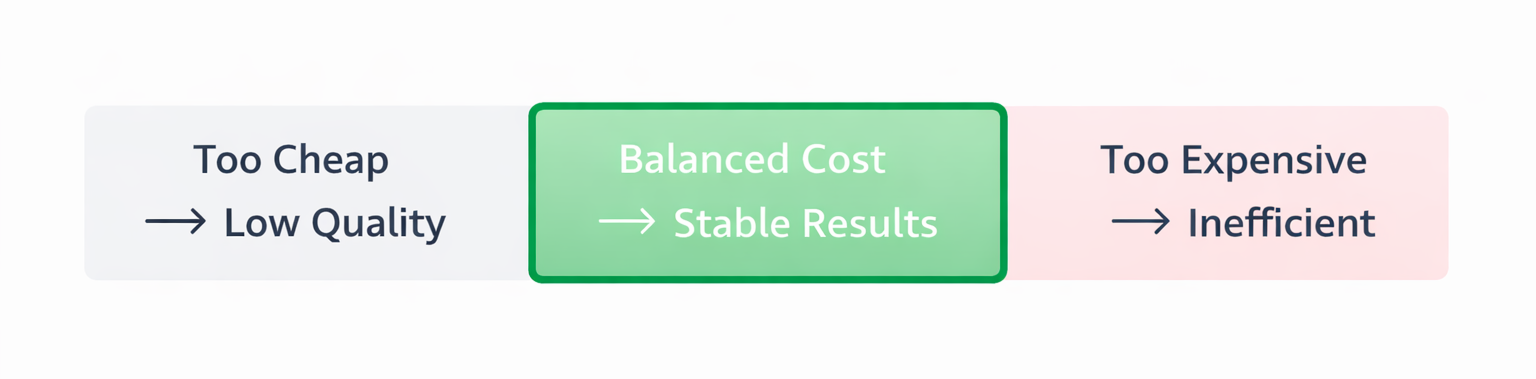
A balanced approach includes:
-
Defining CPL ranges based on pipeline performance
-
Maintaining intentional friction in the funnel
-
Separating campaigns by objective (volume vs quality)
-
Feeding better signals into optimization (qualified leads, opportunities)
-
Evaluating performance beyond Ads Manager
This shifts the focus from cheap leads to effective acquisition.
Final Takeaway
Lower ad costs are not a pure win. They signal a shift in how the system operates.
In most cases, that shift includes:
-
Easier conversions
-
Broader, lower-intent audiences
-
Reduced filtering
-
Limited scaling potential
The goal is not to make leads cheaper.
It is to make them worth acquiring.