Boosting an Instagram post turns existing content into paid distribution across Feed, Stories, Explore, and profile placements.
It’s fast and accessible — but that simplicity removes control. That’s where most performance issues begin.
There’s also a cost factor many advertisers underestimate. If you fund your ad account through the Instagram iOS app, Apple may apply a 30% service fee before your budget even enters Meta’s auction.
That means your campaign starts with less effective spend than you think.
The Apple fee distorts your real campaign performance
Most advertisers rely on Ads Manager metrics to evaluate results. The issue is those metrics reflect delivered spend, not total spend.
If budget is added through iOS, part of it is removed before delivery begins. Inside Ads Manager, everything looks normal — but your real cost per result is higher.
You’ll usually notice it when performance stops scaling the way it should.
- Reported CPA stays stable.
- Actual profitability drops.
- Scaling increases losses instead of revenue.
The fix is operational. Avoid funding campaigns through iOS when performance matters.
Why boosted Instagram posts attract low-intent clicks
Instagram behavior drives campaign outcomes. Users scroll quickly, react instantly, and engage without much evaluation.
Boosted posts inherit that behavior.
At first, performance looks strong. CPC drops, engagement rises, and CTR appears efficient. But once traffic reaches your funnel, the pattern shifts.
Users click, but they don’t convert. Leads come in, but lack intent. Sales teams start filtering out more of them.
This is not a creative problem — it’s an optimization problem.
Meta is prioritizing the easiest measurable action. Without strong conversion signals, that becomes engagement rather than purchase intent.
Placement distribution creates uneven results
Boosted posts run across multiple Instagram placements automatically, and each placement behaves differently.
Story users tap quickly. Feed users evaluate more. Explore introduces completely new audiences with lower familiarity.
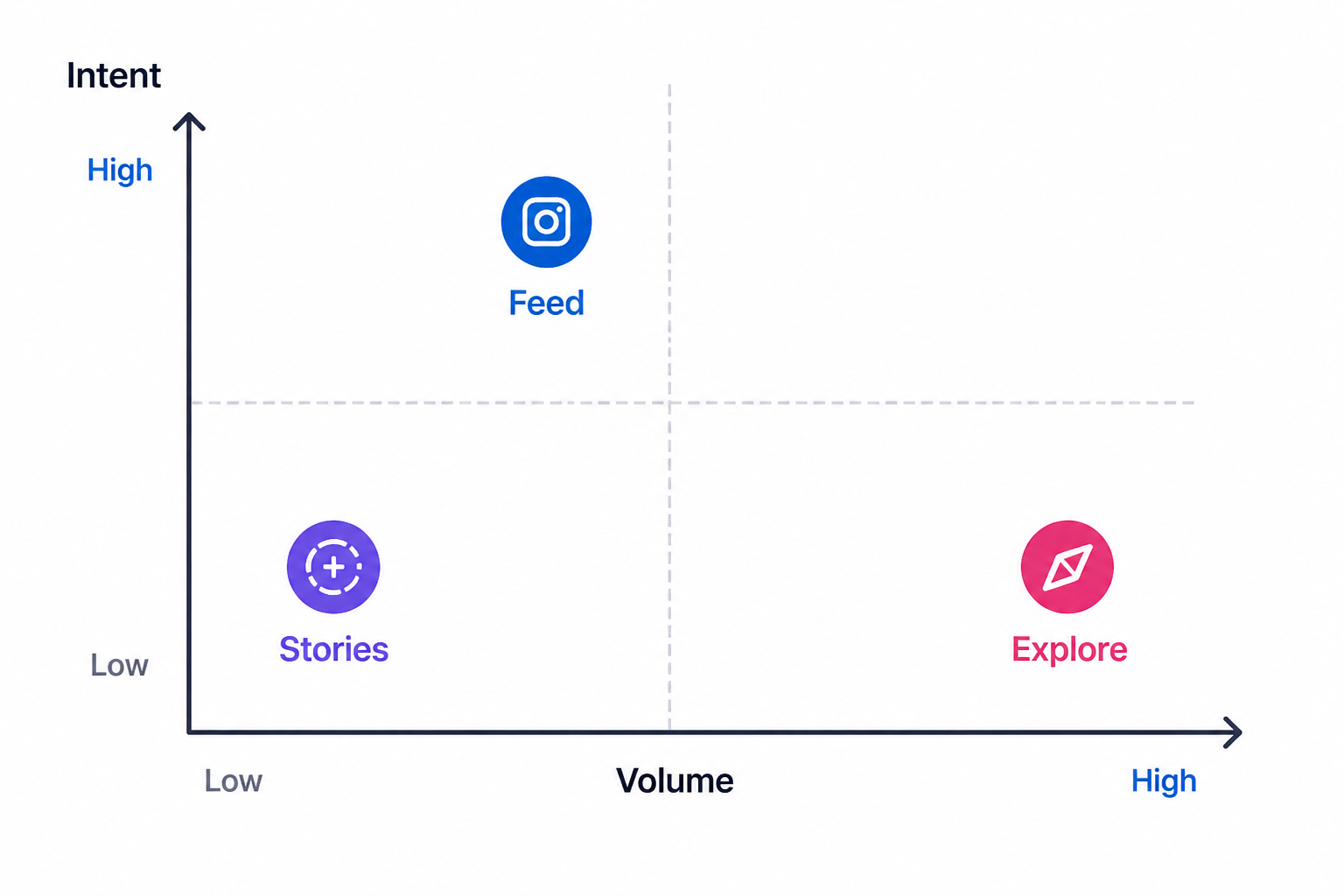
Inside Ads Manager, this creates visible inconsistencies.
- Stories often drive high CTR with weak post-click behavior.
- Feed tends to deliver stronger intent, even with fewer clicks.
- Explore expands reach but reduces conversion efficiency.
This gap between volume and intent is where many campaigns lose efficiency.
That’s why reviewing Instagram Feed and Story placement performance is critical before scaling.
Special Ad Categories reduce targeting precision
If your campaign falls under credit, employment, housing, or social issues in the US, you must declare a Special Ad Category.
This limits targeting options and forces broader delivery.
The result is predictable. CPM rises, and conversion rates often drop because the audience becomes less aligned with your offer.
Many advertisers try to fix this through creative changes. In reality, the limitation comes from the system itself.
Boosting struggles without strong conversion signals
Boosting simplifies setup — but it does not replace data.
When conversion signals are weak, Meta shifts delivery toward cheaper actions. Engagement continues, but meaningful outcomes remain low.
You can recognize this pattern in Ads Manager:
- Impressions increase steadily.
- Engagement remains consistent.
- Conversion volume stays flat.
At that point, the campaign is no longer optimizing for business results.
That’s when it makes sense to set up an Instagram ad campaign with more control.
When boosting actually works
Boosting performs well when the content already shows intent.
You don’t need large engagement numbers — you need the right type of engagement. Comments asking about pricing, saves that suggest future interest, or shares within relevant communities are stronger signals than likes.
Boosting amplifies those signals instead of trying to create them.
It also works when the goal is visibility, not conversion.
Audience quality determines whether boosts scale
Broad targeting is one of the biggest weaknesses of boosted posts.
Early performance often looks promising, but declines as delivery expands. Engagement remains high, but quality drops.
Meta is simply finding the cheapest available interactions.
This is where LeadEnforce becomes relevant.
Instead of relying on broad targeting, LeadEnforce helps advertisers build high-intent audiences using Instagram followers, engagers, and social profile data.
That changes how campaigns perform from the start.
Instead of chasing cheap clicks, delivery begins with users already showing relevant behavior. This improves conversion consistency and reduces wasted spend.
If you’re scaling campaigns, it’s worth learning how to find high-intent Instagram audiences.
How to evaluate boosted Instagram posts correctly
Surface metrics are not enough.
A proper evaluation needs to connect platform performance with business outcomes:
- CPC shows cost efficiency, but not intent.
- Landing page views confirm real visits.
- Conversion rate shows whether users act.
- Lead quality determines whether those actions matter.
- ROAS connects spend to revenue.
A common failure pattern is: low CPC combined with low conversion rate.
When that appears, the campaign is optimizing for attention — not intent.
Final takeaway
Boosting Instagram posts is built for reach and simplicity — not precision.
It works when the content already attracts the right audience and the goal is visibility.
It wastes budget when you rely on broad targeting, weak signals, or hidden cost structures like Apple’s fee.
Use boosted posts to amplify proven content. Use structured campaigns to generate predictable revenue.