Social media advertising can grow your business — or quietly waste thousands. Platforms like Instagram and Facebook are powerful, but not always profitable. Their success depends on timing, creative agility, and business readiness.
This guide breaks down when to double down on paid social and when to hold off.
When Social Media Ads Work Best
Paid ads aren’t a starting point — they’re an amplifier. If your offer already resonates with real buyers, social platforms can help you reach more of them, faster. Below are five situations where social ads consistently perform well.
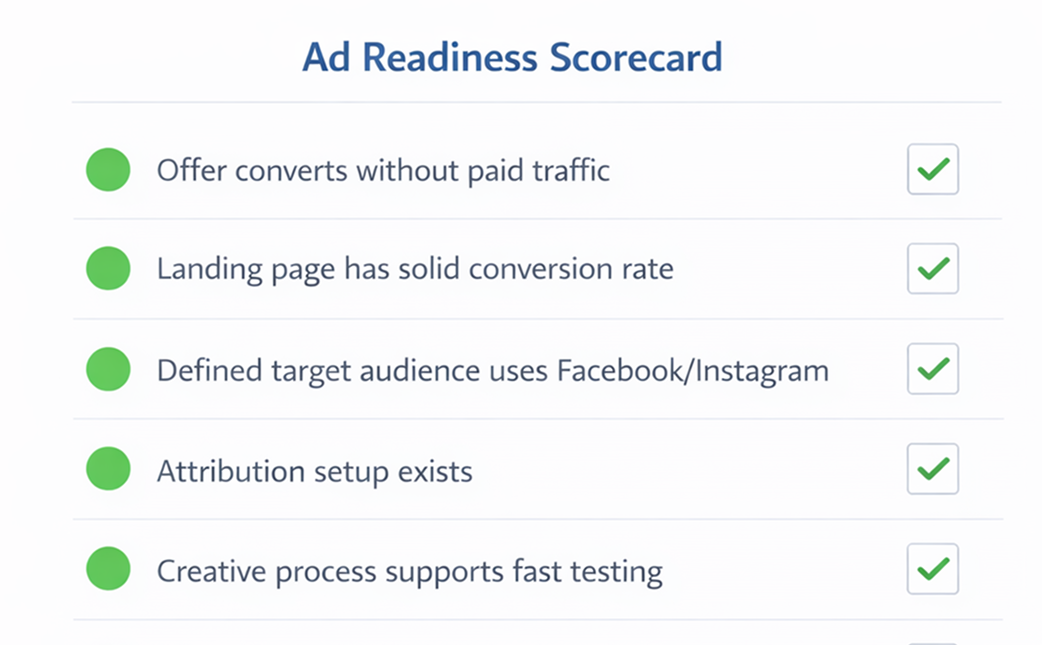
1. Your Offer Converts Without Paid Ads
Running ads before your offer is validated is a fast track to wasting money. Social platforms won’t fix weak positioning or broken funnels — they’ll expose them.
Paid social becomes effective when:
-
You’re getting purchases or sign-ups from email, organic content, or direct referrals.
-
People are buying without heavy discounts or persuasion tactics.
-
Your landing page or sales page converts cold or warm traffic at a healthy rate.
If those foundations are shaky, don’t scale yet. Instead, troubleshoot the fundamentals. Start with this practical guide on why your Facebook ads aren’t converting — it helps identify offer, creative, and funnel misalignments.
2. Your Buyers Are Actively Using the Platform
Some audiences live on Facebook and Instagram. Others don’t. Before running ads, make sure your buyers actually spend time there — and use those platforms for product discovery.
Social ads perform best when:
-
Your audience scrolls during downtime — mornings, evenings, or breaks.
-
Your product is visually driven or impulse-friendly (e.g., beauty, fitness, wellness, lifestyle).
-
You're running retargeting campaigns where people already know your brand.
If your audience is mainly on LinkedIn or Google, start there instead. Social media is attention-rich, but not always intent-rich.
3. You Have a System for Testing Creatives Quickly
The fastest-growing brands on Meta don’t rely on one or two good creatives. They launch and replace ads constantly — because what works today likely won’t work next week.
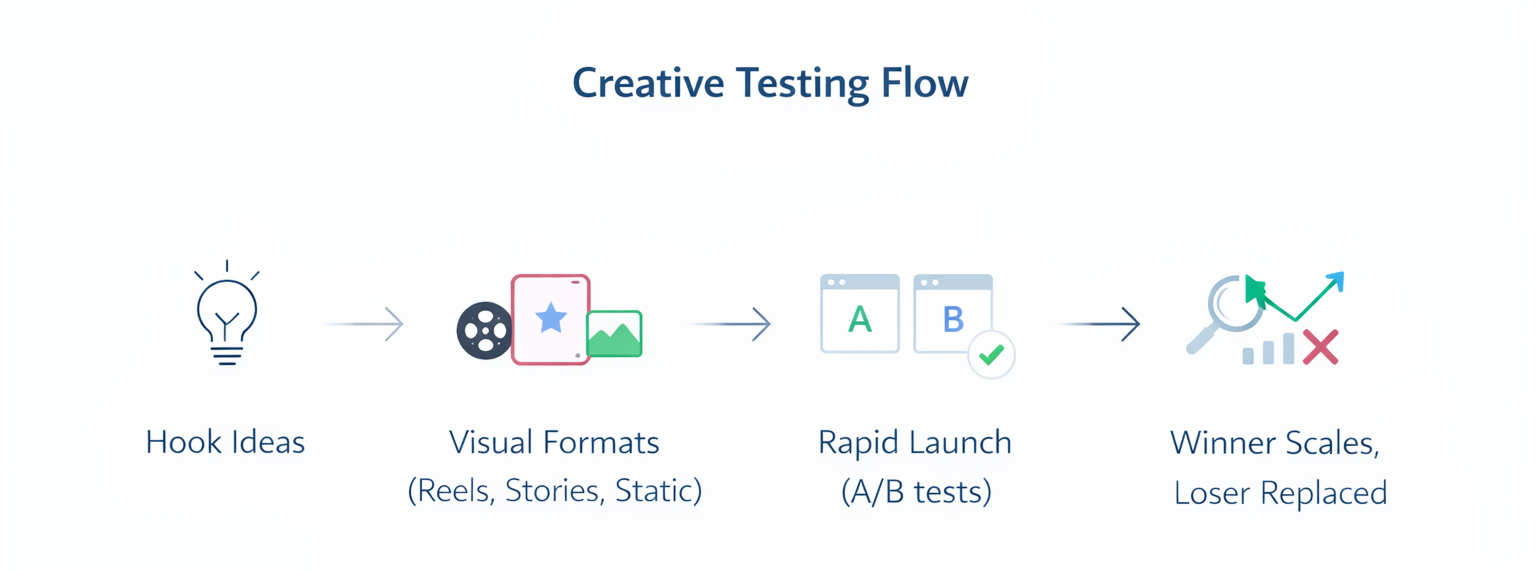
You’re ready for paid social when:
-
You can launch multiple new ad creatives weekly.
-
You measure performance at the ad level — not just campaign or ROAS level.
-
Your team understands how to build content for feed, stories, reels, and UGC formats.
To improve your testing structure, use this framework for testing creative, copy, and audiences in Facebook campaigns to avoid spinning your wheels on the wrong variables.
4. You’re Launching a Campaign With Urgency or Momentum
If your product is new, time-sensitive, or in demand, social ads can fuel fast action. These platforms are built to spark interest in the moment — not over weeks or months.
Examples of when to invest:
-
You’re launching a product with preorders or an email waitlist.
-
You’re running a flash sale or short-lived promotion.
-
You want to fill limited spots for a live event or challenge.
These campaigns benefit from Meta’s real-time delivery and high reach. But without urgency or newsworthiness, they often blend into the feed.
5. You Want Market Feedback, Fast
Paid social is one of the fastest ways to test messaging, positioning, and demand — often within 72 hours. That makes it ideal for validation and insight, not just sales.
Marketers use it to:
-
Test multiple value propositions before a full launch.
-
Compare angles or benefits across customer segments.
-
Collect CTR and landing page behavior to guide product development.
Use data to adjust early, before investing in inventory or long-term assets. Also consider learning how to measure attribution with Meta’s native tools to understand which campaigns drive actual outcomes.
When Social Media Ads Don’t Work
Even with a decent product and budget, social ads don’t always make sense. Below are common scenarios where paid social underperforms — and where your money is better spent elsewhere.
1. You’re Still Figuring Out the Business or Product
If you haven’t nailed product–market fit, ads will only drain resources faster. Paid traffic accelerates feedback — but that’s not always helpful when everything is still in flux.
Don’t run social ads when:
-
You’re unsure who your ideal customer is.
-
You haven’t seen repeat buyers or any organic traction.
-
You’re still rewriting your offer every few weeks.
Instead, use surveys, email, or organic social to refine your positioning. Paid ads can come later — once you’ve proven real demand.
2. You Have No Attribution Strategy
Facebook and Instagram can drive results — but rarely tell the full story. Relying on in-platform metrics alone often leads to misleading conclusions.
Avoid scaling ads when:
-
You can’t connect revenue back to specific campaigns.
-
You lack post-purchase surveys or first-party data tools.
-
You depend on last-click attribution to justify ad spend.
To diagnose deeper data issues, see what to do when your Facebook ads suddenly stop converting — a useful guide to reconnect performance metrics with business impact.
3. Your Creative Is Too Slow or Off-Platform
Creative is the performance lever on Meta. Without fresh, platform-native content, even a strong offer will underperform.
Avoid paid social if:
-
Your visuals are designed for websites or print, not scrollable feeds.
-
You only produce one or two creatives per month.
-
You depend on external freelancers with long turnaround times.
Meta ads often reward speed and iteration — not perfection. If your process can’t support that, pause before investing heavily.
4. You’re Entirely Dependent on One Platform
Brands that rely on Meta for 90% of their acquisition eventually hit a wall. Whether it’s a policy violation, ad rejection, or algorithm shift, fragility grows with dependency.
You’re at risk if:
-
You have no backup channels (email, SEO, Google Ads).
-
Your entire funnel — from discovery to conversion — lives on Meta.
-
One account issue could halt your cash flow for days.
Build redundancy early, not reactively. Use Meta as a growth engine, not a single point of failure.
Final Thoughts
Social media ads can be a powerful driver of growth — but only under the right conditions. Use them when your offer converts, your audience is active, and your team can test and iterate quickly. Don’t rely on them to solve structural issues or replace foundational marketing work.
Before investing in paid social:
-
Validate your product with organic traction.
-
Prepare your team to produce fast, scroll-native creatives.
-
Build a basic attribution system to understand what’s working.
Once those are in place, platforms like Facebook and Instagram can help you scale faster and smarter — without wasting budget or time.