Many advertisers believe diversifying across channels (Google, Meta, TikTok, LinkedIn) reduces risk. But for small and mid-sized brands, it often leads to:
-
Budget spread too thin — not enough spend per platform to generate statistically reliable performance data.
-
Creative dilution — assets repurposed poorly across platforms that favor very different formats.
-
Operational inefficiency — multiple dashboards, inconsistent attribution, and redundant testing cycles.
If one channel is already proving successful, shifting focus can drive faster and more cost-effective growth — without reinventing your ad operation.
When One Channel Deserves 80% of Your Focus
Use these criteria to decide when focusing on a single platform like Meta is not just acceptable — but optimal.
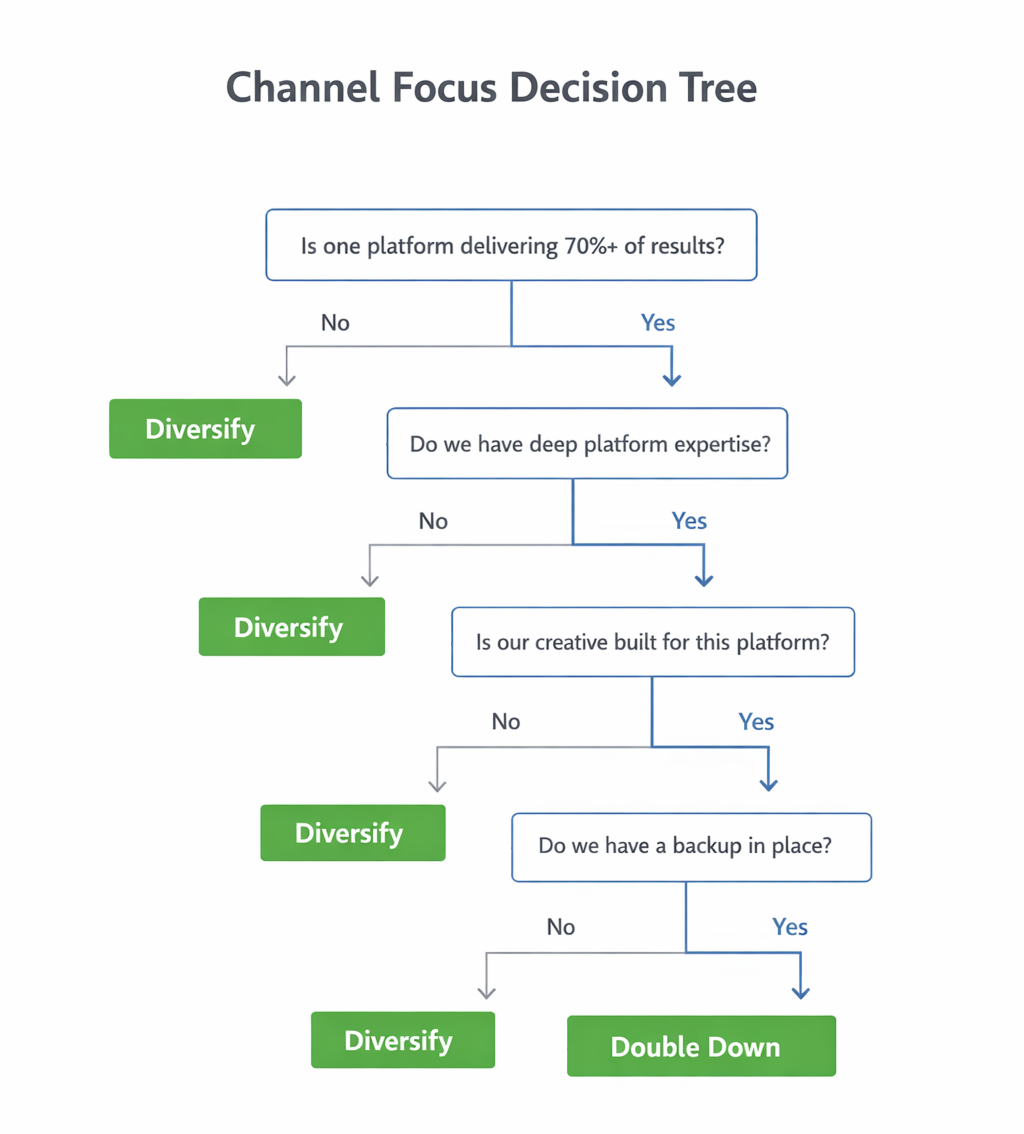
1. One Channel Consistently Outperforms on Cost and Volume
You need more than a few strong days of performance. Look for channel dominance over time in:
-
Conversion cost consistency — If your CPA on Facebook has held steady or decreased over the last 30–60 days, it’s a strong signal.
-
Volume scalability — Are new budgets translating into more conversions without diminishing ROAS?
-
Lead or purchase quality — Are you seeing higher LTV, return purchases, or lower refund rates from this source?
If Meta is delivering 70–90% of your revenue, it likely deserves a proportional budget share.
Learn how to analyze deeper performance indicators in this article: How to Analyze Facebook Ad Performance Beyond CTR and CPC.
2. Your Team Has Platform-Specific Expertise
It’s easier to scale what you already understand. If your team is fluent in Meta’s structure, tools, and testing methodology, you’ll extract more value than trying to learn a new platform from scratch.
That means:
-
Confident use of Advantage Campaign Budget, ad set consolidation, and dynamic creative.
-
Faster iteration cycles with less trial and error.
-
Fewer mistakes — like audience overlap or poor exclusions.
Need a solid foundation? Check out: Meta Campaigns Explained: How to Structure High-Performance Campaigns.
3. Creative Systems Are Built Around One Platform’s Format
Your ad performance is only as good as your creative pipeline. If most of your videos are built for Instagram Reels or Facebook Stories, they likely won’t carry over well to LinkedIn or YouTube.
It’s often smarter to:
-
Scale creative testing within your dominant platform using tools like Advantage+ Creative.
-
Repurpose high-performing visuals into multiple formats: square feed, vertical stories, and carousel.
-
Leverage user data to build new angles or hooks, based on what already performs.
To improve your production-to-testing flow, use this creative testing guide: Secrets Behind High-Performing Creative Testing Campaigns.
The Risks of Over-Focusing on One Channel
Going deep on one platform isn’t always the right move. Be aware of these warning signs.
1. Platform Dependency Risk
When your business relies too heavily on one ad platform, a single change can disrupt your entire customer acquisition flow.
What could go wrong?
-
Algorithm updates may suddenly deprioritize your ad format or campaign type.
-
Policy enforcement can cause delays, rejections, or — in extreme cases — account bans or ad disapprovals without clear explanations.
-
Ad cost volatility during competitive seasons can make your funnel temporarily unprofitable.
Even if Meta is your top performer, it’s smart to build platform redundancy. This doesn’t mean scaling other channels aggressively — but at minimum:
-
Keep your Google Ads account (or any other Ad Account) healthy and verified.
-
Run occasional low-budget awareness campaigns on TikTok or YouTube to preserve pixel and audience data.
-
Maintain email and SMS as owned channels to reduce reliance on paid traffic entirely.
Think of it like server redundancy for marketers — you don’t want a single point of failure.
2. Your Funnel Requires Multi-Platform Touchpoints
In many industries, especially B2B, finance, education, and high-consideration ecommerce, buyers don’t convert on the first click — or even the first platform.
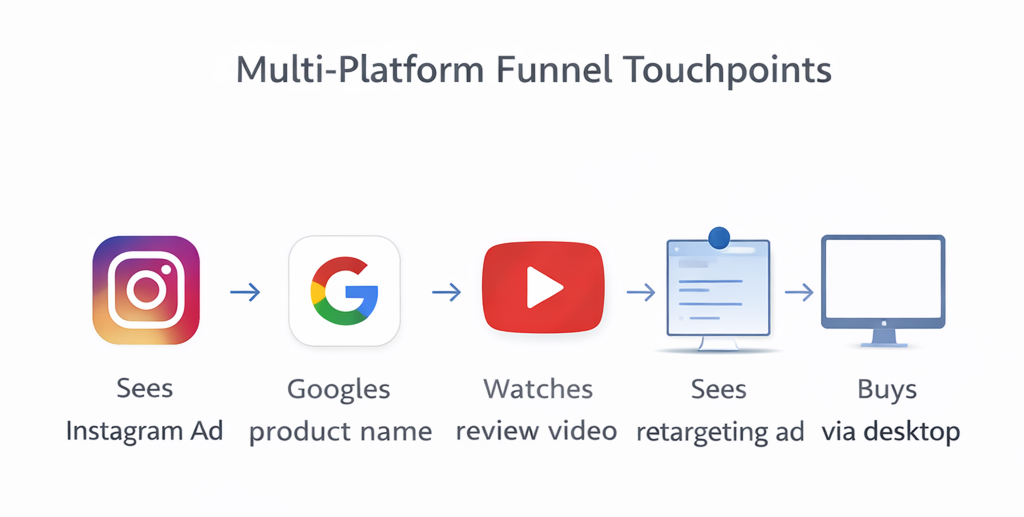
A typical buyer journey might look like this:
-
They scroll past a Facebook video ad and click out of curiosity.
-
Days later, they Google your brand name or product to learn more.
-
They’re retargeted on YouTube or the Google Display Network.
-
They finally convert after visiting your site multiple times.
If you’re only present on Meta, you lose visibility — and influence — during critical decision-making moments.
To support a multi-step path to conversion:
-
Use Meta as your entry point for awareness and discovery.
-
Set up branded search campaigns on Google Ads to control what users see when they look you up.
-
Layer in cross-channel retargeting to bring back users on the channels they use most.
And make sure you're evaluating performance beyond last-click attribution. First-touch and assisted conversions often happen off Meta — even if Meta introduced the buyer in the first place.
How to Scale One Channel Strategically (Without Burning Out)
If you decide to double down, here’s how to avoid stalling out.
Step 1: Study Data Beyond the Surface
Look deeper than CTR or ROAS. Key questions include:
-
What creative format is driving the most downstream purchases?
-
Are your top-performing audiences reaching saturation?
-
How do metrics shift between prospecting and retargeting?
A campaign that looks good on paper can still contain inefficiencies — like overlapping audiences or poor exclusions.
Step 2: Scale Budget Gradually
Meta’s machine learning responds best to gradual changes. Instead of doubling your budget overnight:
-
Increase budgets by 20–30% every 3–5 days.
-
Duplicate high-performing ad sets into new campaigns with Advantage Campaign Budget.
-
Use automated rules to monitor ROAS drops or cost spikes.
More scaling insights here: How to Optimize Advantage Campaign Budget for Scalable Facebook Ads.
Step 3: Expand Depth Before Width
Don’t just chase more reach. Instead:
-
Add value-driven offers or upsells to existing segments.
-
Introduce mid-funnel campaigns focused on education or social proof.
-
Use Advantage+ audience expansion features to identify adjacent audiences, not random ones.
Depth = more revenue from the same users. Width = more cost with less guarantee.
Final Thoughts
If one platform already gives you strong results, there's no shame in focusing your efforts there. Scaling works best when your ad systems, creative, and team knowledge are aligned with a single channel’s strengths.
But focus doesn’t mean isolation. Keep a light presence on secondary platforms, maintain flexibility, and be ready to adapt.
Growth comes faster when you go deeper — not broader — with purpose.