Marketing is more than generating clicks. To get results from Meta ads — especially on Facebook and Instagram — you need a strategy that supports each phase of the buyer journey.
Whether you're building awareness or driving repeat purchases, your messaging and tactics should match where the buyer is in their decision process. Here’s how to align your marketing with every stage of the funnel — and where most advertisers go wrong.
What Is the Buyer Journey?
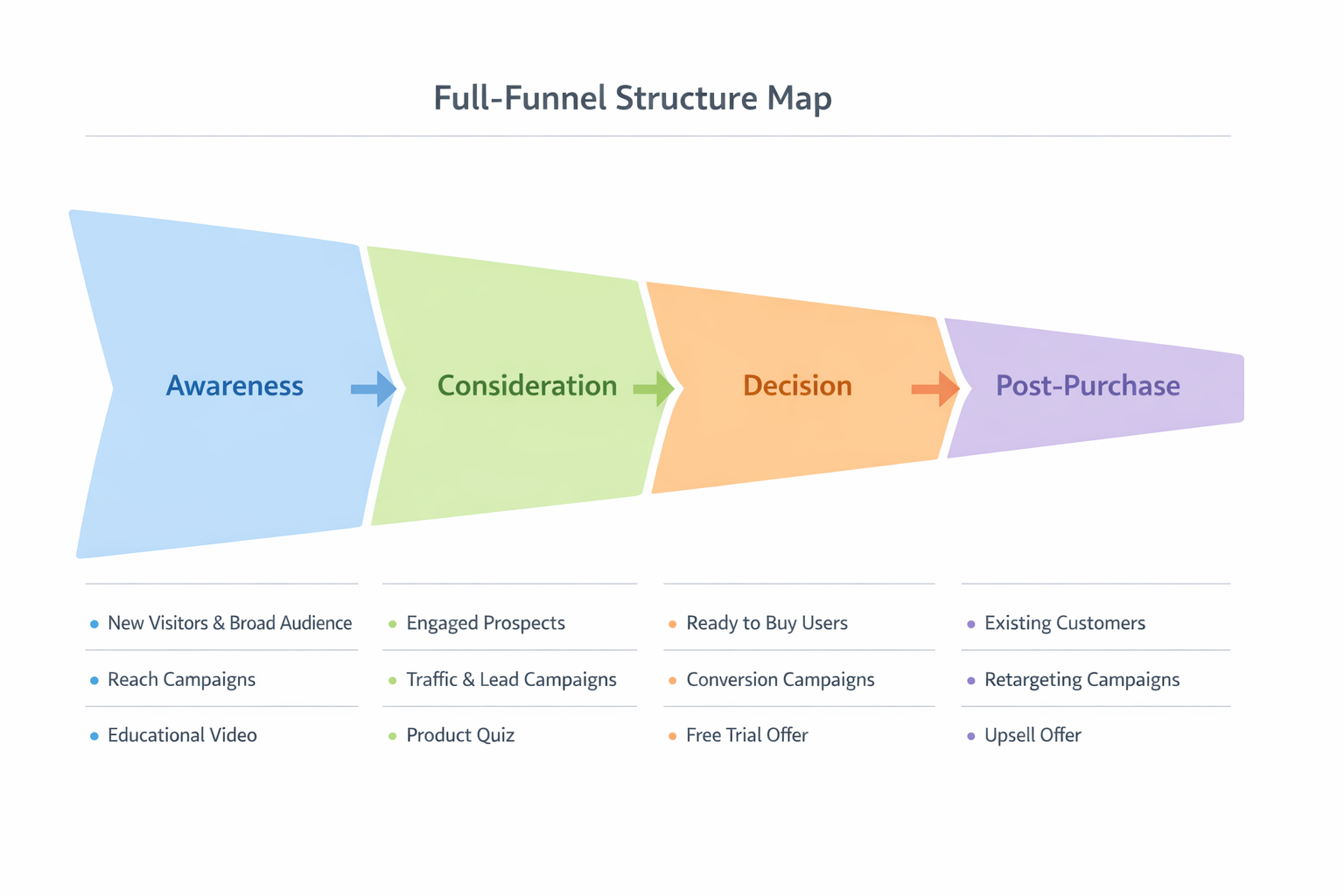
The buyer journey has three key stages.
-
Awareness: The buyer becomes aware of a need or problem.
-
Consideration: They begin researching solutions and comparing options.
-
Decision: They take action and make a purchase.
If your campaigns are optimized only for conversions, you’re missing opportunities to guide buyers before they’re ready to act.
A smart Facebook funnel strategy builds momentum across all three stages. Here’s how.
Stage 1: Awareness — Being Seen by the Right People
At the top of the funnel, the goal is visibility. You want to be discoverable to people who don’t know your brand yet.
This doesn’t mean you target everyone. Smart awareness campaigns use platform signals and data to find high-potential users.
To make awareness campaigns work, focus on:
-
Meta’s Advantage+ audience tools, which help identify patterns in conversion behavior to target better than manual interests.
-
Creative that blends in with the platform but communicates something useful, funny, or relatable to the target user.
-
Clear brand anchors, such as product visuals, unique colors, or tone, to leave a lasting impression.
Learn more about how to run effective awareness campaigns here: Why Awareness Campaigns Should Be Part of Your Facebook Ads Strategy.
Stage 2: Consideration — Helping People Choose You
Once someone has seen or engaged with your ad, the next step is nurturing interest. This stage is critical — and where many campaigns lose efficiency.
Instead of pushing a sale, help people answer the question: Is this the right fit for me?
What works at this stage:
-
Content sequencing, where warm audiences see progressively deeper messaging, such as customer reviews, benefit breakdowns, or comparisons.
-
Engagement-based retargeting, where users who watched videos or saved posts are shown mid-funnel offers or lead magnets.
-
Middle-of-funnel ad strategies, which include how-to videos, product walk-throughs, or behind-the-scenes content.
Need ideas for this stage? Check out Why Your Facebook Campaign Needs a Middle of Funnel Strategy.
Stage 3: Decision — Making the Next Step Clear and Easy
This is where action happens — if your offer, creative, and experience are aligned. But even at the bottom of the funnel, many advertisers make it too complicated or too generic.
High-performing decision-stage ads usually include:
-
Strong value messaging, specific to what the customer cares about (e.g., save time, solve a problem, achieve X in Y days).
-
Landing pages that match the ad, with no friction, confusion, or distractions.
-
Conversion-focused formats, like Dynamic Product Ads or Instant Forms, depending on the funnel.
For help tightening this stage, read The Best Campaign Objectives for Each Stage of the Buyer Journey.
Stage 4: Post-Purchase — Supporting Retention and LTV
The journey doesn’t end at checkout. Many advertisers stop marketing once a sale is made, but that’s a mistake.
Post-purchase ads are low-cost and high-impact — especially for driving repeat sales and reducing churn.
Ideas for post-purchase marketing:
| Business Model | Primary Goal After Purchase | Best Ad Tactics | Channel Suggestions |
|---|---|---|---|
| Subscription (SaaS, DTC) | Reduce churn, increase LTV | Loyalty promos, upgrade offers | Email, in-app, video retargeting |
| Consumables (CPG, beauty) | Increase order frequency | Cross-sell bundles, replenishment ads | Facebook DPA, SMS, Instagram Stories |
| One-time purchase (Tech) | Encourage referrals, upsells | Referral incentives, accessories | Email, dynamic product ads |
| High-ticket (B2B, services) | Build trust, drive advocacy | Review requests, onboarding content | LinkedIn, email nurture, testimonials |
| Ecommerce marketplace | Expand average basket size | Similar product retargeting, coupons | Google Shopping, Meta carousel ads |
To make this easier, follow the structure in Post-Purchase Ad Strategies That Drive Repeat Sales.
Bringing It All Together
Running Facebook and Instagram ads without mapping to the full buyer journey leads to:
-
Disconnected messaging
-
Inefficient spend
-
Misleading performance data
The fix isn’t just more testing. It’s full-funnel clarity. Review your ad account structure and ask:
-
Are we matching creative to funnel stage?
-
Is our offer appropriate for the audience’s level of awareness?
-
Are we tracking mid-funnel performance — not just purchases?
If not, start adjusting your structure now. Begin by planning content for each stage and using Meta’s tools to automate where possible without losing strategic control.
Need more support for this shift? Read From Awareness to Conversion: Full Facebook Funnel Strategy.
Final Thoughts
The most scalable ad strategies are built around the buyer’s journey — not just the brand’s goals.
When your Facebook or Instagram campaigns meet users where they are, you lower acquisition costs, improve conversion rates, and increase customer lifetime value.
That’s what full-funnel marketing really means. Not more complexity — just smarter structure.