If you're running Facebook or Instagram ads without A/B testing, you're likely making decisions based on guesses.
Even a great-looking ad can underperform, while a small variation may generate significantly better results. A/B testing gives you clarity, control, and the insights needed to improve your results over time.
This article explains what A/B testing is, why it matters for serious advertisers, and how to set it up with real strategy — not guesswork.
What Is A/B Testing in Facebook Ads?
A/B testing compares two or more versions of an ad to see which one performs better.
You change only one element — such as the headline, image, or audience — while keeping everything else the same. Meta then delivers both versions to your audience and shows which performs better.
If you're just starting, check out this guide to A/B testing Facebook creatives. It walks through how to structure your first tests correctly.
Why A/B Testing Is Essential for Facebook and Instagram Ads
A/B testing isn’t just about creative preferences — it’s about making smarter decisions and avoiding costly assumptions.
1. Creative Performance Is Hard to Predict
Even experienced marketers can misjudge which ad will work better.
You may expect a product-focused image to convert better than a lifestyle photo, only to see the reverse.
Start by testing variables such as:
-
Visual type: lifestyle vs. product-only;
-
Headline tone: direct offer vs. curiosity-based;
-
Call-to-action (CTA): “Shop Now” vs. “Learn More.”
If you want to understand why copy matters just as much as visuals, read this deep dive on testing messaging.
2. Audience Behavior Varies More Than You Think
A/B testing isn’t just about creative. Targeting strategy matters just as much — and sometimes more.
Instead of lumping all cold or warm audiences together, use testing to break them down.
Consider testing options like:
-
Retargeting windows: 7-day vs. 30-day site visitors;
-
Lookalike types: 1% purchasers vs. 5% subscribers;
-
Cold audiences: broad, interest-based, and hybrid combinations.
This approach helps uncover which message works for which audience — not just which audience is cheaper.
3. Ads Burn Out — Testing Keeps Results Steady
Even high-performing ads stop working eventually. Frequency increases, engagement drops, and performance declines.
With ongoing testing, you always have the next creative or audience variation ready to go.
To learn how to build testing into your campaign planning, see this article on starting split testing before you launch.
How to Set Up A/B Tests the Right Way
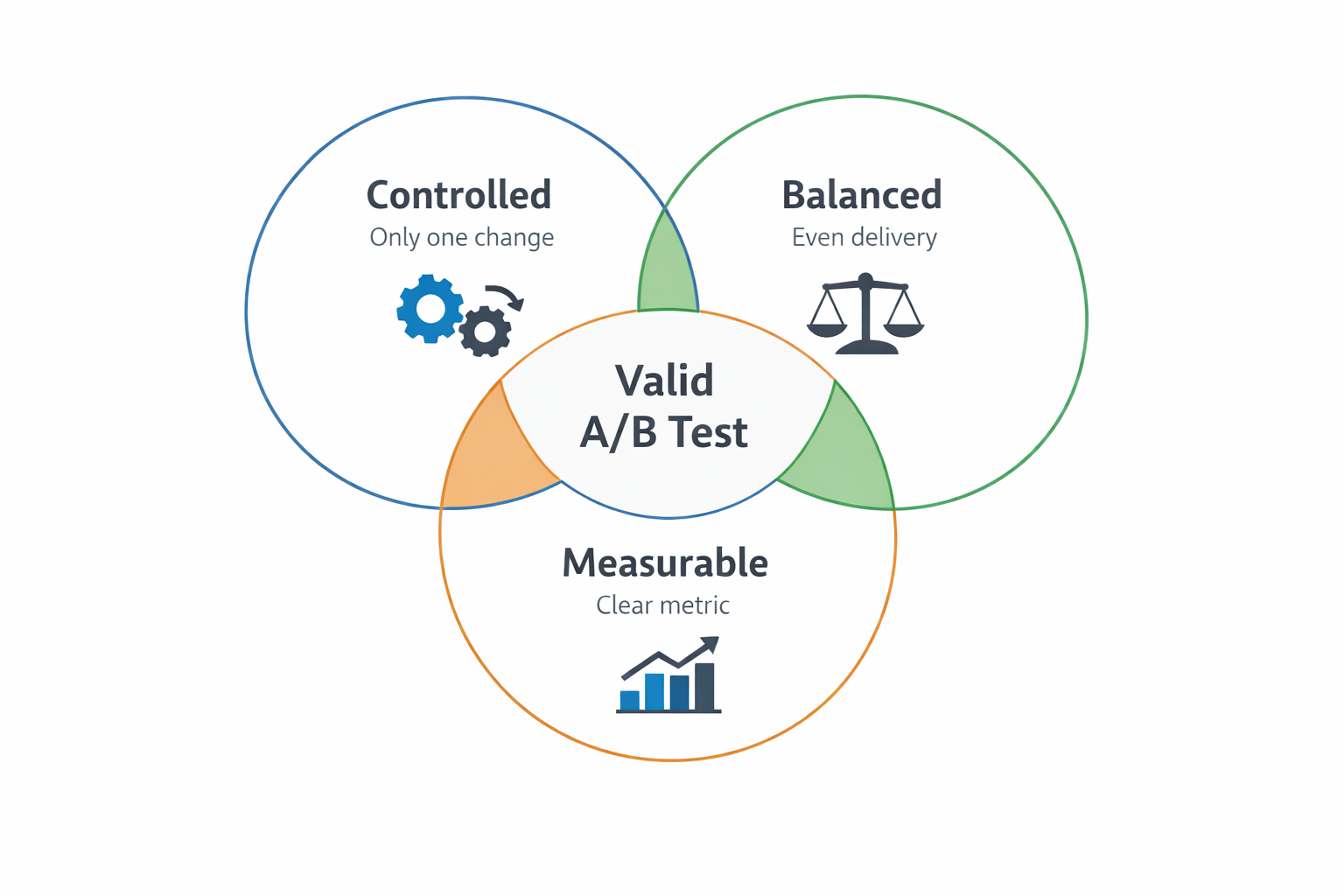
To get clear, usable results, your A/B tests need to follow a structured approach.
Poorly designed tests can mislead or waste your budget.
1. Test One Variable at a Time
If you change multiple things between ad variations, you won’t know which one made the difference.
Examples of clean, focused tests include:
-
Same headline and copy, but different image styles;
-
Identical creative, but different CTA buttons;
-
Same ad, delivered to two different audience segments.
Always keep the rest of your setup — objective, placements, and budget — consistent between test groups.
2. Define a Clear Goal Before You Launch
You need one primary metric to decide which ad wins.
This makes results measurable and prevents distractions.
Match your goal to your campaign type:
-
Use click-through rate (CTR) or cost-per-click (CPC) for testing ad hooks;
-
Use landing page views for copy or format tests;
-
Use cost per purchase (CPP) or return on ad spend (ROAS) for sales-focused campaigns.
If you're unsure which metrics to prioritize, this guide to running insightful split tests can help.
3. Let the Test Run Long Enough
One of the most common mistakes is ending a test too early.
A few early results aren’t statistically significant, and Meta’s algorithm needs time to optimize.
To ensure valid results:
-
Let tests run for 3 to 5 days;
-
Avoid making changes while the test is live;
-
Allocate enough budget to reach your conversion or impression thresholds.
Skipping this step can lead to the wrong conclusions — and higher costs later.
What You Should Be Testing (Beyond the Basics)
Most marketers test images or headlines — but the highest-impact insights come from testing how your messaging, format, and segmentation work together.
1. Message Structure and Delivery
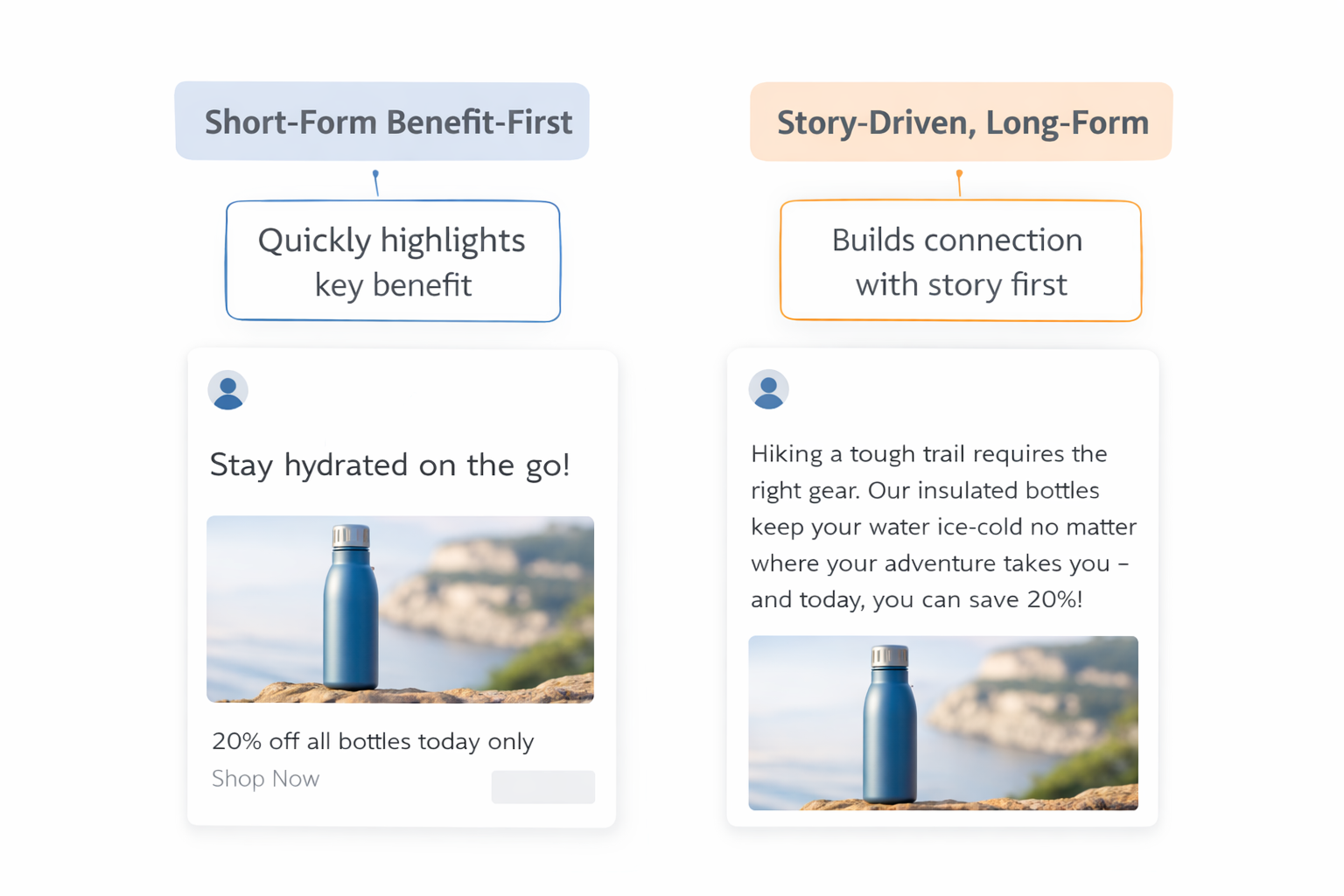
Sometimes it's not what you say, but how you say it that drives performance.
Try testing different styles, such as:
-
Short vs. long-form ad copy;
-
Benefit-first vs. problem–solution structures;
-
Story-based formats vs. bullet-point breakdowns.
These types of tests can reveal what kind of narrative resonates most with your audience.
2. Tailored Messaging for Different Segments
Testing allows you to deliver the right message to the right people — rather than relying on one-size-fits-all creative.
Segment your audience and test:
-
Younger vs. older age groups, using different tone and visuals;
-
Cold traffic vs. warm retargeting, with matching levels of urgency or familiarity;
-
First-time buyers vs. repeat customers, with value messaging tailored to each.
This approach often improves results without increasing your spend.
3. Creative Formats for Different Placements
Not every ad format works across all placements. What grabs attention in Facebook Feed may fall flat in Instagram Stories.
Try these tests:
-
Vertical video vs. square video for mobile users;
-
Copy-led vs. image-led creative;
-
Stories-only delivery vs. automatic placements.
These details often affect cost-efficiency more than changes to your product or offer.
After the Test: How to Apply the Results
Running the test is only part of the process. What matters is how you use the results to optimize future campaigns.
Best practices after testing include:
-
Scaling the winning version gradually — by 20% to 30% every few days;
-
Reusing high-performing elements in new ad variations;
-
Updating evergreen campaigns with winning formats or messaging;
-
Documenting each test and its outcome in a central place.
This helps you build a performance system — not just a collection of one-off wins.
Final Thoughts
A/B testing isn’t about trying random variations. It’s about building a habit of structured experimentation so your decisions are based on real performance, not assumptions.
By testing intentionally and consistently, you gain a clearer picture of what works for your brand and your audience.
That leads to better creative, smarter targeting, and more reliable results — across every campaign.