When your Facebook or Instagram campaign starts performing well, it’s tempting to raise the budget and let it run.
At first, that works.
You double the spend, and results keep coming in. Then performance drops. Costs go up. Your best ads stop converting.
This doesn’t mean the algorithm changed or your offer suddenly stopped working. It usually means your campaign hit a structural limit and needs a different setup to grow further.
Let’s look at what actually causes ads to stop scaling and how to build a system that supports sustainable growth.
The Real Reasons Facebook Ads Stop Scaling
Scaling isn’t about spending more. It’s about building a campaign that can handle more volume, more traffic, and more complexity without falling apart.
Here’s what gets in the way.
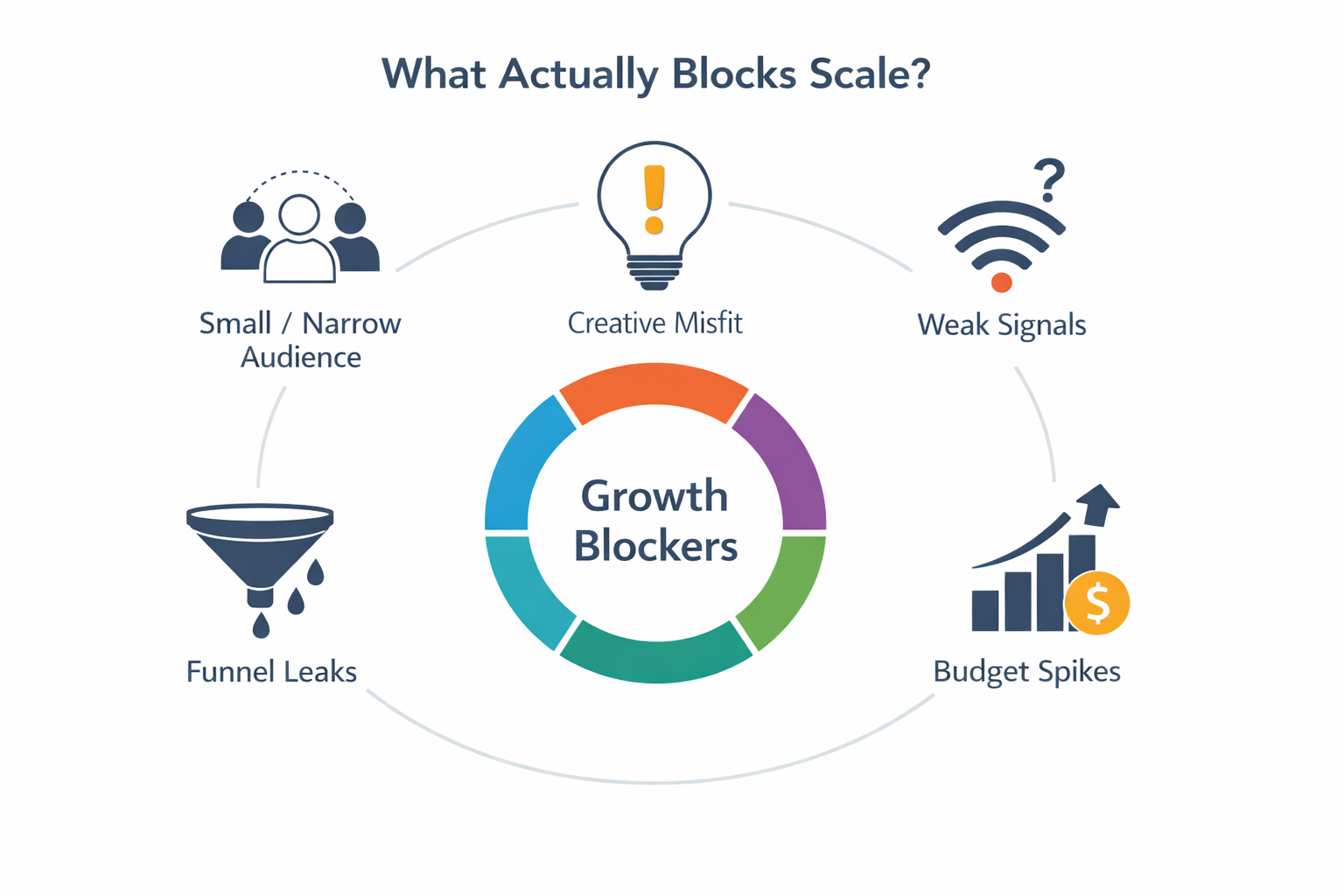
1. Your Audience Is Too Small or Too Narrow
A tightly defined lookalike or interest group might perform well at first. But Meta burns through small audiences quickly. Once people start seeing your ads too often, results decline.
This doesn’t mean your product or message stopped working. It means you’re reaching the same people too many times, without refreshing the audience or the message.
What you’ll notice:
-
Frequency rises while engagement drops;
-
Reach flattens even though the budget increases;
-
Results worsen with no clear explanation.
What to change:
-
Use broader audiences. Test Advantage+ audience or open targeting with only location, gender, and age filters. This gives Meta more room to optimize.
-
Build new lookalikes. Use different source events like repeat purchases, high-value leads, or video viewers to generate varied lookalike sets.
-
Exclude overlapping users. Set exclusions for converters, site visitors, or recent engagers so prospecting campaigns reach new people.
For more on how to build campaigns that go beyond reach and drive real results, see Facebook Ads That Drive Subscriptions and Scale Growth.
2. Your Creative Doesn’t Work Outside the Original Audience
One of the most common issues with scaling is trying to use the same creative for new, colder audiences. What worked for warm prospects often doesn’t land with people who’ve never heard of your brand.
When your campaign reaches a broader group, your messaging has to change. It needs to introduce, build trust, and convert, not just remind.
What this mismatch looks like:
-
Top-performing BOF creatives underperform in prospecting;
-
CTR drops sharply as you expand audience size;
-
People comment that the ad feels unclear or irrelevant.
How to make your creative work at scale:
-
Structure the message. Lead with a strong hook, follow with clear value, build trust with proof, and end with a direct CTA.
-
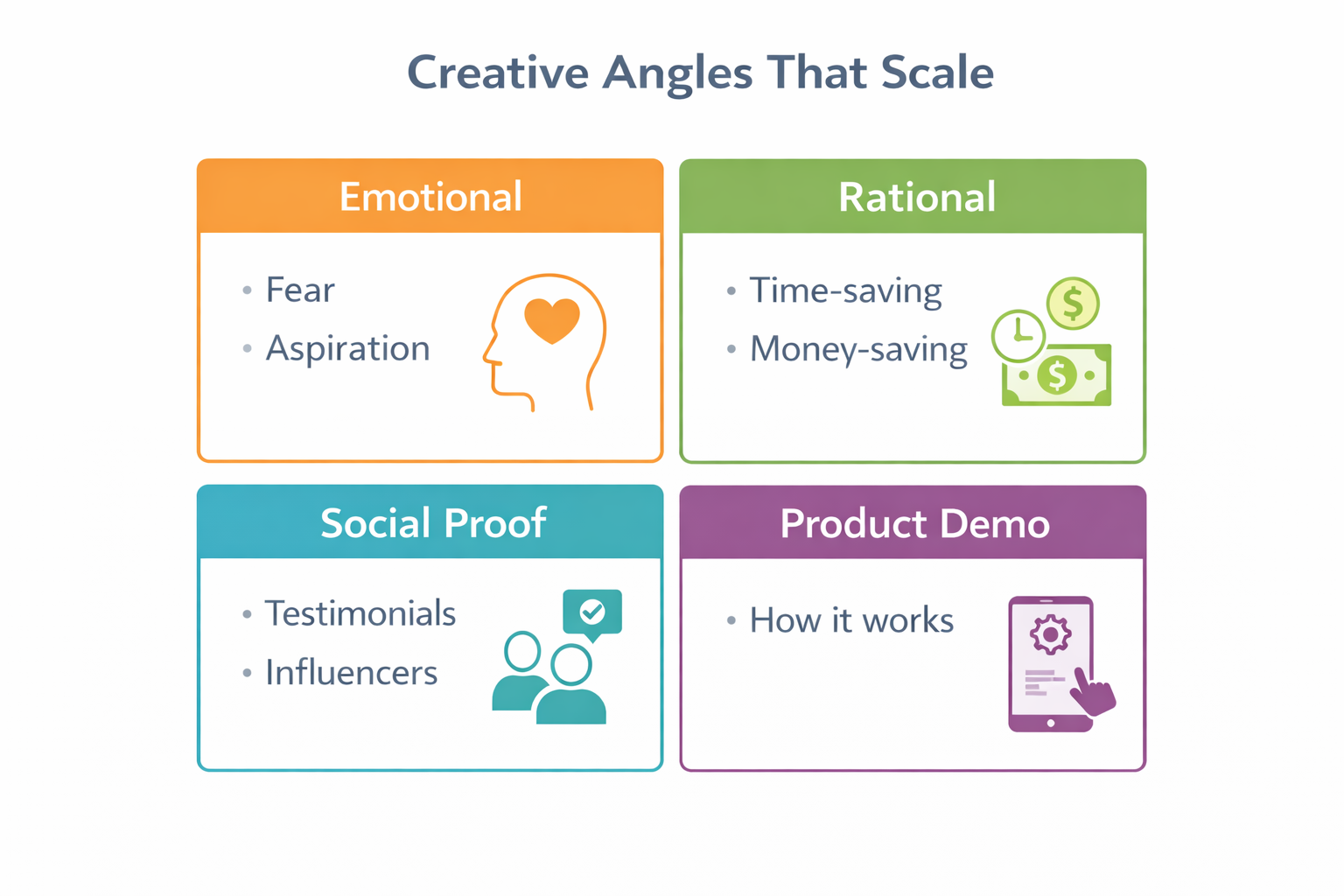
Test different angles. Use emotional hooks (pain, aspiration), rational ones (save time, save money), and social proof (reviews, awards) to find what resonates.
-
Adapt for placements. Use vertical, sound-off videos for Stories and Reels. Square images or carousels work better in Feed.
If you want to integrate scalable creative with automated delivery, check out Scale Your Facebook Ads with Automation Without Sacrificing Quality.
3. Meta Doesn’t Know What Success Looks Like
Scaling only works if Meta knows what kind of user you want to reach. If your data signals are vague or inconsistent, you’ll pay more to reach people who never convert.
A bigger budget amplifies both good and bad signals. So when you're scaling, clarity matters more than volume.
What to look for:
-
Campaigns optimize for low-intent events like link clicks;
-
Pixel events fire inconsistently or miss key actions;
-
CRM or purchase data isn’t passed back to Meta.
How to fix this:
-
Implement Conversion API. Combine it with your pixel to make tracking more reliable, even when cookies are blocked.
-
Optimize for meaningful actions. Use “Purchase,” “Lead,” or other bottom-funnel goals — not “Landing Page View.”
-
Send back value. Include purchase amount or customer LTV when possible, so Meta can optimize for revenue, not just conversions.
Better signals don’t just help the algorithm — they reduce waste and unlock profitable scaling.
4. You Increased Budget Too Quickly
Sudden budget increases often backfire. They confuse the algorithm, reset learning, and destabilize performance. Even strong campaigns can crash if growth happens too fast.
Scaling works best when it’s gradual and structured.

You may notice:
-
Your results get worse after a large budget jump;
-
Learning phase restarts even if creatives and targeting stay the same;
-
Ad sets that were stable begin underdelivering.
To scale safely:
-
Use incremental increases. Raise budgets by 20–30% every 48–72 hours.
-
Duplicate high performers. Clone the campaign or ad set, test the new budget in parallel, and protect performance in the original.
-
Switch to CBO when ready. Only move to Campaign Budget Optimization once your ad sets are stable and consistently converting.
If you’re unsure whether it’s time to scale or pause a campaign, read When to Scale, Pause, or Stop Your Facebook Ads.
5. Your Funnel Can’t Handle More Volume
Strong ads still fail when the rest of the funnel isn’t ready. If your landing pages, website speed, or retargeting setup can’t keep up, you’ll lose conversions as traffic increases.
Scaling puts pressure on the full customer journey, not just the ad.
Issues to watch for:
-
Mobile pages load slowly or break
-
Landing pages don’t match the promise in the ad
-
Retargeting campaigns are generic or delayed
How to strengthen the funnel:
-
Improve load speed. Aim for under 3 seconds, especially on mobile. Use PageSpeed Insights to identify what’s slowing things down.
-
Match messaging. Make sure the headline and offer on your landing page align with the ad content.
-
Segment retargeting. Use behavior-specific audiences — like product viewers or cart abandoners — and tailor creative to match.
When your funnel converts well, scaling becomes a matter of adding volume, not fixing leaks.
Before You Scale Again: Fix the Foundation
If your ads stop scaling, don’t spend more right away. Step back. Audit your setup. Fix the areas that break when volume increases.
Here’s how to prepare for the next round of growth.
1. Audit the Full Journey
Follow your user’s path from first impression to conversion.
Ask:
-
Does the message make sense to someone seeing you for the first time?
-
Does the landing page load fast and direct users clearly?
-
Is there a follow-up or retargeting sequence if they drop off?
Fix anything that slows them down or breaks trust.
2. Simplify Your Campaign Structure
Complicated accounts confuse the algorithm. Dozens of overlapping campaigns and ad sets compete against each other and waste budget.
To clean up your structure:
-
Merge similar ad sets into larger, more scalable groups;
-
Use audience exclusions to keep TOF, MOF, and BOF separate;
-
Run fewer campaigns, with clearer goals and stronger signals.
Simpler is not less powerful. It’s more efficient and easier to scale.
3. Build a Creative Testing Process
Running the same few ads until they burn out isn’t sustainable. You need a system that creates, tests, and rotates creative consistently.
A good process looks like this:
-
Launch 3–5 new creatives each week, focusing on different angles;
-
Track early signs of success — like thumb-stop rate and cost per click;
-
Promote winners to scaling campaigns, and retire the rest.
Testing isn’t just for early campaigns. It’s how you fuel scale without losing momentum.
Final Thoughts: Scaling Is a System, Not a Guess
Most campaigns stop scaling not because the product is wrong, but because the system behind it isn’t built for growth.
You don’t need tricks. You need structure.
When your targeting is flexible, your signals are strong, and your funnel is clean — scaling becomes predictable. Not easy, but repeatable.