AI targeting sounds like the answer to every marketer’s dream. Smarter audiences, machine learning, constant optimization — all on autopilot. But here’s the reality:
Even the best AI can only work with the data and direction you give it.
And when your inputs are weak or misaligned? You won’t just miss the mark. You’ll train the algorithm to do exactly what you don’t want.
Let’s break down why advertisers need to think beyond the AI layer — and how to feed it better information from the start.
AI Doesn’t Guess — It Follows Patterns
AI isn’t intuitive. It’s not creative. It doesn’t “know” your customers the way you do.
Instead, it looks for patterns in your data — and builds predictions based on those patterns.
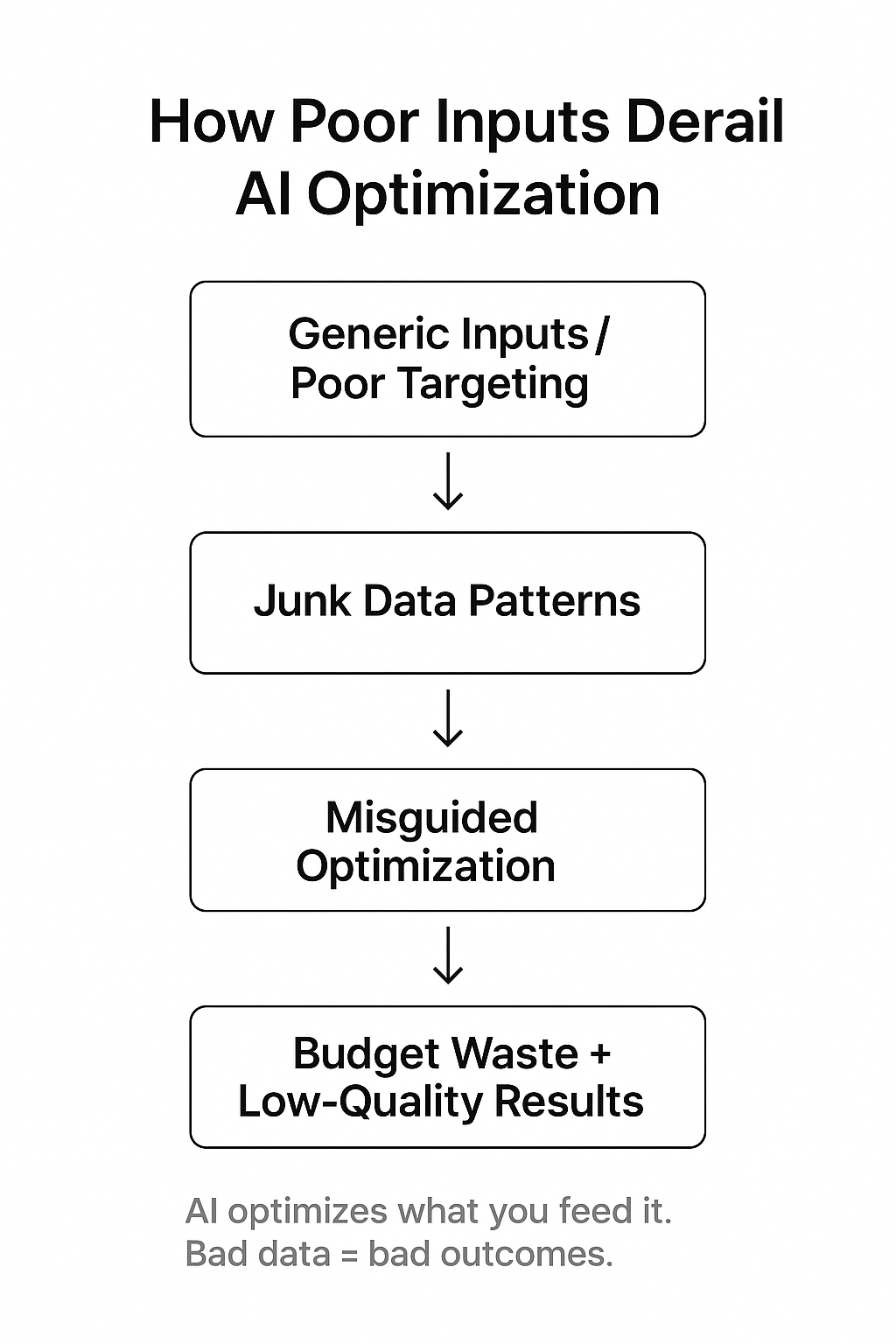
Here’s the problem: if your targeting signals are too broad, vague, or noisy, the AI ends up learning from junk data.
You’ll start seeing:
-
Random reach instead of relevant reach
-
High impressions but weak engagement
-
Conversions that never turn into real customers
What feels like optimization might just be the algorithm learning how to burn through budget faster.
If you're relying on built-in tools to do all the thinking, you may be missing smarter targeting opportunities. This breakdown of AI-powered Facebook targeting tools gives a peek at what works — and what doesn’t.
Better Inputs Start With Audience Quality
The biggest mistake? Expecting AI to fix poor audience targeting.
If you're handing the platform a generic interest like “marketing,” you're asking it to guess who your actual customer is. That’s like saying, “Show my ad to anyone breathing who’s vaguely interested in business.”
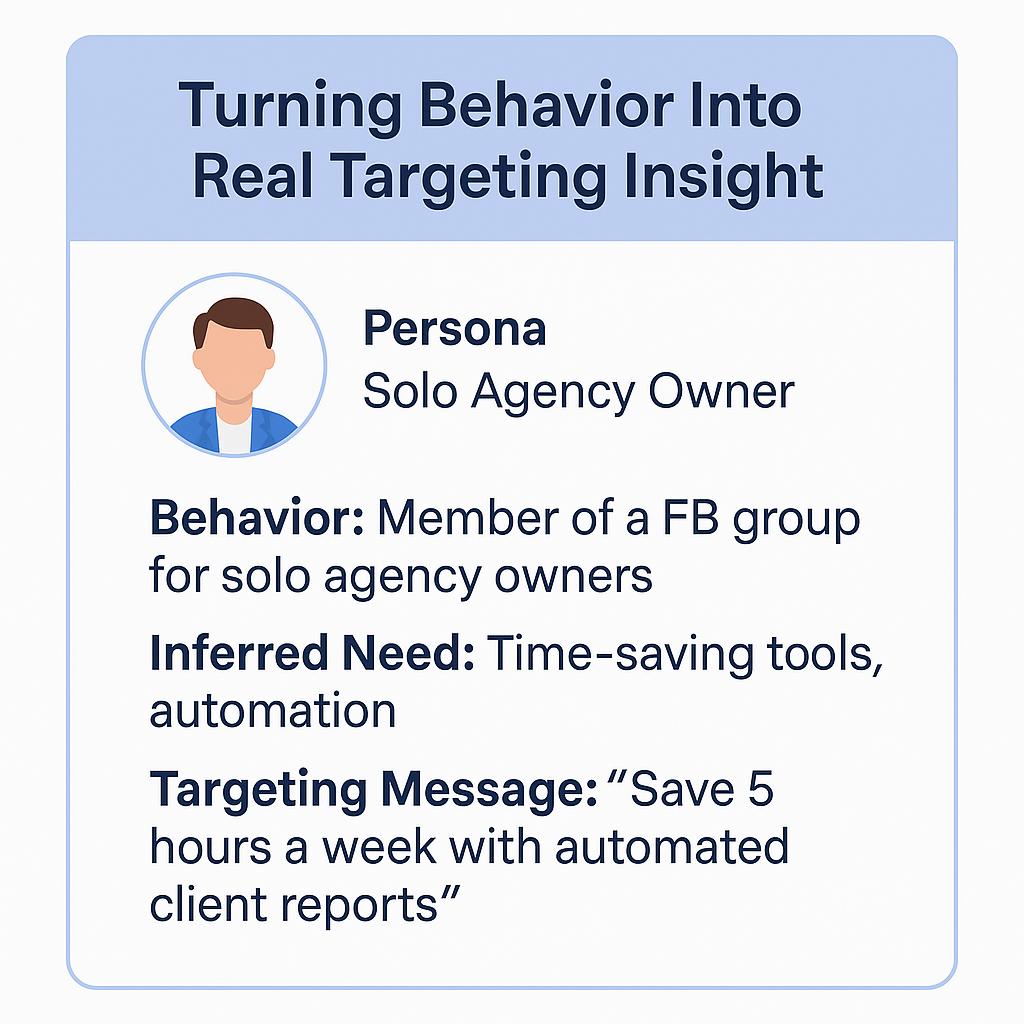
Want stronger results? Build audience inputs based on real behavioral signals — the kind that reflect actual intent and context.
Think in terms like:
-
Follows Instagram pages about workflow automation? → Might be struggling with internal processes
-
Member of a Facebook group for solo agency owners? → Likely wears multiple hats and needs tools to save time
-
Engages with content around pricing strategies? → Possibly exploring how to grow revenue
This is where audience intelligence and micro-niche targeting can outperform even AI-automated lookalikes.
Your Creative Is an Input, Too
AI doesn’t just learn from who you target. It learns from what you show them.
Your ads — especially the messaging, format, and hook — influence who clicks, who converts, and how the algorithm defines a “high-quality” user.
Let’s say you run a generic ad that promises “more leads for your business.” You’ll attract every kind of marketer, from freelancers to Fortune 500 consultants. You’ll get clicks, sure — but very few will be the right fit.
But change the message to something specific — like “Cut your client reporting time in half with these 3 dashboards” — and suddenly the quality of engagement changes. Now you’re pulling in agency operators, not tire-kickers.
What to check before you run ads:
-
Does the message filter out the wrong people?
-
Does the creative reflect the real pain point — or just the benefit?
-
Are your visuals aligned with your targeting or completely generic?
To refine creative faster, more marketers are experimenting with AI tools for generating text and visuals — but even these require strong guidance to work well.
The Feedback Loop Can Help or Hurt You
Once your ads run, the algorithm watches what happens — who clicks, who converts, who drops off — and adjusts accordingly.
That’s good if your initial data was sharp.
But if your audience was poorly defined or your creative was clickbaity? You’ve just built a feedback loop that rewards the wrong behavior. Over time, the system starts chasing the wrong people more efficiently.
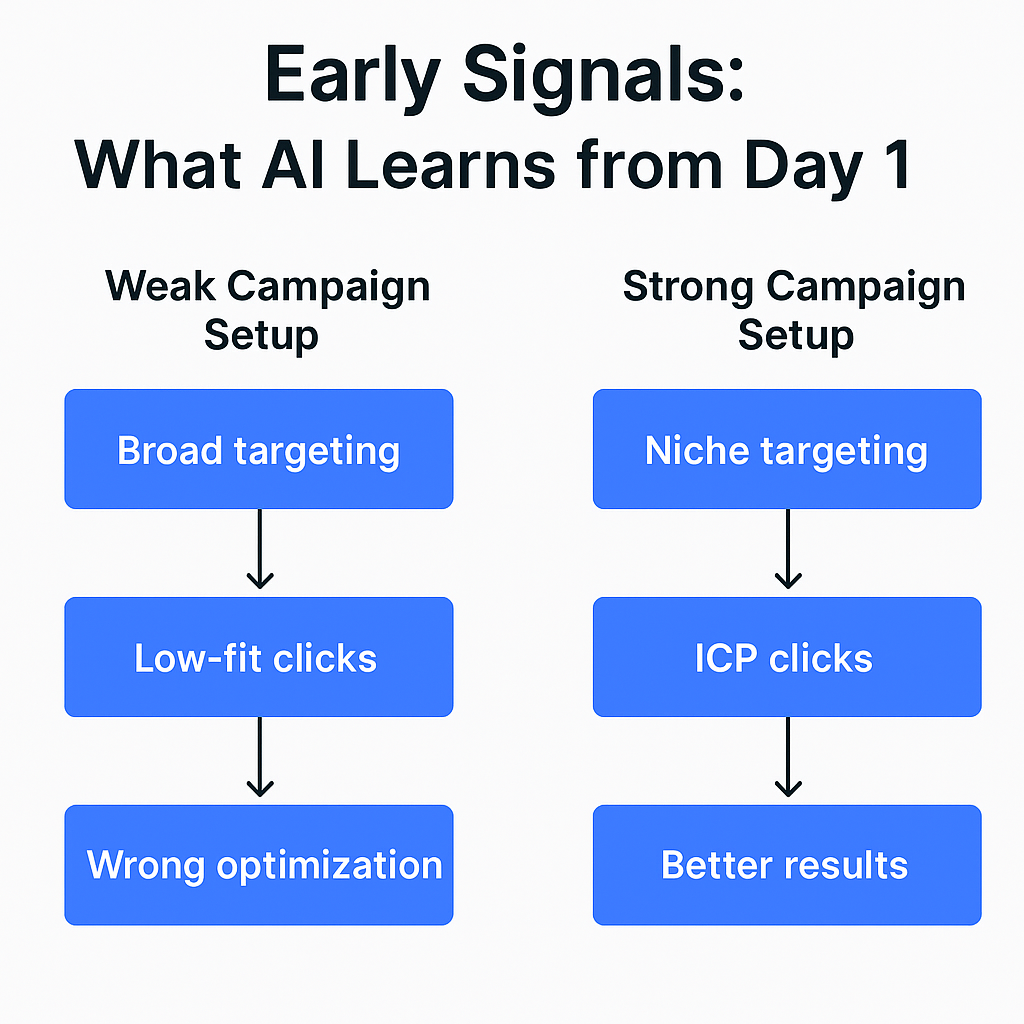
That’s why your early campaign structure matters so much. Don’t treat the first few days of a campaign like a throwaway test. They train the system.
Use early signals wisely:
-
Pause ads that get low-quality clicks, even if the CPC is cheap
-
Analyze post-click behavior — not just CTR
-
Split test your audiences and your messages, not just one or the other
If you’re seeing signs of misalignment, this guide on why Facebook ads fail due to targeting issues is worth revisiting.
You Can’t Delegate Strategy to the Algorithm
AI targeting isn’t a strategy. It’s a tool — and tools are only as good as the people using them.
If you hand off all thinking to the algorithm, you lose your biggest advantage: human insight.
Your job as a marketer isn’t just to pick settings and let things run. It’s to understand the real motivations behind your audience’s behavior, to spot nuance that platforms can’t detect, and to guide the machine toward better outcomes.
So before you launch another campaign and hope the AI "figures it out," ask yourself:
-
Have I defined exactly who I want to reach — and why?
-
Am I giving the system enough meaningful signals to learn from?
-
Will this creative attract the right kind of click, not just any click?
If the answer isn’t a confident “yes,” take a step back. The smarter move is to sharpen your inputs now — before the algorithm starts working against you.
For help defining targeting that actually feeds the algorithm well, this step-by-step audience targeting guide is a great reference.
Final Thoughts
AI is powerful. But it’s not magic.
The quality of your targeting, messaging, and strategy still matters — maybe more than ever. Because when you get lazy with inputs, AI doesn’t save you. It scales the mess.
Want better results? Start with better signals.
Because great campaigns don’t just target the right people. They start with the right thinking.