Instagram has evolved far beyond a single feed. It's now a network of content formats — each shaping how users behave, consume, and respond.
The two most prominent formats — Feed and Reels — attract the same users, but under different mindsets. This has major implications for advertisers.
What works in the Feed can fall flat in Reels. And if you’re running the same ads across both, you’re probably wasting impressions — and missing better results.
Let’s break down exactly how and why these two behaviors differ, and what that means for strategy, creative, and performance.
Feed Scrolling: Passive Browsing with Familiar Content
When someone scrolls their Instagram Feed, they’re engaging in a fairly passive activity. It’s often habitual — a quick check-in during breaks or downtime.
The content they see usually comes from people they already follow or have engaged with. There’s a sense of continuity and context.
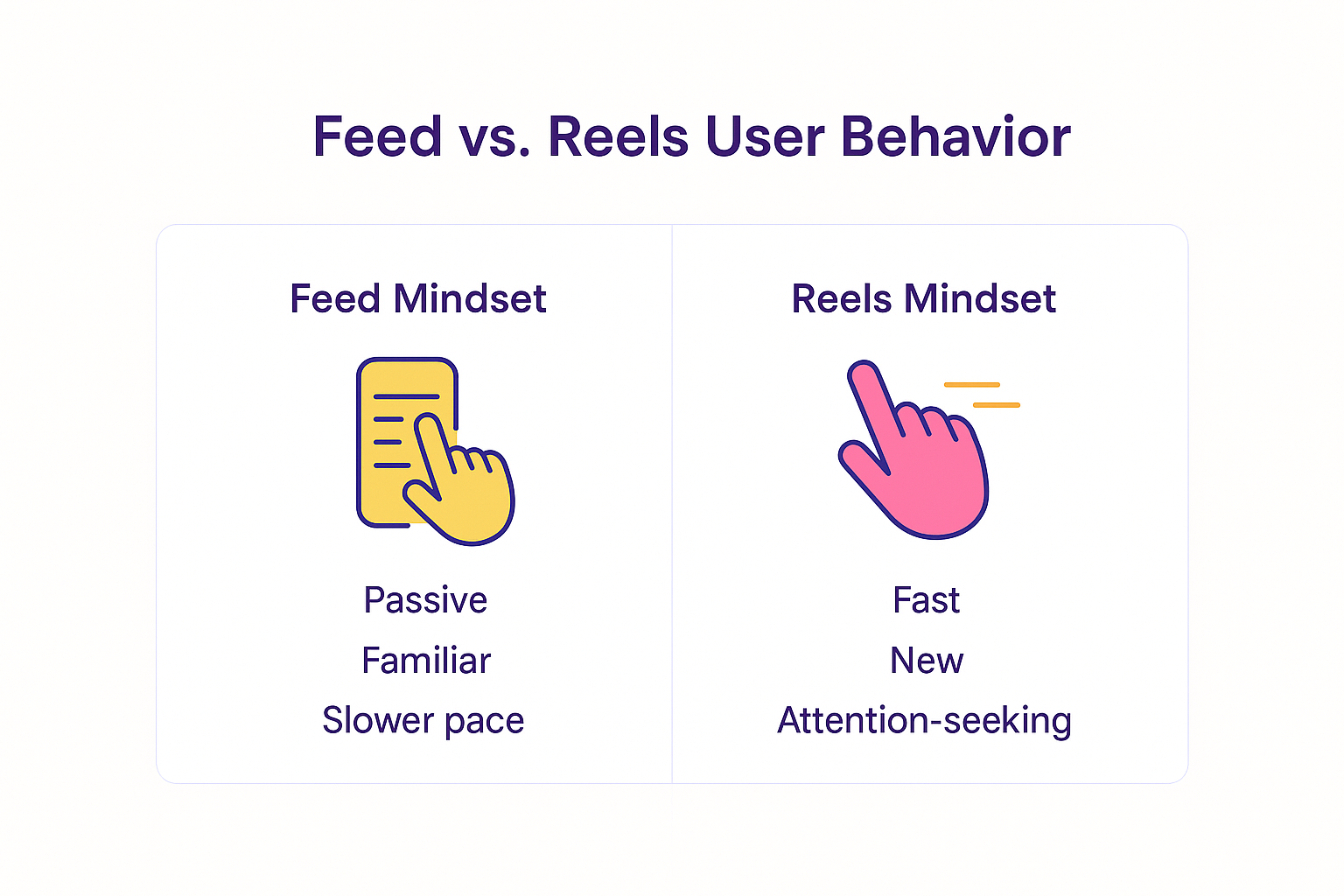
This shapes their expectations and behavior. In the Feed, users are more likely to:
-
Pause when something looks visually familiar or emotionally relevant.
-
Read longer captions if the opening line creates interest.
-
Swipe through multi-image carousels when the topic feels useful or story-driven.
-
Click on “Learn More” or “Shop Now” if the value proposition is clear.
Feed content allows for more depth. Viewers are willing to engage longer — if the content earns their attention without overwhelming them.
This makes the Feed ideal for mid-funnel messaging. Think: product education, customer proof, and light storytelling that builds trust over time.
Reels Swiping: High-Speed Discovery with Algorithmic Control
Reels operates differently — in both form and function. It mimics the TikTok model: short videos, endless scroll, and algorithm-powered discovery.
Here, users aren’t catching up with people they know. Instead, they’re actively open to new, interesting, or emotionally charged content.
Reels viewers aren’t browsing. They’re swiping quickly — looking for something that instantly hooks their attention. They expect each video to be self-contained and fast-moving.
Compared to Feed users, Reels viewers:
-
Expect motion within the first 1–2 seconds, or they’ll swipe away.
-
React better to trending audio, music, or voiceovers — sound is part of the experience.
-
Rarely read captions — the value needs to be delivered in-video.
-
Engage with content that feels organic, not overly polished or “ad-like.”
This environment rewards content that feels like entertainment — not explanation. Advertisers need to approach Reels like they’re creating content for a culture, not a campaign.
If you want to get the most from this format, check out How to Use Instagram Reels in Your Marketing Strategy for more actionable tactics.
Why Creative That Works in Feed Fails in Reels
Many brands make the mistake of recycling static images or slow-paced video content into Reels. It rarely works.
That’s because Feed viewers have more context. They might recognize your brand, see the logo, or remember a previous ad. Reels viewers don’t — and they don’t care unless you give them a reason.
To work in Reels, creative needs to respect the format.
Successful Reels ads usually:
-
Start with immediate visual motion, not static intros or logos.
-
Use bold, easy-to-read on-screen text to deliver the core message — even without sound.
-
Include music, a voiceover, or trending audio that fits the tone.
-
Deliver a full story or message in under 15 seconds.
-
Avoid long product demos or sales pitches — those can be used later in the funnel.
Think of Reels as the place to spark interest, not explain every detail.
The Algorithm: Different Signals, Different Reach
One of the biggest reasons behavior differs between Feed and Reels is how content is distributed.
The Feed is primarily relationship-based. You see posts from accounts you follow, with some algorithmic suggestions based on past behavior.
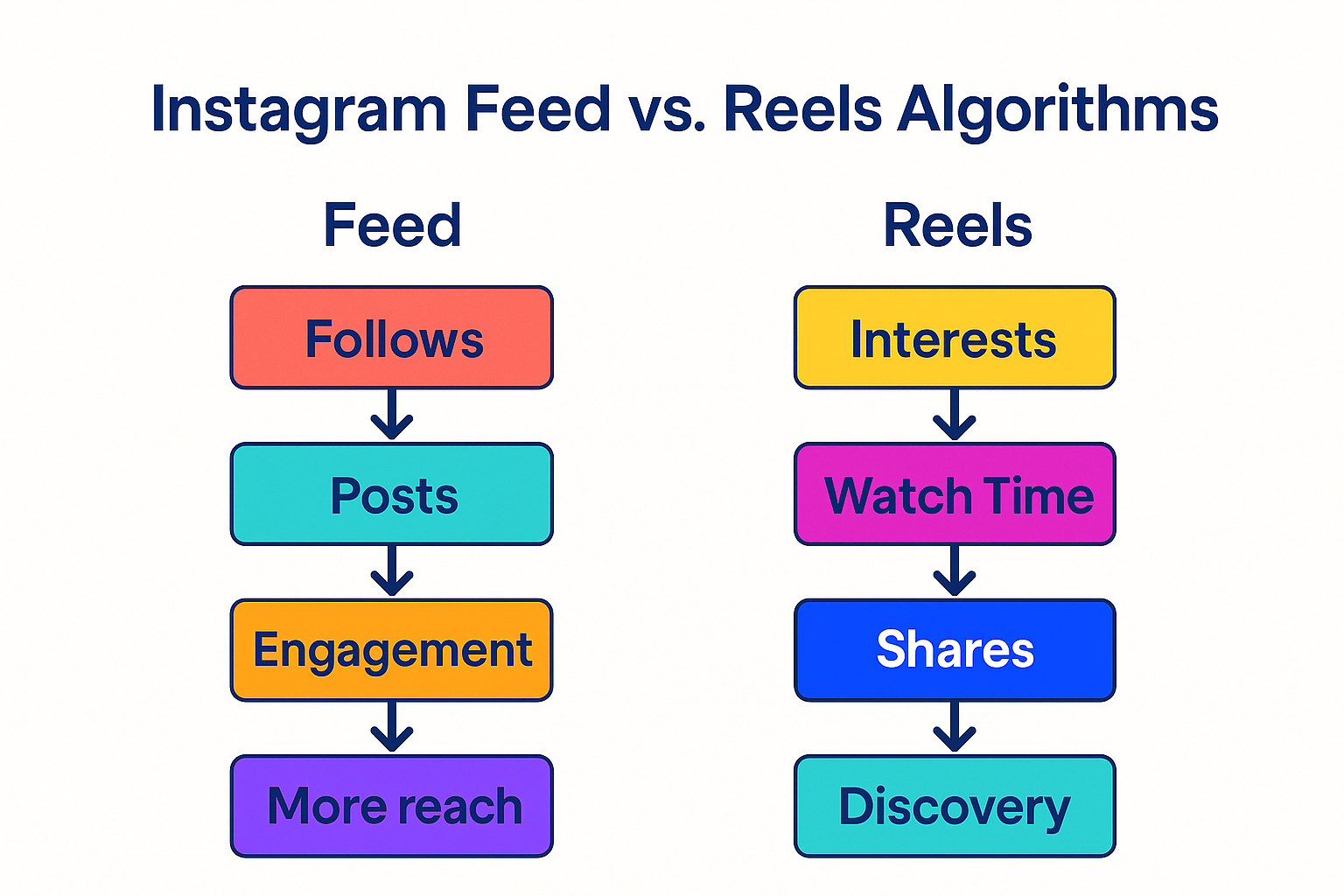
Reels is interest-based. It doesn’t care who you follow — it cares what people like you are watching and engaging with.
Because of this, targeting and delivery work differently.
In the Feed:
-
Content reaches people who are already somewhat familiar with your brand.
-
It’s influenced by follower behavior and previous post interactions.
-
You can use detailed targeting to reinforce existing brand familiarity.
In Reels:
-
You’re reaching a cold audience most of the time — discovery is the goal.
-
The algorithm prioritizes engagement signals like watch time, shares, and completion rate.
-
Audience targeting is broader, so creative needs to do the work of earning trust.
Your Feed content supports consideration. Your Reels content drives awareness. Use each accordingly.
How Attention Span Shapes Creative Structure
Feed and Reels aren’t just different formats — they create different cognitive environments.
In the Feed:
-
People expect to pause, look at an image, and maybe read.
-
They tolerate slower pacing if they feel the content is relevant.
-
Captions act as a supporting layer to visuals.
In Reels:
-
You have less than 3 seconds to earn a second longer.
-
There’s no “warming up” — the viewer either stops or swipes.
-
Everything must be conveyed within the video itself — captions are usually ignored.
So while Feed lets you build up to the message, Reels demands you lead with it.
If your first 2 seconds don’t immediately deliver interest, movement, or emotion — the viewer is already gone.
Feed Builds Consideration. Reels Sparks Discovery.
Understanding where each format fits into the customer journey can guide how you structure your campaigns.
Use Instagram Feed for:
-
Retargeting warm audiences who already follow or visited your site.
-
Explaining product features or sharing user stories.
-
Promoting in-depth content like blog posts or case studies.
Use Instagram Reels for:
-
Reaching new audiences who haven’t seen your brand before.
-
Starting the relationship with high-impact visuals or emotional storytelling.
-
Testing fast-moving, trend-aligned creatives.
Want to revisit how to define a sharper audience before crafting your funnel? This step-by-step targeting guide is a solid foundation.
Let Reels pull people in — and use Feed to keep them engaged over time.
Practical Strategy: How to Use Both Formats Effectively
Treating Reels and Feed the same leads to weak results. Here’s how to structure your efforts more strategically:
Separate your ad sets.
Use one for Reels placements and one for Feed. Optimize creative and budget independently.
Build creative natively.
Design each piece for the environment it's shown in — don't just resize videos.
Use different metrics for success.
For Reels, track:
-
3-second and 15-second view rates.
-
Swipe-through and completion percentages.
-
Profile visits and shares.
For Feed, focus on:
-
Click-through rate and time on post.
-
Engagement rate (likes, saves, comments).
-
Conversions and add-to-cart actions.
Create a funnel structure.
Use Reels to attract attention, then retarget with Feed content that informs and converts.
Final Thoughts
Instagram Reels and Feed are not just different containers for content — they create different experiences, expectations, and behaviors.
Reels viewers want surprise, speed, and visual storytelling. Feed scrollers want relevance, clarity, and thoughtful pacing.
To get the most from your Instagram ad spend, align your strategy to fit how people actually behave — not how the platform looks from the outside.
Because when you match message to mindset, format to function, and creative to context, your content doesn’t just get seen — it gets remembered.