Many Facebook advertisers assume any movement is enough to make video ads perform better than static creative.
That usually creates a different problem.
The ad technically contains video, but the footage feels generic, repetitive, or visually inactive. Users notice movement without feeling interested enough to stop scrolling.
The result is weak engagement, lower CTR, rising CPA, and poor conversion quality — even when the offer itself is strong.
The Problem: Generic Footage Creates Invisible Ads
A lot of Facebook video ads fail because the footage looks interchangeable with everything else in the feed.
This often happens when brands rely too heavily on:
- stock-style product shots;
- repetitive lifestyle clips;
- slow talking-head footage;
- wide shots without visual focus.
Nothing inside the ad creates tension, curiosity, or visual contrast.
Users process the creative passively and continue scrolling before the value proposition fully appears.
That becomes a serious performance issue because Meta optimizes around engagement quality. If users ignore the ad early, delivery efficiency weakens over time.
Why Basic Video Footage Hurts CTR and CPA
Facebook and Instagram feeds are highly competitive visual environments. Users constantly move through Reels, creator content, Stories, UGC clips, and short-form entertainment with fast pacing.
Basic footage struggles in that environment because it lacks interruption value.
Weak footage usually causes:
- low hold rates;
- shorter watch time;
- weaker click intent;
- lower engagement quality.
Over time, those signals often push CPM and CPA higher because Meta sees limited audience response.
This is why advertisers spend so much time designing Facebook ads that stop fast scrollers. Feed competition is visual before it becomes strategic.
Why “Professional” Video Often Performs Worse
Many polished Facebook video ads fail because they prioritize aesthetics over attention.
A cinematic product video may look expensive while still feeling slow or emotionally flat inside the feed.
This usually happens when:
- scenes stay unchanged too long;
- movement lacks purpose;
- framing feels too safe;
- visuals never create emphasis.
Users do not reward production quality automatically. They reward stimulation, clarity, and progression.
That is why understanding what people notice first in Facebook ads matters more than simply improving production value.
The Solution: Create Visual Contrast Faster
Most underperforming Facebook video ads improve when the footage becomes more visually intentional. The goal is not adding random motion. The goal is making the creative feel active enough to compete inside the feed.
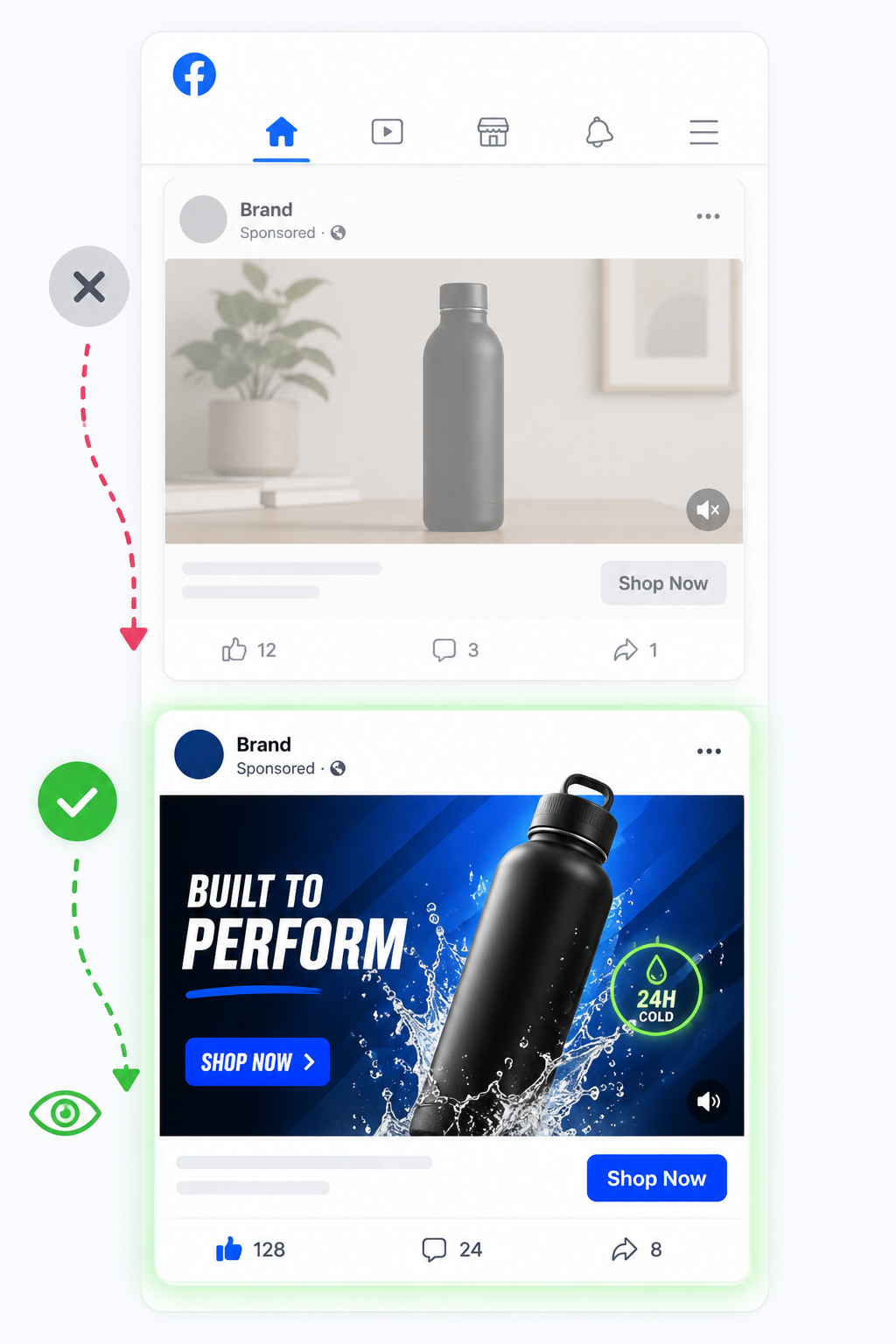
Simple improvements often work well:
- tighter scene changes;
- stronger close-up framing;
- movement around the focal point;
- clearer visual progression.
For example, LeadEnforce campaigns explaining audience targeting often perform better when segmentation workflows, engagement filtering, or audience-building processes appear dynamically on screen instead of relying on generic dashboard footage.
Movement with context feels more valuable than movement alone.
Why Motion Graphics Often Fix Weak Footage
Many advertisers think weak footage requires expensive reshoots.
Usually, it does not.
Simple motion graphics often improve low-energy creative dramatically because they introduce visual rhythm and attention direction. Animated headlines, zoom effects, interface movement, and kinetic typography can make ordinary footage feel significantly more engaging.
That is why many advertisers improve results by using motion graphics to improve Facebook ad engagement.
The footage itself does not always need to change. The perception of movement does.
Final Takeaway
Facebook video ads become easy to ignore when the footage feels visually passive.
Users notice movement, but they do not feel enough tension, contrast, or progression to keep watching. That weakens engagement signals, lowers CTR, and eventually raises CPA.
The fix is rarely “better cameras” or more expensive production.
It is usually:
- stronger visual contrast;
- clearer focal points;
- faster pacing;
- more intentional movement.
The best Facebook video ads do not simply contain footage. They make the footage feel impossible to ignore.