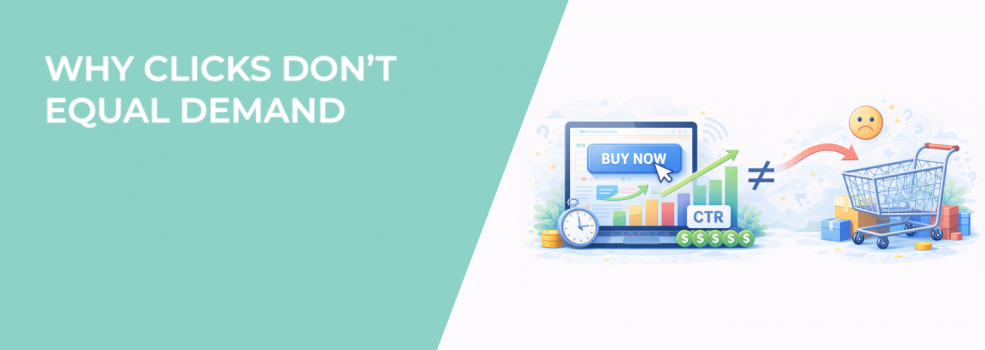
You’ve probably seen it before. A Facebook or Instagram ad with a great click-through rate, low cost-per-click, and thousands of visits.
But then — nothing. No sales. No leads. Just traffic that doesn’t convert.
This isn’t just frustrating. It’s a sign that you’re measuring the wrong thing.
Clicks Are Easy to Get. Demand Is Not.
Clicks are cheap, especially on social platforms. The algorithms are trained to get them fast. But what most advertisers miss is this:
Clicks don’t signal buying intent.
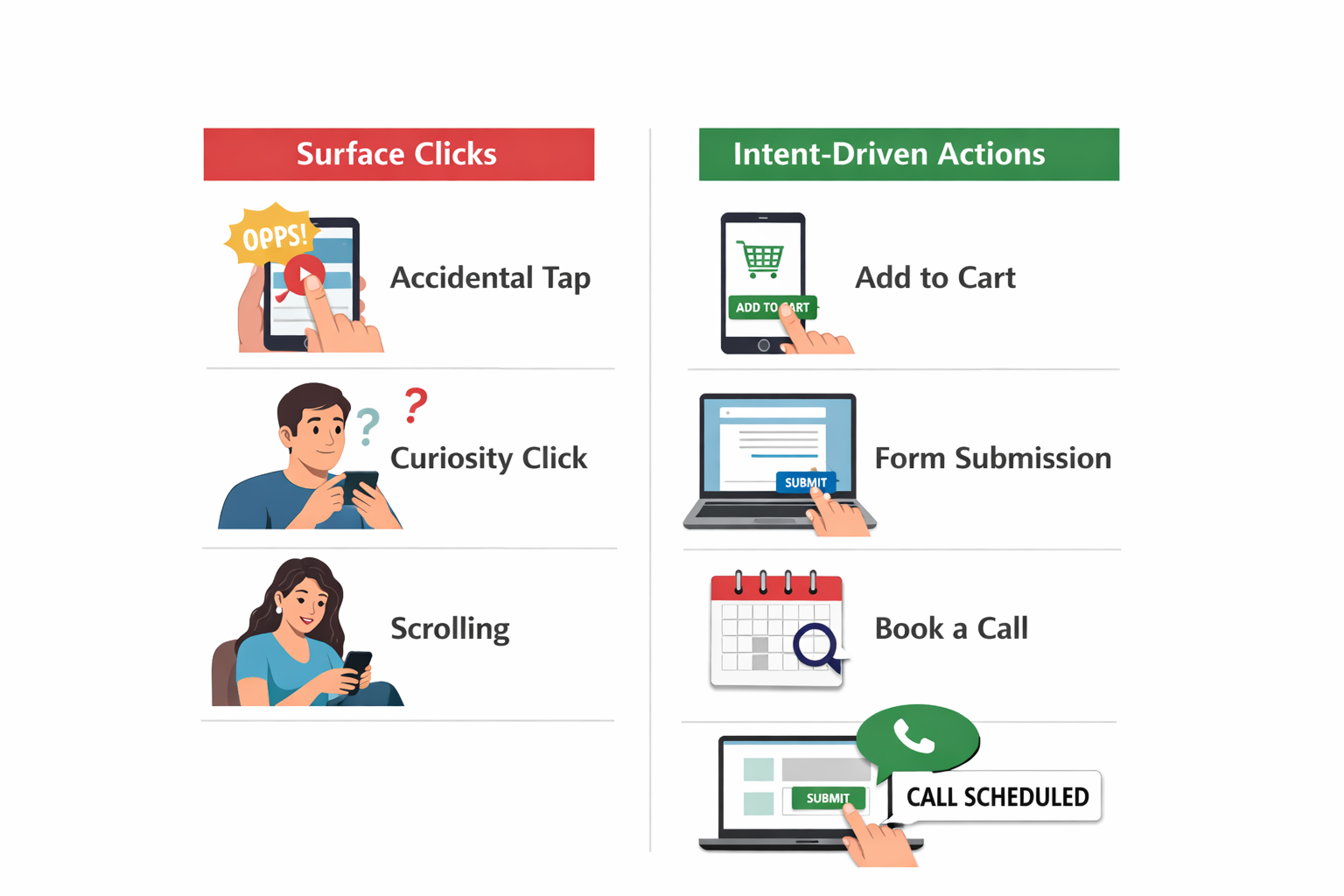
Here’s what often counts as a “click” in your ad metrics:
-
A user taps your ad by accident while scrolling on a phone.
-
Someone clicks out of curiosity without reading the headline.
-
A user likes the visual but doesn’t care about the offer.
These are not potential buyers. They’re just passersby. If your campaigns optimize for clicks alone, you’ll fill your funnel with people who were never interested in the first place.
For a deeper breakdown of which Facebook metrics actually reflect profitability, see this full guide.
Attention ≠ Intent
Yes, your ad needs to stop the scroll. But that’s not enough.
Getting attention is a surface-level win. Demand means someone sees your offer and feels a reason to act on it.
Let’s compare:
| What Attention Looks Like | What Demand Looks Like |
|---|---|
| User watches 3 seconds of a video | User watches 80% of a video and clicks |
| Curious click on an ad headline | Adds product to cart or downloads a guide |
| Saves the ad for later | Submits a form, asks a question, books a call |
If you only track attention, you’ll miss the signs that actually lead to revenue.
The Wrong Metrics Will Mislead You
Most ad platforms encourage you to optimize for easy-to-hit metrics like CTR or CPC. But those don’t show real performance.
A click doesn’t equal a lead. A low CPC doesn’t mean the traffic is qualified. And a high engagement rate doesn’t guarantee conversions.
Instead, watch the metrics that map to real intent and downstream results:
-
Qualified lead rate — How many leads actually match your ICP (ideal customer profile)?
-
Time on page — Are users staying long enough to read your offer?
-
Scroll depth or button clicks — Are they engaging with the content, not just bouncing?
-
Post-click behavior — Do they view pricing, initiate checkout, or sign up?
Many campaigns that look successful on the surface fail beneath it. To explore how seemingly “good” ad metrics can still hide poor performance, read Ad Metrics That Lie.
Creative That Drives Demand Looks Different
Most ads are designed to win attention. Few are built to generate demand. That’s why so many creative teams celebrate high engagement and low costs, while sales teams stay silent.
The difference is in the strategy behind the visual.
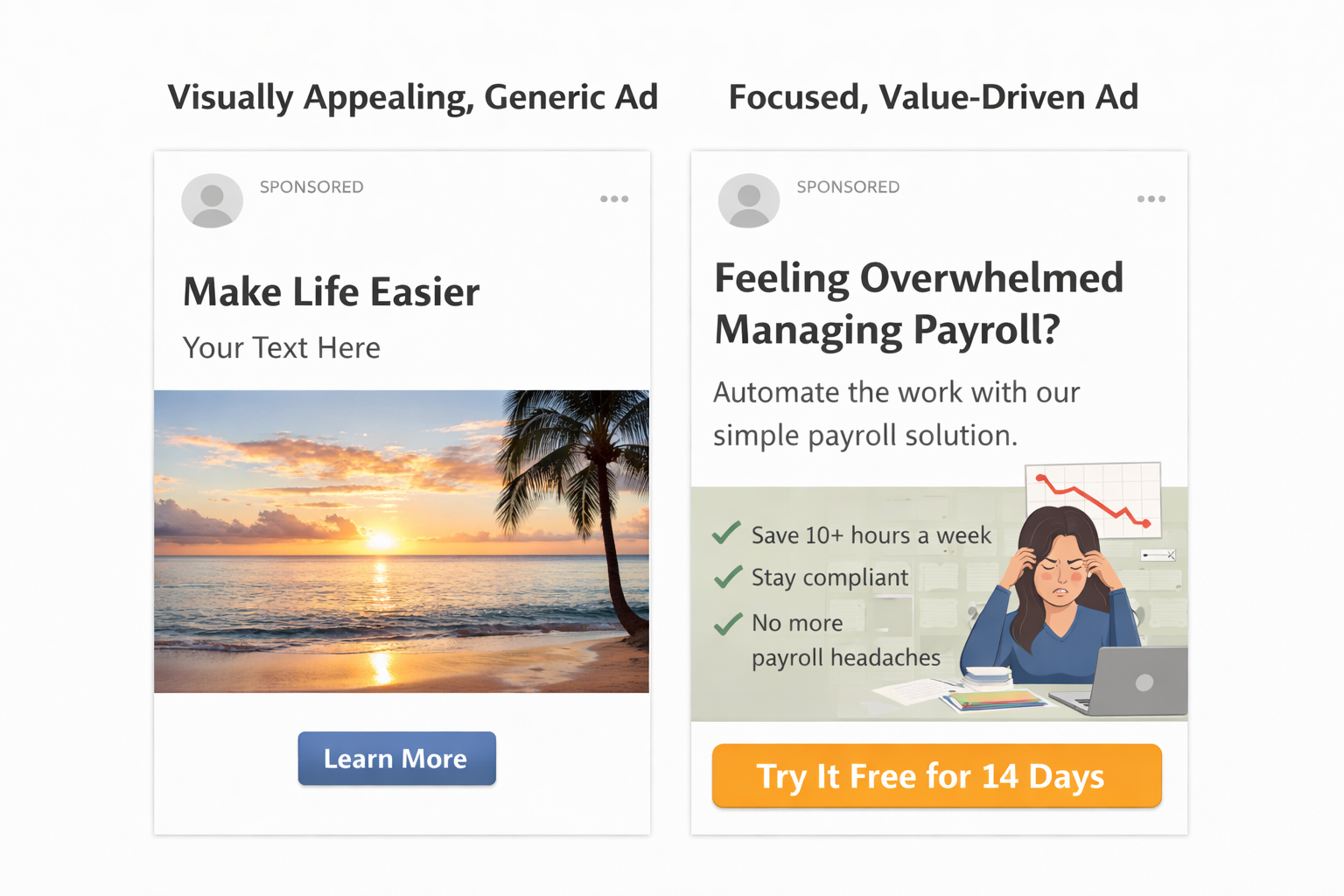
A demand-driving creative should:
-
Frame the offer with context — For example, show why this service matters now (Q1 budget, seasonal timing, etc.).
-
Prequalify the viewer — Speak directly to a problem only your target customer would recognize.
-
Reduce friction — Remove vague headlines and give a clear next step.
This doesn’t mean your creative has to be boring. But it has to be intentional. Cool visuals don’t matter if they attract the wrong audience.
Build Audiences Around Behavior, Not Just Interests
Targeting broad interest groups might get you volume. But intent lives in behavior.
Facebook and Instagram offer multiple layers of behavioral data you can use to build higher-quality audiences.
Start with signals like:
-
Viewed 75% or more of a video ad — a sign of real engagement.
-
Opened but didn’t complete a lead form — a near-miss with warm intent.
-
Engaged with your product page on Instagram — saved, shared, or messaged.
These actions are more predictive than general interests like “marketing” or “fitness.” They reflect actual user behavior in response to your content.
If your ads are attracting the wrong people, the problem isn’t the platform — it’s the targeting. See how to fix audience misalignment and start building demand from the right segments.
When Clicks Don’t Convert: What To Check First
Clicks with no conversions can point to deeper issues. Before assuming the offer is broken, run through this short diagnostic:
-
Audience mismatch
Are you targeting people who need what you’re offering, or just those who might find it interesting? -
Landing page disconnect
Does the page match the message in the ad? Is the value clear in the first 5 seconds? -
Offer clarity
Is the benefit obvious, and does it address a specific need? Is the CTA frictionless? -
Creative expectation setting
Does the ad set up what the user will see next, or does it bait and switch? -
Tracking gaps
Are you measuring only the click, or are you watching what happens after?
Often, it’s a combination of small gaps across these areas that lead to large performance drop-offs.
Final Thoughts
Clicks are surface metrics. Alone, they tell you very little. You need to track behavior, intent, and meaningful action.
The best-performing advertisers will be those who:
-
Understand the difference between interest and intent.
-
Align creative, offer, and audience from the first impression.
-
Optimize not for volume, but for qualified demand.
If you want predictable revenue, don’t stop at the click. Use it as the first step — not the goal.