Scaling Facebook ads isn’t just about raising budgets. Done carelessly, it leads to unstable performance, inflated CPMs, and wasted spend. Done right, it allows for predictable, profitable growth — without losing control of your results.
This guide walks through a practical 3-step method for scaling safely. It’s written for advertisers, marketers, and business owners who want results they can actually sustain.
Step 1: Make Sure Your Baseline Is Solid
Scaling begins with one question: is what you're running right now actually working?
Many advertisers jump into scaling too early and magnify campaigns that are already breaking down. You need stability before growth.
How to Know If Your Campaign Is Ready
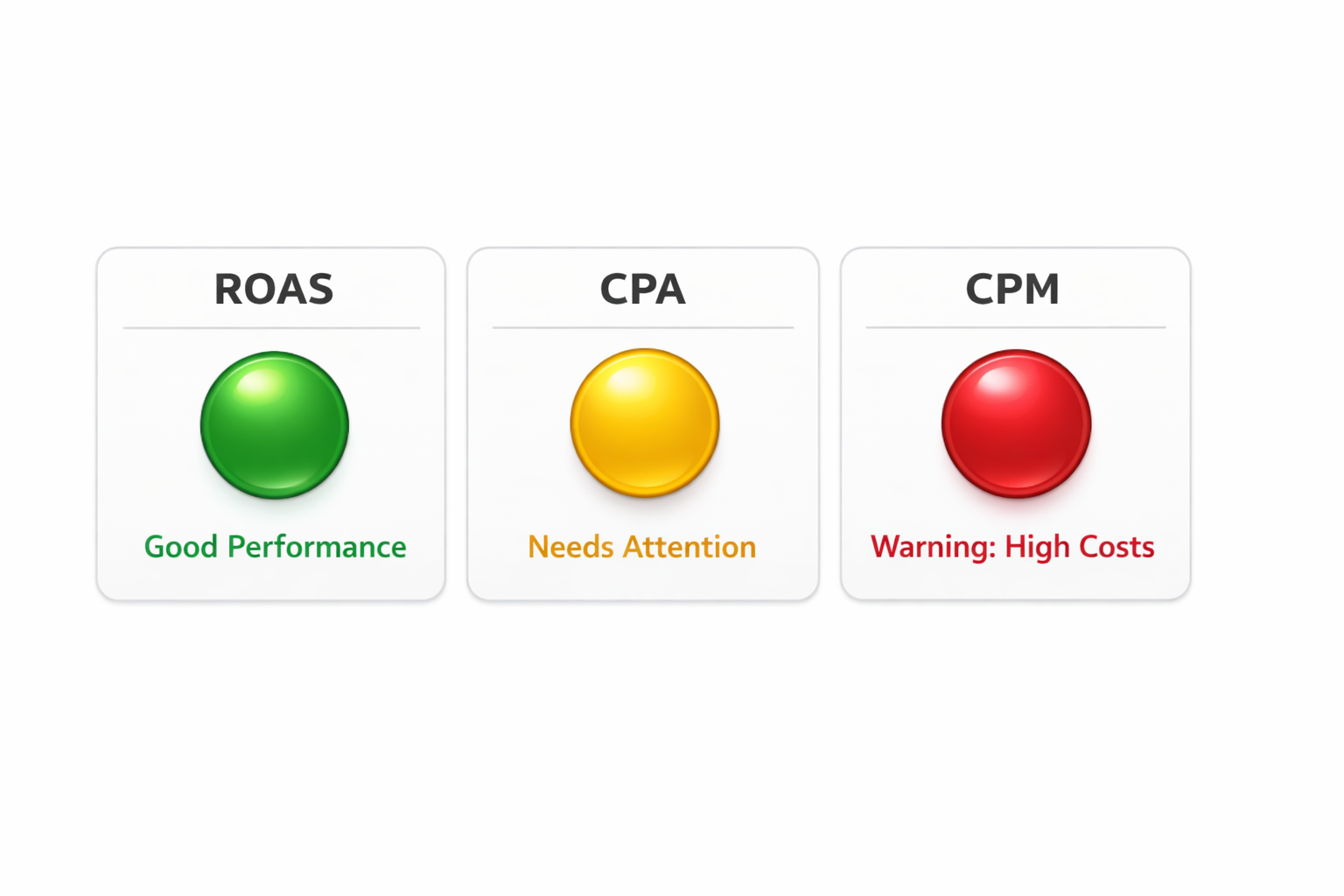
These are the minimum indicators of a stable campaign. Look for them over a consistent 3 to 5 day window:
-
Return on ad spend (ROAS) is within your target range — and not fluctuating wildly.
-
Cost per result (CPA) and cost per 1,000 impressions (CPM) are holding steady — not rising day by day.
-
Daily conversions are consistent — not just driven by one good day or an outlier audience.
If those numbers check out, you’re scaling something predictable — not something lucky.
Still unsure? This checklist of 3 hidden metrics will help you look deeper before committing spend.
Fix These Issues First
Scaling will amplify whatever is already happening — good or bad. Address these problems before you touch the budget:
-
Creative fatigue: Falling CTR and rising frequency mean your ad is overexposed. Swap in new creatives or angles.
-
Audience overlap: When ad sets compete for the same audience, CPMs climb. Use the audience overlap tool to check for conflicts.
-
Tracking errors: A missing pixel event or double-counted conversion throws everything off. Double-check in Events Manager.
Step 2: Choose the Right Scaling Strategy
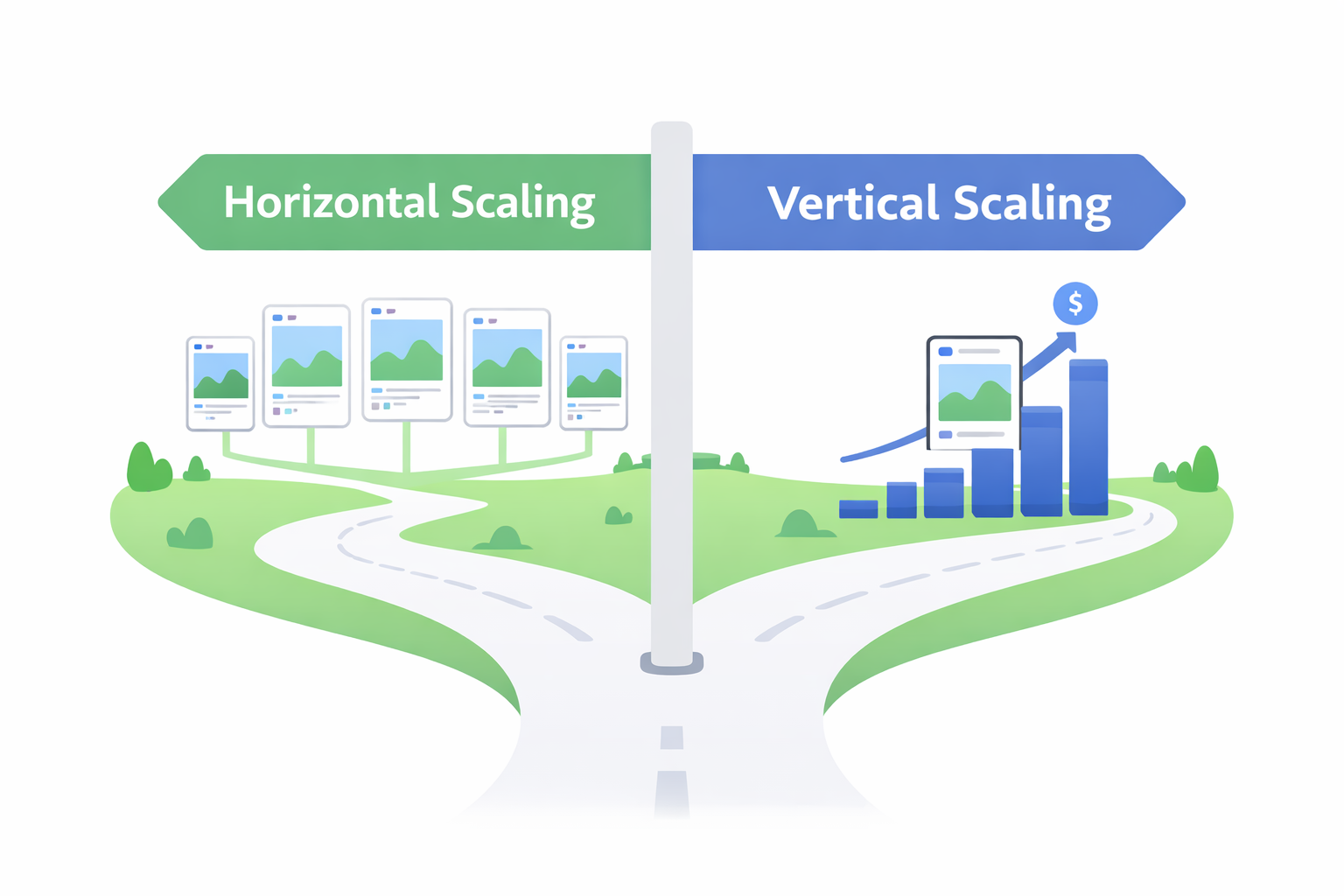
There are two primary ways to scale: horizontal and vertical. Both can work — the key is choosing based on how your campaign is structured.
Horizontal Scaling — Add New Ad Sets
With horizontal scaling, you increase your reach by adding new audiences or variations — not by raising the budget on existing ad sets.
Use this when:
-
You have multiple high-performing creatives you want to test across different audiences.
-
You want to expand to new placements or geographies without touching your control group.
-
You’re trying to reduce risk by spreading budget across multiple ad sets.
Examples of horizontal scaling:
-
Duplicate a winning ad set, and target a new interest-based or lookalike audience.
-
Create separate ad sets for Feed, Reels, and Stories — and tailor your creative to each.
-
Launch new ad sets focused on a specific geo, language, or demographic segment.
This method keeps your current performance stable while testing for new opportunities.
Vertical Scaling — Increase Budgets Inside a Winning Ad Set
Vertical scaling is about increasing budget inside a top-performing ad set. It’s faster, but less forgiving.
To reduce risk:
-
Increase your budget in small steps — 10 to 20 percent at a time.
-
Wait 48 to 72 hours after each increase before making another.
-
Avoid changes during or right after the learning phase.
Scaling too fast resets learning and drives up acquisition costs — sometimes permanently. Make small moves, and let the algorithm adapt.
If you're not sure whether now is the right time to scale, pause, or stop altogether, use this decision-making guide to evaluate risk and timing.
Step 3: Monitor, Adjust, and Scale in Cycles
Once you start scaling, the work doesn’t stop. In fact, this is where most advertisers fall behind. Scaling requires constant adjustment — not guesswork.
What to Monitor Daily
These are the key metrics to watch while scaling:
-
ROAS: If it dips sharply after a budget increase, you may have scaled too soon.
-
CTR and CPC: Lower engagement and higher costs usually mean your creative is losing relevance.
-
Frequency: If this creeps above 2.5 for cold audiences, it’s time to refresh.
-
Conversion rate: Declining conversion rates can mean mismatched creative or a landing page bottleneck.
Review performance by ad set, not just campaign-wide. Look at daily data, not just 7-day averages — you’ll spot problems earlier.
Use Automation to Limit Downside
You can use rules in Ads Manager to protect budget during scaling:
-
Pause an ad set if ROAS drops below a set number for more than 2 days.
-
Cut budget by 20 percent if CPA rises above your max threshold.
-
Send a notification if CPM rises by 30 percent in a day.
Automation won’t replace strategy — but it gives you a safety net. Here’s a guide to using automation effectively while scaling.
Keep Testing While You Scale
Your creative strategy is what makes scaling sustainable. Ads that work today will fade — and without testing, you’ll stall.
What experienced advertisers do:
-
Launch at least one or two new creatives per week, even if current ads are strong.
-
Test format changes — like video vs. static, carousels vs. single image — to learn what resonates.
-
Build creative variations from a common theme — not just isolated one-off ads. It allows faster testing and reuse across audiences.
Scaling works when you feed the algorithm constant, high-quality inputs — especially fresh creative.
Final Thoughts
Scaling Facebook ads safely is about discipline, not shortcuts.
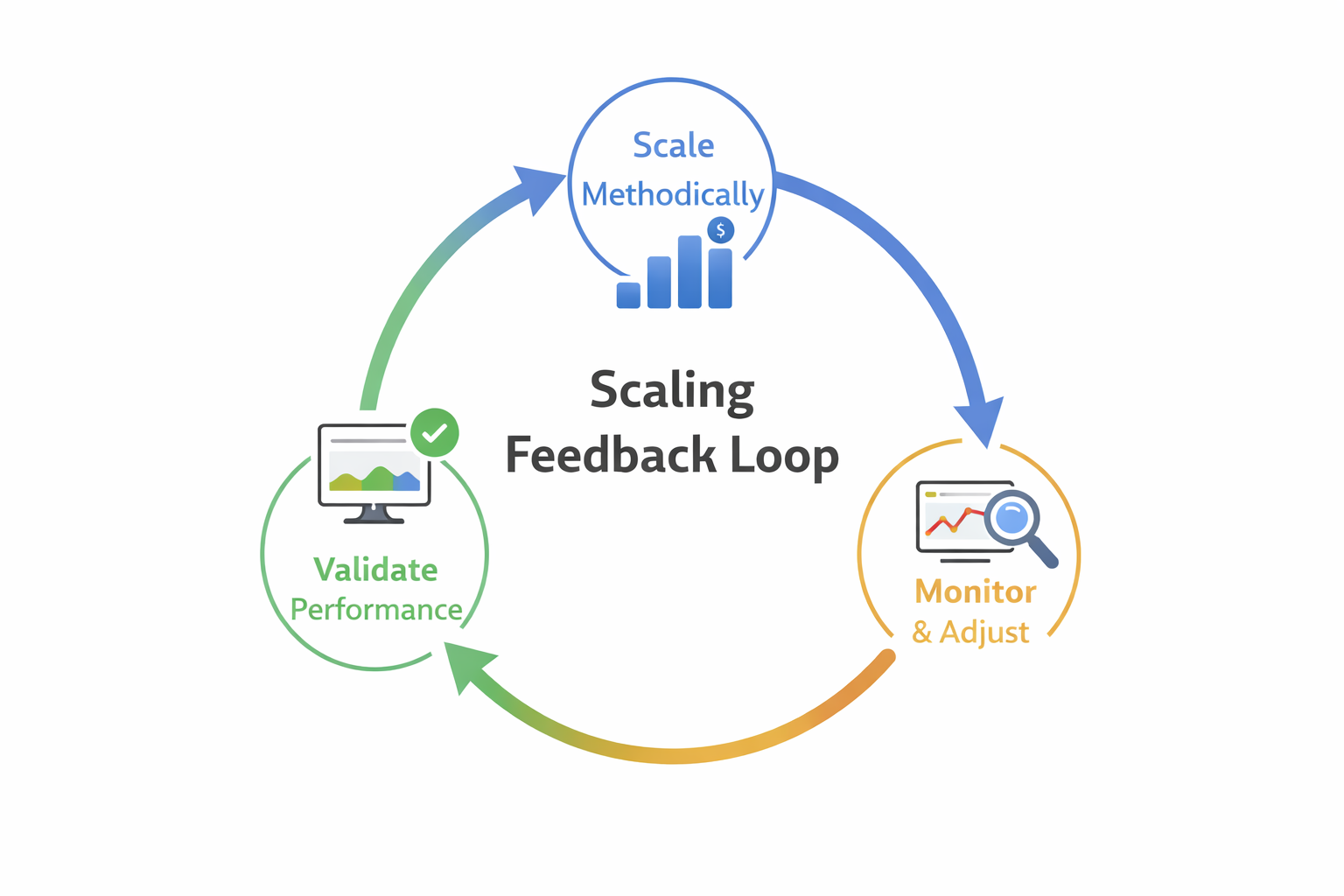
To recap:
-
Validate performance before you scale — not while scaling.
-
Pick the right method — horizontal for expansion, vertical for deepening.
-
Monitor and refine — scaling isn’t one decision, it’s a continuous loop.
The best results come when scaling is structured — not emotional. Take your time, read the signals, and scale only when the system is ready.
If you follow this approach, growth doesn’t just get bigger — it gets smarter.