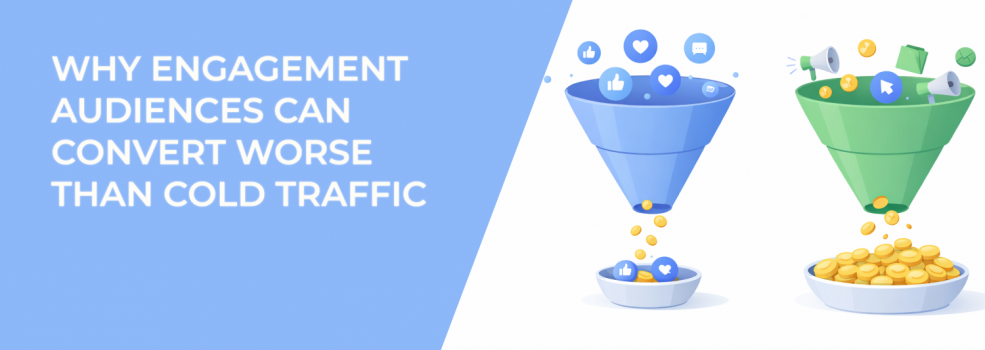
Many advertisers assume engagement audiences should outperform cold targeting. If someone has already watched your video, liked a post, or clicked on your ad, it seems logical that they would be closer to purchasing.
In practice, the opposite often happens. Engagement audiences frequently convert worse than cold traffic, even though they appear warmer on the surface.
The reason lies in how engagement signals are created and how Meta’s delivery system interprets them. Once you examine these mechanics, it becomes clear why engagement-based retargeting sometimes produces disappointing results.
Engagement Signals Often Represent Attention, Not Buying Intent
Most engagement audiences are built from actions that are extremely easy for users to perform inside the feed.
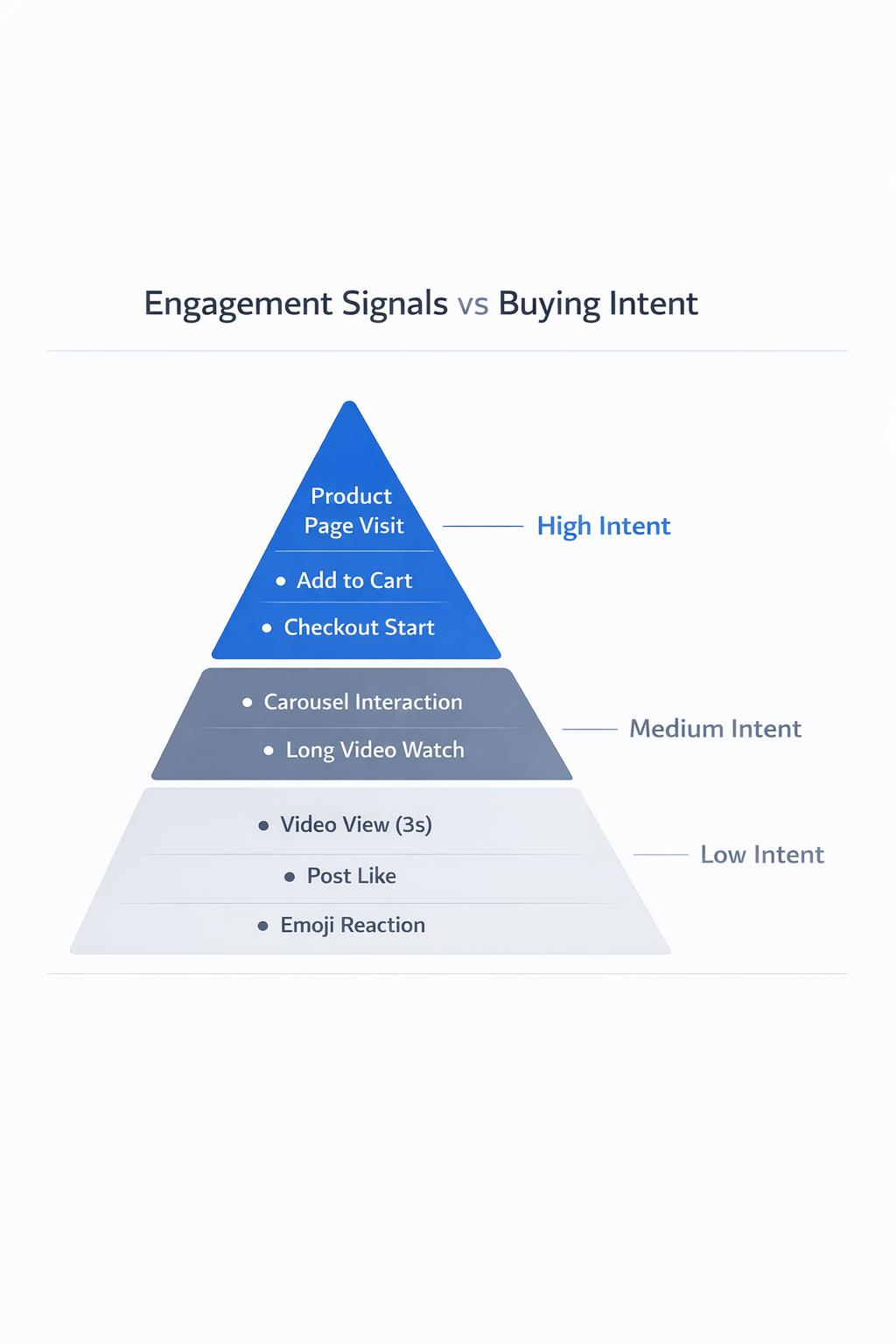
Common engagement signals include:
-
Video views, where someone watches a few seconds of a video while scrolling. Many users watch short clips automatically without evaluating the product or service being advertised.
-
Post reactions, such as likes or emojis. These often reflect momentary interest in the content rather than interest in purchasing.
-
Ad clicks without deeper interaction, where the user taps the ad but leaves the landing page almost immediately.
-
Instagram profile visits, which may occur simply because the creative looked interesting in the feed.
These interactions generate engagement signals that look meaningful in Ads Manager but often represent casual curiosity rather than product evaluation.
You can usually detect this pattern by comparing engagement metrics with on-site behavior. For example, an ad might produce thousands of video views or reactions while generating only a small number of product page visits or add-to-cart events.
When engagement audiences contain mostly passive viewers, retargeting campaigns struggle to produce conversions.
If you want a deeper overview of how engagement audiences are structured, see Using Facebook Engagement Custom Audiences to Find Your Best Leads.
Social Feed Behavior Creates Low-Intent Engagement
Another structural issue comes from how people behave while browsing social media.
Users often interact with content during casual scrolling. They might like a post, open a carousel, or watch a short video without ever intending to research the product.
These lightweight interactions accumulate quickly, which can make engagement audiences appear large and valuable.
However, several diagnostic signals usually reveal the true nature of these audiences:
-
High engagement volume paired with low website traffic. If many users react to posts but only a few visit the website, most engagement likely came from passive browsing.
-
Short session duration from social traffic. Users who leave the site after a few seconds often clicked out of curiosity rather than purchase interest.
-
Large engagement audiences with little overlap with site visitors. This suggests the audience contains people who interacted with content but never explored the product.
Cold campaigns optimized for conversions avoid this problem because Meta evaluates users based on historical purchasing behavior, not simply social interactions.
For a broader explanation of how audience types behave across campaigns, see The Complete Guide to Warm, Cold, and Custom Audiences in Meta Ads.
Engagement Audiences Become Saturated Quickly
Engagement audiences are usually much smaller than cold targeting pools. Because the number of users is limited, campaigns often reach the entire audience very quickly.
This typically creates a recognizable pattern in Ads Manager:
-
Frequency rises rapidly, sometimes exceeding three or four impressions per user within a few days.
-
Click-through rates begin to decline, as users see the same ads repeatedly.
-
Cost per conversion increases, even though the targeting has not changed.
The reason is simple. The most interested users convert early, leaving behind a large group of people who already decided not to buy.
Once that point is reached, the campaign continues spending on the same individuals even though their purchase probability is low.
Cold campaigns behave differently. Because the audience is much larger, Meta can continuously explore new users instead of repeatedly serving ads to the same group.
Long Engagement Windows Introduce Stale Signals
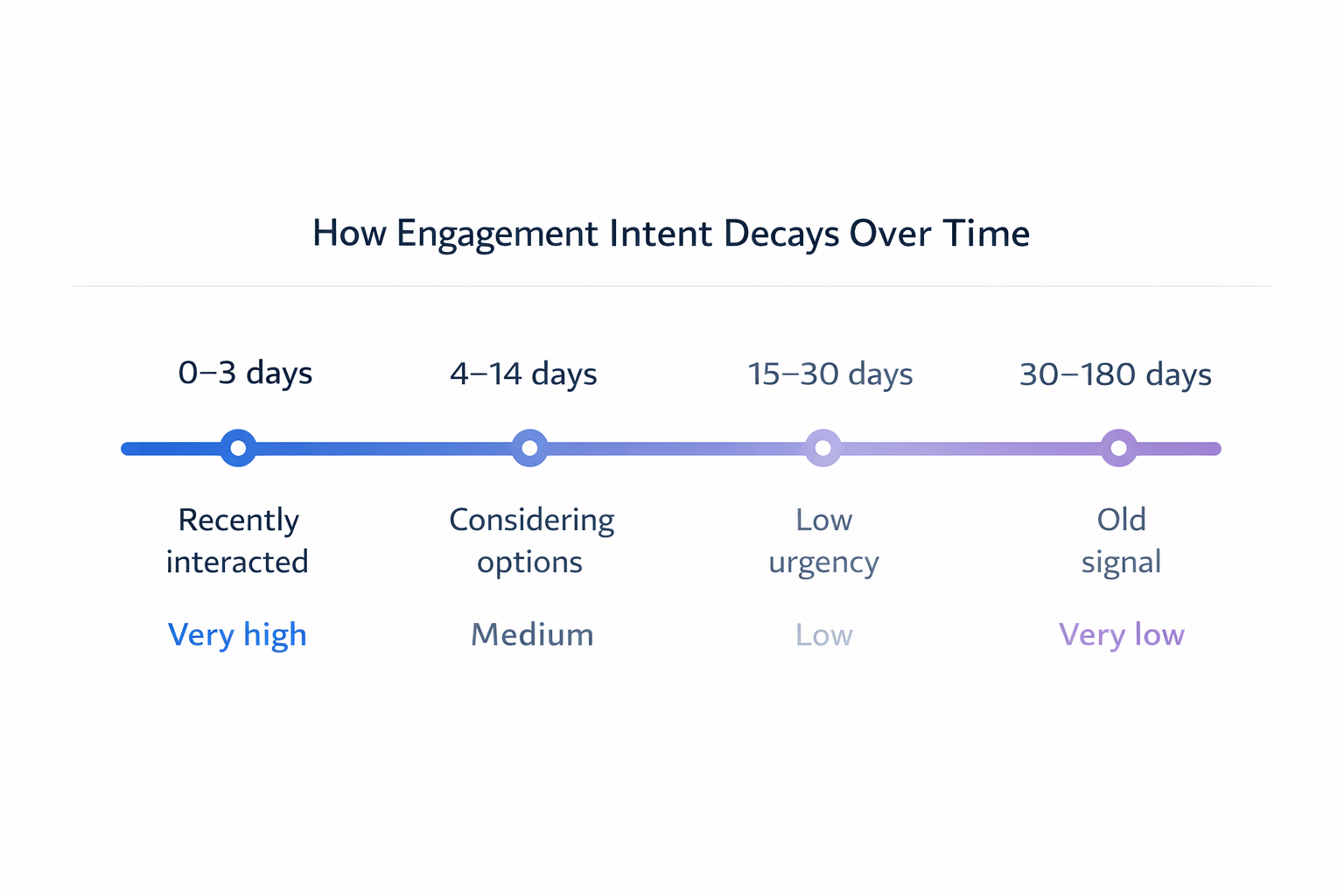
Engagement audiences are often built using long time windows such as 180 or 365 days.
At first glance, this seems useful because it increases audience size. However, these long windows also include users whose interest disappeared long ago.
For example, someone who liked a post several months earlier may have:
-
already purchased from another brand;
-
forgotten about the product entirely;
-
interacted with the content casually without serious interest.
When these older signals remain inside the audience, campaigns continue targeting users whose likelihood of converting is extremely low.
A simple diagnostic test is to compare conversions with engagement timing. In many ad accounts, most retargeting conversions occur within the first week after the interaction. After that period, conversion probability drops sharply.
When engagement audiences include months of historical interactions, campaigns often target outdated intent signals rather than current buying behavior.
Engagement Campaigns Often Attract “Easy Signal” Users
Meta’s algorithm optimizes campaigns by finding users who frequently generate the selected event.
If a campaign optimizes for engagement actions such as video views or reactions, the system quickly identifies users who produce those signals regularly.
These users typically share certain behavioral traits:
-
they watch many videos across different advertisers;
-
they interact with posts frequently;
-
they click on ads but rarely purchase products.
Once the algorithm identifies these users, it keeps showing them ads because they generate the desired engagement signal cheaply.
Over time, this creates a feedback loop:
-
Engagement campaigns attract users who interact frequently.
-
Those interactions populate engagement audiences.
-
Retargeting campaigns then show ads to the same behavioral segment.
As a result, the engagement audience becomes filled with people who engage often but purchase rarely.
Cold campaigns optimized for purchases avoid this loop because they prioritize signals tied directly to buying behavior.
Attribution Can Make Engagement Audiences Look Stronger Than They Are
Engagement campaigns sometimes appear profitable due to attribution effects.
If someone interacts with an ad and later converts through another channel — for example, through a branded search — Meta may still attribute the conversion to the ad interaction depending on the attribution window.
Several signals often indicate this type of attribution distortion:
-
High return on ad spend despite limited click traffic.
-
A large share of view-through conversions in reporting.
-
Conversions increasing in Ads Manager while overall revenue remains flat.
In these cases, the engagement campaign may simply be capturing credit for demand created elsewhere, rather than generating new purchases.
Understanding attribution patterns is important when evaluating engagement retargeting performance.
When Engagement Audiences Actually Work
Engagement audiences perform much better when the signal reflects real product consideration rather than casual interaction.
Examples of stronger engagement signals include:
-
Users who clicked through a product carousel, indicating they explored multiple product options.
-
Viewers who watched most of a product demonstration video, suggesting deeper interest in the offering.
-
People who opened an Instant Experience with product details, which requires more active interaction than a simple reaction.
-
Users who engaged with ads that lead directly to the website, especially when they also generated meaningful on-site activity.
These behaviors indicate that the user evaluated the product rather than merely interacting with content.
If you want to build stronger engagement-driven audiences, the process is explained in How to Create High-Converting Facebook Custom Audiences.
A Better Way to Use Engagement Data
Instead of relying on engagement audiences alone, many advertisers combine them with stronger intent signals.
Two approaches are particularly effective:
-
Combine engagement with website behavior.
For example, retarget users who watched at least 75 percent of a product video and visited a product page. This ensures the audience includes users who interacted with both content and the website. -
Use engagement audiences as seed data for lookalike expansion.
When engagement users are filtered by meaningful actions, they can help train stronger lookalike audiences.
This approach aligns engagement data with Meta’s broader targeting systems. For a deeper explanation of how lookalike seeds influence campaign performance, see Lookalike Audiences: How to Seed, Train, and Scale.
The Key Takeaway
Engagement audiences fail when advertisers assume that interaction equals intent.
Most social engagement signals reflect lightweight actions that occur during casual browsing. When those signals populate retargeting pools, campaigns end up targeting users who were entertained or briefly curious — not users actively considering a purchase.
Cold conversion campaigns sometimes outperform engagement audiences because Meta’s algorithm evaluates long-term behavioral patterns associated with buying activity, not just momentary interactions.
For engagement retargeting to work consistently, the underlying signal must indicate product evaluation, not simply attention.