Facebook advertising has long been a go-to tool for businesses looking to tap into a vast, diverse audience. However, over recent years, many marketers and business owners have found that Facebook ads are not as effective as they once were. Despite the platform’s massive reach, advertisers are facing increased competition, higher costs, and more stringent regulations.
1. Increased Competition and Ad Saturation
One of the most significant challenges advertisers face on Facebook today is the sheer level of competition. As Facebook has grown, so has the number of advertisers vying for attention. According to Statista, as of 2023, Facebook has more than 2.96 billion monthly active users. However, this massive audience is now divided among millions of businesses, making it harder to capture attention.
Furthermore, with more businesses advertising on Facebook, the platform has become saturated. Users are exposed to an increasing number of ads every day, which leads to ad fatigue. As a result, people are more likely to scroll past ads without engaging, making it harder for advertisers to stand out.
2. Rising Costs of Advertising
As competition for ad space increases, so do the costs. Over the past few years, the cost-per-click (CPC) on Facebook has risen significantly. According to data from WordStream, the average CPC for Facebook ads increased by 17% between 2020 and 2021. This upward trend is expected to continue as more businesses allocate their advertising budgets to Facebook.
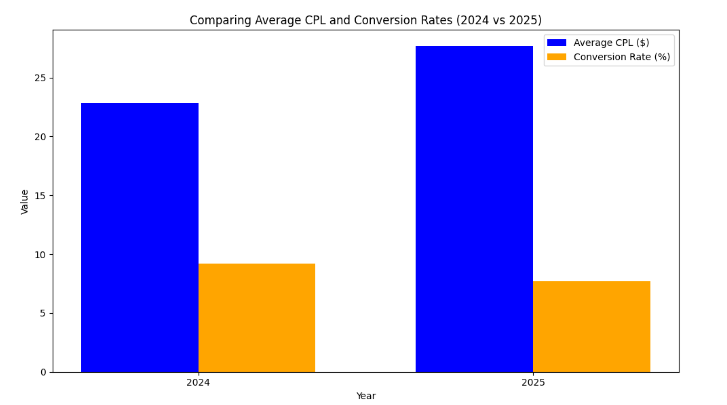
Higher advertising costs can squeeze profit margins, particularly for small businesses or those operating in competitive industries. This makes it difficult for advertisers to maintain a profitable return on ad spend (ROAS).
3. Privacy Changes and Data Restrictions
Recent privacy changes, particularly Apple’s iOS 14.5 update, have made it harder for advertisers to track and target users effectively. The update introduced the App Tracking Transparency (ATT) feature, which gives users more control over whether or not their data is shared with third-party apps, including Facebook. As a result, many users have opted out of tracking, which has reduced the accuracy of Facebook’s advertising algorithms.
This shift has made it more challenging for advertisers to run effective targeted campaigns. Facebook is now relying on aggregated data to optimize ad delivery, but the loss of granular tracking data means that advertisers have less insight into their campaigns’ performance.
4. Changing User Behavior
User behavior on Facebook has evolved over time. While the platform was once a place where people spent hours scrolling through their feeds, user activity has shifted. People are now more likely to engage with content from friends, family, and groups rather than businesses and ads.
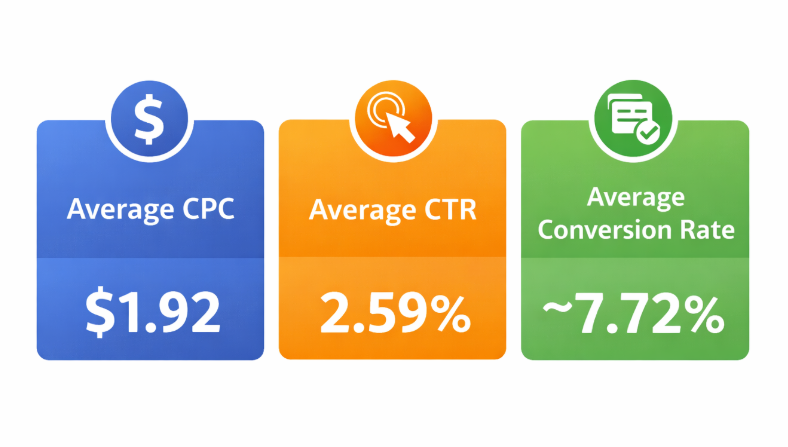
Facebook Ads benchmarks in 2025 show average CPC of $1.92 for lead campaigns, CTR at 2.59%, and conversion rates near 7.72% across industries
Moreover, with the rise of other social media platforms like TikTok and Instagram (both owned by Meta), users are spending more time on these newer, more interactive platforms. This shift in attention has led to lower engagement rates on Facebook ads, making it harder for advertisers to capture their audience's interest.
5. Ad Platform Changes and Algorithm Updates
Facebook frequently updates its advertising platform and algorithms, which can be both a blessing and a curse for advertisers. While updates can bring new features and opportunities, they also require marketers to constantly adapt to new rules, guidelines, and best practices.
For example, the platform’s transition from a “relevance score” to a “quality ranking” has made it more difficult for advertisers to assess the effectiveness of their campaigns in real-time. Additionally, frequent changes to the platform's targeting options and ad formats can require businesses to overhaul their strategies, which can be time-consuming and costly.
6. Ad Approval and Policy Restrictions
Facebook has become more strict with its ad approval process, which can make it harder for businesses to get their ads approved in the first place. The platform has ramped up its efforts to comply with advertising regulations and ensure that ads are not misleading, offensive, or harmful.
In some cases, businesses may find their ads disapproved or their accounts suspended for violating Facebook’s policies. This can cause delays in campaigns, resulting in lost opportunities and wasted ad spend. Advertisers now need to be extra cautious when creating their ads to ensure they comply with Facebook's ever-evolving guidelines.
7. Overcoming the Challenges
While these challenges may make Facebook advertising seem more difficult, there are still ways to succeed. Here are three strategies businesses can use to improve their Facebook ad performance:
-
Refine Targeting: Even though Facebook’s tracking capabilities have been limited, advertisers can still leverage advanced targeting options, such as lookalike audiences, to reach users who are more likely to engage with their ads. Focusing on highly relevant audiences will improve ad performance and reduce wasted ad spend.
-
Test Creative Formats: As ad saturation increases, it's essential to stand out with fresh and engaging creative. Try experimenting with different ad formats like carousel ads, video ads, or interactive content to grab the audience’s attention. Ad creativity plays a critical role in cutting through the noise.
-
Optimize for Conversions: Instead of simply aiming for clicks, focus on optimizing your campaigns for conversions. Use Facebook’s conversion tracking to measure the actions that matter most, such as purchases or sign-ups. This will help you ensure that your advertising efforts are directly tied to your business goals.
Related Articles to Explore
Short Announcement
Struggling with your Facebook ad campaigns? You're not alone. The platform has become more challenging for advertisers due to rising competition, stricter policies, and changing user behavior. In this article, we’ve discussed the key reasons why Facebook ads are harder than before and shared actionable tips to help you succeed.