Facebook Ads attribution is important for measuring how well your campaigns are doing. But it doesn't always show the full picture of how ads affect real-world results.
Many advertisers rely on Facebook's reporting tools to track performance, but the data can be misleading. Understanding the issues with attribution can help you make better decisions and get more accurate insights.
For a more detailed look at improving your attribution with Facebook's tools, check out How to Use the Facebook Attribution Tool to Optimize Your Facebook Ad Performance.
The Challenges of Facebook Ads Attribution
Facebook’s attribution model shows how ads contribute to conversions. But it’s based on some assumptions that might not match real customer behavior. The model gives credit to different touchpoints in a customer’s journey, but it isn’t always accurate.
1. Facebook’s Attribution Window Limitations
Facebook gives different options for attribution windows—1-day, 7-day, or 28-day post-click or post-view. These windows determine how long after an interaction a conversion is credited to the ad.
These windows work well for short-term tracking but might not show long-term behavior. For example, a person may click on an ad but not buy anything for a few days or even weeks.
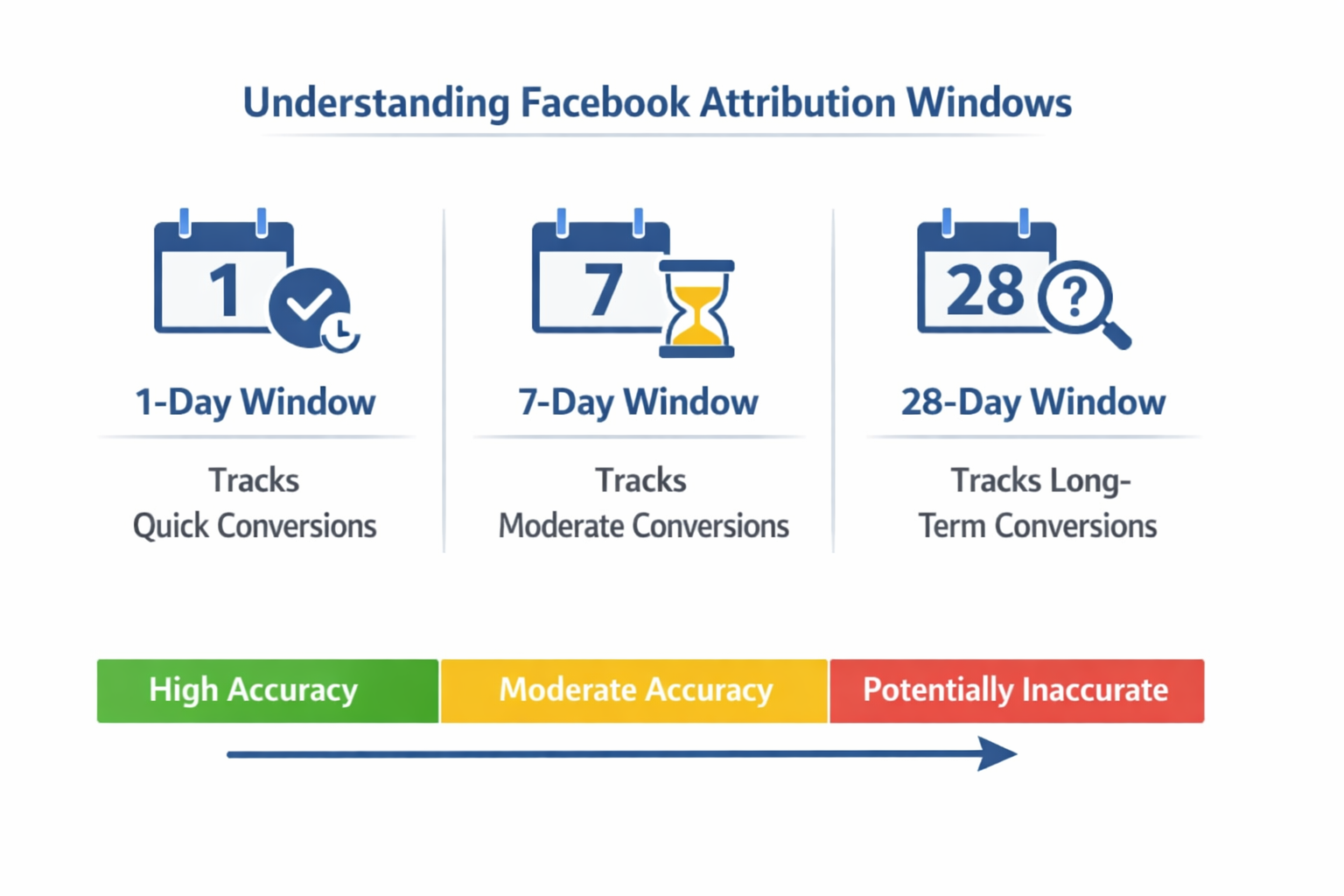
Example: A user clicks on an ad but buys 10 days later. If the attribution window is 7 days, Facebook won’t credit the ad, even though it helped make the purchase.
2. Multi-Device Use and Attribution
People often switch between devices while making purchases. They may start on their phone and finish on a desktop. Facebook’s attribution model struggles to track these changes, which can lead to errors.
Example: A user clicks on an Instagram ad on their phone but buys the product on a desktop. Facebook may credit the desktop purchase but miss the phone interaction.
3. Limitations of Self-Reported and First-Party Data
Facebook uses both first-party data (from people interacting with the platform) and third-party data (like Pixel tracking). But third-party data collection is being limited due to privacy rules like GDPR and Apple’s App Tracking Transparency (ATT).
Example: If a user opts out of tracking, Facebook may not be able to attribute the conversion correctly. This could lead to underreporting, even if the ad played a key role in the sale.
Key Factors that Distort Attribution Accuracy
There are several reasons why Facebook Ads attribution may not be completely accurate. To get a more accurate picture of ad performance, you need to use additional tracking methods.
1. Attribution Models Aren’t One-Size-Fits-All
Facebook has different attribution models, like first-click and last-click. These models give credit to different parts of the customer journey. But no single model captures the full experience of every customer.
Example: A first-click attribution model gives credit to the first ad the customer clicks. A last-click model credits the final ad before the purchase. Both models are helpful but don’t fully capture the entire process.
2. Delayed Conversions and Long Sales Cycles
For some products, customers take time to make decisions. Facebook’s attribution model may not track conversions that happen much later.
Example: A user might click an ad for an expensive product but doesn’t make a purchase until weeks later. If the attribution window is too short, Facebook may not credit the ad, even though it played a role in the decision.
3. Algorithmic Bias in Attribution
Facebook’s attribution tools use algorithms to decide which touchpoints get credit for conversions. These algorithms tend to favor more recent or higher-engagement ads, which can ignore earlier steps in the journey.
Example: If a user engages with an ad and later clicks on a retargeting ad, Facebook’s algorithm may give more credit to the retargeting ad, even though the first ad got the user interested.
How to Improve Attribution Accuracy for Your Campaigns
To get a clearer understanding of how your ads are performing, consider integrating additional tracking methods and adopting a broader approach to attribution.
1. Use Google Analytics for Cross-Platform Attribution
Facebook’s attribution model works well for in-platform interactions, but it may miss important cross-platform behavior. Using Google Analytics can help track user actions across different platforms, giving you a better idea of how your ads are impacting conversions.
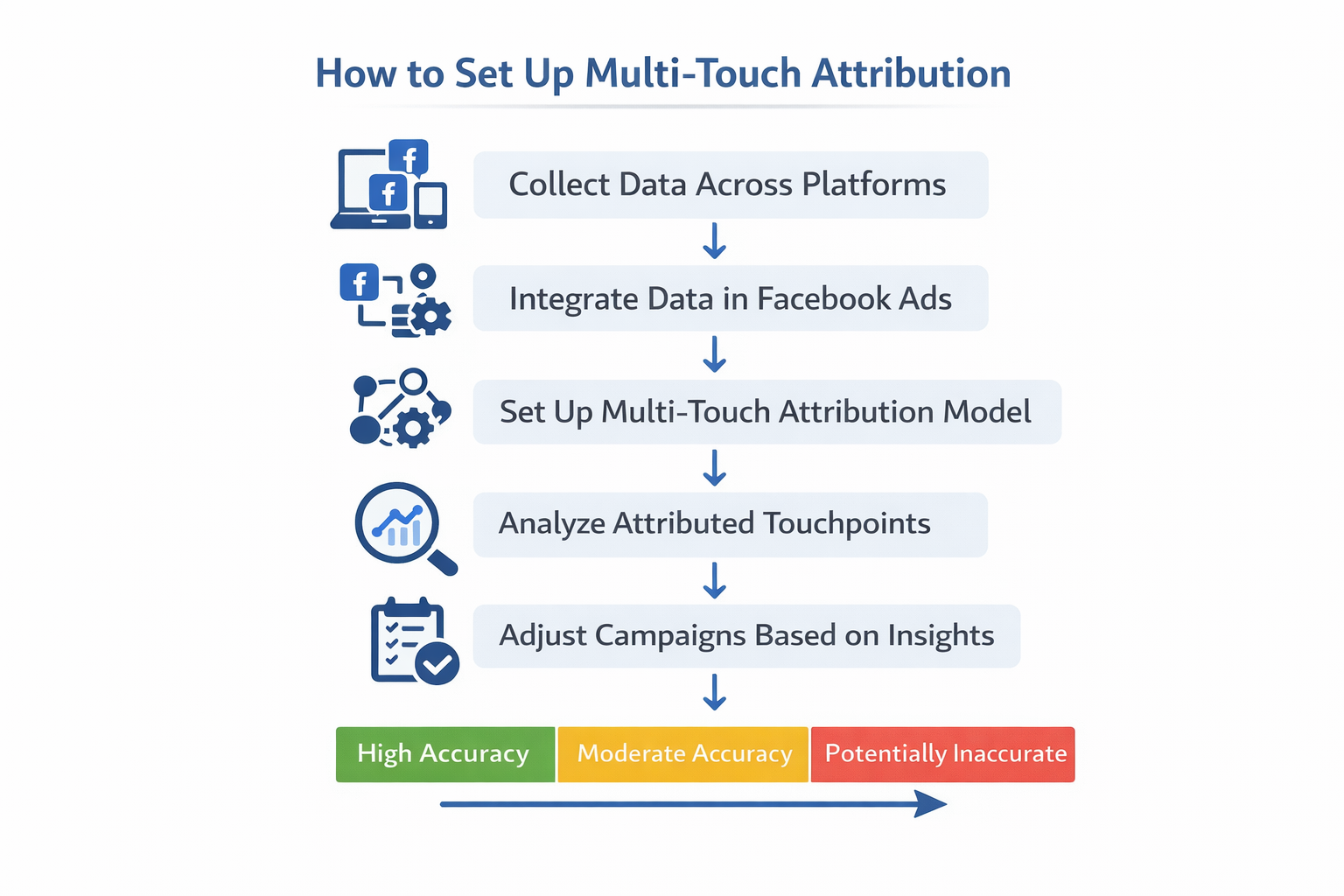
2. Implement Multi-Touch Attribution
Consider moving beyond a single attribution model by adopting multi-touch attribution. This method takes into account all the touchpoints a customer interacts with before making a purchase. It gives you a clearer picture of how each ad affects conversions.
3. Monitor Longer Attribution Windows
For campaigns that involve longer decision-making processes, extend the attribution window (e.g., up to 28 days). This way, you can track conversions that happen later. You should also check how much time passes between interactions to see how long it takes for ads to influence conversions.
4. Track Incrementality with A/B Testing
A/B testing helps measure the real impact of your ads. By comparing groups exposed to ads with those who weren’t, you can see if your ads are driving conversions that wouldn’t have happened otherwise.
5. Use UTM Parameters for Better Tracking
Adding UTM parameters to your URLs helps track which specific campaigns are driving traffic and conversions. By using these, you can get a clearer view of which Facebook and Instagram ads are performing well.
For more on how to build more effective audiences, visit How LeadEnforce Helps Local Businesses Reach the Right Customers.
Conclusion
Facebook Ads attribution is a useful tool, but it has its limitations. The model doesn’t always provide an accurate view of how ads drive conversions.
By understanding these issues and using additional tracking methods like multi-touch attribution and Google Analytics, you can get a more complete picture. These strategies will help you make better decisions and improve your ad campaigns for better results.