You’re running Facebook ads with solid numbers. Click-through rate looks good. CPA is acceptable. Return on ad spend is promising.
You expect that increasing the budget or expanding to a new audience will deliver more results. But instead, performance drops.
This happens more often than not. Good metrics at a small scale don’t always translate to larger success. Scaling Facebook ads requires more than just bumping the budget. It requires the right structure, timing, and signals.
What “Scaling” Facebook Ads Really Means
Scaling a campaign means increasing your ad spend while maintaining or improving performance. It’s not just spending more.
It’s making sure the additional spend goes toward equally valuable conversions, not just more impressions.
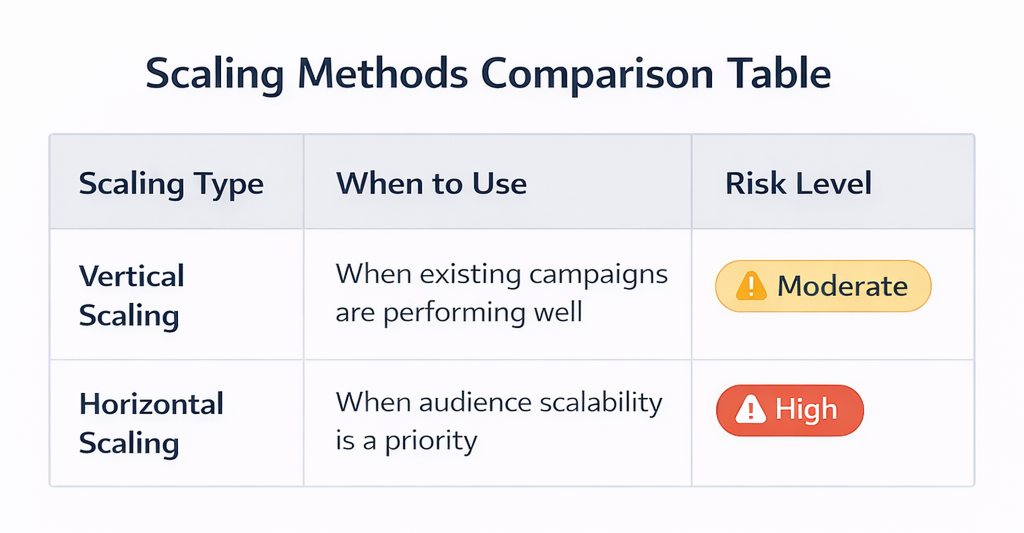
There are two main approaches to scaling:
-
Vertical scaling: Increasing the budget of an existing campaign or ad set gradually.
-
Horizontal scaling: Creating new ad sets or campaigns with different audiences, creatives, or placements.
Each method can work — if the campaign is set up correctly and backed by strong signals. But if it’s not, both methods can just amplify inefficiencies.
For a deeper dive into the technical side of scaling, read The Science of Scaling Facebook Ads Without Killing Performance.
Why Good Metrics Aren’t Enough
You may be seeing a $10 cost per lead on a $50/day budget, and that’s encouraging. But scaling to $500/day often leads to worse results.
That’s because Facebook’s ad system responds differently at higher volumes. Here are a few reasons why:
1. Your Audience Gets Saturated
Even if your targeting includes a million people, Facebook will show your ad to those most likely to convert first.
After those users are reached, the algorithm moves to lower-quality prospects. This often leads to:
-
Higher cost per result;
-
Lower engagement;
-
Weaker return on ad spend.
The impact is especially strong if your targeting is narrow or if you rely on one core audience segment. For a broader view on why this happens, see Why Facebook Ads Stop Scaling (and How to Fix It).
2. The Learning Phase Resets
Facebook’s algorithm uses the learning phase to identify patterns and optimize delivery.
Sudden increases in budget — or major edits to the campaign — can trigger a new learning phase.
This means the system has to start over, often with inconsistent or less efficient delivery. The learning phase isn’t just a formality — it’s when Facebook figures out how to spend your money well.
Here’s a full guide to getting through it faster: How to Finish the Facebook Learning Phase Quickly.
3. You Don’t Have Enough Optimization Data
Scaling only works if Facebook has enough data to make smart decisions.
If your pixel has tracked 20 purchases total, it doesn’t have a reliable pattern yet.
Without enough high-quality conversion data, Facebook can’t identify the right users at scale. The algorithm becomes less accurate as the volume increases, and your cost per action rises.
4. Creative Breaks Under Pressure
At small budgets, an ad may show to just the right slice of your audience. But scaling increases frequency — people see your ad more often. That can lead to:
-
Ad fatigue (declining click-through rates);
-
Higher CPMs;
-
Negative feedback from users.
When scaling, creative quality and variety become far more important than in smaller tests.
5. Your Campaign Structure Doesn’t Support Scaling
Some campaigns are built only to work in controlled, small environments.
For example, if you're relying on a single narrow audience and one or two ads, the structure itself limits how far you can go.
At scale, you need a broader audience, a stronger creative mix, and clear optimization goals. Otherwise, increasing spend just reveals those weaknesses faster.
How to Know You're Not Ready to Scale
Scaling too early is one of the most common mistakes. Before increasing spend or expanding reach, watch for signs that you need to hold off.
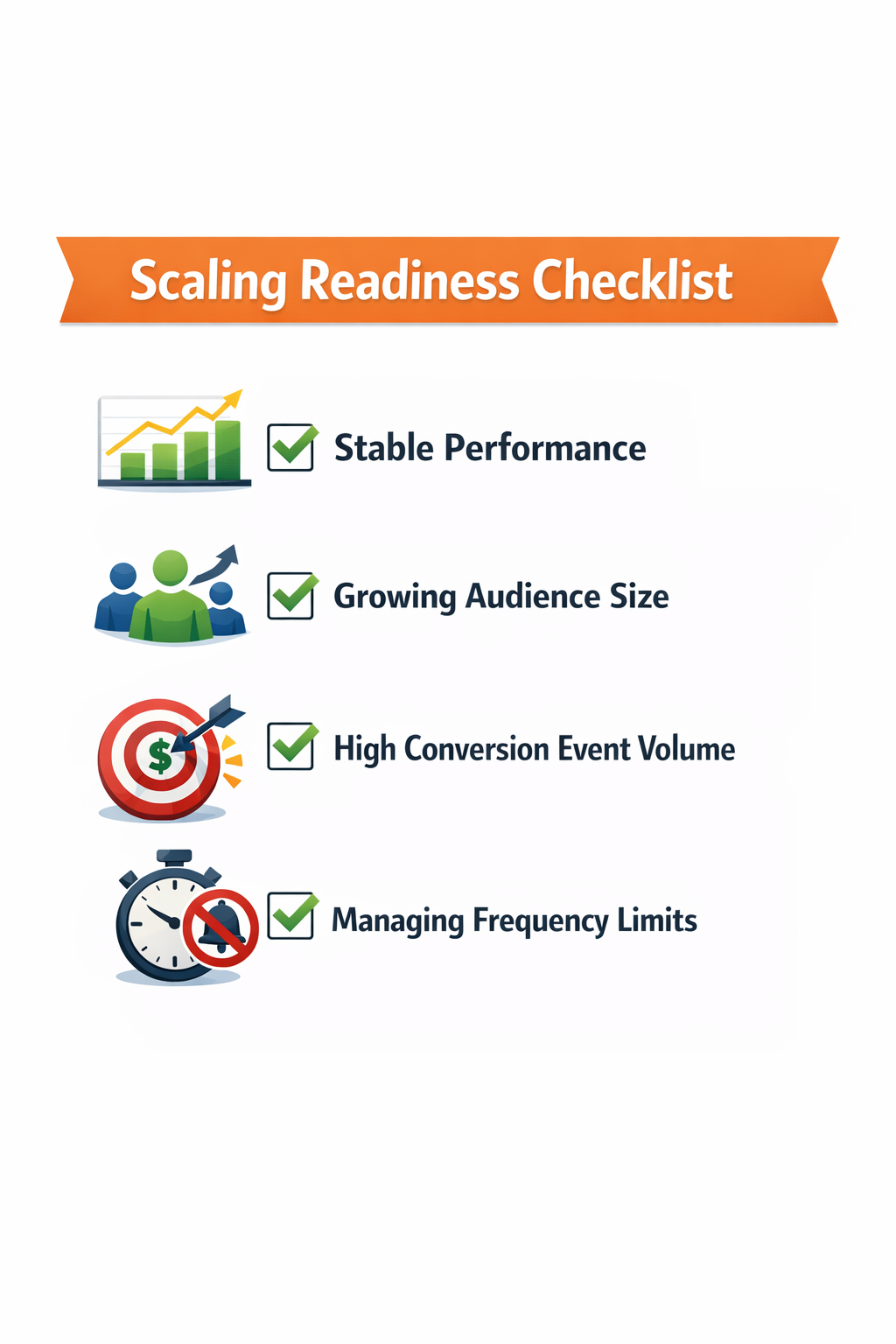
These include:
-
Large fluctuations in daily cost per result;
-
Audience size under 500,000 people, especially with tight interests;
-
Ad frequency rising above 3.0 with declining performance;
-
Less than 50 conversion events per week for your optimization goal.
If you’re seeing these issues, focus on stability and system strength before scaling.
How to Prepare for Scale — Without Breaking Performance
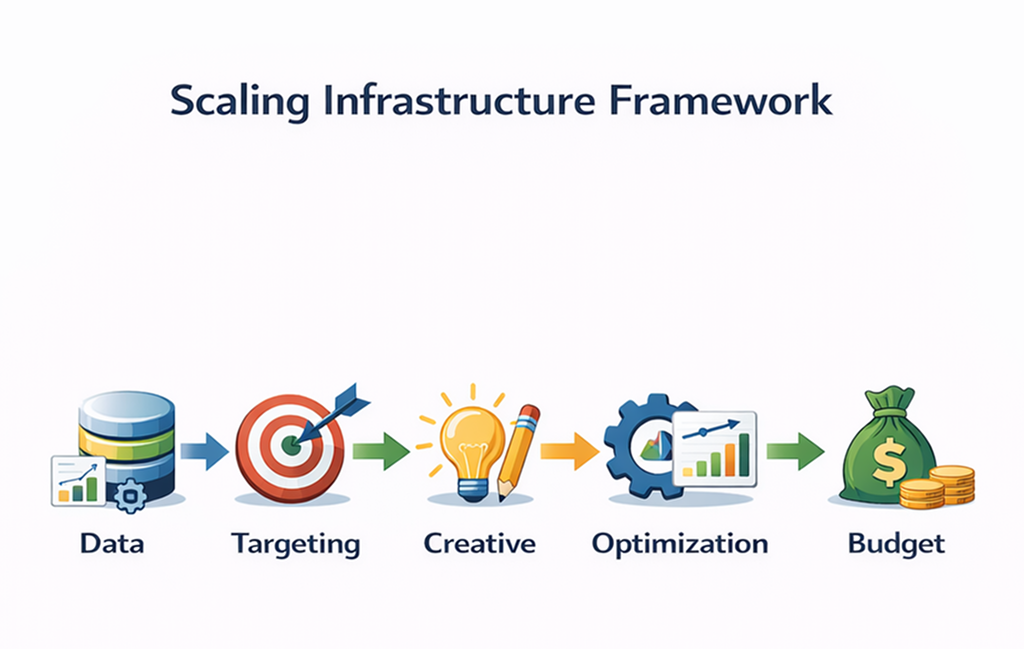
Scaling should feel like a continuation of success, not a gamble. Here’s how to set your campaign up to grow smoothly.
1. Increase Budget in Steps
Raise your budget slowly — about 20 to 30 percent every few days. This lets Facebook adjust without disrupting delivery.
Jumping from $100 to $500 in one go usually leads to volatility and resets.
2. Use High-Quality Lookalike or Broad Audiences
Build lookalike audiences based on meaningful actions — such as purchases over a certain value, subscriptions, or lead quality.
You can also test Advantage+ or broad targeting, but only if your pixel has enough data to support algorithmic decisions.
3. Build a System for Creative Testing
Creative is a major lever at scale. Instead of launching with one or two ads, prepare a full creative strategy.
Aim to test variations of:
-
Hook and headline;
-
Format (static, video, carousel);
-
Message angles or value propositions.
Don’t wait for ads to fail before testing new ones. Rotate before fatigue sets in.
4. Optimize for the Right Goal
Don’t optimize for link clicks or video views if those aren’t tied to actual revenue. Choose events that matter — purchases, qualified leads, completed registrations.
This gives Facebook more meaningful data and keeps optimization aligned with your business goals.
5. Simplify and Consolidate Where Possible
Too many ad sets split your budget and slow optimization. If you have overlapping audiences or similar ads, merge them.
Use Advantage Campaign Budget to let Facebook allocate spend across ad sets more efficiently.
Final Thoughts: Scaling Isn’t About Spending More — It’s About System Strength
You don’t scale Facebook ads just because your metrics look good at $50/day. You scale when your system is stable, your data is strong, and your creative is ready.
It’s easy to mistake early success for long-term scalability. But scaling is not about pushing a winning campaign harder. It’s about expanding a proven system with enough structure to grow.
If you want better results at scale, focus less on hacks and more on building campaigns with the depth and flexibility to grow.