

You launch a new campaign. The first few days look great — high engagement, strong click-through rate, conversions rolling in.
But soon, things change. Clicks get more expensive. Purchases slow down. ROAS falls below break-even. What’s going on?
This isn’t just bad luck. It’s a sign that your campaign has hit one of the most common — and fixable — breakdown points in the Facebook ad ecosystem.
For a deeper understanding of scaling challenges, check out The Science of Scaling Facebook Ads Without Killing Performance.
Why Facebook Ads Lose Efficiency Over Time
Meta’s advertising platform runs on algorithms — but those algorithms can only work with the inputs you give them. If your structure, creative, or audience targeting is off, results will degrade.
Let’s break down the most frequent causes of ad fatigue and underperformance — and how to fix them.
1. Audience Fatigue: When People Stop Noticing You
Facebook’s targeting is powerful — but if you keep showing the same ad to the same people, they’ll start ignoring you.
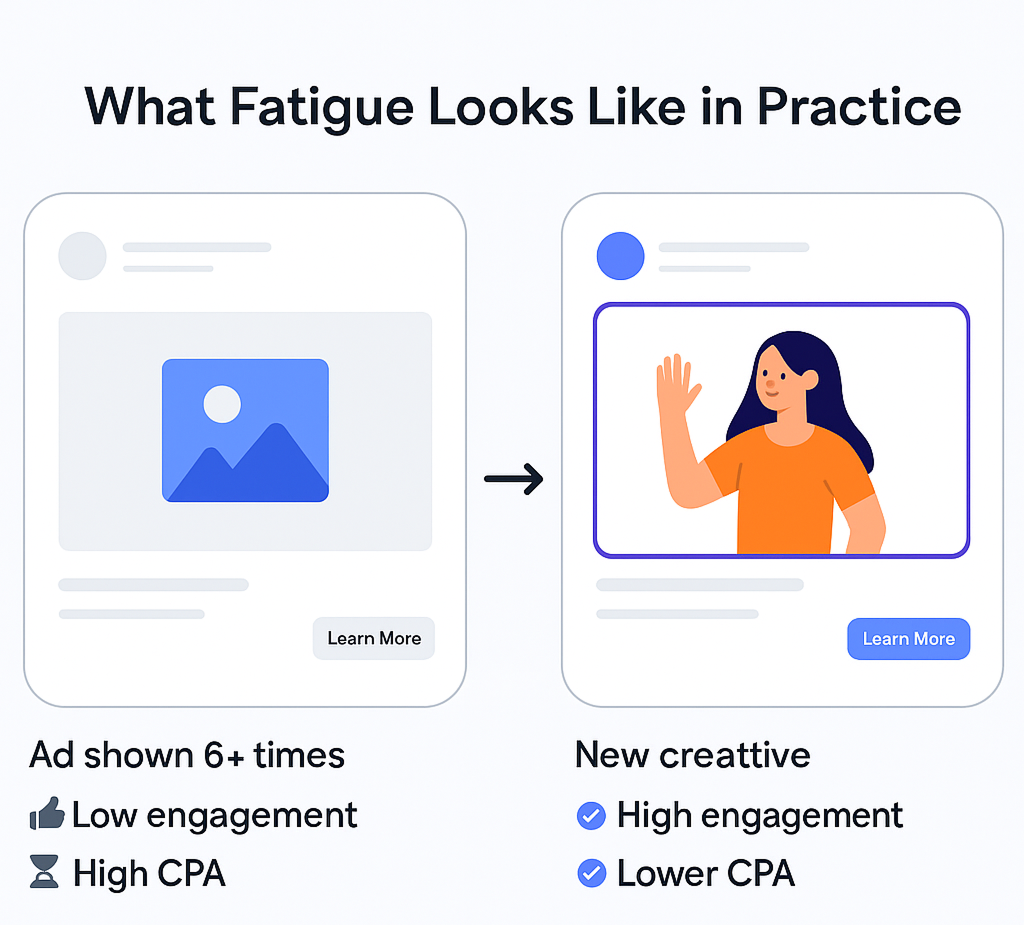
What audience fatigue looks like:
-
Ad frequency creeps above 2.5;
-
CTR drops steadily despite consistent spend;
-
CPM rises because Facebook’s system detects lower engagement;
-
Even your retargeting ads lose momentum.
This is especially common in small audience segments — like narrow interest groups, remarketing lists, or local markets — where reach is limited by nature.
How to reduce audience fatigue:
-
Rotate creative assets regularly. Change visuals, copy, and angles every 7–10 days — even if results are decent.
-
Use lookalike expansion. Refresh cold audiences by generating new lookalikes based on recent engagers or high-value actions.
-
Dynamic exclusions. Exclude recent purchasers, video viewers, or website visitors from certain campaigns to avoid overlap.
Example: If you're retargeting people who visited your product page in the past 30 days, exclude those who already saw your current offer in the last 14 days. This gives newer visitors room to engage while reducing overexposure to others.
2. Creative Burnout: Even the Best Ads Get Tired
Facebook’s algorithm gives more delivery to ads that get strong early engagement. But as engagement slows, so does delivery — and performance.
What causes creative burnout:
-
Reusing the same video or image for too long;
-
All your ads follow the same structure — headline, offer, call to action;
-
Your message hasn’t changed with the season, promotion, or audience mindset.
How to prevent it:
-
Create a creative rotation schedule. Plan new concepts weekly or biweekly, mixing formats — video, carousel, reels, UGC.
-
Test different hooks. Lead with a question, a bold claim, a benefit, or a pain point. Don’t rely on a single message formula.
-
Adapt creatives to platform placements. What works in Feed won’t always perform in Stories or Reels. Crop, reframe, and re-edit accordingly.
Pro Tip: Build modular creatives — visuals and copy chunks that can be easily mixed and matched. This lets you create variations quickly without building everything from scratch.
3. Weak Funnel Strategy: Skipping the Consideration Phase
Too many advertisers go straight for the sale. But most users — especially cold traffic — aren’t ready to buy when they first see your brand.
That’s where full-funnel strategy comes in. If you're only running conversion ads without warming up your audience, performance will eventually tank.
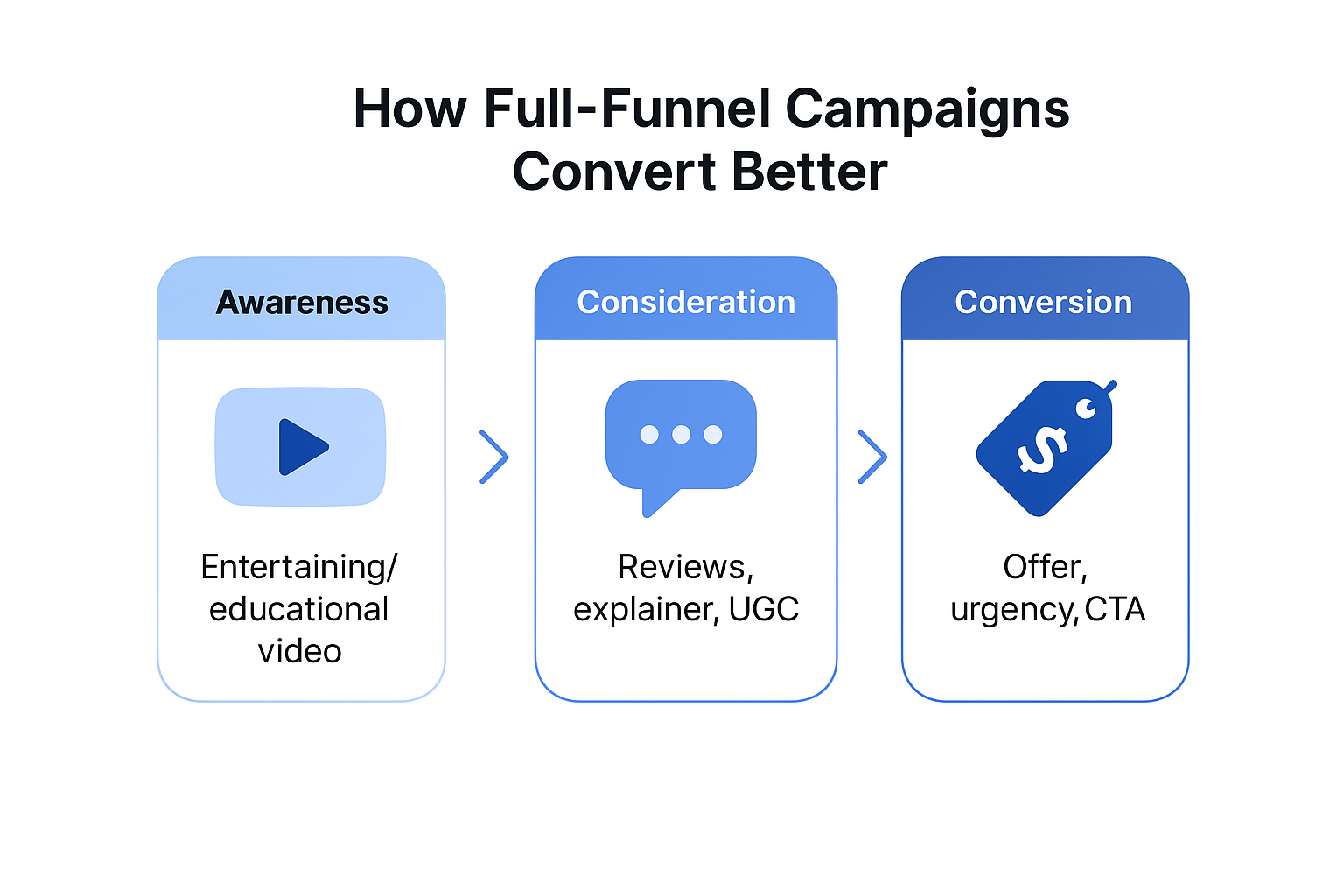
Symptoms of a weak funnel:
-
You run only one campaign targeting cold audiences with “Buy Now” messages;
-
Retargeting audiences are small or shrink fast;
-
Conversion rate is low despite high CTR.
What to do instead:
-
Create a three-stage funnel:
-
Awareness — Capture attention. Use storytelling, educational content, or UGC.
-
Consideration — Build trust. Show testimonials, explainer videos, reviews, or comparisons.
-
Conversion — Make the ask. Offer discounts, urgency, bundles, or free shipping.
-
-
Use behavioral segmentation for retargeting:
-
Retarget people who watched 50% or more of a video;
-
Re-engage visitors who spent over 30 seconds on a product page;
-
Target users who added to cart but didn’t check out.
-
Real-world example: A skincare brand saw better ROAS when they stopped pushing discount ads to cold traffic. Instead, they ran educational Reels for awareness, UGC reviews for consideration, and savings offers only in conversion campaigns.
To learn how to avoid deeper structural mistakes, see Meta Campaigns Explained: How to Structure High-Performance Campaigns.
How to Stabilize Facebook Ad Performance
Now that you know the causes of performance drops, let’s walk through what sustainable, scalable campaigns look like in practice.
Structure Your Campaigns With Long-Term Stability in Mind
Great results aren’t random — they come from having the right system in place.
Segment Audiences by Intent — Not Just by Demographics
Don’t just split by age or gender. Segment based on where users are in their journey with your brand.
| Intent Level | Audience Type | Strategy | Creative Focus |
|---|---|---|---|
| Cold | Broad, Lookalikes | Educate and attract | Introduce brand, show problem |
| Warm | Video viewers, page visitors | Nurture and qualify | Reviews, demos, comparisons |
| Hot | Cart abandoners, past buyers | Convert quickly | Offers, urgency, bundle deals |
Each group has different needs. A cold prospect doesn’t want to be sold — they want to understand who you are. A hot lead doesn’t need education — they need a reason to act now.
Quick Tip: Build separate ad sets or campaigns for each funnel stage. This lets you track performance clearly — and optimize messaging for each group.
Align Creative With Funnel Stage and Platform Format
When creative doesn’t match where a user is in their journey, results suffer — even if the ad looks great.
Creative strategy by funnel stage:
| Funnel Stage | Type of Content | Best Use Cases |
|---|---|---|
| Awareness | Founder story, entertaining content, problem setup | Cold audiences on Reels, Explore, or Feed |
| Consideration | Explainers, before-after visuals, social proof | Website visitors, video viewers |
| Conversion | Promo-focused, countdowns, reviews + urgency | Cart abandoners, email subscribers |
Example: Use a product unboxing video for cold traffic to spark interest — then follow up with a carousel of reviews for mid-funnel audiences.
Use the Right Metrics — Not Vanity Stats
It’s easy to get distracted by high CTR or lots of comments. But these don’t always translate to business results.
Want a full breakdown of what metrics matter most? Read How to Analyze Facebook Ad Performance Beyond CTR and CPC.
Surface metrics (vanity):
-
Click-through rate (CTR);
-
Cost per click (CPC);
-
Engagement rate.
Business-critical metrics:
-
CPA — Is your cost per purchase profitable?
-
ROAS — Are you generating more revenue than you spend?
-
Click-to-conversion rate — Are your clicks actually turning into buyers?
Tip: Always connect your Ads Manager metrics with Shopify, WooCommerce, or backend analytics. True success is measured in profit — not in clicks.
Work With Facebook’s Algorithm — Not Against It
Facebook’s delivery system is smart — but only if you give it room to optimize.
How to support the algorithm:
-
Don’t make constant edits. Every change restarts the learning phase — which delays results.
-
Avoid splitting budgets too thin. Too many ad sets with small budgets create inefficient delivery.
-
Use Campaign Budget Optimization (CBO). Let Facebook allocate spend to top-performing ad sets.
Scaling Tip: If an ad set performs well, duplicate it with a new cold audience and rotate creative. Avoid editing the winning ad set directly.
Bonus: Additional Tips for Sustained Performance
-
Plan around sales cycles. Launch awareness campaigns 2–4 weeks before your peak selling period.
-
Use Advantage+ placements. Let Facebook test formats and placements automatically.
-
Test objectives other than conversions. Run video view or engagement campaigns to warm up cold audiences affordably.
-
Turn strong organic posts into paid ads. Repurpose top-performing Reels or carousels into new creative tests.
-
Check your pixel setup. Missing or misfiring events will tank optimization. Regularly test your Purchase and Add to Cart events.
For more targeting-focused troubleshooting, see Why Facebook Ads Fail: 7 Targeting Issues You Didn’t Know About.
Final Thoughts: Efficiency Drops Are Normal — But Fixable
Facebook ad performance rarely stays stable by accident. Creative burnout, audience fatigue, and poor funnel structure are common issues — but they’re not permanent.
The brands that scale consistently do one thing better than everyone else — they build systems, not one-off wins.
So don’t just chase today’s numbers. Build a campaign structure that educates, nurtures, converts — and adapts over time.
