People don’t open Facebook or Instagram to shop. They open them to relax, scroll, and see what’s new. Even if your ad is interesting, you're interrupting their flow — not meeting them with intent.
Here’s what people are usually doing when they see your ad:
-
Scrolling between posts from friends or creators;
-
Watching short videos without sound;
-
Half-paying attention while multitasking.
They’re not searching for your product. They’re not comparing prices. They’re not ready to make a decision. That’s why first-touch conversions are rare — not because your ad is bad, but because your timing is early.
This gap between attention and intent is also why ads often get engagement without revenue. The issue is explained in more detail in Why Your Ads Get Clicks But No Sales.
Instead of expecting a quick sale, use that first impression to introduce your brand. Build curiosity. Start a relationship. People convert later — after they’ve seen you more than once and started to trust you.
Ad clicks often lead to research — not purchases
One click opens a longer journey
Getting a click isn’t the same as getting a sale. In fact, it usually means the user is just starting to look into you. They’ll often leave Facebook and start digging elsewhere.
This is what usually happens after a click:
-
They Google your brand name or product;
-
They look for reviews, Reddit threads, or TikTok demos;
-
They visit your website — and bounce.
This is normal. It’s especially common with higher-priced products, new brands, or unfamiliar categories. People want to feel sure before they buy — and that takes more than one visit.
Because this research happens across channels, attribution becomes messy. If you want a clearer view of how Facebook fits into longer buying paths, check out How to Use the Facebook Attribution Tool to Optimize Your Facebook Ad Performance.
There’s a delay between the ad and the sale
Attribution doesn’t show the full story
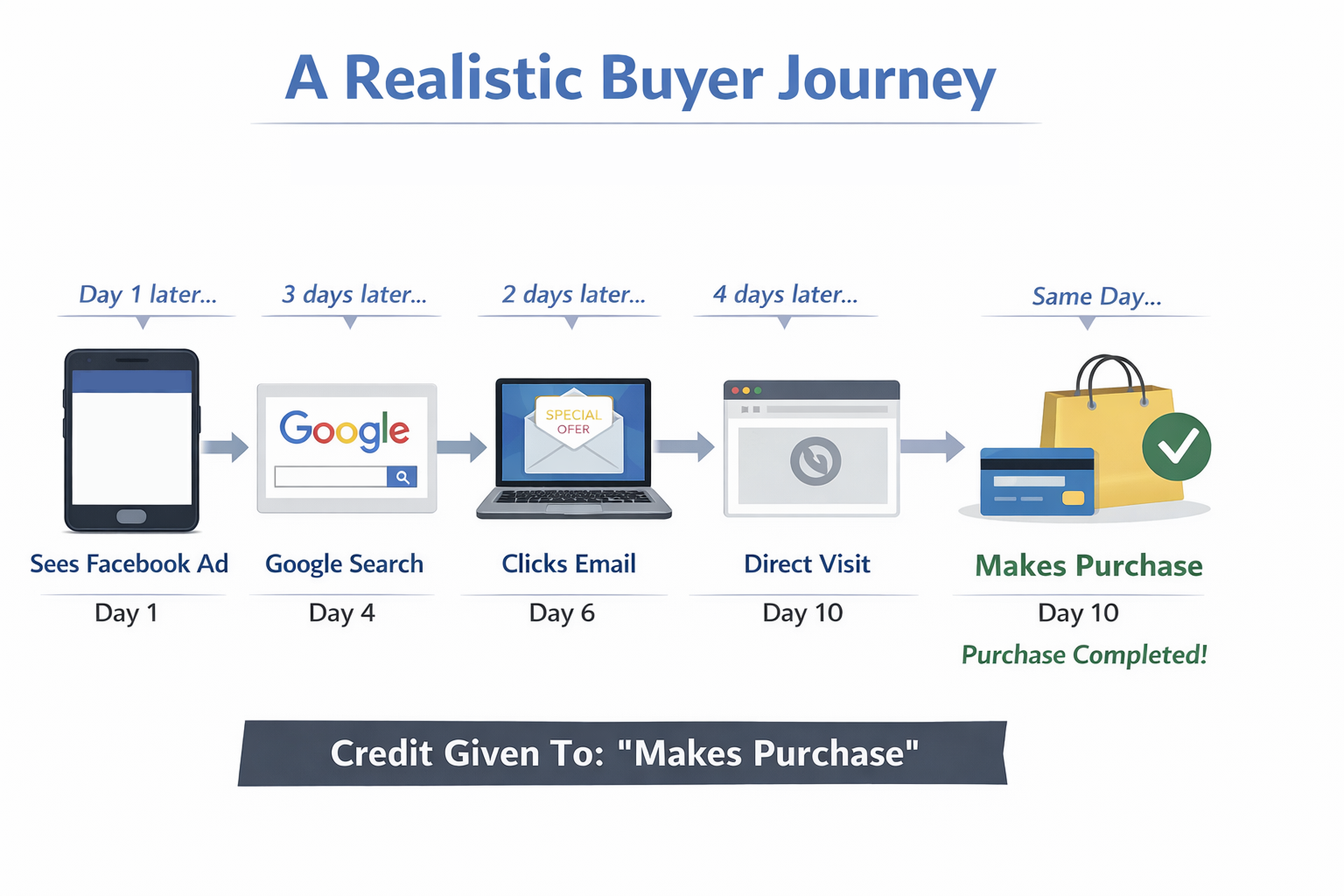
Most platforms — including Facebook — use last-click attribution by default. That means they only credit the final interaction before the sale. If someone sees your ad, researches later, then buys through another channel — Facebook gets no credit.
Here’s a realistic path:
-
Sees your Facebook ad;
-
Three days later, Googles your brand;
-
Two days later, clicks your email;
-
Two days later, visits your site directly and buys.
Only the final touch — the direct visit — gets counted. Your Facebook ad looks ineffective, even though it started the process.
This is why first-touch ads often look weak in reports. The structural issue is covered in Why Relying Only on Last-Click Attribution Hurts Ad Strategy.
People need to see your brand more than once
Frequency builds trust and action
A single ad impression is rarely enough. Most people need repeated exposure before they feel confident enough to act. That’s not a flaw — it’s how memory and trust work.
Why frequency matters:
-
First impressions often get ignored or forgotten;
-
Repeated views increase recall and familiarity;
-
Different messages resolve different objections.
Meta research shows it often takes 6–10 impressions before conversion likelihood rises. But frequency works best when ads are sequenced, not duplicated.
This idea is explored further in Why Not All Ads Are Meant to Convert Immediately. When each ad plays a specific role, repetition becomes progress instead of noise.
Don’t chase first-touch conversions — build a smarter system
Trying to force conversions from the first interaction usually leads to bad decisions. Strong Facebook strategies assume delay and design for it.
1. Track longer journeys — not just clicks
To understand real impact, you need tracking that captures delayed behavior:
-
Facebook Conversion API — links backend and CRM events to ad exposure;
-
UTM tracking — shows how users move across channels;
-
Post-purchase surveys — reveal what actually influenced the decision.
These methods often show that early ads contribute more than reports suggest. For a deeper dive, read Facebook Ads Funnel Strategy: From Audience Identification to Conversion.
2. Plan your retargeting before you launch
Most users won’t convert on the first visit. That’s expected. Retargeting is where intent matures.
Useful retargeting audiences include:
-
Video watchers — users who showed real attention;
-
Page visitors — users who researched but hesitated;
-
Cart abandoners — users close to purchase.
Retargeting works best when messages evolve, not repeat. A deeper breakdown of effective approaches is covered in Retargeting Strategies That Double Your ROAS.
3. Use blended ROI — not just in-platform ROAS
Facebook’s ROAS number reflects only part of reality. Especially for longer buying cycles, it undercounts influence.
Instead, evaluate:
-
Blended CAC — total spend divided by new customers;
-
Customer LTV — long-term revenue per buyer;
-
Net margin — what remains after all costs.
A campaign that looks weak on last-click data can still lower total acquisition costs across the business. Judging Facebook in isolation often leads to cutting the wrong campaigns.
Final thought: the first ad starts the journey — it doesn’t finish it
Most Facebook ads are not closers. They’re starters.
When you accept that, your strategy changes:
-
You build longer funnels;
-
You invest in retargeting early;
-
You judge performance over time — not instantly.
In 2026, the brands that win won’t be chasing first-touch conversions. They’ll be building systems that reflect how people actually buy.