
Some Instagram ads look professionally designed and still fail to convert.
The visuals are polished. The branding is clean. Engagement appears healthy. Yet CPA keeps rising while conversion quality weakens after scaling.
This usually happens because the creative was optimized for attention aesthetics instead of buyer intent.
Looking expensive is not the same as communicating relevance.
Why polished Instagram creatives often prioritize aesthetics over buying signals
Many Instagram ads are designed to impress visually before they communicate anything meaningful.
The creative feels premium, but users still do not understand:
- what problem the product solves;
- who the offer is for;
- why they should care immediately;
- what makes the product different.
This creates a common paid social pattern:
- users pause briefly;
- engagement remains acceptable;
- clicks increase early;
- conversion intent stays weak;
- CPA rises during scaling.
The ad succeeds at attracting visual attention but fails to connect with purchase motivation.
This happens often with lifestyle-heavy Instagram creatives where aesthetics dominate the message. Fashion, skincare, wellness, SaaS, and creator brands frequently fall into this trap.
The ad blends naturally into Instagram’s visual environment but never creates enough buying tension to push action.
Build creatives around buyer motivation instead of visual polish
High-converting Instagram ads usually communicate intent quickly.
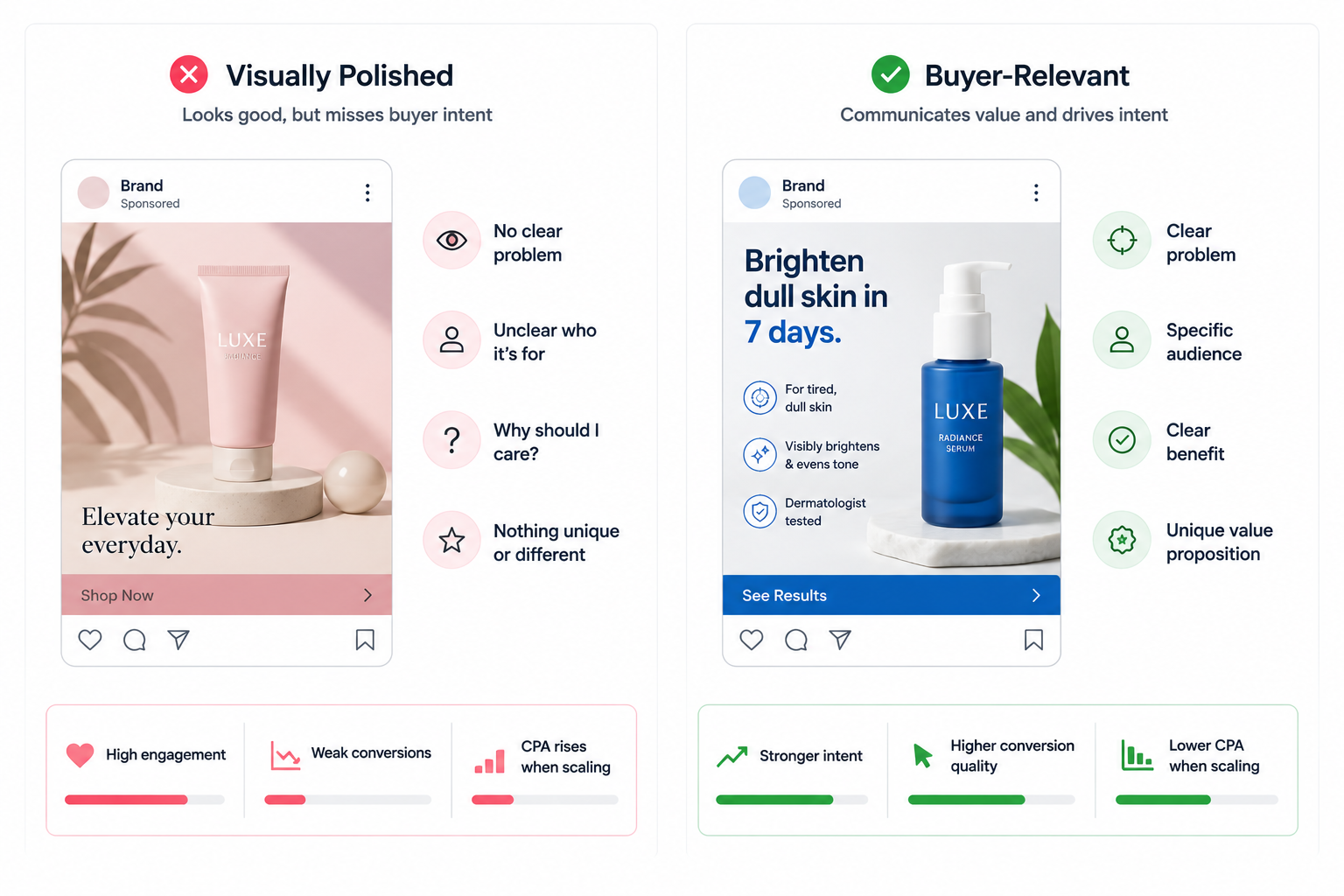
The buyer should immediately recognize:
- the product category;
- the use case;
- the desired outcome;
- the problem being solved.
That does not require aggressive sales messaging. It requires clarity.
Strong-performing creatives often feel simpler than heavily designed ones because they reduce interpretation time. Users understand the offer before scrolling behavior resumes.
This becomes especially important in cold traffic campaigns where attention windows are extremely short.
Understanding Instagram scroll behavior helps explain why visually attractive ads often fail commercially. Users may stop briefly because the creative looks appealing without developing any actual buying intent.
Match creative messaging to buyer awareness
Some Instagram ads fail because they communicate at the wrong awareness stage.
A polished creative introducing emotional branding to users already comparing products often underperforms. The opposite also happens. Product-heavy conversion creatives struggle when the audience still lacks category awareness.
This is why creative quality alone rarely predicts sales performance.
The message must align with buyer awareness and emotional state.
Advertisers using strong emotional creatives often outperform more rational product-focused ads in cold traffic because emotion creates faster psychological connection.
At the same time, emotional appeal without clear commercial relevance still produces weak purchase intent.
The balance matters.
That is why aligning creatives with audience awareness levels usually improves conversion stability more than redesigning visuals repeatedly.
Final takeaway
A visually impressive Instagram ad can still fail commercially.
Many polished creatives attract attention without creating buyer intent. The campaign appears healthy at surface level while conversion quality weakens underneath.
Strong Instagram ads do not succeed because they look expensive. They succeed because users immediately recognize relevance, intent, and value before scrolling away.