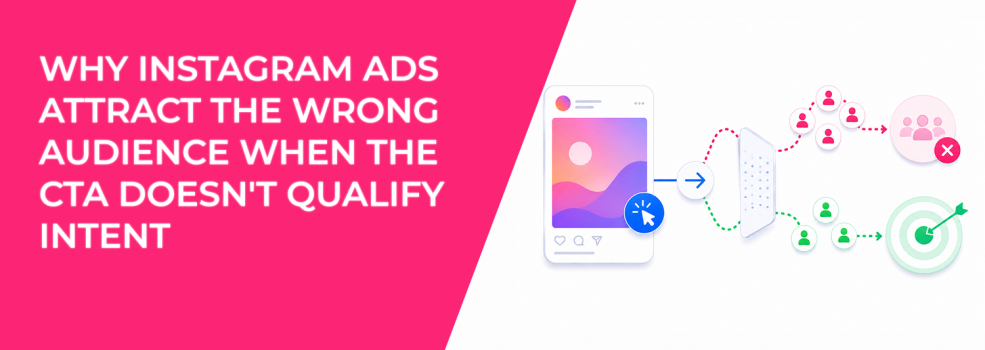
Instagram ads can fail even when people click. The problem starts when the CTA invites the wrong type of user into the funnel.
A vague CTA can make the campaign look active. CTR may look good, CPC may stay low, and traffic may keep growing. But if the people clicking are only curious, the campaign will struggle to generate qualified leads, sales calls, or purchases.
Your CTA filters people before they click
Targeting controls who can see the ad. The CTA helps control who decides to act.
A broad CTA like “Learn More” can attract almost anyone. Some users may have real intent, but many only want to browse. A stronger CTA gives users a clearer reason to self-select before they click.
For example:
- “Learn More” attracts curiosity, which can work for education but often weakens lead quality.
- “Request A Quote” attracts users who are comparing options and thinking about cost.
- “Book A Demo” attracts users who are closer to evaluating a real solution.
- “Schedule A Consultation” attracts prospects willing to spend time discussing their problem.
This is why CTA wording affects audience quality. It does not just guide action. It shapes who enters the funnel.
Low-intent clicks make the campaign look healthier than it is
Weak CTAs often produce attractive surface metrics. More people click because the action feels easy and low-commitment.
The issue appears after the click. Users skim the landing page, abandon the form, or submit weak leads. The campaign pays for traffic, but the business receives little sales value.
Watch for these signs:
- CTR is stable, but lead quality keeps dropping.
- CPC looks efficient, but CPA keeps rising.
- Form submissions increase, but sales conversations do not improve.
- Sales teams say leads are “not serious” or “just browsing.”
This is similar to the problem advertisers face when they fail to spot low-quality leads before they hurt the funnel. The waste often starts before the lead reaches sales.
Weak CTAs can train Meta on the wrong behavior
Meta learns from user actions. If many users click but few complete valuable actions, the campaign sends mixed signals.
The platform sees who clicks, but it receives less useful data about who converts. Over time, delivery can shift toward people who behave like casual clickers instead of serious buyers.
This is the pattern to avoid:
- The CTA attracts easy clicks.
- Click data grows faster than conversion data.
- Meta finds more users who resemble clickers.
- Lead quality declines while traffic metrics still look acceptable.
That is why strong CTR does not always mean strong intent. A campaign can become efficient at attracting the wrong behavior.
Use the CTA to qualify users before the funnel
Many advertisers try to qualify users only after they submit a form. That can work, but it is more expensive because the campaign already paid for the click.
A better CTA helps users decide whether the offer is relevant before they enter the funnel. The action should match the level of intent you want.
Use CTA language like this:
- For education: “Download The Free Guide.”
- For pricing intent: “Request A Pricing Proposal.”
- For product evaluation: “Book A Product Demo.”
- For service intent: “Schedule A Consultation.”
This is the same logic behind learning how to pre-qualify leads in ad campaigns before sending them to sales. Qualification should not start only after the lead is created.
Match the CTA to the customer you want
A high-ticket service, B2B product, or appointment-based offer usually does not benefit from vague traffic. These campaigns need people who understand the next step and still choose to continue.
If the business needs consultation requests, the CTA should not invite people only to browse. If the campaign needs qualified buyers, the CTA should not attract users who only want general information.
A useful CTA should answer:
- What action does the business actually want?
- What level of commitment should the user show?
- Does the CTA attract buyers or casual browsers?
- Does the post-click experience match the CTA promise?
This is why experienced advertisers focus on attracting the right customers, not just clicks. The goal is not to fill the funnel with everyone. The goal is to bring in users who have a real chance of converting.
Stronger qualification can improve CPA
A more specific CTA may reduce click volume at first. That can look risky if the account is judged mostly by CTR or CPC.
The better question is whether the remaining clicks are more valuable. When more users arrive with real intent, conversion rates can improve, sales teams waste less time, and CPA becomes easier to control.
A stronger CTA can help by:
- Reducing casual clicks that rarely convert.
- Sending clearer signals to Meta.
- Improving lead-to-sale conversion rate.
- Helping sales teams focus on better opportunities.
This is where lead qualification filters that improve sales-ready leads can support the ad strategy. The CTA qualifies before the click, while the funnel confirms quality after the click.
Final takeaway
The CTA does more than tell users what to do next. It helps decide who enters the funnel in the first place.
If Instagram ads are generating traffic but attracting weak leads, review the CTA before rebuilding the audience. A more specific action can filter out casual clickers and bring in users with stronger intent.