You’re running Instagram ads. The numbers look good at first: low CPMs, lots of clicks, solid engagement.
But when it’s time to convert those users — nothing happens. You dig into the data and realize the problem isn’t the cost. It’s the kind of people your ads are pulling in.
This article breaks down the less obvious reasons Instagram ads bring the wrong audience. We’ll also look at how to fix that with better structure, clearer creative, and smarter campaign logic.
If this situation feels familiar, you’ll recognize patterns described in Why Your Ads Get Clicks But No Sales: Fixing the Audience Misalignment.
Instagram’s Format Rewards the Wrong Behavior
Instagram is a scrolling platform. People are moving fast. They're not thinking about buying — they’re reacting to what catches their eye.
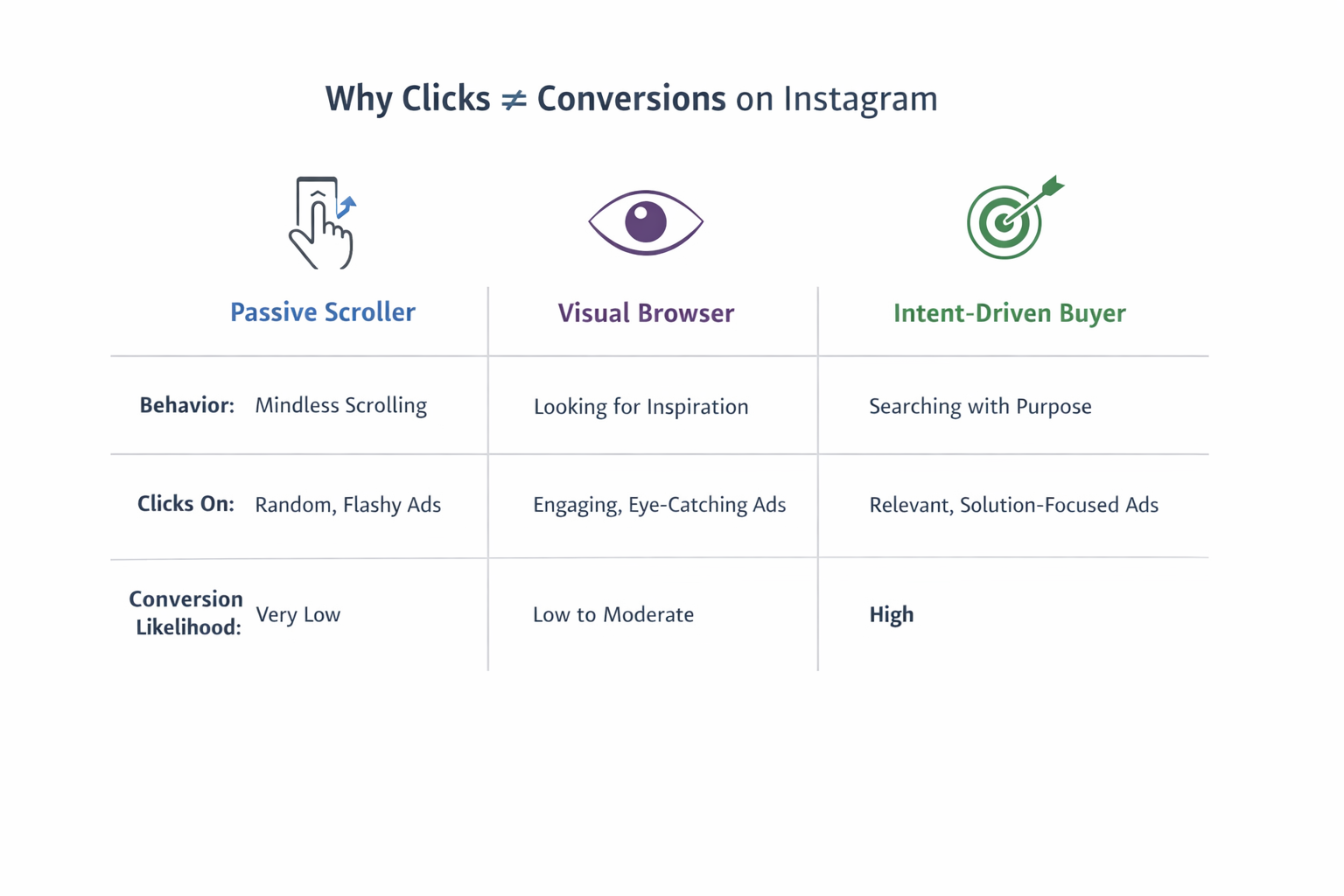
That means even your best-looking ad might be getting clicks from the least interested users. Here's what that looks like in practice:
-
Accidental engagement: Many users tap through Stories or Reels without meaning to engage.
-
Low-intent curiosity: People might click just to see more visuals, not because they want your product.
-
Boredom behavior: Users swipe when they’re distracted, not when they’re ready to make decisions.
This gap between attention and intent is also why optimizing for visibility alone often backfires, as explained in CTR vs Conversions: Why High CTR Doesn’t Always Mean More Sales.
What to do instead: Use subtle friction to qualify users. Include the price early. Add product context immediately. Frame your ad with “this is for you if…” language so the wrong people self-select out.
Optimizing for the Wrong Signals Trains the Algorithm Poorly
If your campaign is set to optimize for video views or link clicks, that’s what Meta will find: people who click easily.
But these are rarely the people who follow through. You need to tell the algorithm what matters by feeding it the right events.
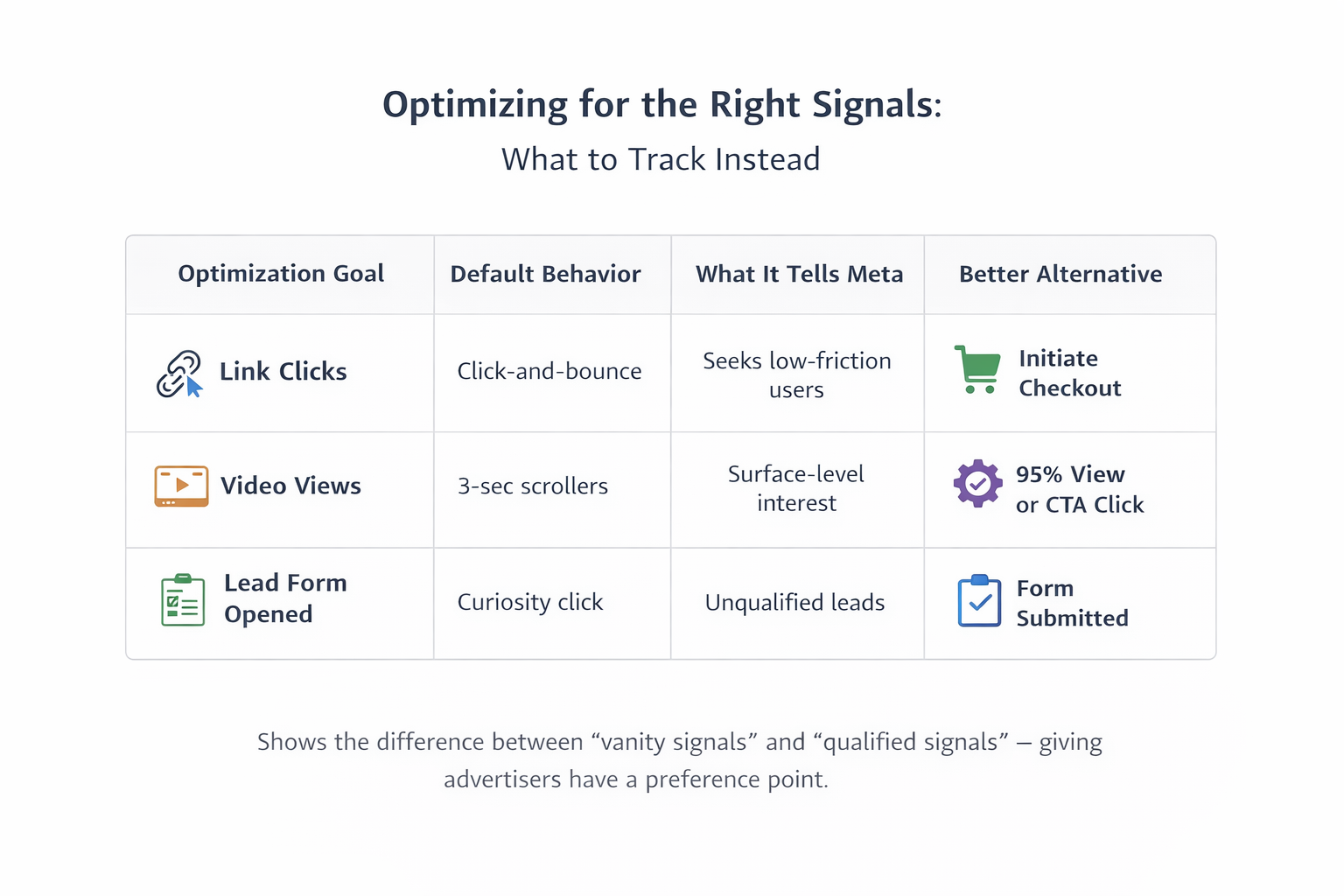
Start by optimizing for signals further down the funnel:
-
Add to cart or initiate checkout — if you have the volume to support it.
-
Lead form submitted — not just opened or started.
-
Purchase completed — even if delayed by retargeting or email.
This problem is common enough that it has its own pattern: campaigns that look efficient but fail economically. A deeper breakdown is covered in What to Do When Your CPC Is Low But Conversions Are Flat.
If you're early in the funnel and still building data, at least exclude previous engagers who didn’t convert. That stops your system from learning from dead-end activity.
Broad Creative Brings Broad — and Often Useless — Audiences
Many Instagram ads are too generic. The copy tries to appeal to everyone, so it ends up attracting no one useful.
Let’s say your hook is “Struggling to get more clients?” That could apply to hundreds of different roles — freelancers, consultants, local businesses. The algorithm fills your audience with whoever’s cheapest to reach inside that group.
This is where audience quality quietly collapses, a dynamic explored further in Why Broad Interest Targeting Wastes Ad Budgets.
The fix is to make every creative element more specific:
-
Hook: Name the person or role clearly. Try “Gym owners losing members?” or “Agencies wasting time on lead gen?”
-
Image or video: Use visuals that reflect your customer’s environment or day-to-day reality.
-
CTA: Use specific prompts like “See if this fits your business” or “Compare pricing plans,” not just “Learn more.”
This doesn’t shrink your audience — it filters it. You’ll get fewer clicks, but better ones.
The Landing Page Doesn’t Match the Ad Experience
When someone clicks your Instagram ad, they expect the experience to continue. If the landing page feels off-brand or vague, even a good lead will bounce.
Here’s where many advertisers go wrong:
-
Visual inconsistency: The landing page has different colors, fonts, or imagery than the ad.
-
Message mismatch: The copy doesn’t follow the storyline from the ad.
-
Poor mobile UX: Long load times or unscrollable layouts kill Instagram traffic, which is nearly 100% mobile.
Make sure your landing page starts where your ad ends. Use the same visual language. Continue the same message. Don’t make users work to figure out what your offer is or why they should care.
Interest-Based Targeting Isn't as Precise as It Seems
Instagram’s interest targeting is mostly based on past behavior — not what people actively care about right now.
A user who liked one fitness post three months ago might still be in your “fitness” audience. That means your targeting can be filled with stale, irrelevant profiles.
A better approach is to rely on real data:
-
Lookalike audiences based on actual purchasers or high-quality leads.
-
Custom audiences from your CRM — such as active buyers, lapsed subscribers, or repeat customers.
-
Cross-platform source audiences — for example, people who clicked your ads or visited your site from LinkedIn or Facebook.
- Targeting Instagram account followers — with Leadenforce, you can build audiences based on people who follow or engage with specific Instagram profiles (including competitors or niche influencers).
For a practical framework on choosing stronger audience inputs, see How to Select Facebook and Instagram Sources for Targeting with LeadEnforce.
There’s No System to Sort Out Bad Traffic After the Click
Even with good targeting, some poor-fit traffic will slip through. The key is to qualify leads after the click instead of treating all visitors the same.
You can do this in a few ways:
-
Lead scoring: Assign values to different actions or responses. Track which users actually follow through.
-
Segmented retargeting: Don’t group all non-buyers together. Break them up based on site behavior, time on page, or funnel stage.
-
Onboarding filters: Use surveys or email flows to identify quality leads. Remove cold or unresponsive ones early.
Think of this like a funnel within a funnel. Let users reveal their intent through small actions and respond accordingly.
Final Thoughts: Good Ads Aren’t Enough
Instagram is full of distraction. The people who click fast are often the ones who leave fast.
If your campaigns keep attracting the wrong audience, the solution isn’t always a better ad. It's a better system. One that filters the right people in and the wrong ones out at every step.
That means:
-
Smarter objectives;
-
Specific creative;
-
Matching landing pages;
-
Quality-based targeting;
-
Mid-funnel sorting mechanisms.
Build that kind of structure, and Instagram becomes much more than a pretty traffic source. It becomes predictable.