Facebook remains one of the most cost-effective channels for affiliate marketers, thanks to its granular targeting and scalable bidding tools. Even advertisers spending under $20 per day can generate meaningful results if their campaigns focus on efficiency.
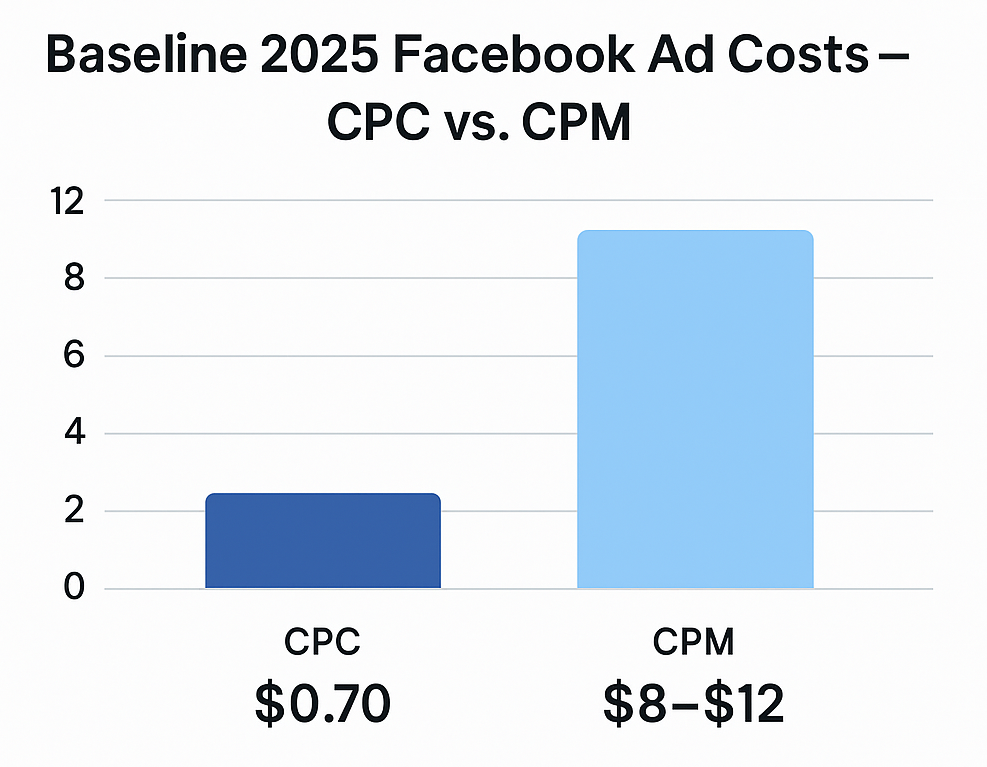
Baseline 2025 Facebook Ad Costs — CPC vs. CPM
Recent data shows that:
-
The average cost per click across industries ranges from 70 cents to $1.35, allowing small budgets to reach consistent daily traffic.
-
Ads optimized for conversions see up to 2.5x higher ROI compared to traffic-only objectives, especially for affiliate offers.
Start With a Tight Audience
When every dollar matters, broad audiences often waste spend.
Build highly specific audiences:
-
Visitors who interacted with similar niche pages
-
Users engaging with relevant content categories
-
Lookalikes built from high-quality seed lists
A study of micro-budget campaigns found that narrowing interests to fewer than five tightly aligned themes reduced CPC by an average of 26 percent.
Choose the Right Campaign Objective
To stretch a small daily budget, select objectives aligned with your affiliate payout model.
Best objectives for low-budget affiliates:
-
Conversions if your funnel consistently registers events
-
Landing page views for top-of-funnel testing
-
Engagement when you are warming up audiences before conversion campaigns
Campaigns using conversion events typically achieve 40–60 percent lower cost per acquisition once the algorithm receives 50+ events.
Build Simple, High-Impact Creatives
High spend does not win; clarity does. Ads with a single visual focus and one clear call-to-action outperform complex designs.
Proven low-cost creative principles:
-
Use clean backgrounds to make the product stand out
-
Highlight the offer benefit in the first 2 seconds of the video
-
Maintain consistent brand colors to build recognition
CTR improvements of up to 34 percent have been recorded after simplifying ad creatives for affiliate funnels.
Use Manual Bidding When Needed
If competition in your niche drives up costs, test bid caps or cost caps.
Why manual bidding helps small budgets:
-
Prevents overspending during high-demand windows
-
Forces delivery only when results meet your cost targets
-
Reduces volatility caused by fast-paced auctions
Reports suggest that cost caps can reduce CPA fluctuations by up to 22 percent across short cycles.
Test With Micro-Budgets, Scale Only Winners
Small budgets demand disciplined testing.
A smart testing structure:
-
Start with $3–$5 per ad set
-
Test 2–3 creatives at a time, not 10
-
Evaluate after the learning phase or after 3–5 days
Affiliate marketers who limit tests to a maximum of three variables reduce wasted spend by an estimated 31 percent.
Track the Right Metrics
Not all metrics matter equally when budgets are tight.
Prioritize:
-
CPC to monitor traffic efficiency
-
CTR to evaluate creative relevance
-
Conversion rate to measure funnel health
-
ROAS to determine true profitability
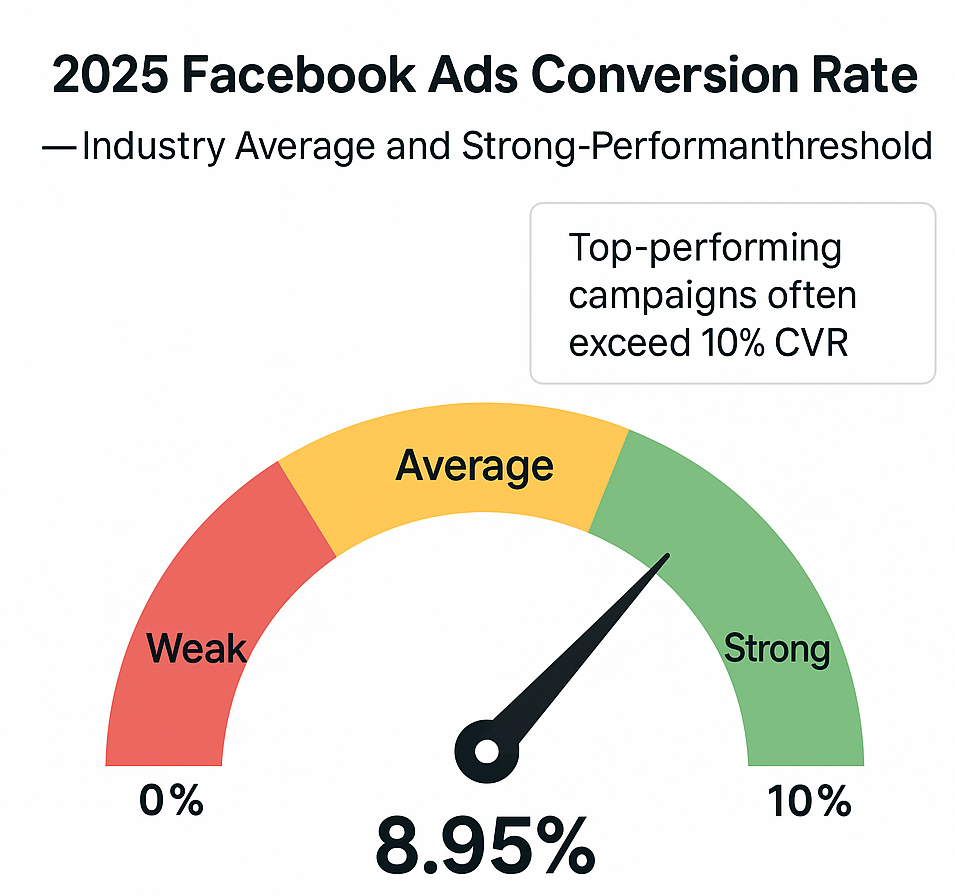
2025 Facebook Ads Conversion Rate — Industry Average and Strong-Performance Threshold
A dataset of small-budget advertisers showed that those focusing only on CPC and CTR misjudged profitability 47 percent of the time—reinforcing the need to track end-to-end revenue.
Three Suggested Reads
To deepen your strategy, explore these related articles:
Final Thoughts
Low-budget Facebook advertising is not a limitation—it is an optimization challenge. With tightly controlled targeting, streamlined creatives, and disciplined testing, affiliate marketers can achieve strong profitability without large ad spend. When every dollar is used with intention, results follow.