

At first, running ads on several platforms seems like the best way to grow. You reach more people, test new ideas, and collect more data. But in reality, multi-channel marketing often leads to mixed results, confusing reports, and messages that don’t match.
For business owners and advertisers using Facebook and Instagram, managing many channels takes more than spreading the budget. It requires coordination between goals, data, and creative work — something that’s harder than it looks.
Here’s why multi-channel marketing is so tricky, and what you can do to make it work better.
Why Multi-Channel Marketing Is Difficult
1. Each Platform Works Differently
Every platform has its own rules and user behavior. What performs well on one channel might fail on another.
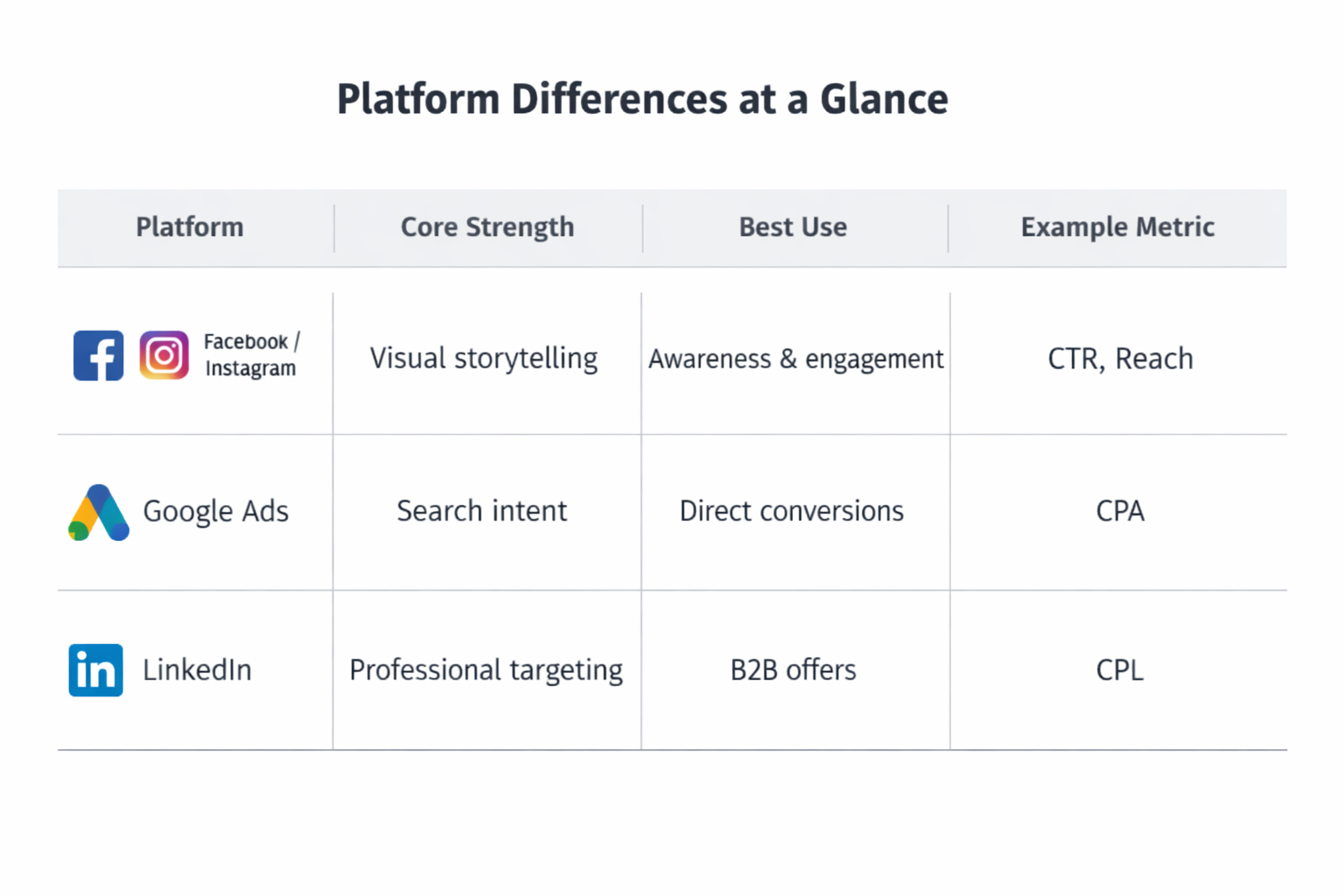
For example:
-
Facebook and Instagram rely on visuals, storytelling, and social proof to drive engagement.
-
Google Search focuses on intent — users are already looking for something specific.
-
LinkedIn works best for professional offers and clear value messages.
If you use the same creative and targeting everywhere, your campaigns will likely waste money and fail to connect with the right audience. To understand how to align Meta’s key platforms, see Cross-Platform Strategy: How to Synchronize Facebook and Instagram Ads.
2. Tracking Results Is Complicated
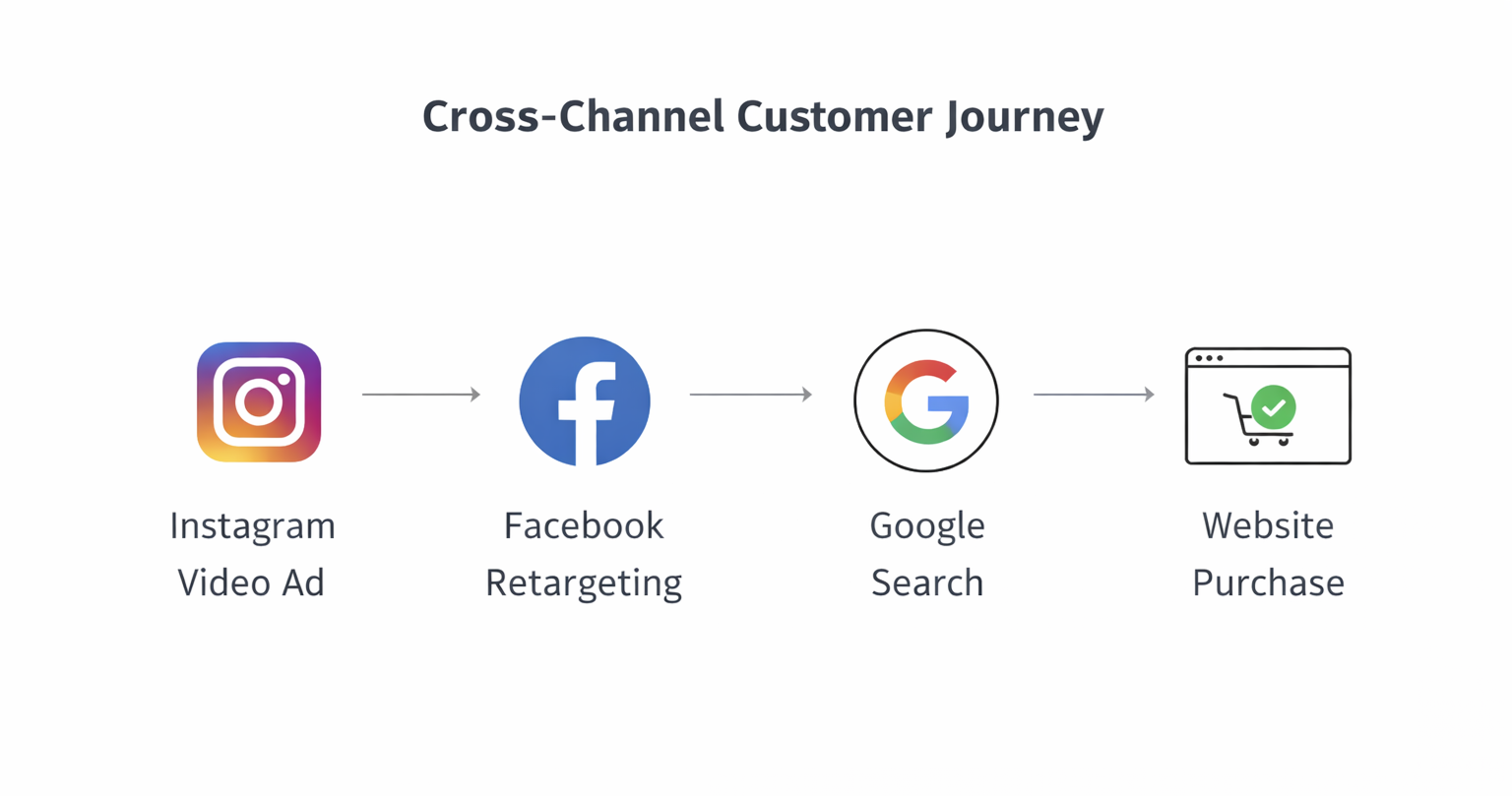
It’s hard to know which platform really drives conversions. Most customers interact with several ads before they buy.
Here’s a common example:
-
A person watches a video ad on Instagram.
-
Later, they see a Facebook retargeting ad.
-
Finally, they search on Google and complete the purchase.
Each platform counts that sale as its own success. Without proper tracking, your reports look inconsistent, and you might end up putting more budget into the wrong place.
To avoid this, marketers need better attribution — a system that shows how all channels work together. Learn more in Why Relying Only on Last-Click Attribution Hurts Ad Strategy.
3. Data Is Stuck in Silos
When every platform keeps its own data, you only see part of the picture.
Metrics like click-through rate (CTR), cost per click (CPC), or return on ad spend (ROAS) show performance inside one channel, but not how users move between them.
For example, Facebook may look unprofitable by itself. But when combined with CRM or Google Analytics data, it might turn out to be your best awareness driver, bringing users who later convert through other channels.
To manage this, you need a connected measurement setup, something outlined in The Complete Guide to Omnichannel Marketing in 2025.
4. Keeping the Message Consistent Is Tough
When teams manage ads separately, it’s easy for the brand voice to drift.
You might end up with:
-
Different tones or visuals across platforms;
-
Confusing or repeated offers;
-
CTAs that lead users in opposite directions.
To avoid this, build a shared creative system. Use one set of brand rules for colors, tone, and key messages. Then adapt the same idea to fit each platform’s style.
For guidance on how to keep your visuals and messages aligned, see Creating Unified Messaging Across Facebook and Instagram Ads.
How to Make Multi-Channel Marketing Work
Step 1: Give Each Channel a Clear Role
Each platform should serve a specific purpose in your marketing funnel.
For example:
-
Facebook / Instagram: Create awareness and build trust.
-
Google Search: Capture ready-to-buy customers.
-
Email / Retargeting: Nurture leads and bring users back.
This approach reduces overlap and makes your budget work smarter. For deeper insights on role distribution, read Cross-Channel Ad Funnels: When Facebook Drives, and When It Converts.
Step 2: Connect and Centralize Your Data
You can’t manage what you can’t measure clearly. Combine data from ads, CRM, and website analytics into one view.
This helps you:
-
Track how users move between platforms;
-
Spot duplicated audiences;
-
See which channels influence conversions the most.
Tools like Meta’s Conversion API or Google Data Studio can bridge gaps and show the full journey.
Step 3: Keep Your Creative Aligned
A simple creative system helps maintain consistency without limiting ideas.
Here’s how to do it:
-
Start with one main message (for example, “save time with automation”).
-
Adjust it to fit the platform — short visuals for Reels, stronger proof for Facebook, clear copy for Google.
-
Use shared design templates and tone so your brand looks and feels the same everywhere.
This builds trust, recognition, and makes your campaigns easier to scale.
Step 4: Measure What Really Matters
Short-term metrics can be misleading. High clicks or a sudden ROAS jump don’t always mean true growth.
Instead, focus on:
-
Customer Lifetime Value (LTV);
-
Incremental lift (extra results driven by your ads);
-
Retention and return visits over time.
These numbers show whether your marketing builds long-term results — not just temporary spikes.
Conclusion
Multi-channel marketing is not just about showing up everywhere. It’s about being coordinated, consistent, and connected.
When your channels have clear roles, your data works together, and your message stays unified, every ad supports the next. That’s how brands move from fragmented campaigns to systems that grow steadily over time.
It takes structure and patience, but once you align your data, goals, and creative, you stop competing with yourself and start compounding results.
