Marketers love discounts. They’re simple to run, straightforward to track, and easy to pitch to leadership.
But there’s a catch — they rarely build customer loyalty. And they almost never grow your customer lifetime value (LTV) the way post-purchase ads can.
Here’s why.
Discounts Create One-Off Buyers, Post-Purchase Ads Create Relationships
Think about it: when someone buys from you and immediately gets a 20% off coupon for the next order, what are they learning?
They learn to wait for the next deal, code, or price drop.
That means your margins shrink, and your customers become less loyal, not more engaged.
Now imagine something different.
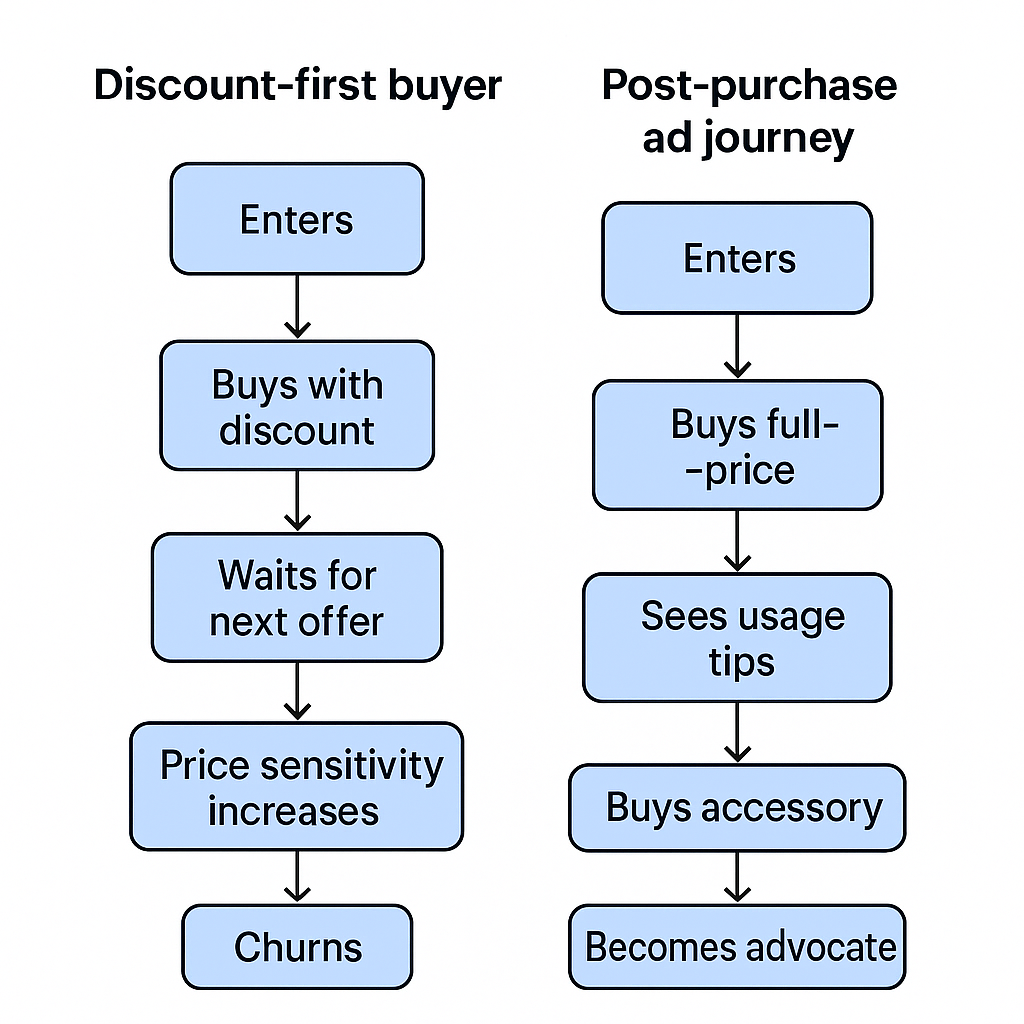
A customer buys a product. Two days later, they see an ad showing how to get more out of what they just bought. Maybe it's a “pro tip” video or a complementary product that enhances their experience. A few days later, they’re shown how other customers are using the product in smart, creative ways. Later, they see a limited edition or premium add-on.
In this case, you're not giving away value. You're adding to it.
This kind of messaging leads to repeat purchases, stronger brand affinity, and ultimately, higher LTV. If you’re still measuring success mostly by ROAS, it’s time to look deeper — here’s why pairing ROAS with LTV is a smarter long-term play.
Post-Purchase Ads Tap Into the “Ownership Mindset”
The moment someone buys from you, a psychological shift happens. They've made a commitment and now own something from your brand.
This creates a rare and powerful opportunity.
People are far more open to hearing from you when they feel good about a purchase. Use this moment wisely. Show them how to make the most of what they just bought. Introduce a higher-tier product. Upsell with relevance, not pressure.
Ideas for Post-Purchase Ad Campaigns:
-
Product education: Short, helpful videos that demonstrate how to use the item better.
-
Complementary products: Related items that make the original purchase even more useful.
-
Social proof: Showcase how others are using the product through UGC, testimonials, or creative use cases.
-
Exclusive upgrades: Early access or premium versions available only to existing customers.
-
Milestone rewards: Ads triggered after 30, 60, or 90 days to encourage another purchase.
These ideas create momentum instead of fatigue. When done right, they reinforce satisfaction and increase the chance of long-term loyalty.
If you’re unsure how to structure these campaigns, this breakdown of campaign objectives can help you choose the right one.
Additional Tip: Use behavior-based segmentation. If someone viewed your warranty or how-to content post-purchase, target them with a value or protection upgrade.
Bonus: Remind customers of usage milestones with personalized nudges, like: “You’re 30 days in. Here’s how most people double their results.”
Discounts Attract Price Shoppers. Post-Purchase Ads Build Value Shoppers.
Discounts bring in bargain hunters. These buyers aren’t necessarily your best long-term customers. They often switch brands over a small price difference, are more likely to return items, and less likely to recommend you.
Post-purchase ads speak to people who already believed in your value — and bought without needing a discount.
When you reconnect with them in a relevant and helpful way, they pay attention. More importantly, they come back to buy again.
Not sure if your audience is ready for this kind of engagement? Use this guide to define and segment them properly.
Strategies to Shift Away from Discounts:
-
Swap discount codes for bundles: For example, offer a “Pro Upgrade Pack” instead of a percentage off.
-
A/B test education vs. incentive ads: Use engagement data to uncover what drives actual purchase behavior.
This approach attracts customers who see long-term value in your product, not just a lower price.
You Can Layer Ads Without Overwhelming
Some marketers worry post-purchase ads might annoy customers.
They won’t — if you plan the sequence thoughtfully.
This isn’t about hitting people with “Buy more!” messages. It’s about layering relevant, well-timed content that adds value and feels personal.
Best Practices for Post-Purchase Ad Sequencing:
-
Wait 48–72 hours before showing the first post-purchase ad.
-
Exclude recent buyers from top-of-funnel retargeting and build separate audiences.
-
Use dynamic creative to personalize messaging based on what was purchased.
-
Cap frequency to keep ads fresh and non-intrusive.
Each touchpoint should feel like a continuation of the experience, not a sales push.
If your ad sets aren’t delivering, or you’re getting the dreaded “zero reach” issue, this troubleshooting guide can help.
Pro Strategy: Build a simple retargeting flow like this:
-
Day 2: Setup or usage tips.
-
Day 5: Accessory or add-on suggestion.
-
Day 10: Loyalty program or referral ad.
This approach ensures relevance and avoids fatigue.
LTV Growth Is a Data Game — Post-Purchase Ads Give You More of It
Every post-purchase touchpoint generates behavioral data.
What they click, what they ignore, and how fast they respond all help you improve segmentation, personalization, and offer timing.
In contrast, a discount code tells you nothing beyond a price sensitivity signal.
If you want to build smarter LTV strategies, start by evaluating your entire funnel. Here’s how to analyze performance beyond ROAS.
Optimization Ideas:
-
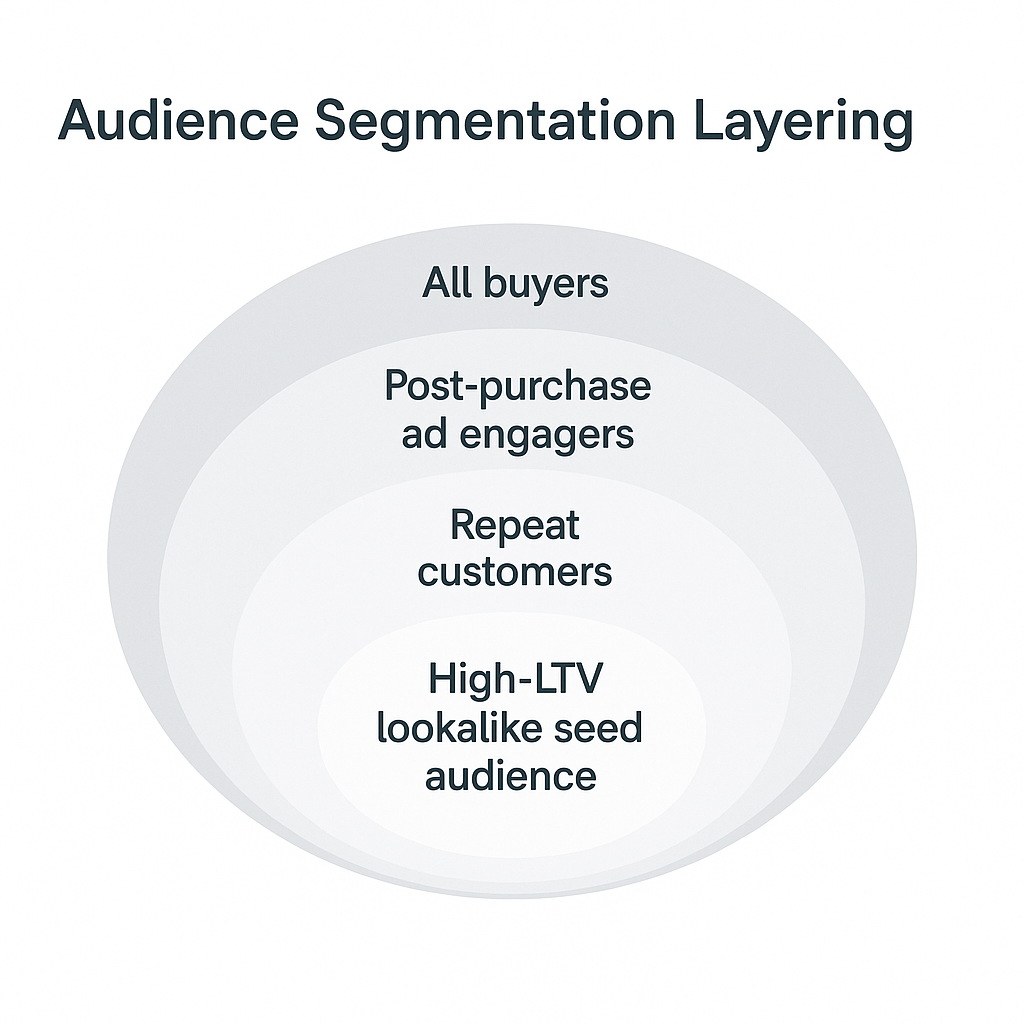
Track engagement with post-purchase ads: Create audiences based on actions taken and build lookalikes from top converters.
-
Experiment with timing: Some products convert best after 3 days, others after 3 weeks. Test both.
-
Trigger offers based on email behavior: Did someone click your post-purchase email but not convert? Show them an ad that reinforces the benefit.
You’ll start seeing patterns that help you increase not just LTV, but retention and satisfaction as well.
Reinforce the Purchase, Don’t Distract From It
This is one of the most overlooked parts of post-purchase marketing.
Avoid making customers second-guess their decision by showing them similar or discounted alternatives right after buying.
Instead:
-
Reinforce their choice with affirmation ads: “Why smart buyers love [Product].”
-
Show social proof from other customers.
-
Highlight upgrades and accessories that build on their current purchase.
This makes the customer feel smart and validated, not hesitant.
Final Thoughts
Want higher LTV? Don’t default to discounts. Use the golden moment after purchase to deepen the connection, deliver more value, and make the next sale feel like a logical step in their journey.
You already earned their trust once. Use that momentum to grow a customer, not just a one-time buyer.