When your ad shows up once, people forget. When it shows up again — in the right way, at the right time — they start to remember.
If you're running ads on Facebook or Instagram, repetition isn’t just helpful. It’s necessary. It builds familiarity, trust, and results over time.
But not all repetition works. Repeating the wrong message, or showing the same ad too often, can hurt performance. Let’s explore why repetition matters — and how to do it in a way that actually helps your campaigns.
Why Repetition Matters in Digital Ads
People Rarely Act on the First Touch
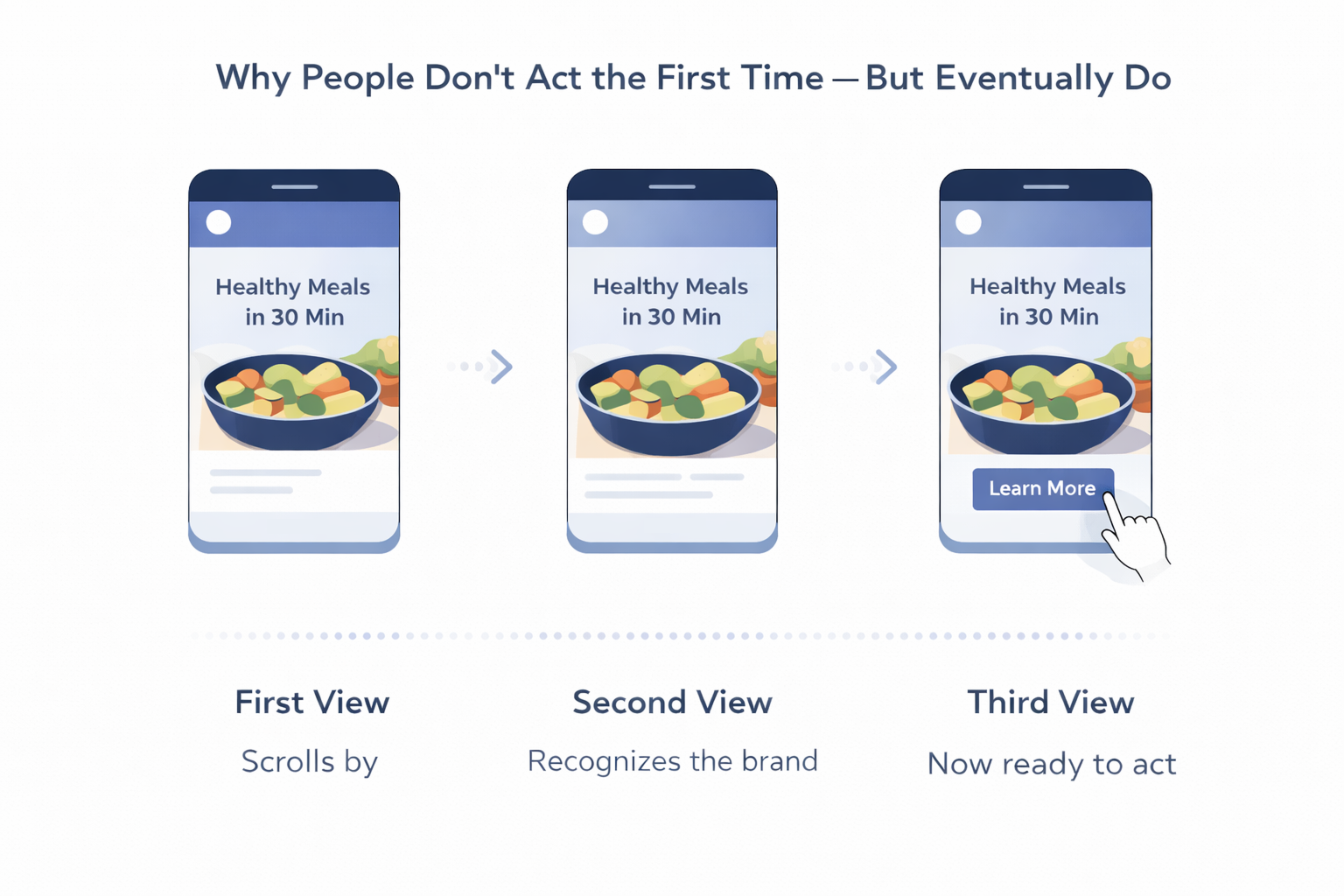
Most people don’t click or buy the first time they see your ad. They’re busy. Distracted. Not ready yet. That doesn’t mean your ad failed. It means they need more time.
This is why strong brands repeat their messages. Repetition helps your offer stick — so when the time is right, they think of you.
The Brain Likes Familiar Things
Psychologists call this the “mere exposure effect.” When we see something a few times, we’re more likely to trust it — even if we don’t fully notice it at first.
If your ad shows up often (without being annoying), people start to recognize your logo, your tone, your style. That sense of familiarity builds comfort — and comfort makes people more likely to act. Learn more in The Psychology Behind Retargeting: Why Familiarity Sells.
What Smart Repetition Looks Like
Repetition doesn’t mean showing the same exact ad every day. That leads to fatigue — fast. Instead, use repetition with variation.
Here’s how:
1. Repeat the Message, Not the Ad
You want your core message — the what and why — to stay the same. But the way you deliver it can (and should) change.
Example: Let’s say you run a local meal delivery service. Your main message is: "Healthy dinners delivered in under 30 minutes."
Here’s how you could repeat it across different formats:
-
Reel: Show a customer opening the bag and plating dinner.
-
Story Ad: Before/after photos of a fridge with and without your meals.
-
Feed Carousel: One slide for each step: pick your meals, delivery, heat, eat.
-
Click-to-Messenger ad: Ask people their dinner routine, then recommend a weekly plan.
Same message. Different entry points. That’s what smart repetition looks like.
2. Use Ad Sequences to Build the Story
Don’t try to say everything in one ad. Break your message into pieces and deliver them in a planned sequence.
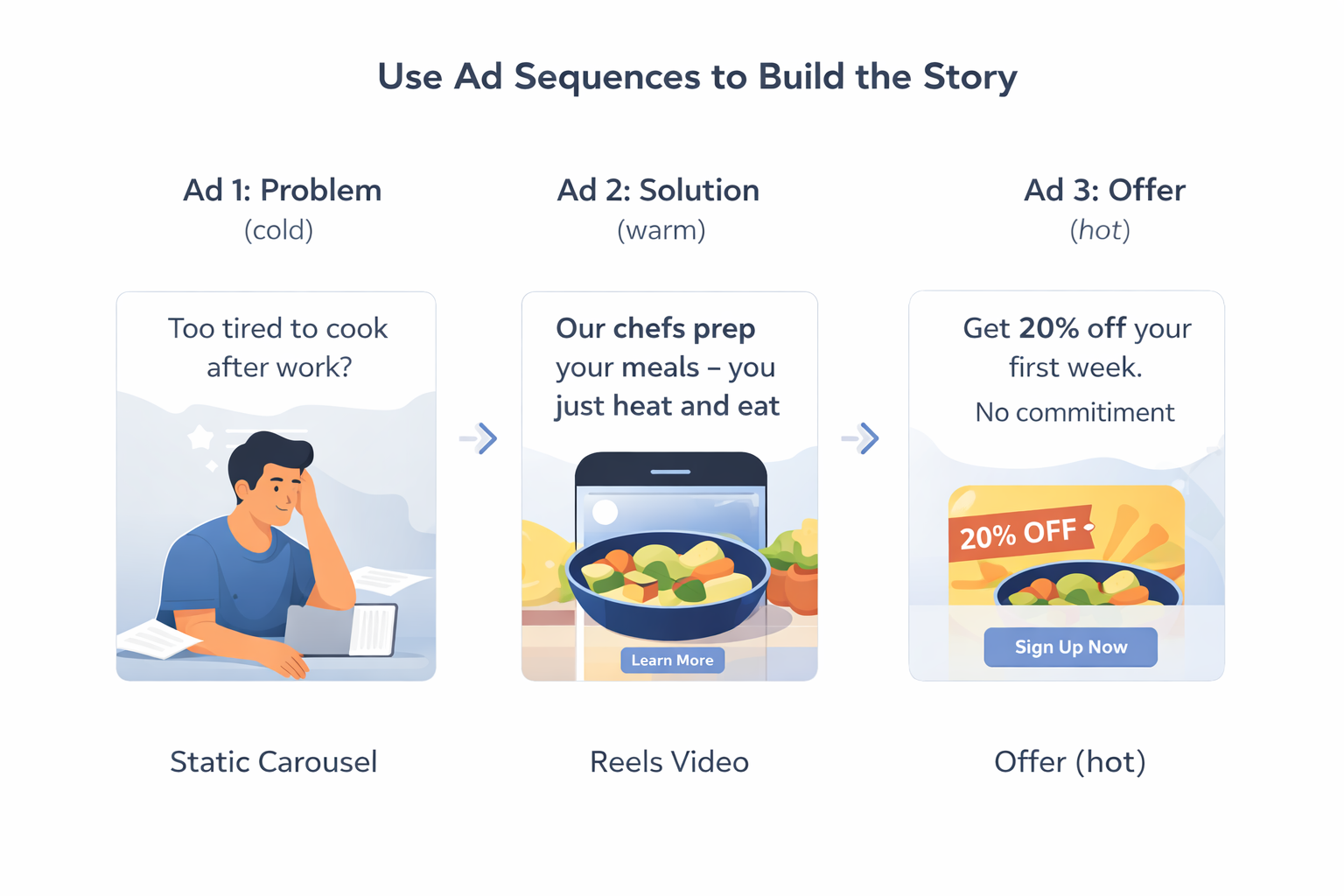
Here’s a simple three-step ad flow you can use:
-
Problem Awareness
Show the issue your product solves.
Example: “Too tired to cook after work?” -
Value Delivery
Explain what your solution does and how it helps.
Example: “Our chefs prep your meals — you just heat and eat.” -
Call to Action
Offer a clear next step, like a discount or trial.
Example: “Get 20% off your first week. No commitment.”
You can run these ads back to back, or space them over a week using retargeting.
This structure is proven — explore more in Retargeting Strategies That Double Your ROAS.
3. Reinforce Key Visual Elements
Repetition isn’t just about what you say — it’s also how you look.
Use consistent elements to make your brand easy to recognize, like:
-
Color palette: Stick to 1–2 main brand colors.
-
Logo placement: Keep it in the same spot across creatives.
-
Fonts and type styles: Use the same size and style for headlines.
-
Voice and tone: Whether casual, direct, or friendly — stay consistent.
The more people see and recognize these elements, the faster your brand builds mental space.
How to Use Repetition Without Causing Fatigue
Yes, repetition works — but too much of the same thing can backfire. If people start ignoring your ads or marking them as irrelevant, performance drops.
Here’s how to avoid that:
Mix Creative While Keeping the Core
If you're running a single campaign for three weeks, don’t just let one ad run on autopilot.
Instead, use two or three ad versions that:
-
Say the same core thing
-
Use different visuals, lengths, or formats
-
Target slightly different audience interests or behaviors
You’re repeating, but not boring people.
Example:
A fitness coach might test:
-
A 15-second workout clip with a strong CTA
-
A client transformation carousel with captions
-
A quote image with a motivational message
Same outcome: “Sign up for coaching.” Different angles and entry points.
Want help deciding what to change? See What to Test First: Creative, Copy or Audience.
How Facebook and Instagram Algorithms React to Repetition
The Meta algorithm learns faster when you repeat key signals. Changing too much, too often, can confuse the system — and slow results.
Here’s what helps:
-
Keep the campaign objective stable — avoid switching from traffic to conversions mid-flight.
-
Let ad sets run long enough to learn — especially if you’re testing variations.
-
Use similar headlines or hooks — that helps the system identify patterns that work.
Algorithms favor consistency with variation — not randomness. But if your ads run too long without a refresh, it can lead to performance dips.
How to Measure If Repetition Is Working
Look at performance across time, not just daily snapshots.
Check these indicators:
-
Frequency: Are people seeing the ad often enough (but not too much)? A frequency of 2–4 is often a good place to start.
-
Time to convert: Are people converting after a few touches? You can see this in attribution reports.
-
Retargeting success: Are your warm audiences converting at higher rates than cold ones?
If someone clicks or buys after their third or fourth impression — that’s repetition doing its job.
Need a deeper dive? See Why Your Ad Frequency Matters More Than You Think.
Final Thoughts: Say It Again (But Smarter)
Repetition isn’t lazy. It’s strategic. It helps people remember, trust, and eventually act.
If your ads only show up once, you’re leaving money on the table. But if they show up too often without variation, you’ll lose attention.
The sweet spot is consistent message, delivered in fresh and useful ways.