Many advertisers blame Meta when lookalikes stop working. In most cases, the real issue sits inside the seed audience.
Meta builds lookalikes by copying patterns from your source list. If that list contains weak or mixed signals, performance drops fast. Budget increases only make the problem bigger.
If you want better lookalikes, you need better inputs.
How Meta Builds a Lookalike Audience
Meta studies the users inside your seed audience. It looks at behavior, device usage, purchase signals, and engagement patterns. Then it finds other people who behave in a similar way.
The system does not understand your margins or sales team feedback. It only understands patterns inside the data you provide.
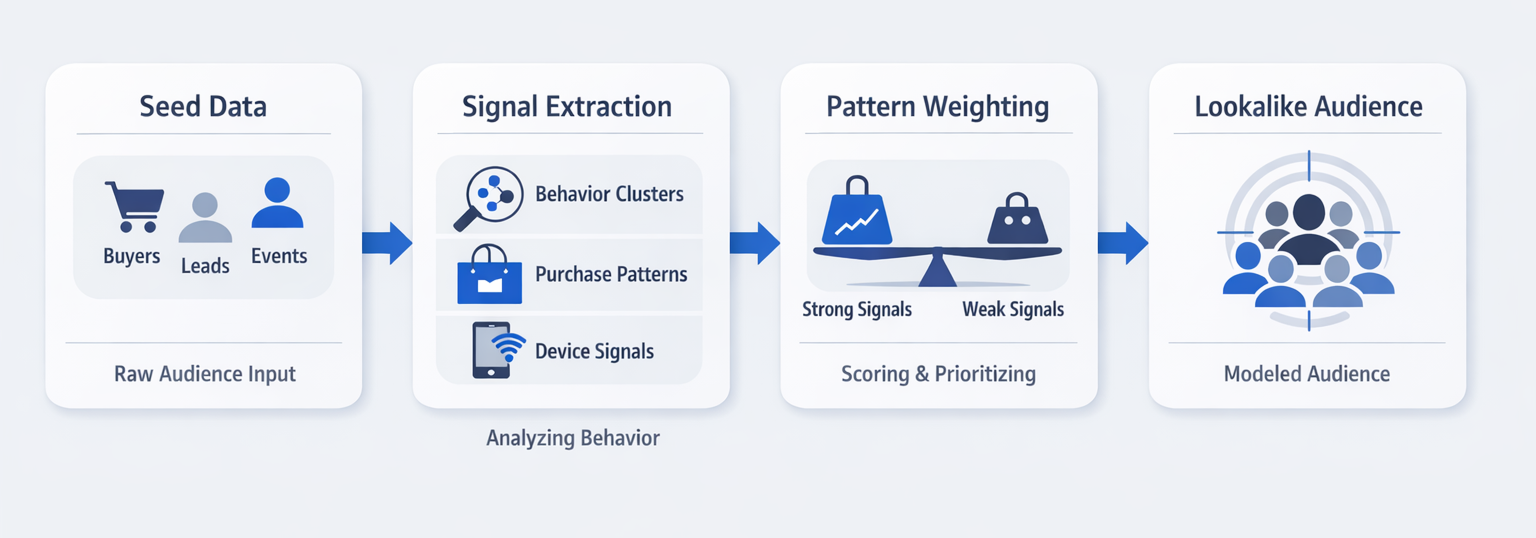
If your seed is full of low-quality leads, Meta will find more low-quality leads. The algorithm is consistent. It scales whatever behavior it sees.
If you need a deeper breakdown of mechanics, read Understanding Lookalike Audiences: A Practical Guide for Marketers.
Why Most Lookalikes Underperform
Most advertisers build lookalikes from easy conversions. That usually means all leads, all purchases, or long historical lists.
This creates several problems:
-
Mixed intent levels; a webinar signup does not equal a paying customer.
-
Outdated data; users from 12 months ago reflect old offers and old messaging.
-
Low commercial value; cheap buyers dominate the pattern.
-
No revenue filtering; all conversions count the same inside the seed.
When the seed lacks focus, the lookalike lacks focus.
If you see unstable performance, also review Why Your Lookalike Audiences Underperform (And What to Do About It) .
What a High-Quality Seed Actually Looks Like
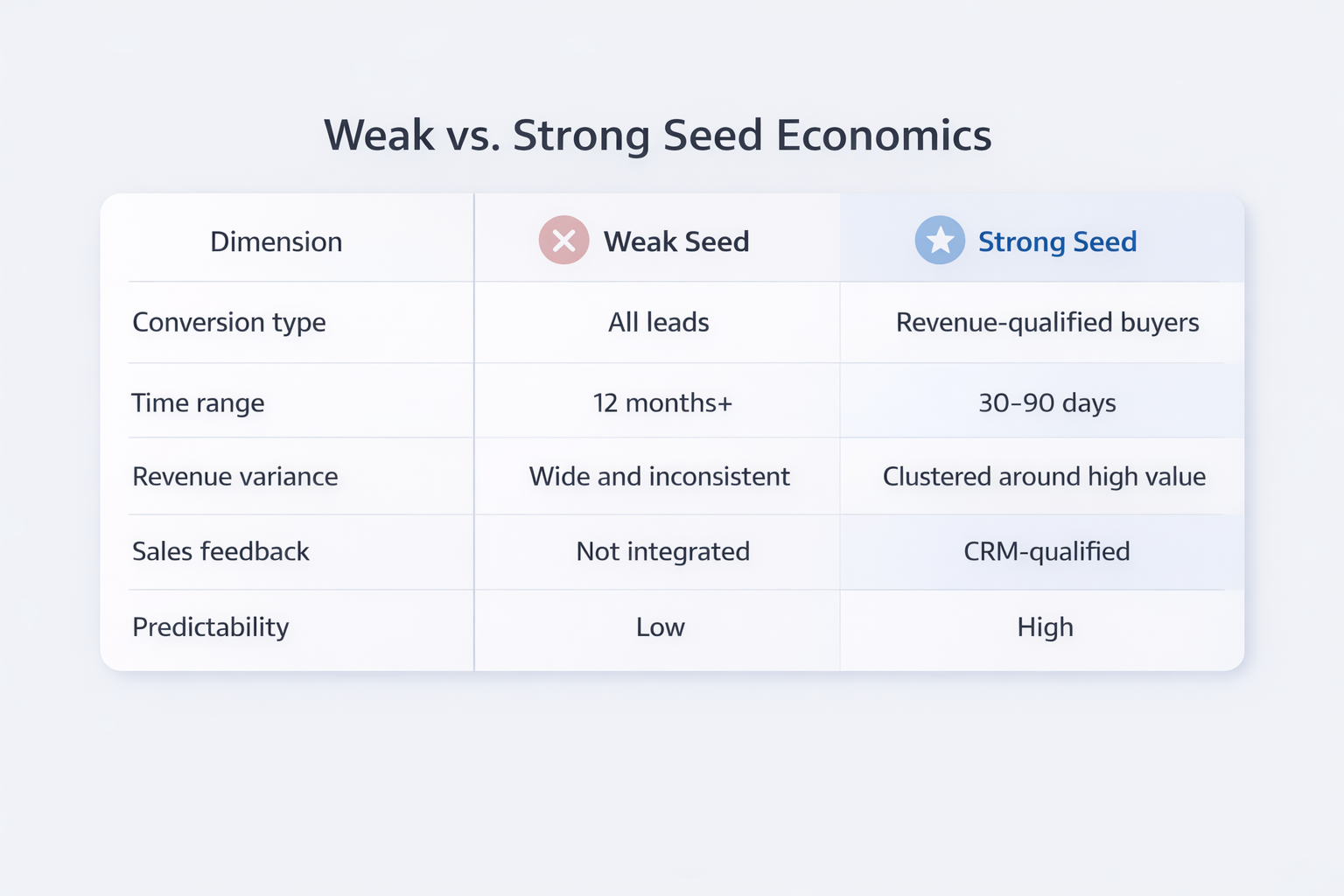
A strong seed is not just large. It is specific and economically meaningful.
High-quality seeds usually include:
-
Paying customers instead of raw leads; this aligns targeting with revenue.
-
Qualified opportunities; for B2B, use booked meetings that passed screening.
-
Recent conversions; 30–90 days keeps the signal current.
-
Consistent behavior; similar sales cycles improve pattern clarity.
The more consistent the seed, the clearer the behavioral fingerprint.
If you want a broader perspective on why quality beats volume, review Audience Quality vs Quantity: What Drives Better Long-Term Results? .
How Seed Quality Impacts Cost Per Lead
If your seed includes unqualified leads, your lookalike will target similar profiles. These users click, submit forms, and disappear. Your sales team struggles, and cost per qualified lead rises.
You then increase budget to recover volume. That spreads spend across even weaker users.
When the seed contains high-intent buyers, conversion probability increases. Meta can predict outcomes with more accuracy. Cost per result stabilizes because the audience is closer to your ideal customer.
For a tactical walkthrough, see Lookalike Audiences: How to Seed, Train, and Scale .
Practical Ways to Improve Your Seed
Improving seed quality does not require complex setups. It requires better filtering.
Segment by Value, Not Just Event
Do not use all purchasers in one list. Separate high-ticket buyers from discount-driven customers. Build lookalikes from each segment and compare revenue per campaign.
This shows which customer type scales profitably.
Shorten Your Time Window
A list from the last 60 days is often stronger than a 365-day list. Recent users reflect current pricing, creatives, and positioning.
If volume is low, test both short and long windows. Compare qualified lead rate, not just CPL.
Remove Low-Quality Conversions
Exclude:
-
Refunded customers;
-
Duplicate leads;
-
Spam submissions;
-
Freebie seekers from contests.
Each low-quality record weakens the pattern.
Match Seed to Campaign Objective
If your campaign optimizes for purchases, use buyers as the seed. If you optimize for qualified leads, use CRM-verified opportunities.
Do not mix funnel stages inside one source audience. Clarity improves results.
Signs Your Seed Needs an Update
Sometimes performance tells you the seed is outdated.
Watch for:
-
Stable lead volume but falling close rates;
-
Rising cost per qualified opportunity;
-
Lower average deal value from lookalike campaigns;
-
Frequent learning resets without structural changes.
These signals often mean the model is copying the wrong behavior.
Refreshing the seed can restore performance without changing creatives or budgets.
A Simple Testing Framework
If you want a controlled approach, test seeds the same way you test creatives.
-
Create two or three clearly defined seed audiences.
-
Build separate 1 percent lookalikes from each.
-
Keep budgets and creatives identical.
-
Compare revenue per campaign and qualified lead rate.
Do not judge based on click-through rate alone. Revenue metrics reveal which seed drives real growth.
Final Takeaway
Lookalike performance is not random. It reflects the quality of the source audience.
If results are inconsistent, start by auditing your seed. Focus on revenue, intent, and recency. When the source is strong, scaling becomes predictable instead of risky.