Facebook ads used to be laser-focused. You could target a job title, a purchase behavior, or a niche interest — and trust the results. But today, those same targeting methods don’t perform like they used to.
If your campaigns are more expensive and less predictable, it’s not just you. Facebook’s targeting system has changed — and smart advertisers are adapting fast.
What Broke the Old Targeting System
Apple’s tracking limits hit Facebook hard
When Apple rolled out App Tracking Transparency (ATT), most iOS users chose not to be tracked. That meant:
-
Facebook lost key conversion signals from outside its apps;
-
Retargeting pools shrank, especially on mobile;
-
Interest data became less reliable or disappeared entirely.
Before ATT, Facebook could track user behavior across other apps and sites. Now, that data is often missing or delayed — especially if you still rely on the old pixel setup.
For ways to adapt, read Combating iOS Privacy Changes: Smart Ad Targeting Strategies for Facebook.
Facebook now leans heavily on what happens inside the platform
With less data from outside sources, Facebook shifted focus to user activity within Facebook and Instagram:
-
Which posts people save, share, or engage with;
-
How long they spend on content;
-
What ads they watch or click without bouncing.
This means your off-platform events — like purchases or signups on your site — have less influence unless you’ve updated your tracking setup.
Old Targeting Tactics That No Longer Work
Lookalike audiences based on weak data
Lookalikes used to be gold. But if your source audience is built on weak or delayed signals — like pixel-only purchases — expect poor results.
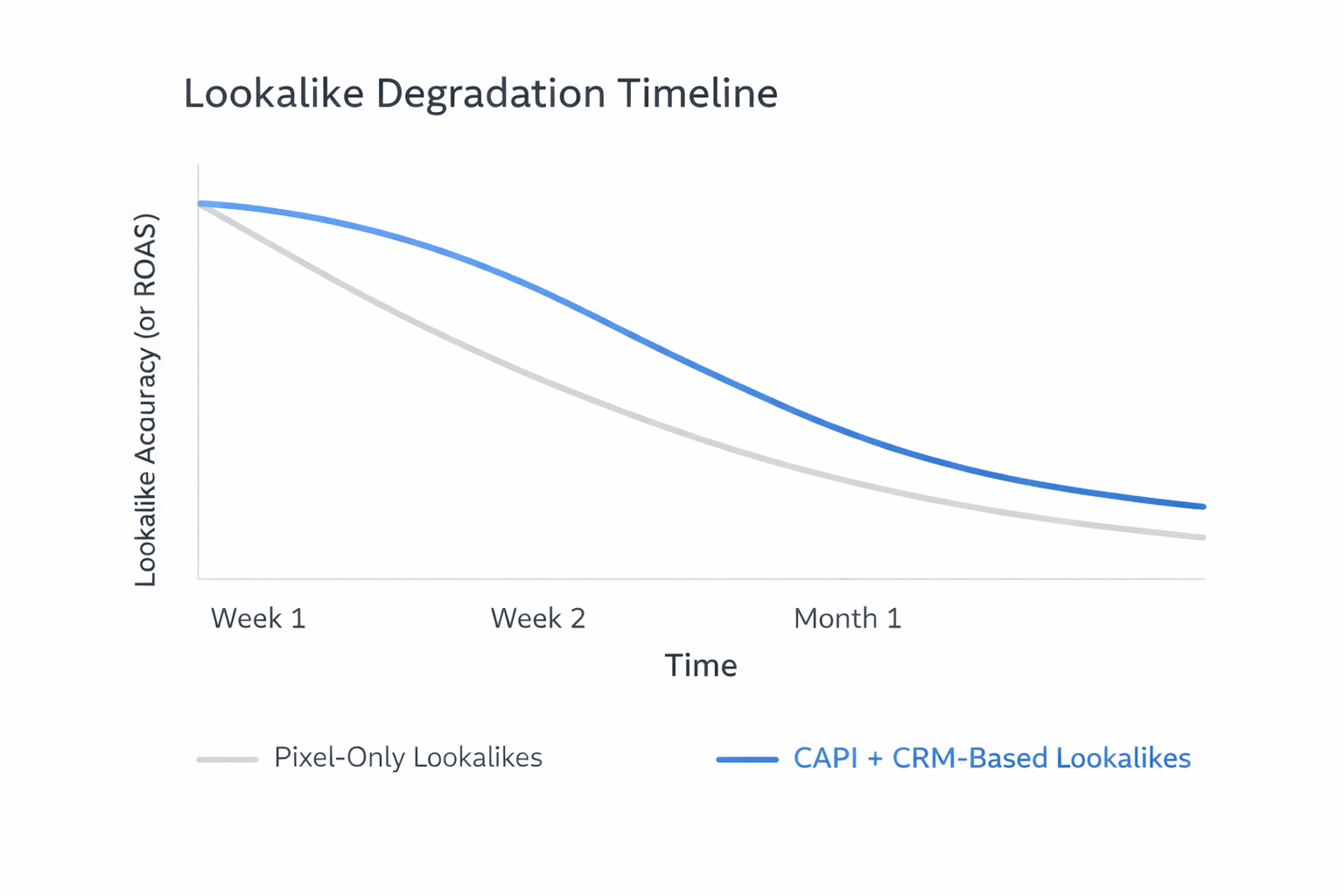
Today, you’ll likely see:
-
Lookalikes underperforming compared to broad targeting;
-
Almost no difference between 1% and 5% lookalikes;
-
Fewer conversions and more expensive clicks.
What to do: Use Conversions API and connect backend data like purchases or lead quality. Refresh source audiences often — especially if your business changes quickly.
For an in-depth breakdown, see What to Do When Lookalikes Stop Performing.
Over-narrow interest targeting
Stacking interests like “marketing managers” + “email software” + “digital events” used to help refine your audience. But now:
-
Facebook struggles to match users accurately;
-
Audience size drops too low for learning;
-
Performance often drops compared to broader setups.
What to do: Focus on broader themes or single-interest groups. Pair them with strong creative and test results directly. Also see Interest Targeting on Facebook: What Still Works (and What Doesn’t).
What Facebook’s Algorithm Rewards Now
Positive signals are deeper than just clicks
Clicks used to be the most important signal. That’s no longer true. Now, Facebook’s system favors signals that show deeper user interest:
-
Shares, saves, and comments;
-
Long viewing time;
-
Low bounce rates after clicking.
A flashy ad with a high clickthrough rate (CTR) might still fail if users bounce too fast. That can raise your CPMs and reduce delivery.
More on this in How to Analyze Facebook Ad Performance Beyond CTR and CPC.
Post-click behavior shapes your CPM
Facebook tracks what happens after someone clicks your ad:
-
Does the landing page load fast?
-
Do users stay and scroll, or exit immediately?
-
Is the content relevant and clear?
If your post-click experience is weak, your ad gets penalized — even if the ad itself performs well.
What to Focus On Now
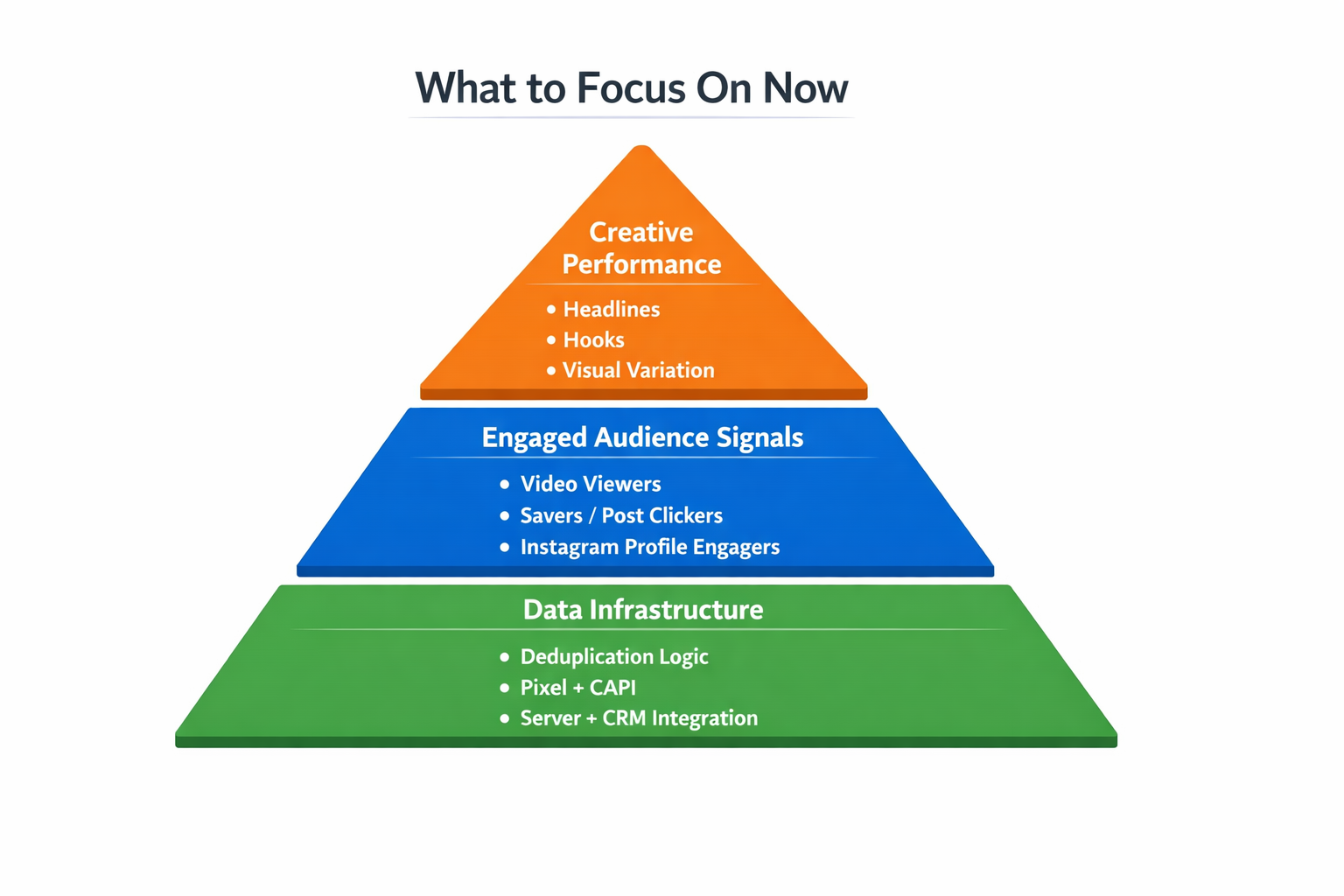
1. Clean up your tracking setup
The Meta Pixel alone isn’t enough. To get better data into Facebook’s system, use:
-
Conversions API (CAPI) connected to your server or CRM;
-
Real-time signals like subscriptions, purchases, or app logins;
-
Deduplication to avoid double-counting events.
The better the data, the better your targeting — especially for remarketing and lookalikes.
2. Build custom audiences from real engagement
Interest targeting is weaker. Instead, create audiences based on actions users take inside Facebook and Instagram:
-
People who watched at least 50% of your videos;
-
Users who saved or clicked on your posts or ads;
-
Visitors who interacted with your profile or stories recently.
These signals are fresh, reliable, and still part of Meta’s data pool.
3. Let your creative guide delivery
When targeting is broad, your creative does the heavy lifting. Meta’s system watches how users react and adjusts delivery based on that. Focus on:
-
Testing different hooks and headlines;
-
Highlighting clear value — price, time saved, results;
-
Tracking which creatives drive results across campaigns.
Pro tip: Break down ad performance by creative element. Identify which openers or visuals work best and double down.
Final thoughts: Precision Isn’t Gone — It’s Just Different
Facebook’s targeting didn’t disappear. It changed. The old rules — stack interests, trust the pixel, build wide lookalikes — don’t work like they used to.
Advertisers who succeed today:
-
Feed Facebook better first-party data;
-
Build audiences around real user actions;
-
Test creative like it’s their main targeting lever.
Adapt to the new rules, and you’ll stay ahead — even as the platform keeps shifting.