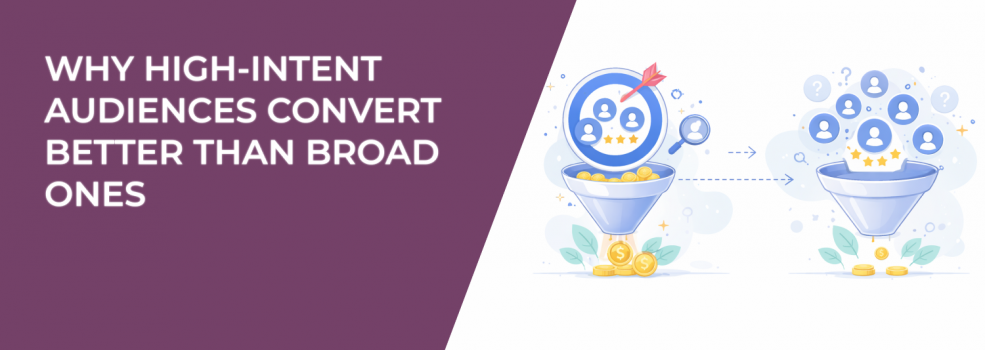
Many advertisers think broad targeting brings better performance because it’s cheaper and reaches more people. But if the people seeing your ad don’t care or aren’t ready to buy, you’ll waste your budget fast.
High-intent audiences are different. They’re made up of people who already know your brand or have taken steps toward buying — like visiting your site or watching your product video. These users are more likely to click, engage, and convert. And Meta’s system learns better from them.
This article breaks down why these audiences perform better, how to find them, and how to build Meta campaigns around them — especially if you're working with a small budget.
What is a high-intent audience?
A high-intent audience includes people who’ve already shown real interest in your offer. They’re not just scrolling. They’re thinking about buying, signing up, or learning more.
You can spot high intent by actions like:
-
Visiting your site’s product or pricing page;
-
Watching most of your video ad;
-
Adding an item to cart;
-
Opening and interacting with a lead form;
-
Returning to your site more than once.
The more serious the action, the stronger the intent. These users are much more likely to convert — and Meta can see that.
Learn how to identify high-intent audiences using Facebook Insights.
Why broad targeting often underperforms
Meta’s default advice is to go broad. That can work for big brands with mass-market appeal and deep pockets. But for most advertisers, it leads to poor results.
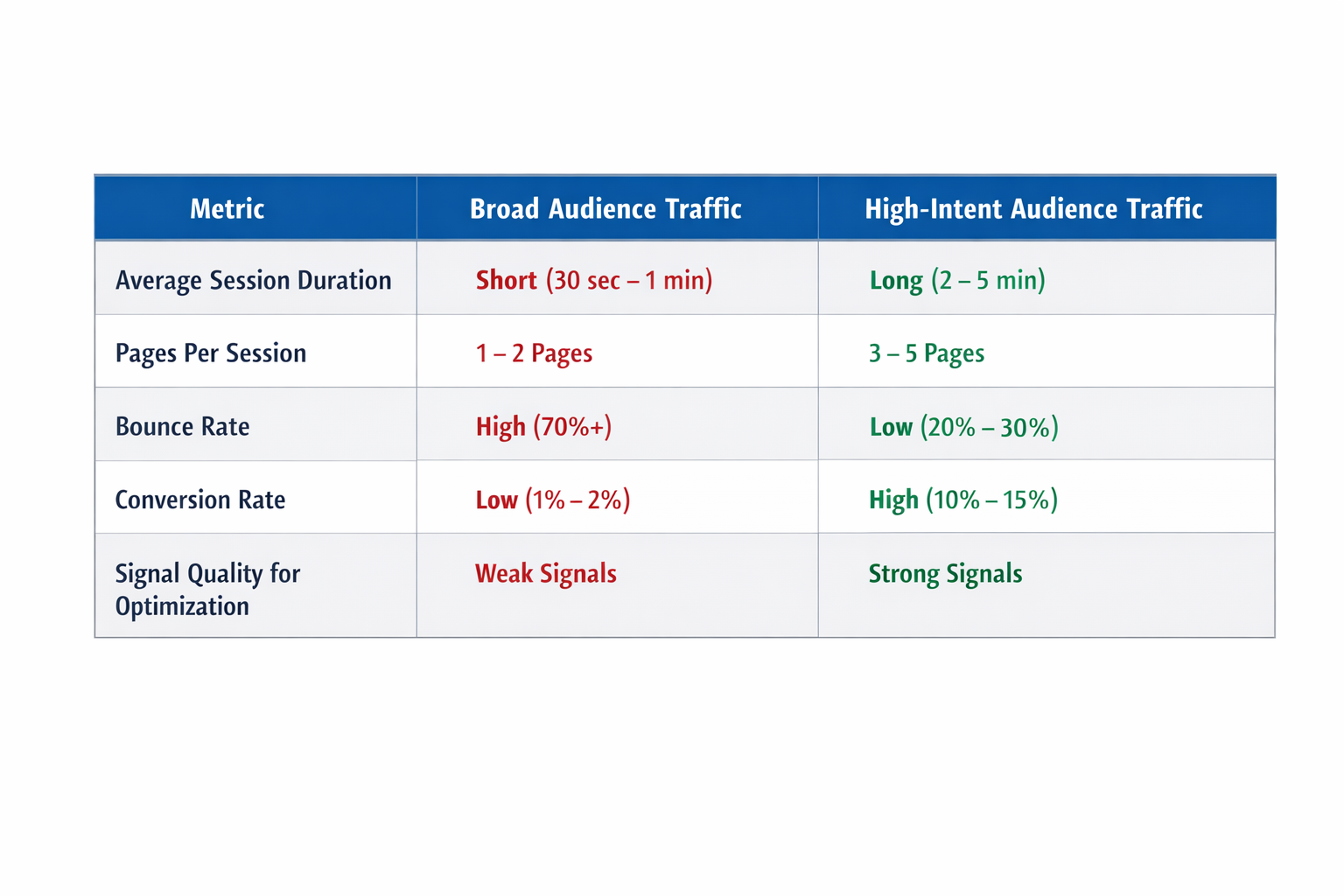
The problem with broad audiences:
-
You show ads to people who don’t care or aren’t ready;
-
Meta’s system gets weak signals and struggles to optimize;
-
You spend more getting fewer real results.
You may get cheaper impressions or clicks, but those numbers won’t matter if sales don’t follow. Broad can mean waste.
For a full breakdown, see retargeting vs. broad targeting: which strategy drives better results.
How Meta’s system uses intent
Meta doesn’t just track clicks. It also watches what people do after they click.
Some of the key behaviors Meta looks at:
-
How long someone stays on your site;
-
How far they scroll;
-
If they visit more than one page;
-
If they come back later;
-
If they complete a valuable action, like a purchase or sign-up.
If your audience is high intent, they’ll send stronger signals. Meta uses those signals to find more people like them. If your audience bounces or ignores your offer, your campaign struggles to learn.
This connects to how Meta favors behavior patterns — not just interest matches. Learn more in signals, not segments: the new way Meta measures users.
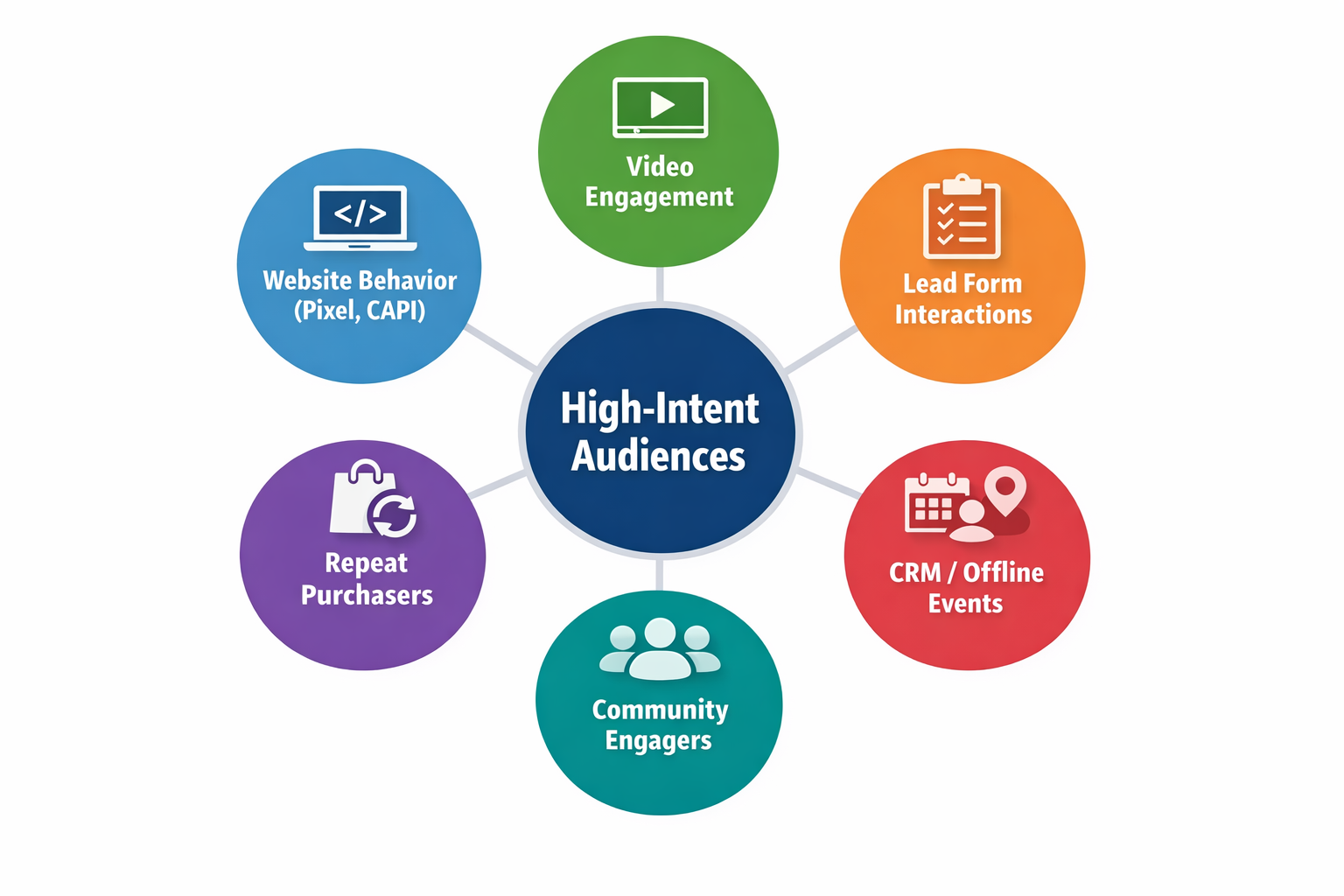
Where to find high-intent audiences
You won’t find high-intent users by guessing. You build them using real behavior — online and offline.
1. Track site behavior
Use Meta Pixel and Conversions API to capture:
-
Who viewed your products;
-
Who started checkout;
-
Who visited multiple times;
-
Who converted offline (e.g., phone calls, store visits).
Then build custom audiences and lookalikes based on those actions.
2. Use Meta’s engagement tools
Inside Meta, you can create audiences from:
-
People who watched most of your video;
-
Users who opened but didn’t submit a lead form;
-
People who clicked or saved your post.
Not sure where to start? Here's how to create high-intent custom audiences for Facebook lead ads.
3. Sync your CRM or offline data
If you close deals through sales calls, email, or offline, send that data back to Meta. Use the Conversions API to track and target users who’ve already shown buying intent.
Why high-intent audiences make scaling easier
High intent doesn’t just improve results at a small scale — it helps you grow faster and with less risk.
Benefits of focusing on high intent:
1. Faster learning
Meta’s system sees clear patterns in what works. Your campaign exits the learning phase sooner and gets more efficient.
2. Lower cost per sale
Retargeting people who already know you usually costs less per conversion than reaching cold users.
3. Smarter creative testing
You’ll get cleaner results when testing ads. If your audience is qualified, you’ll know which creative elements actually make a difference.
Want to explore more? Check out how to build a sales-focused audience funnel with Facebook’s native tools.
Final thoughts
If you're still relying on broad targeting or weak signals, you're making Meta work harder — and paying for it. High-intent audiences give you better data, better results, and a more stable way to grow.
Don’t just chase reach. Build a system that attracts, tracks, and converts the right people — and feeds that information back into Meta.
Start with better signals. The rest will follow.