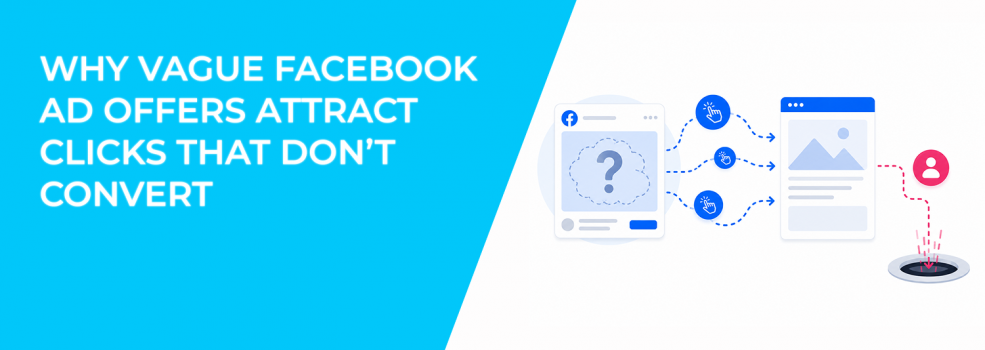
A Facebook ad can get clicks for the wrong reason. That is why CTR alone can make a weak offer look stronger than it is.
Vague offers often create curiosity. They make people wonder what the product does, what the price is, or whether the promise applies to them. Curiosity can produce clicks, but it does not always produce buyers, qualified leads, booked calls, or sales conversations.
This is where many campaigns become misleading. The ad appears to be working at the top of the funnel, while the business result stays flat.
The problem: vague offers create curiosity clicks instead of buying intent
A vague offer gives users just enough information to click, but not enough information to self-qualify. That means the click carries weak intent.
For example, “Get more customers with smarter marketing” may attract local businesses, coaches, agencies, e-commerce founders, and SaaS teams. The message is broad enough to get attention, but too broad to create clear commercial intent.
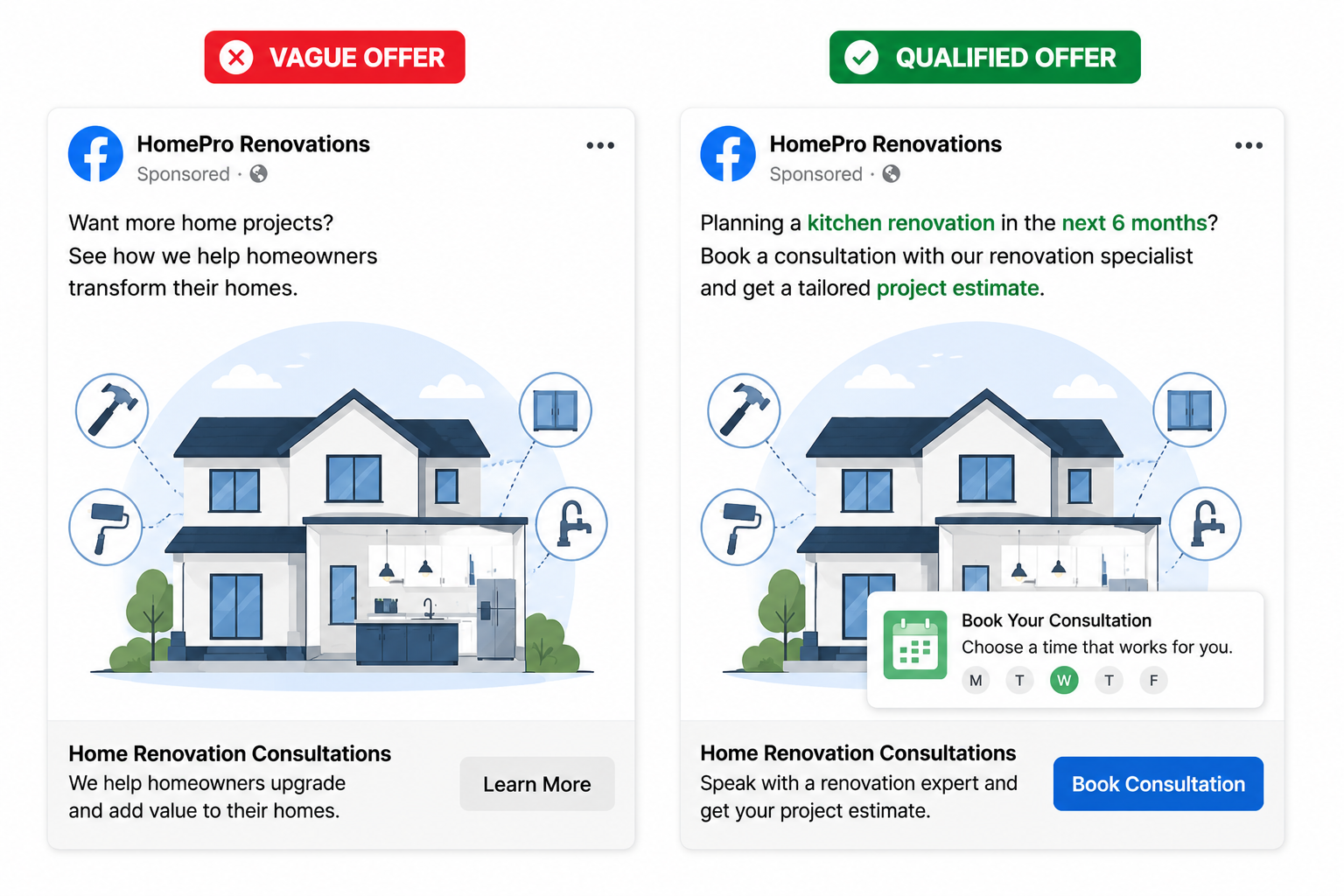
A sharper offer would be: “Book more local renovation consultations from homeowners already researching remodeling ideas.” That version filters the audience before the click happens.
This matters because high CTR does not always mean more sales. Clicks are useful only when they come from people who understand the offer and have a realistic reason to continue.
Why vague Facebook ad offers confuse Meta’s learning signals
Meta optimizes from the behavior it receives. If many users click but few convert, the campaign sends mixed signals.
The system can identify people who respond to the ad, but the response may not reflect purchase intent. It may reflect curiosity, confusion, or broad interest in the topic.
That creates a delivery problem. Meta may keep finding users who are likely to click because those users look similar to early clickers. If those early clickers were low-intent, the campaign learns from the wrong pattern.
This is how a campaign can generate traffic while CPA keeps rising. The platform is not necessarily broken. It may be optimizing around weak input signals.
How vague offers damage post-click performance
A vague ad often pushes the real explanation onto the landing page. That creates a mismatch between the click and the next step.
The user clicks expecting one thing, then lands on a page that requires more effort to understand the offer. Some users leave immediately. Others skim the page without taking action because the ad did not create enough commitment before the click.
Common signs include:
- Good CTR with weak form starts. The ad gets attention, but the offer does not create enough intent to begin the lead process.
- Low CPC with poor lead quality. Cheap clicks come from broad interest, not from people with the right buying need.
- High landing page views with low conversion rate. Users are willing to look, but not convinced enough to act.
- Sales complaints about bad leads. The campaign generates inquiries from people who misunderstood the offer.
This is why ads get clicks but no sales even when the surface metrics look acceptable.
Examples of vague offers versus conversion-focused offers
The fix is not always to make the ad longer. The fix is to make the promise more specific before the click.
| Business type | Vague offer that attracts weak clicks | Clearer offer that filters for intent |
|---|---|---|
| Local law firm | Get legal help today | Book a consultation for small business contract disputes |
| B2B SaaS | Improve your workflow | Automate client approval steps before projects stall |
| E-commerce brand | Shop products you’ll love | Buy fragrance-free skincare for sensitive, dry skin |
| Fitness studio | Start your fitness journey | Join small-group strength classes for beginners over 40 |
| Marketing agency | Grow with better ads | Reduce wasted Meta spend by finding higher-intent audiences first |
The clearer offer does more work before the user clicks. It tells the user whether the ad is for them, what problem it solves, and why the next step is relevant.
The solution: make the ad qualify the click before it happens
A strong Facebook ad should not attract everyone. It should attract the right people with enough clarity to make the next step meaningful.
To qualify the click, the offer should answer four questions inside the ad:
- Who is this for? Name the user type, business type, role, or situation.
- What problem does it solve? Use a concrete pain point instead of a broad improvement claim.
- What outcome should the user expect? Make the result specific enough to feel practical.
- Why is this offer different? Mention the mechanism, audience fit, speed, format, price model, or proof point.
For example, “Get better leads” is too loose. “Book qualified demo calls from startup founders already engaging with SaaS growth communities” gives the click a clearer intent profile.
Why clearer offers may reduce clicks but improve CPA
A more specific offer can lower CTR in some campaigns. That is not always bad.
If the ad filters out low-intent users, the remaining clicks may become more valuable. You may pay for fewer clicks while seeing stronger lead quality, better conversion rate, and lower CPA.
This is the difference between attention and intent. Vague ads often win attention because they sound broadly relevant. Clear ads win intent because the right user understands the reason to act.
If your ad copy can hurt lead quality, the fix is not to chase more engagement. The fix is to make the offer specific enough to repel the wrong clicks.
Final takeaway
Vague Facebook ad offers often attract clicks because they create curiosity. But curiosity is not the same as conversion intent.
Before judging CTR, check what happens after the click. If users visit but do not convert, the offer may be too broad, too unclear, or too easy for the wrong audience to misunderstand.
The stronger solution is to make the ad qualify the click before it happens. A clear offer may attract fewer people, but it gives Meta better signals and gives the business better leads.