Ever noticed your ads perform better at certain hours?
Maybe your cost per click drops in the evening. Or you suddenly get more sales around lunchtime. It’s not a coincidence.
The time of day affects how people react to ads — sometimes more than you think. If you're not paying attention to when your ads run, you could be wasting budget or missing opportunities.
Let’s talk about why timing matters, how it affects your results, and what you can do about it.
1. People Act Differently at Different Times
Your audience’s mood changes throughout the day — and so does how they use social media.
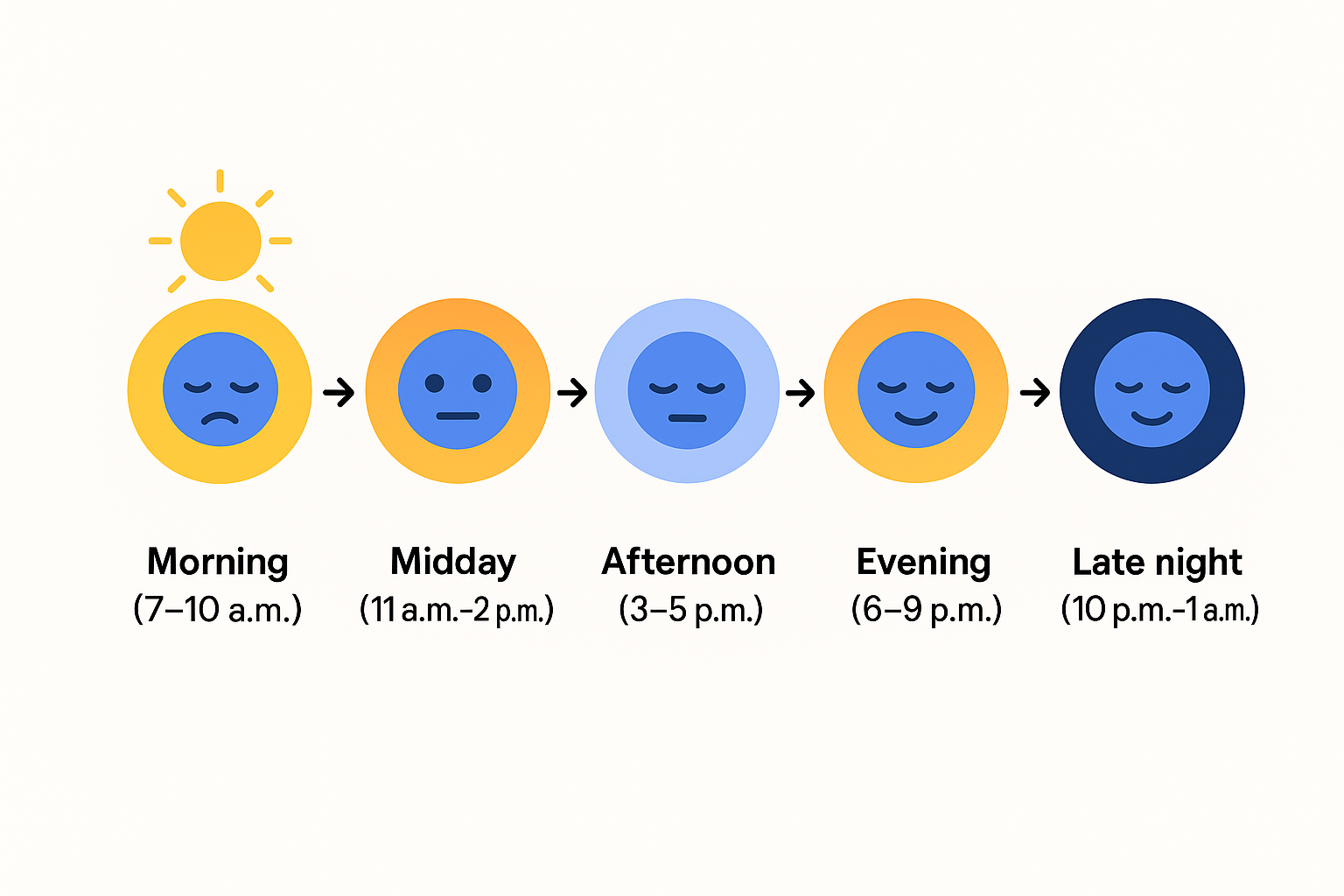
Here’s a quick breakdown of what that usually looks like:
-
Morning (7–10 a.m.): People are just waking up, checking their phones, scrolling quickly. They might like a post, but they’re not ready to buy yet.
-
Midday (11 a.m.–2 p.m.): Lunch break scrolling. Still distracted, but more likely to read or click if something grabs their attention.
-
Afternoon (3–5 p.m.): A slower time. People check in between meetings or before picking up the kids. It’s hit or miss.
-
Evening (6–9 p.m.): This is prime time. People are relaxed, at home, and more open to engaging or buying.
-
Late night (10 p.m.–1 a.m.): Scroll-heavy hours. People aren’t as focused, but impulse buys can happen — especially for cheaper items.
Different times = different moods. And different moods lead to different actions.
If you're not sure when your audience is most likely to engage, this article on testing Facebook ads by time of day gives practical ideas on how to find out.
2. Social Platforms Notice Timing, Too
Platforms like Facebook and Instagram track when people engage with your ads.
If you’re running ads when people are just scrolling past without clicking, the platform sees that as a sign your ad might not be relevant. That can lead to higher costs and reduced reach.
But if your ad shows up during high-engagement hours and gets clicks or comments, it’s seen as more valuable — and often shown to more people for less money.
In some cases, poor timing can even lead to delivery issues like the dreaded “Ad Set May Get Zero” message. That usually means your settings are too tight, or your ad isn’t connecting when and where it needs to.
3. Ads Can Burn Out Faster at the Wrong Time
Have you ever had an ad that started strong and then suddenly dropped off?
That might not be the creative. It could be when your ad is running.
If your audience sees the same ad too many times — especially when they’re not in the right mindset — they start to ignore it. That’s called ad fatigue, and it happens faster when timing is off.
Some signs of ad fatigue:
-
Fewer clicks.
-
Higher costs.
-
Same ad, worse results.
To avoid this, consider rotating your ads more often or showing them during high-attention periods. You can also read this breakdown on how to spot ad fatigue early and fix it.
4. Use Dayparting to Show Ads at the Right Time
Dayparting — also known as ad scheduling — lets you choose which hours your ads run. It’s simple but powerful.
And yet, many advertisers don’t use it at all.
Here’s how to get started:
-
Check your data. Look at your ad performance reports to see when clicks, conversions, or views are highest.
-
Match the goal to the time. Want reach? Try mornings. Want conversions? Evenings often perform better.
-
Test two time blocks. Run the same ad during two different windows and see what performs best.
If you need help, this guide on day-parting strategies walks you through how to use timing to boost ROI.
5. Don’t Forget About Time Zones
If you're targeting people in different regions or countries, make sure you're adjusting your delivery time.
An ad that runs at 8 p.m. in New York appears at 5 p.m. in Los Angeles or 2 a.m. in London. You could be missing your audience entirely — or paying for impressions that don’t convert.
The fix: duplicate your ad sets and adjust schedules for each region. That way, your ads reach people when they’re actually online and paying attention.
Final Thoughts
Great ads still need strong targeting and creative. But if they show up at the wrong time of day, they might not perform at all.
Timing affects visibility, intent, and performance. And in a competitive ad environment, that matters more than ever.
If your ads aren’t converting the way they should, it might not be the content — it could be the clock. Here’s a deeper look at why Facebook ads sometimes don’t convert — and how to fix it.
So ask yourself before you launch: are my ads showing up when people are most likely to care?
Because the right timing might just turn a decent ad into a top performer.