Some people buy things they don’t even need — just because they feel like it.
Others research for weeks, comparing every detail before making a decision.
And then there’s a third group: the ones who know exactly what they want, act quickly, and come back for more. These are your high-value buyers.
But what separates them from the rest?
It’s not just income level or demographic profile. It’s emotional motivation — the underlying driver that makes someone feel compelled to buy.
If you can identify those triggers early, you’ll know who’s worth your attention. Even better, you’ll be able to tailor your messaging to speak directly to them — leading to better ROI, higher LTV, and stronger customer loyalty.
Let’s break down how.
Why Emotions Lead to Higher-Value Purchases
Most marketers assume logic is the key to persuasion. But decades of behavioral psychology say otherwise.
People buy based on emotion, then justify with logic. This is especially true with high-value buyers.
They aren’t necessarily impulsive — but their decisions are emotionally charged. They’re buying to solve real pain, unlock deep desires, or align with a certain identity.
Here are common emotional drivers behind high-value purchases:
-
Relief: The product removes a painful problem or source of stress.
-
Aspiration: It helps them become a better version of themselves.
-
Trust: They feel confident the brand won’t let them down.
-
Status: It signals success, intelligence, or exclusivity.
-
Belonging: It connects them to a like-minded group or community.
-
Fear: It helps them avoid loss or prevent a negative outcome.
-
Empowerment: It makes them feel more in control of their lives.
High-value customers often act when multiple emotional triggers are activated — not just one.
To understand how this plays out across Facebook campaigns specifically, check out this detailed guide on emotional triggers that get people to click on Instagram ads.
Spotting Emotional Intent in User Behavior
Not all actions are equal. If you want to focus on emotionally motivated buyers, learn to read between the lines.
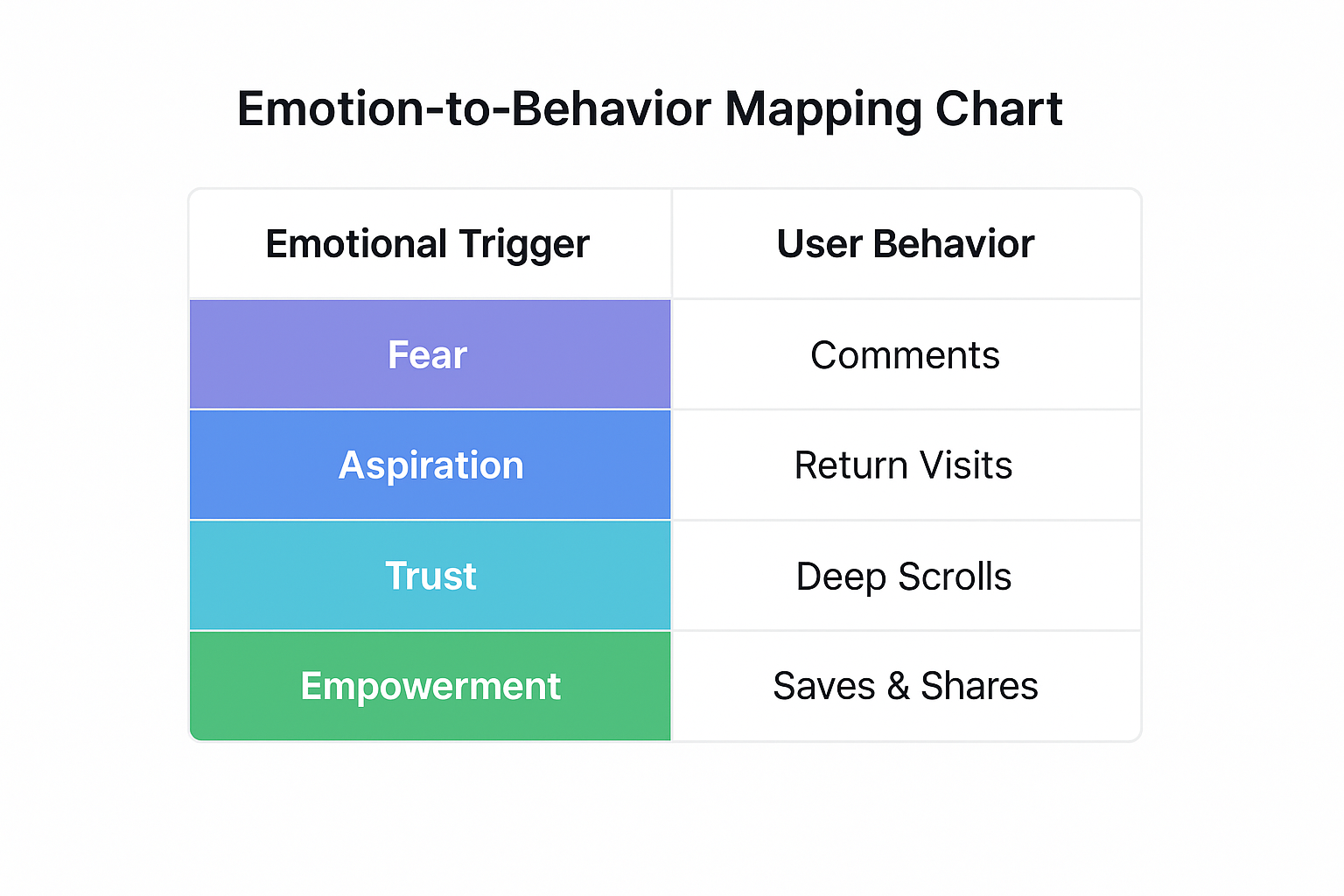
Here’s what to look for:
1. Deeper Engagement
People who scroll past the first screen or click through multiple product pages are more invested. They’re likely comparing solutions to a real, present problem — a strong sign of emotional urgency.
2. Comments and Conversations
When people leave comments on ads or social posts — especially when they mention personal challenges, identity, or transformation — it’s a good sign they’re emotionally engaged.
“I’ve been struggling with this exact issue — does this actually work?”
That’s gold.
3. Return Visits
A visitor who returns multiple times over a short period is wrestling with a decision. There’s emotional tension there. Use retargeting to lean into it with messaging that eases doubt or builds urgency.
4. Saves, Shares, and Tags
These are subtle cues that a piece of content hit a nerve. It resonated emotionally, even if they didn’t convert right away.
Map Emotions to Audience Segments
You can’t read minds — but you can infer emotional triggers by analyzing context and content preferences.
Here’s how to start:
Group by Emotional Needs:
Create micro-segments based on what your audience feels, not just who they are.
Examples:
-
“Fix my frustration” group: Users engaging with problem-focused blog posts or search terms like “how to stop X”.
-
“Aspiring achievers”: People who download goal-oriented checklists or engage with transformation stories.
-
“Fear avoiders”: Audiences who respond to warnings, risk-reduction claims, or urgency copy.
-
“Status seekers”: Those clicking on premium options, “best of” lists, or luxury reviews.
This aligns with broader audience strategies explained in Facebook Ad Targeting 101, especially if you’re building funnel stages or interest clusters.
Once segmented, you can speak more directly to each group’s emotions — which increases both relevance and conversion potential.
Writing Copy That Triggers the Right Emotions
Emotions need a voice — and your ad copy is the perfect place to give them one.
Here are examples of emotionally intelligent ad messaging, organized by trigger:
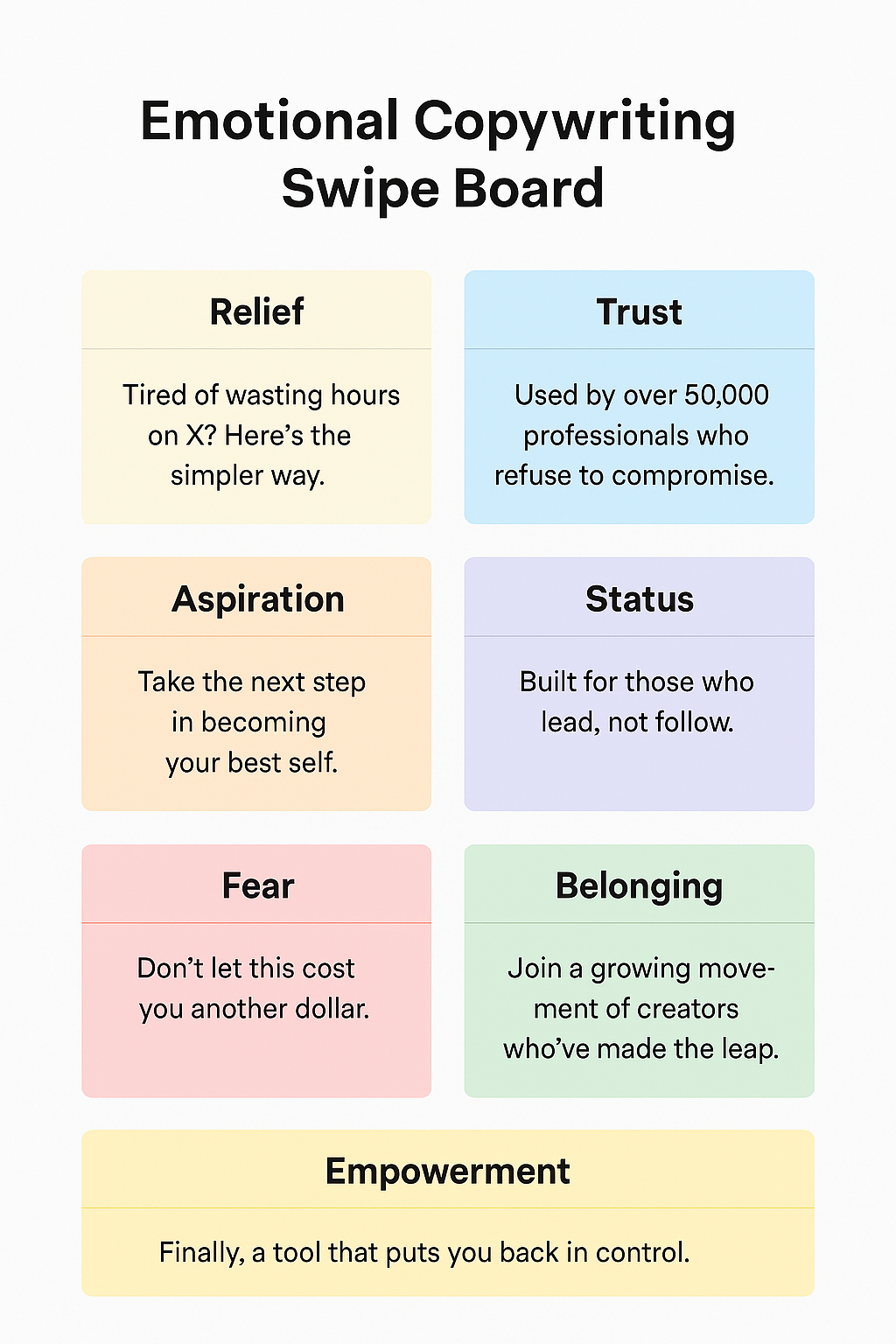
Pro tip: Try A/B testing emotional tones. You may discover your audience responds more to aspiration than fear, or more to trust than urgency.
Align Your Offers With Emotional Payoffs
If your product solves a big problem, highlight that. But don’t stop there — show how it feels to have that problem solved.
Use language that mirrors the customer’s emotional state before and after the purchase:
-
“No more second-guessing.”
-
“Sleep better knowing it’s handled.”
-
“Finally feel like you’re making progress.”
-
“Be the person who actually follows through.”
Don’t just promise results. Promise relief, clarity, confidence, or freedom — whatever emotional payoff fits.
Measuring Emotional Impact (Yes, You Can)
Here’s how to check if your emotional targeting is working:
-
Monitor comment tone: Are people reflecting emotional language back to you? Words like “finally,” “needed this,” “love,” or “struggled with this” are great indicators.
-
Survey your audience: Ask why they chose your product. Their answers will often point directly to emotional triggers.
-
Check engagement depth: Higher session duration, scroll depth, and page flow often indicate emotional investment.
-
Analyze referral sources: Did they come from emotionally charged content (like a story, testimonial, or problem-solving blog post)? That context matters.
If you’re seeing strong top-of-funnel activity but conversions are flat, read Why Your Ads Get Clicks but No Sales to evaluate emotional resonance vs targeting misalignment.
Avoid These Common Emotional Targeting Mistakes
Let’s make this practical. Here are some pitfalls to avoid:
-
Over-relying on fear: Fear can convert — but it can also backfire. Use it sparingly, and always offer a reassuring solution.
-
Using emotional triggers that don’t match your product: Don’t promise transformation if your product is just a utility. That mismatch leads to churn.
-
Using the same emotional angle everywhere: Different platforms have different emotional tones. What works on TikTok may flop in a newsletter.
-
Neglecting post-purchase emotion: Make sure the emotional payoff doesn’t disappear after the buy. Reinforce it through onboarding and follow-up.
Final Thought: Emotion is Data — Use It
Emotions aren’t soft. They’re signals — just as real and measurable as clicks, impressions, or ROAS.
And when you use those signals to identify and nurture your most emotionally invested buyers, you stop guessing. You start connecting.
That’s how you go beyond short-term sales and build a business that resonates — and grows.
Want a deeper breakdown of emotional-based segmentation and targeting? This guide on how to define a target audience for marketing will sharpen your strategy.