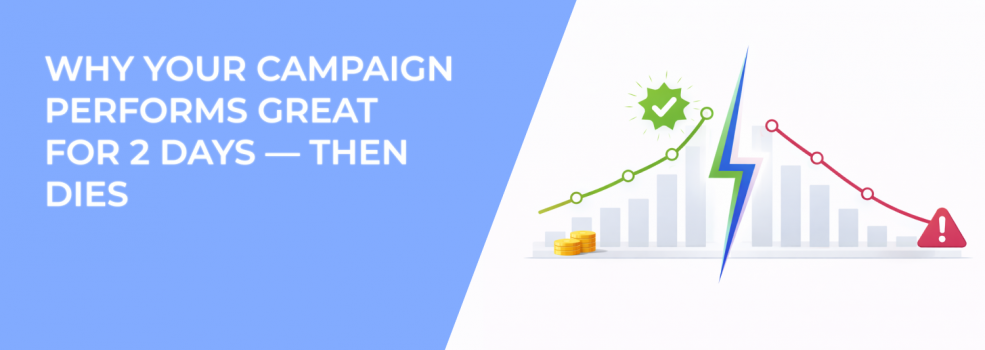
Many advertisers experience the same frustrating pattern. A new campaign launches, early metrics look promising, cost per result drops quickly, and the platform begins to scale delivery. Then, within a few days, performance collapses. Conversion rate declines, cost per acquisition rises, and the campaign never recovers.
At first glance this looks like simple “ad fatigue.” In reality, the mechanism is usually more structural. The platform did not suddenly break. The campaign entered a feedback loop where early signals misled the optimization system.
Understanding why this happens requires looking at how Meta’s delivery system interprets early performance signals, how audiences evolve during the first few days of a campaign, and how small setup decisions amplify volatility. Once you see the mechanics clearly, the pattern becomes predictable and preventable.
The Hidden Volatility of Early Campaign Performance
When a campaign launches, the delivery system has limited information about which users will convert. Early delivery therefore focuses on a narrow subset of the audience that appears most responsive.
These early users often belong to what performance marketers informally call the “low-friction conversion pocket.” They are the people most likely to click, engage, and convert quickly based on historical patterns.
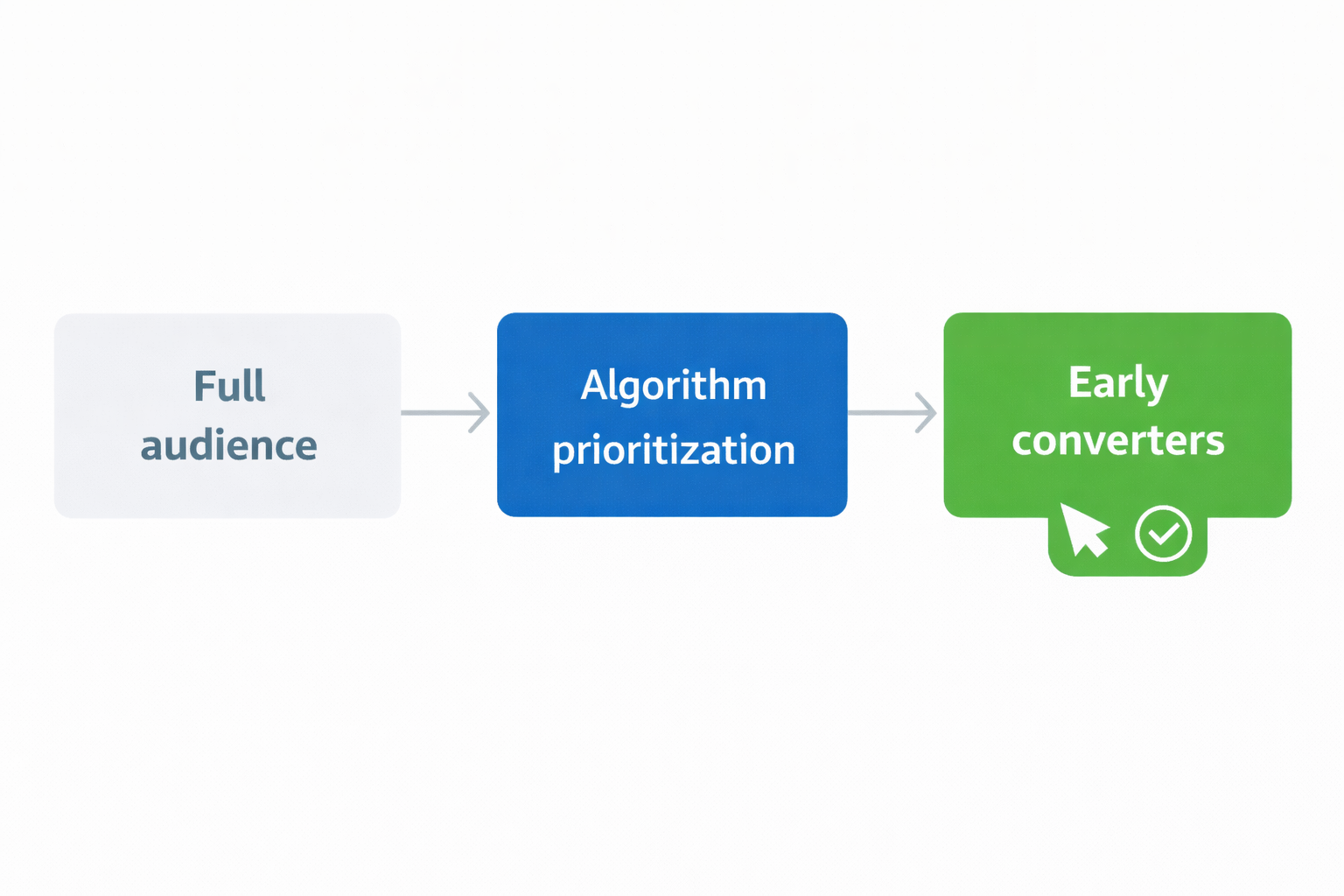
During the first 24–48 hours, this group generates strong metrics:
-
High click-through rate. Early viewers often belong to segments with strong historical engagement signals. These users tend to interact with ads more frequently than the average audience member.
-
Low cost per click. Because engagement signals are strong, the auction rewards the ad with cheaper delivery. The system interprets the interaction as evidence that the ad is relevant.
-
Fast conversions. These users often already have purchase intent, which shortens the time between the click and the conversion event.
-
Favorable cost per acquisition. With strong engagement and high conversion probability, the campaign appears unusually efficient in its initial stage.
From a reporting perspective, the campaign looks highly efficient.
However, this performance reflects initial audience density, not sustainable demand. Once the platform exhausts the easiest conversion pocket, the system must expand into a broader audience. That transition is where performance instability begins.
How the Optimization System Expands Delivery
Meta’s optimization engine continuously adjusts delivery based on observed outcomes. Early conversions provide the signals the system uses to identify similar users.
The expansion process usually follows three stages.
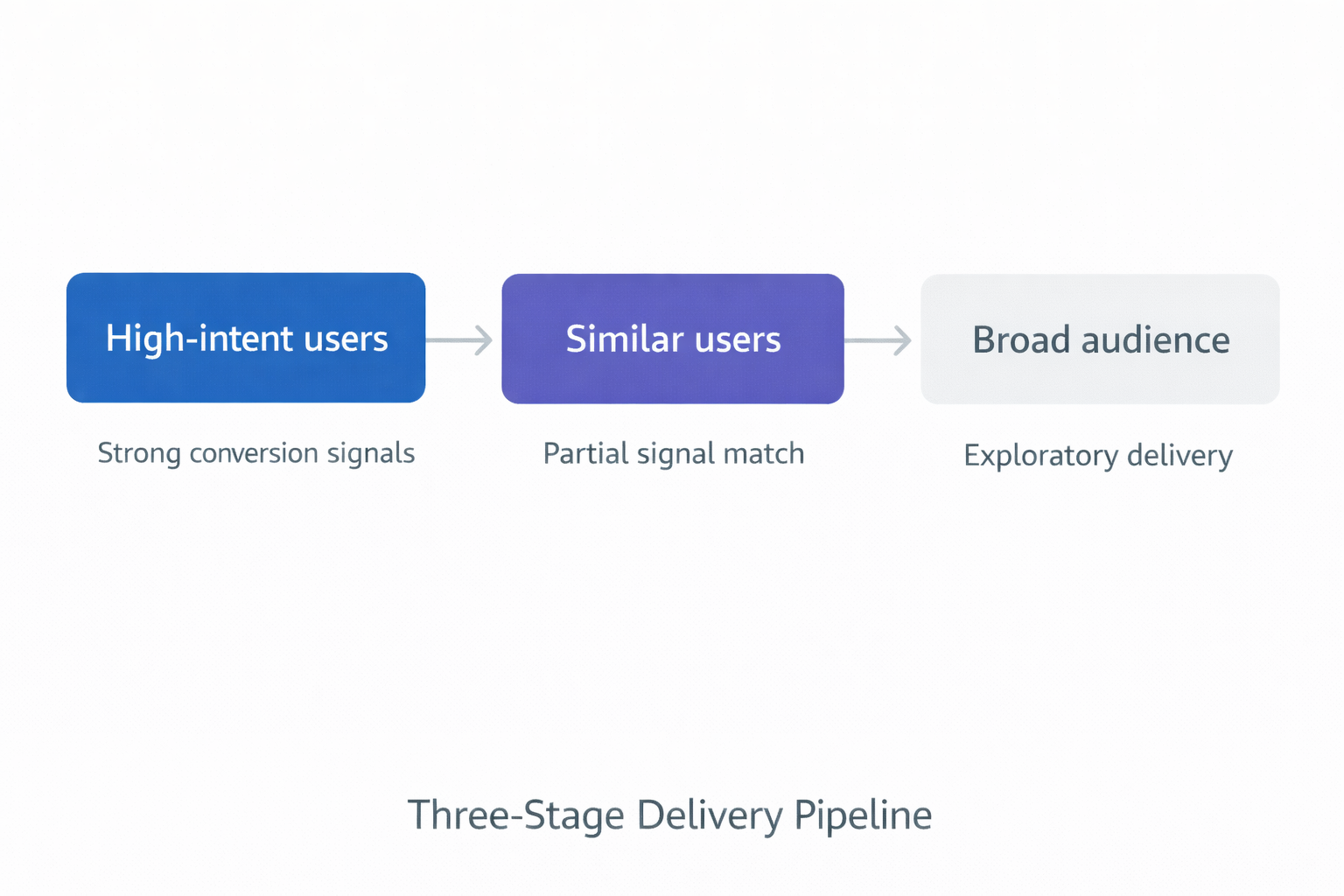
Stage 1: Initial High-Intent Cluster
Delivery starts with users whose behavioral profiles strongly match previous converters. These users may include:
-
Recent purchasers in related categories. The algorithm prioritizes people who have recently demonstrated buying behavior similar to your product category.
-
Highly engaged users within your targeting segments. These individuals frequently interact with ads and branded content, making them more responsive during early delivery.
-
Users with strong historical conversion signals. Meta’s predictive models identify people whose past activity indicates a higher likelihood of completing conversion events.
Because these users require minimal persuasion, conversion rates tend to be unusually high.
Stage 2: Adjacent Audience Expansion
Once the initial cluster is saturated, the algorithm expands toward adjacent profiles—people who share some characteristics with early converters but not all of them.
This expansion introduces moderate uncertainty. Click-through rates often remain healthy, but conversion rate begins to soften.
Many advertisers misinterpret this phase. Seeing CTR remain strong, they assume performance is stable. In reality, the algorithm is already exploring less reliable segments.
Stage 3: Broad Distribution
Eventually the system distributes impressions across a much wider portion of the target audience. At this point:
-
Intent levels vary significantly. The audience now includes users who may be curious but not ready to purchase.
-
Engagement signals become noisier. Click behavior becomes less predictive of conversion outcomes.
-
Conversion probability declines. As the algorithm moves away from the high-intent cluster, the likelihood of conversion drops.
The campaign is now operating under more realistic conditions.
If the campaign structure was not built for this transition, performance appears to collapse.
Why the Drop Often Happens Around Day Two or Three
The timing of the decline is not random. Several factors converge during the first 48–72 hours of delivery.
1. Initial Audience Saturation
The earliest converters represent a very small share of the total audience. In many verticals they are exhausted within a few thousand impressions.
Once these users have been reached, the system must expand outward quickly. That shift changes the conversion baseline.
In practice, this mechanism is closely related to the issue described in
Why Audience Expansion Sometimes Lowers Facebook Ads ROI, where algorithmic reach expansion introduces lower-intent traffic.
2. Optimization Signal Distortion
Early conversions create a statistical bias. The platform assumes those initial signals represent the broader audience.
If the early converters are unusually responsive, the system temporarily overestimates conversion probability across similar segments.
When the broader audience behaves differently, the algorithm must recalibrate.
3. Budget-Induced Expansion
Campaign budgets often accelerate the process. If the system receives a strong early signal, it attempts to scale delivery aggressively.
That scaling forces the campaign to reach less qualified users sooner than expected.
This is why many scaling failures follow the pattern explained in The Science of Scaling Facebook Ads Without Killing Performance.
Why CTR Often Remains Stable While Conversion Rate Falls
One of the most confusing aspects of this pattern is that engagement metrics may remain strong even as conversion performance deteriorates.
This happens because click behavior and purchase intent are not the same signal.
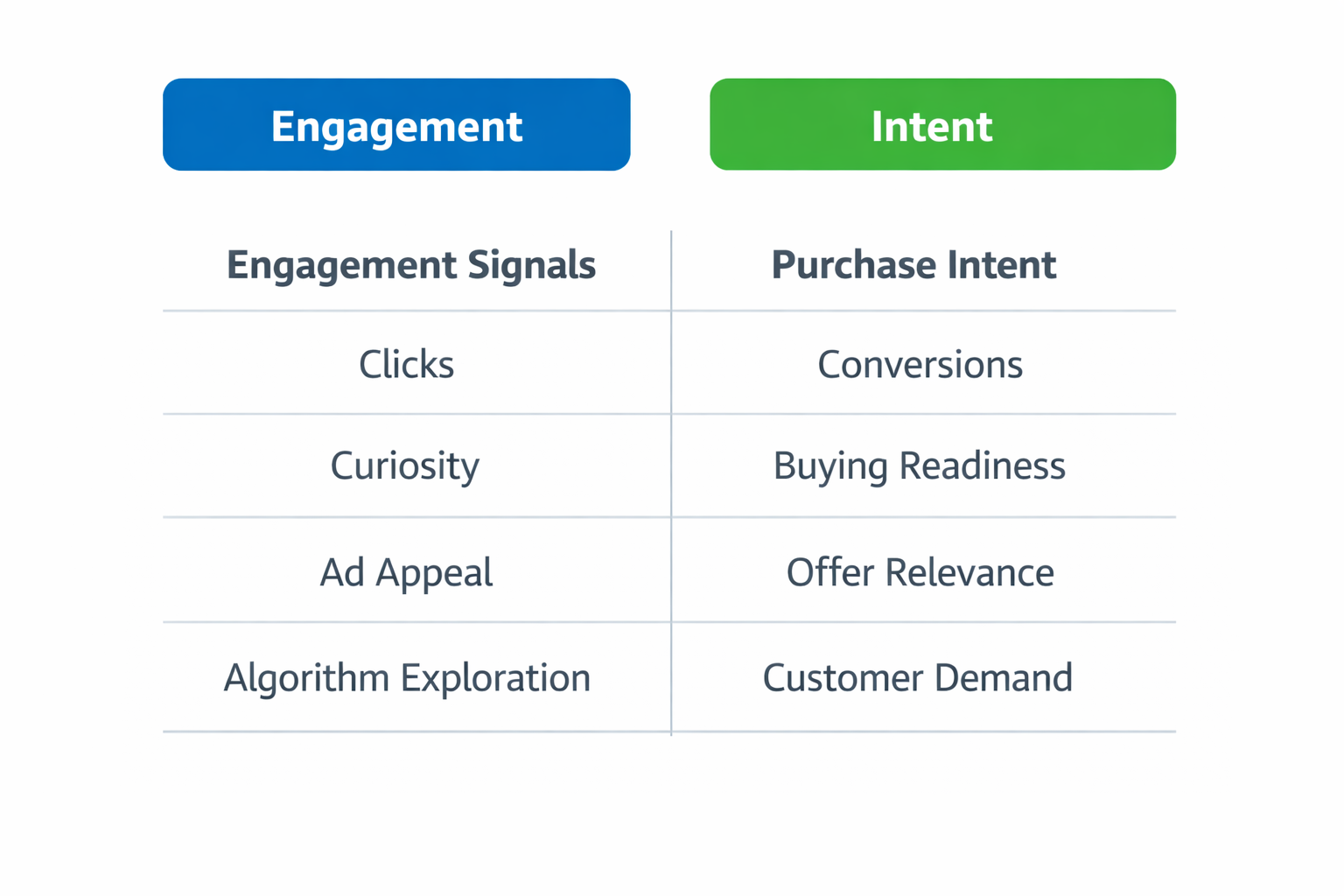
A campaign may continue attracting clicks if the ad creative is compelling. However, those clicks increasingly come from users with weaker purchase intent.
Several structural changes contribute to this divergence:
-
Intent dilution. As delivery expands, the proportion of curiosity-driven clicks rises. These users engage because the creative is interesting, but they were not actively looking for the product.
-
Expectation mismatch. Broader audiences interpret ad messaging differently. Early converters may clearly understand the offer, while later viewers may misinterpret the value proposition.
-
Algorithmic exploration. The platform deliberately tests new user segments to discover additional conversion opportunities. During this exploration phase, click quality fluctuates.
Because CTR remains relatively stable, many advertisers misdiagnose the problem as a landing page issue or technical error.
In reality, this dynamic often reflects the same mechanism explained in CTR vs Conversions: Why High CTR Doesn’t Always Mean More Sales.
Structural Setup Mistakes That Amplify the Problem
The early performance spike followed by collapse becomes much worse when campaign structure introduces additional instability.
Several configuration choices increase the likelihood of this pattern.
Overly Broad Targeting From Day One
Launching a campaign with extremely broad targeting forces the system to explore a massive audience immediately.
This introduces several risks:
-
Rapid exhaustion of high-intent segments. The algorithm quickly finds the most responsive users and burns through them.
-
Large variance in user intent. The broader the audience, the wider the difference between high-intent and low-intent users.
-
Less predictable optimization signals. The system receives inconsistent feedback from a heterogeneous audience.
A more controlled targeting strategy often produces smoother performance curves. For example, approaches such as those discussed in
How to Create High-Intent Custom Audiences for Facebook Lead Ads can stabilize early delivery.
Creative That Attracts Curiosity Clicks
Some ads generate strong engagement but weak purchase intent.
Examples include:
-
Attention-grabbing claims without clear product context. These ads attract clicks from users who are curious but not qualified buyers.
-
Lifestyle visuals that lack offer clarity. Attractive visuals generate engagement but fail to filter for serious prospects.
-
Messaging optimized for clicks instead of outcomes. Copy designed purely for engagement may increase CTR while reducing downstream conversions.
These creatives amplify the divergence between CTR and conversion rate.
Weak Event Signal Quality
Optimization relies on accurate conversion signals. If tracking events are incomplete, delayed, or duplicated, the algorithm receives inconsistent feedback.
Typical signal issues include:
-
Delayed event reporting, which makes the algorithm misinterpret user behavior patterns.
-
Missing server-side events, reducing the reliability of conversion signals.
-
Duplicate tracking events, which inflate perceived performance.
When the platform receives inconsistent feedback, it struggles to identify which users are actually valuable.
Budget Changes During Early Learning
Rapid budget increases during the first few days force the system to expand delivery before the optimization model stabilizes.
This often accelerates the exact performance collapse advertisers are trying to avoid.
The campaign jumps directly from the high-intent cluster to broad distribution.
How to Diagnose Whether This Is Happening in Your Campaign
Instead of reacting immediately to a drop in performance, it helps to examine the campaign’s behavioral signals.
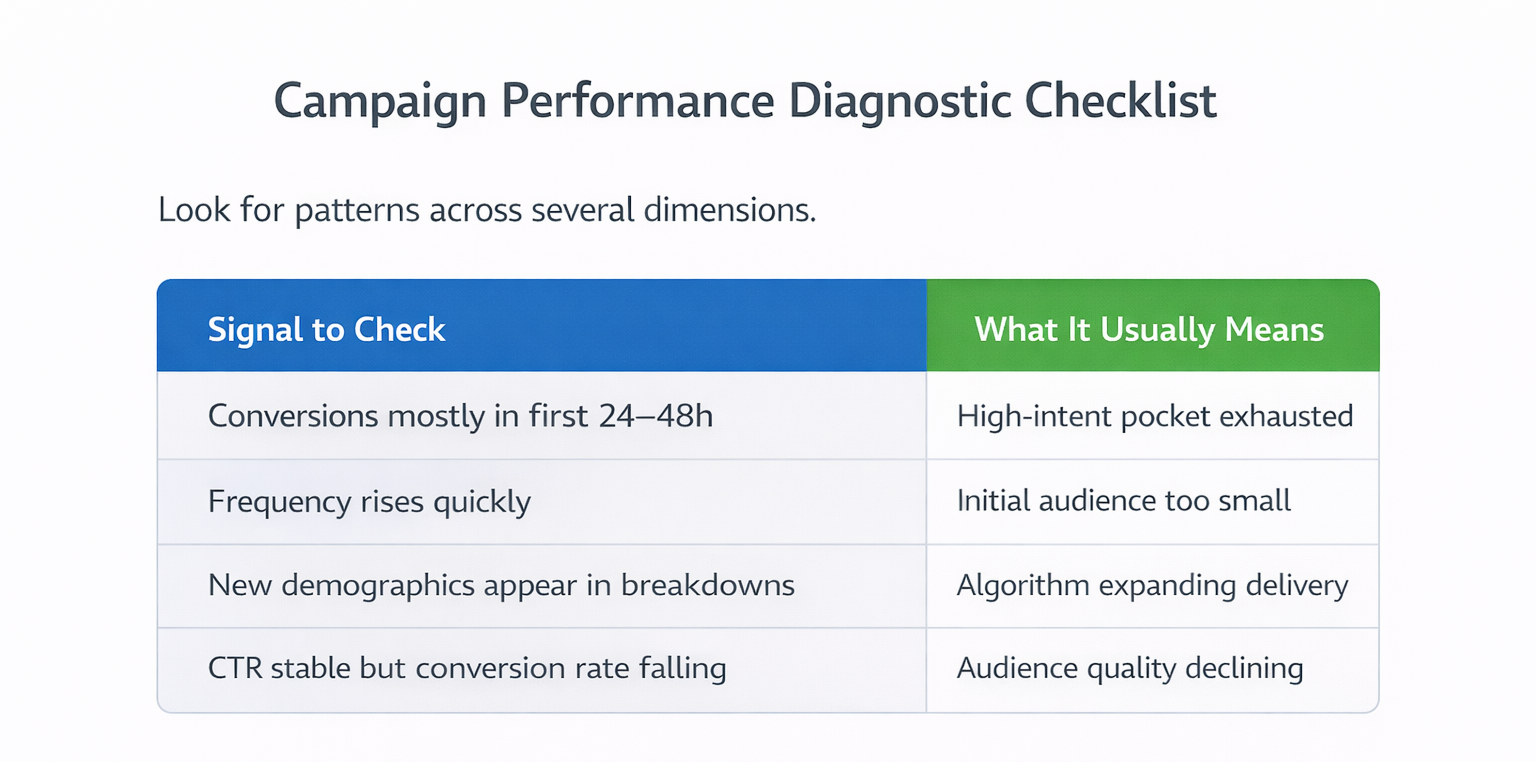
Look for patterns across several dimensions.
Conversion Timing
Check when conversions occur relative to impressions and clicks.
If most conversions happen within the first 24–48 hours after launch, the campaign may have exhausted a small high-intent segment early.
A healthy campaign should continue producing conversions as delivery expands.
Frequency Growth
Monitor how quickly frequency increases during the first few days.
If frequency climbs rapidly before performance declines, the initial audience cluster may have been too small.
This forces the platform to expand delivery aggressively.
Audience Distribution
Review breakdown reports for age, placement, and geographic distribution.
A campaign experiencing expansion-related decline often shows a clear pattern:
-
Early conversions concentrated in a narrow demographic or behavioral segment.
-
Later impressions distributed across broader and less qualified user groups.
-
Conversion events shifting toward lower-intent placements.
That shift signals the system is exploring new inventory.
Conversion Rate Trend vs CTR
If click-through rate remains stable while conversion rate falls steadily, the issue is usually audience quality, not creative visibility.
The ad is still attracting attention, but the audience being reached has lower purchase intent.
How to Stabilize Early Campaign Performance
Preventing this pattern requires controlling how the campaign transitions from early high-intent segments to broader audiences.
Several operational adjustments can help.
Stage Your Budget Increases
Avoid scaling aggressively during the first 48 hours.
Instead:
-
Allow the algorithm to gather stable conversion signals.
-
Increase budgets gradually in controlled increments.
-
Monitor conversion distribution before expanding spend.
Gradual scaling improves signal clarity and reduces volatility.
Use Multiple Ad Sets With Structured Audiences
Instead of relying on a single broad ad set, separate audiences based on intent level.
For example:
-
High-intent custom audiences, such as site visitors or engaged users.
-
Lookalike audiences built from converters, which preserve behavioral similarity.
-
Broader prospecting segments, used for discovery once strong signals exist.
This structure prevents the platform from jumping immediately into the lowest-intent segments.
Qualify the Click With Clear Messaging
Creative should attract users who are likely to convert, not just those likely to click.
Effective ads typically:
-
Communicate the offer clearly.
-
Set realistic expectations before the click.
-
Filter out low-intent curiosity traffic.
This alignment reduces the gap between early and later audience performance.
Monitor Signal Integrity
Ensure your conversion tracking is consistent and reliable.
Practical checks include:
-
Verifying that event IDs are consistent across browser and server events.
-
Confirming that conversion events fire only once per action.
-
Ensuring server-side tracking covers key funnel steps.
When the platform receives accurate feedback, optimization stabilizes faster.
The Real Lesson Behind the Two-Day Spike
The “great for two days, then dies” pattern is not random volatility. It is a structural signal about how the campaign interacts with the optimization system.
Early performance reflects the easiest conversions available in the audience. Once those users are reached, the platform must search for additional buyers. If the campaign structure cannot support that expansion, performance drops sharply.
Strong campaigns anticipate this transition. They guide the algorithm from narrow high-intent clusters toward broader audiences while maintaining signal quality and message alignment.
When that transition is managed well, the early spike becomes a stable growth curve instead of a short-lived illusion.