When a campaign’s cost per lead suddenly jumps, the first instinct is usually to blame competition, rising CPMs, or platform instability. Those factors can matter, but they’re rarely the real cause of a sudden shift.
In most cases, a sharp CPL increase means something structural changed inside the campaign system. The relationship between traffic quality, conversion rate, and optimization signals shifted, and the algorithm started buying a different mix of impressions and clicks than it did yesterday.
Understanding what changed — and why delivery reacted — is the only reliable way to fix it.
CPL Is a Output Metric, Not a Lever
Cost per lead is not a single variable.
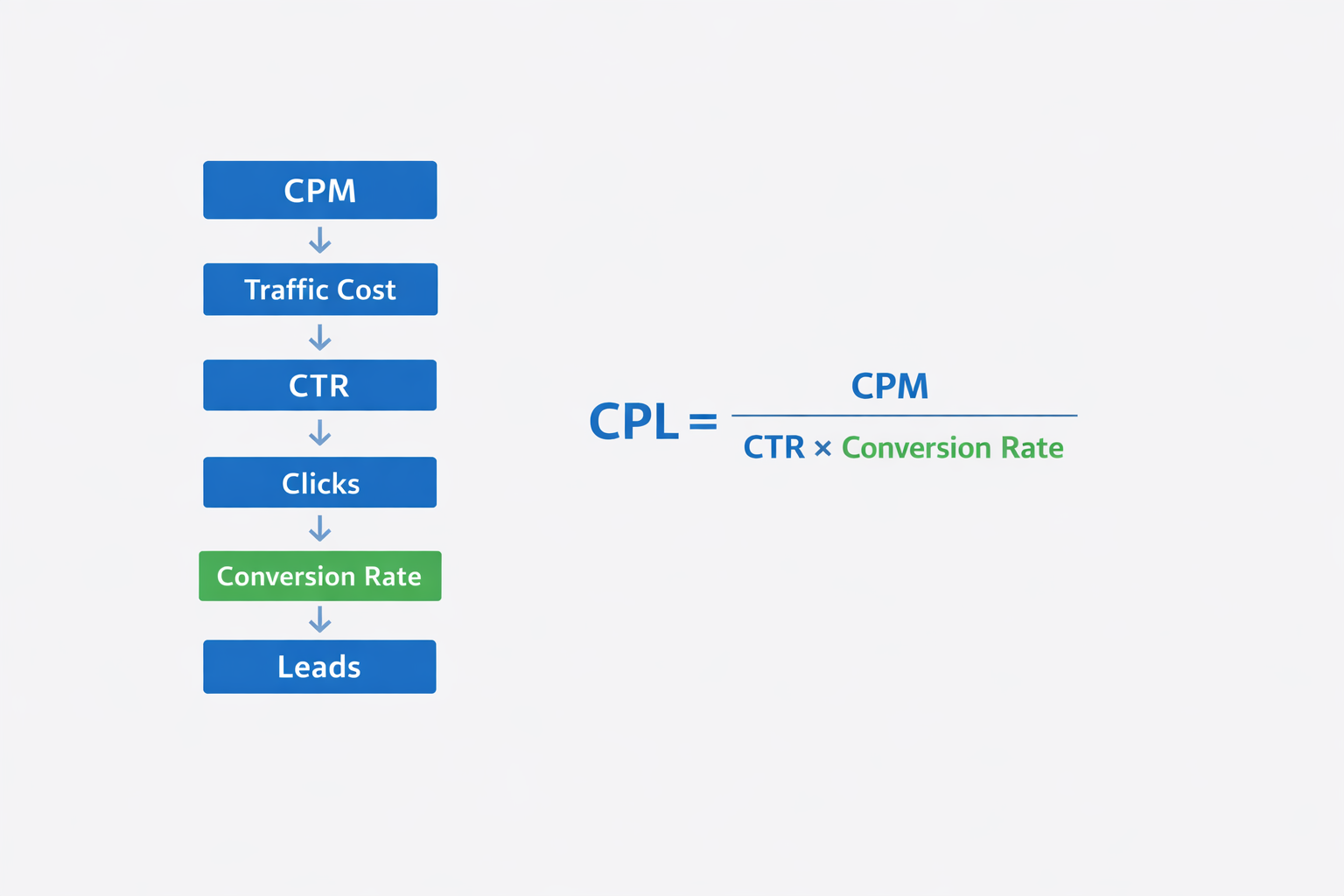
It is the outcome of several layers interacting:
-
CPM (cost per thousand impressions). This defines the cost of access to an audience in the auction.
-
CTR (click-through rate). This describes how often your creative earns a click once shown.
-
Conversion rate. This measures how efficiently clicks turn into leads on your landing page or instant form.
-
Optimization signals. This is the quality and consistency of the events the platform learns from.
A small change in any one layer can create a big move in CPL.
If your conversion rate drops from 10% to 5%, your CPL doubles even if CPM and CPC don’t move. If the algorithm shifts delivery to slightly broader or lower-intent segments, your CTR can stay “fine” while conversion rate collapses.
The Four Most Common Reasons CPL Doubles Suddenly
1) Audience saturation and frequency creep
If you’ve been running the same targeting for long enough, the platform eventually uses up the densest pockets of high-intent users in that audience. At that point, it keeps spending, but it has to spend on weaker segments.
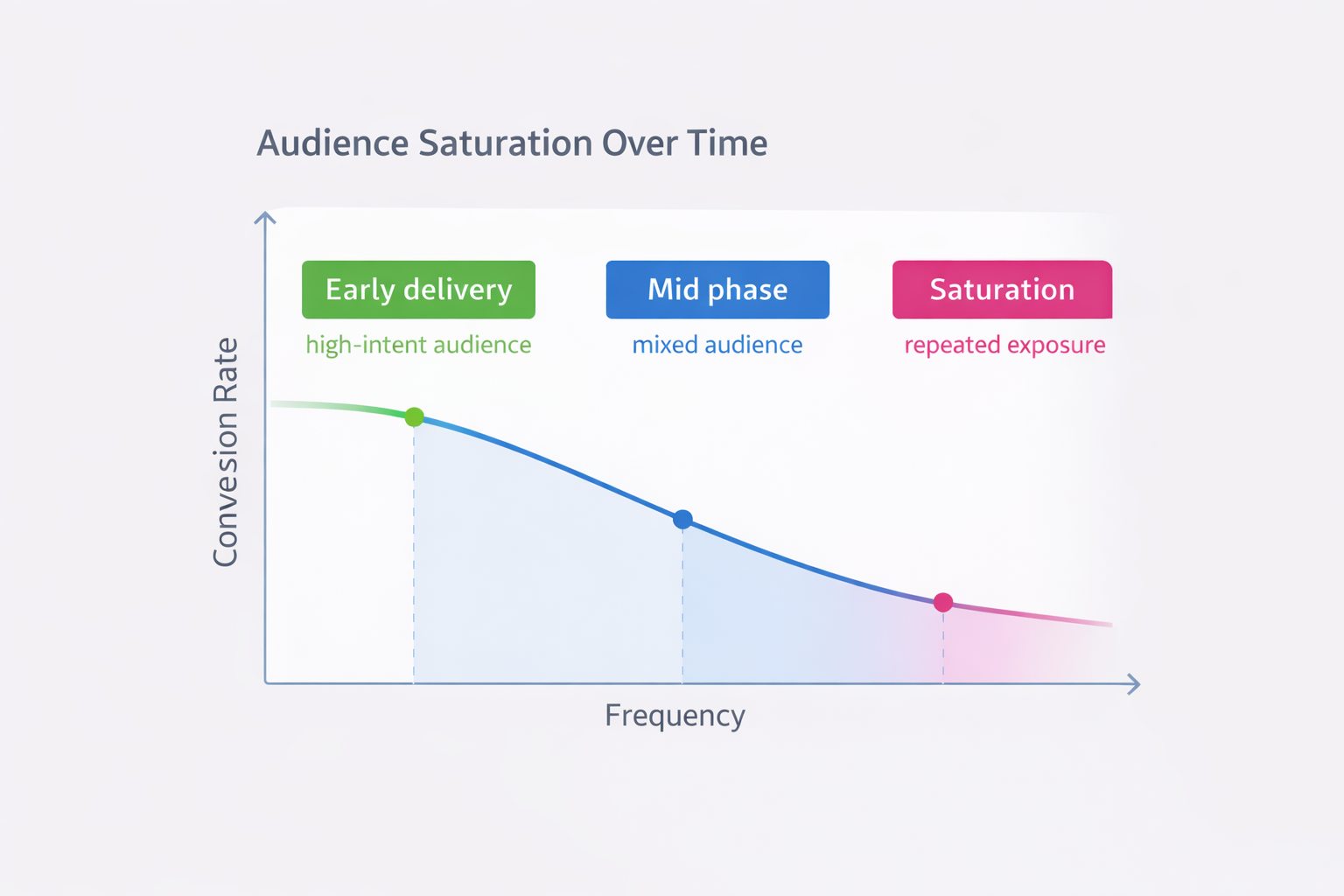
Early on, the system tends to prioritize:
-
People with recent intent signals. These users have behavior that statistically matches your converters.
-
Users adjacent to past converters. The algorithm finds clusters that resemble the first people who converted.
-
Responsive micro-segments within your audience. These are pockets that click and convert with low friction.
As the pockets thin out, you typically see this pattern:
-
Frequency rises. The system repeats impressions to the same users because new qualified inventory is limited.
-
CTR drifts down. The creative becomes familiar and stops earning attention.
-
Conversion rate declines. The remaining reachable users have weaker intent or poorer fit.
This mechanism is basically ad fatigue expressed through delivery math. For a deeper tactical breakdown, see How to Avoid Ad Fatigue and Keep Optimal Ads Costs.
What to check:
-
Frequency trend over 10–14 days. A steady climb is often the first warning.
-
Unique reach vs. daily impressions. If impressions are growing faster than unique reach, you’re recycling users.
-
Audience overlap across campaigns. Cannibalization accelerates saturation.
What usually works:
-
Creative refresh before the drop. Don’t wait for CPL to spike; refresh on frequency/CTR signals.
-
Controlled audience expansion. Expand in a way that preserves intent (new segments, new geos, new lookalikes).
-
Prospecting/retargeting separation. If both compete for the same people, frequency rises faster.
2) Creative messaging drift (you attracted the wrong click)
Sometimes “nothing changed” in targeting, but the creative changed what kind of person clicks. That can improve CTR and still destroy CPL.
Messaging drift often happens when you introduce creatives that:
-
Over-broaden the promise. More people click, but fewer are qualified.
-
Remove natural filtering. You get volume, but it’s low intent (students, bargain-hunters, “just browsing”).
-
Optimize for curiosity, not value. The ad wins attention, but the landing page can’t cash it.
You’ll often see this metric signature:
-
CTR holds or improves.
-
CPC improves.
-
Conversion rate drops.
That’s not “the platform got expensive.” That’s “you bought cheaper clicks that don’t convert.”
How to diagnose it quickly:
-
Compare conversion rate by creative. Don’t average it at ad set level; isolate the culprit.
-
Check lead quality signals. If MQL rate, show-up rate, or close rate fell, the traffic mix changed.
-
Look for promise/offer mismatch. If the ad implies “free/instant/guaranteed” but the page asks for commitment, CPL spikes.
Fixes that don’t create chaos:
-
Separate “attention” creatives from “lead” creatives. Keep curiosity ads in their own testing sandbox.
-
Restore qualification language. Price anchors, “for X only,” or “best for Y” reduces junk clicks.
-
Align the first 3 seconds with the form/page. The click should feel like a continuation, not a switch.
3) Optimization signal disruption (learning lost its anchor)
If the platform’s conversion signals become inconsistent, it stops being confident about who converts. When that happens, delivery becomes exploratory, and CPL can jump fast.
Common causes include:
-
Tracking changes. Pixel/CAPI updates, GTM changes, or event mapping adjustments can break consistency.
-
Event duplication or renaming. The algorithm may suddenly be learning from a different or messier signal.
-
Delayed events. If conversions arrive late or inconsistently, the model gets weaker training data.
-
Landing page/form changes. Even minor form friction (extra field, slower load) can cut CVR enough to double CPL.
Typical symptoms:
-
CPL rises while CPM and CTR are stable.
-
Reported conversions drop or become volatile.
-
Campaign status shifts into learning or learning-limited patterns.
If you suspect the system is learning the wrong thing, see How to Tell If Facebook Ads Are Optimizing for the Wrong Goal.
What to verify immediately:
-
Event firing consistency. Test real journeys end-to-end, not just “event received.”
-
Event matching and duplication. Make sure one conversion equals one primary event.
-
Time-to-conversion distribution. If conversion lag changed, performance will “look” worse before it is.
Stabilizing actions:
-
Stop making structural edits while signals are unstable. Edits reset learning on top of broken data.
-
Revert to the last known-good event setup. Restore consistency first, optimize second.
-
Reduce variables. Keep audience/creative steady while you validate tracking.
4) Auction competition changes (CPM rose, everything else stayed true)
Yes, sometimes it’s the auction. When more advertisers chase the same users, CPM rises, and CPL rises with it.
This often happens during:
-
Seasonal spikes.
-
Category-wide promos.
-
Local market surges (events, weather, news cycles).
The classic pattern:
-
CPM rises.
-
CTR stays similar.
-
Conversion rate stays similar.
That indicates your funnel still works, but access got more expensive.
What to do (without panicking):
-
Improve differentiation. Stronger creative can offset CPM by lifting CTR and CVR.
-
Broaden inventory carefully. Small expansions can reduce CPM without destroying intent.
-
Adjust pacing and bidding. Don’t chase CPL by brute-forcing budget into a hotter auction.
A Diagnostic Way to Find the Real Cause
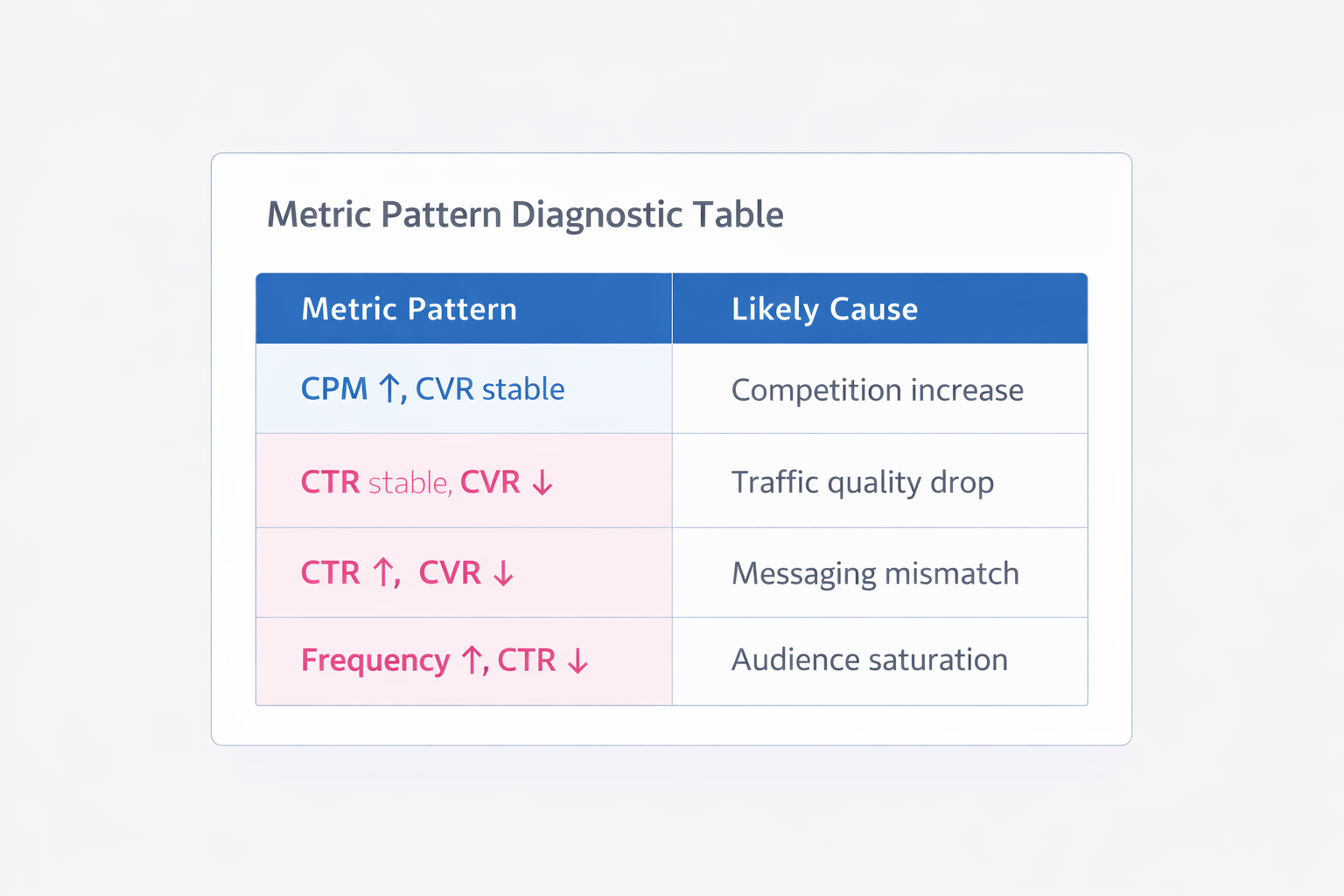
Instead of guessing, compare “before” vs “after” and look at relationships between metrics:
-
CPM.
-
CTR.
-
CPC.
-
Conversion rate.
-
Frequency.
These combinations usually point to the culprit:
-
CPM up + CVR stable = competition-driven cost increase.
-
CPM stable + CVR down = traffic quality or funnel friction problem.
-
CTR stable + CVR down + conversion tracking changes = signal disruption.
-
Frequency up + CTR down = saturation/fatigue.
This keeps you out of “random fixes” mode and makes your next move testable.
Why Fast “Fixes” Often Make It Worse
A sudden CPL spike triggers aggressive edits: pausing ad sets, swapping creatives, changing audiences, and moving budgets. The problem is that doing many changes at once creates two failures:
-
You reset learning. The system loses continuity.
-
You lose diagnosis. You can’t tell what actually caused the shift.
A cleaner approach:
-
Identify which metric moved first.
-
Change only one structural variable.
-
Let the system stabilize before the next change.
The Practical Takeaway
CPL doubles overnight when one of three things changes:
-
The auction got more expensive.
-
The traffic mix got worse.
-
The system stopped learning cleanly.
If you treat CPL as a symptom and diagnose the layer that moved first, fixes become straightforward. If you treat CPL as “the problem,” you’ll end up repeatedly restarting campaigns and never getting stable performance.