If your Facebook or Instagram ads get views but few clicks, comments, or conversions, you're likely facing an engagement issue. That doesn’t mean your product is weak — but it does mean something in your campaign structure needs rethinking.
This article explores advanced causes of low ad engagement and how to address them — with data-backed insights and practical fixes.
What Low Engagement Actually Looks Like
Most ad platforms report metrics that sound fine at a glance — but don’t reveal how people are really interacting with your content.
Here’s what low engagement often looks like:
-
CTR below 0.9%, especially on cold traffic — a sign your creative or message isn’t connecting.
-
High impression counts but static comments or shares — the content is forgettable, not compelling.
-
Strong CPC but poor downstream metrics, such as bounce rate or low page scroll depth — a sign the ad may be misleading or disconnected from the landing page.
Before optimizing, you need to measure the full path of attention — not just the click. For more detail on how to read these signals, check out How to Analyze Facebook Ad Performance Beyond CTR and CPC.
1. Visuals That Lack Strategic Contrast
Many ads get skipped not because they look bad — but because they look like everything else. To compete in the feed, your creative needs selective contrast — subtle ways of breaking expected patterns.
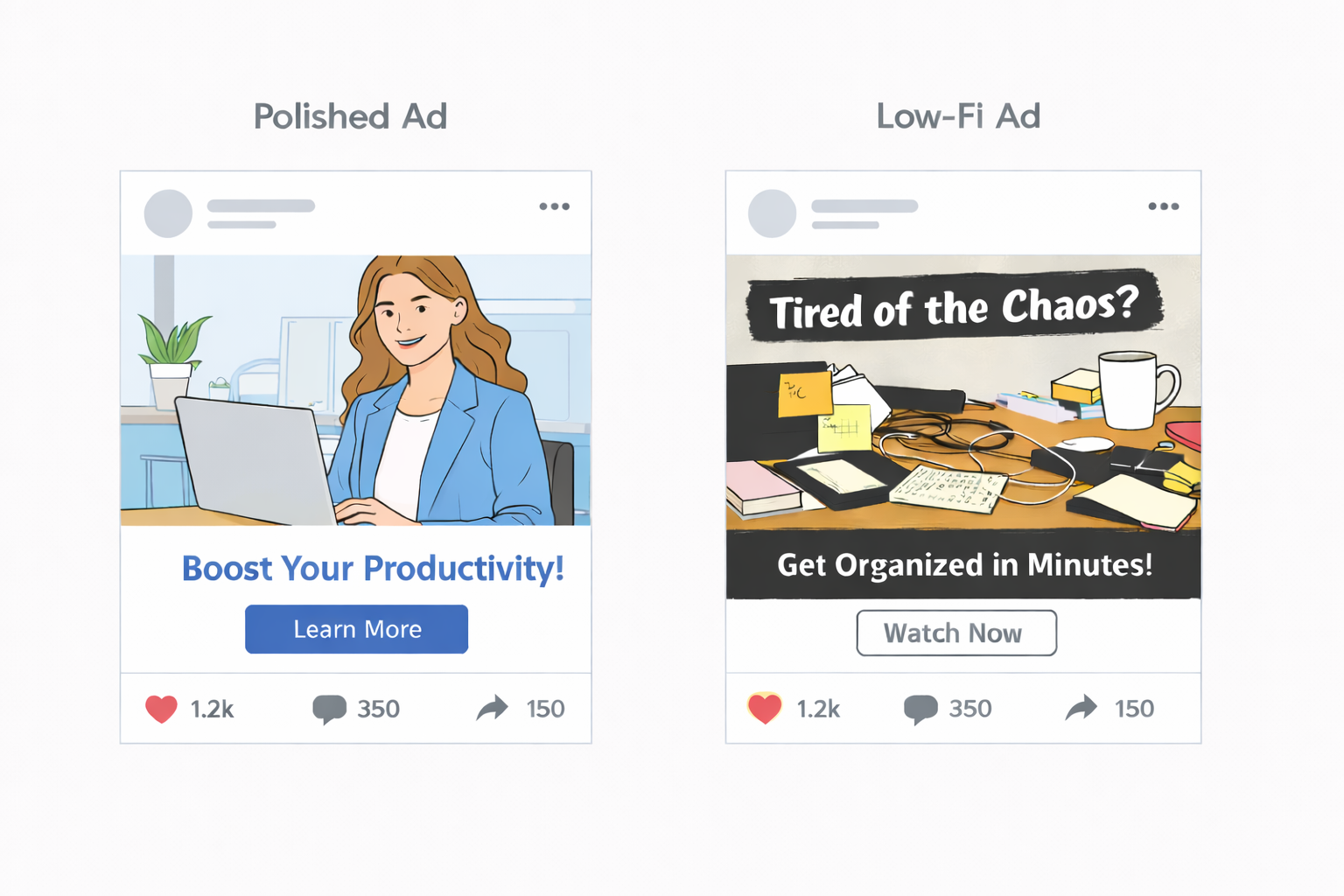
Instead of relying on flashy edits or generic stock images, try:
-
Out-of-place thumbnails — such as a visual metaphor (e.g., an empty chair for a scheduling app) that prompts curiosity.
-
Low-fi video cuts — especially if most ads in your niche are polished. Messy, real footage often performs better.
-
Creative intro framing — such as opening with a problem, unexpected stat, or partial image before revealing the product.
Want to go deeper? Read How to Use Advantage+ Creative Tools to Design Winning Facebook Ads.
2. Message That’s Too Product-Centric
Ads that focus only on product features often underperform. This is especially true for cold audiences unfamiliar with your brand.
A stronger approach: build tension between the user’s current state and their desired outcome — then position your product as the bridge.
Advanced messaging angles:
-
Show how the old way fails before introducing the new one.
-
Highlight silent pain points people already feel but rarely articulate (e.g., “You shouldn’t have to chase your attribution data across three platforms”).
-
Introduce unexpected use cases to reposition a familiar product in a new light.
After that, make the benefit feel inevitable. Instead of listing features, focus on outcomes: What changes the moment they start using your solution?
If your messaging still reads like a spec sheet, it’s time to rewrite for empathy, not explanation.
3. Over-Reliance on Interest-Based Targeting
Facebook’s interest targeting used to be powerful — but it's less precise post-iOS14. Advertisers who still rely on it often see poor engagement and rising costs.
Instead, consider:
-
Building advanced Lookalikes from high-value events (e.g., customers with 3+ purchases, or completed a 7-day trial).
-
Layering behavioral filters, such as targeting video viewers who also engaged with your Instagram profile.
-
Using “Engaged Shoppers” or “Business Decision-Makers” filters, when relevant, for higher intent.
Also, leverage retargeting windows strategically. For example:
-
Short windows (1–3 days) for cart abandoners.
-
Longer windows (14–30 days) for high-ticket leads still in consideration.
For more targeting options, see Custom vs Lookalike Audiences: What Works Best for Facebook Campaigns.
4. Not Managing Creative Lifespan Proactively
Most advertisers wait too long to rotate creative. This leads to audience burnout and lower relevance scores.
To stay ahead of the curve:
-
Build a modular creative testing system — where headlines, visuals, CTAs, and formats are mixed systematically.
-
Map your asset rotation to audience size — small audiences need faster rotation (every 5–7 days); larger audiences can sustain longer cycles.
-
Use dynamic creative delivery for top-of-funnel testing — let Meta automatically test combinations of creative elements.
Get a full breakdown of how to avoid fatigue in How to Avoid Ad Fatigue and Keep Optimal Ads Conversion Rate.
5. Using the Wrong Format for the Placement
Ads often fail because they don’t match the expectations of the platform or placement. Users interact differently with Reels, Stories, and Feed — so format fit is critical.
To align content with context:
-
Use vertical, fast-paced video (under 30 seconds) for Stories and Reels — with sound and captions.
-
Use static carousel ads for product showcases in feed — each slide should tell a step in the narrative.
-
Use click-to-message formats in placements where conversational intent is high (especially in local or service industries).
Want ideas for adapting creative to different formats? See What to Test First: Creative, Copy or Audience in Facebook Campaigns?
6. Lack of Social Proof and Micro-Validation
People don’t engage with ads they don’t trust. If your ad feels unproven, untested, or too polished, people will avoid clicking.
Go beyond “5-star” claims. Instead, show:
-
Real conversations or DMs from users (screenshot style works well).
-
Mini case studies in a single frame, showing before/after numbers or visual progress.
-
Short clips of customer feedback, especially if unscripted and casual.
The best proof doesn’t feel like proof — it feels like familiarity.
7. Timing That Doesn't Match User Intent
Running ads at the wrong time doesn’t just hurt performance — it burns budget. Smart advertisers build campaigns around intent cycles, not just demographics.
Advanced timing strategies:
-
Sync high-ticket campaigns with monthly pay cycles — launch ads in the last 5 days of the month or first 3 days of the next.
-
Use weekday scheduling for B2B lead gen — focus on working hours when intent is higher.
-
Shift daily budgets dynamically using rules — for example, pause spend during major holidays or live sports events that pull attention away.
Map spend to mental availability, not just audience size.
What to Track (and What to Ignore)
Ad platforms offer dozens of metrics. Many are vanity. Focus on those that help diagnose engagement quality.
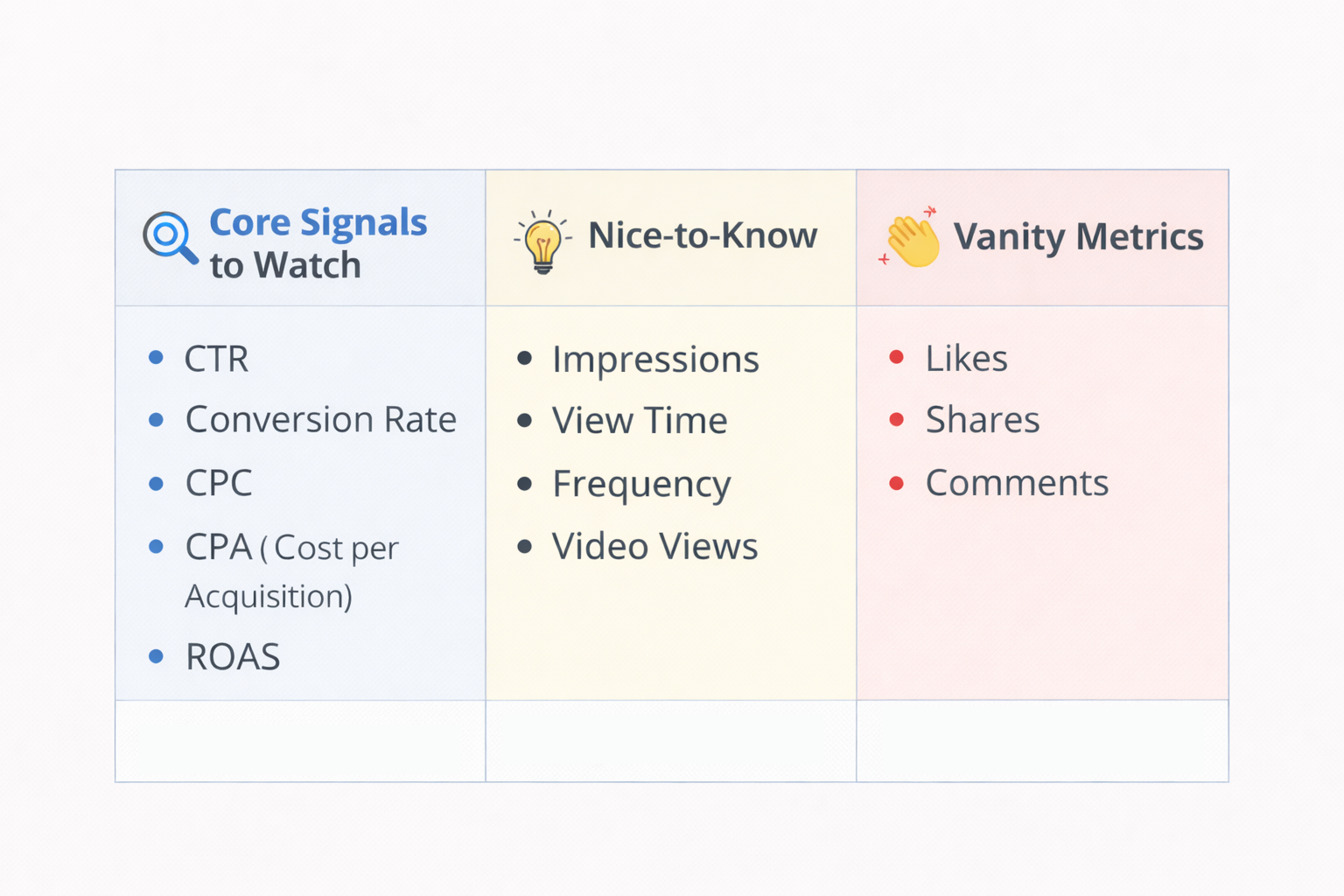
Watch closely:
-
CTR (Link Click-Through Rate): Tells you if the ad earns curiosity.
-
Post Saves + Shares: Indicates depth of interest and pass-along potential.
-
Scroll Depth or Time on Page: Signals whether post-click behavior aligns with pre-click expectations.
-
Ad Set Frequency vs. CTR: A falling CTR paired with rising frequency = fatigue.
To dive deeper into interpreting metrics, check Why Tracking Engagement Metrics on Facebook Ads is Crucial for Success.
Wrap-Up: Better Engagement Starts with Better Alignment
High-engagement ads aren’t louder — they’re smarter. They align creative to user behavior, message to moment, and format to platform.
Here’s your checklist for better engagement:
-
Break visual patterns, but stay native to the feed.
-
Speak to real problems, not generic promises.
-
Target based on behavior and intent — not just interests.
-
Rotate creative proactively, not reactively.
-
Respect the rhythm of attention — when, where, and how people scroll.
Engagement isn’t just a metric — it’s a reflection of how well your ad fits the user’s mindset. When you meet people where they are, with the right story, at the right time, clicks and conversions follow naturally.
Start optimizing for relevance, not reach. That’s how performance scales.