
Testing is supposed to reduce risk and improve performance. In practice, many marketers lose budget not because testing doesn’t work, but because it’s done incorrectly.
Mistake #1: Testing Too Many Variables at Once
One of the fastest ways to waste money is to change multiple elements in a single test: creative, copy, audience, and budget—all at the same time. When results shift, it becomes impossible to understand why.
Why it costs money:
-
You can’t identify the real performance driver
-
Winning elements are often discarded by mistake
-
Budget is spent without generating actionable insights
Best practice:
Test one variable at a time. If you’re testing creatives, keep the audience and budget identical across all variants.
Mistake #2: Ending Tests Too Early
Many campaigns are paused after 24–48 hours based on early performance signals. This is one of the most expensive habits in paid marketing.
Useful statistic:
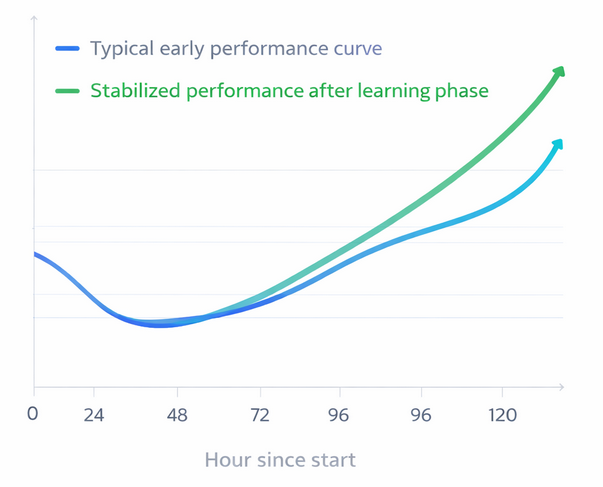
According to aggregated ad platform data, up to 40–60% of ad sets that look unprofitable in the first 48 hours stabilize or improve after the learning phase.
Why it costs money:
-
Platforms need time to exit the learning phase
-
Early data is often volatile and misleading
Best practice:
Allow tests to reach statistical significance or a predefined conversion threshold before making decisions.
Mistake #3: Using Audiences That Are Too Small
Testing with small audiences limits delivery, increases CPMs, and produces unreliable results.
Useful statistic:
Ad sets with very limited audiences can see CPMs increase by 20–50% due to restricted delivery and frequent ad fatigue.
Why it costs money:
-
Higher costs with lower reach
-
Faster creative burnout
-
Inconclusive test results
Best practice:
Ensure audiences are large enough to support consistent delivery and learning. Testing requires volume to produce clarity.
Mistake #4: Ignoring Budget Distribution
Even well-designed tests fail when budget is unevenly distributed. Giving one variant significantly more spend than others invalidates the comparison.
Why it costs money:
-
Underfunded variants never get a fair chance
-
Decisions are made based on skewed data
Best practice:
Allocate equal budgets across all test variants, or use automated split testing where available.
Mistake #5: Optimizing for the Wrong Metric
Click-through rate, CPC, or engagement often look impressive—but they don’t always correlate with revenue.
Useful statistic:
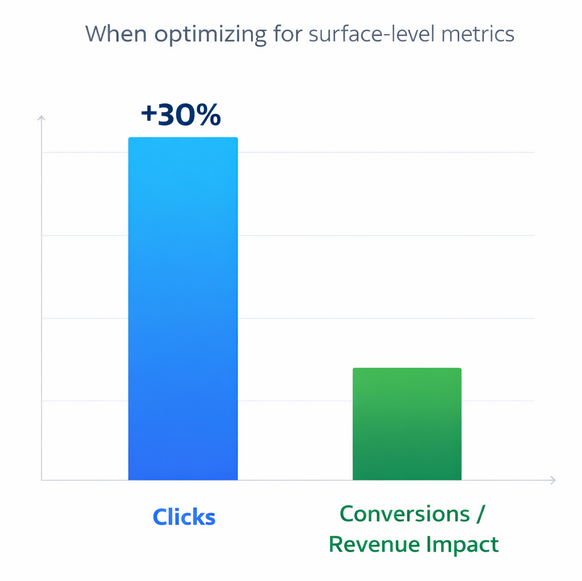
Campaigns optimized for surface-level metrics can generate up to 30% more clicks without improving conversions or revenue.
Why it costs money:
-
False positives lead to scaling losing campaigns
-
Real business outcomes are ignored
Best practice:
Always align tests with your core business objective: qualified leads, purchases, or lifetime value.
Mistake #6: Not Documenting Test Results
Many teams run the same failed tests repeatedly simply because results aren’t documented or shared.
Why it costs money:
-
Repeating losing experiments
-
No long-term optimization knowledge
Best practice:
Maintain a simple testing log with hypothesis, setup, outcome, and key learnings. Over time, this becomes a performance playbook.
Final Thoughts
Testing is one of the most powerful tools in performance marketing—but only when executed with discipline. Avoiding these common mistakes can significantly reduce wasted spend and turn testing into a predictable growth engine rather than a budget drain.
