Finding the right audience is not about luck. Yet too many advertisers treat it that way — hoping Facebook or Instagram will "figure it out." That leads to inconsistent results, poor conversion rates, and wasted budget.
Real audience discovery is built on signals, structure, and smart tools. This article will show you how to uncover overlooked targeting angles, spot hidden patterns, and move beyond guesswork.
Most Advertisers Look in the Same Places
When campaigns underperform, the usual instinct is to tweak creatives or budgets. But often, the real issue lies deeper — in the audience itself.
Many marketers fall back on default targeting tactics: interests, demographics, and basic lookalikes. These often miss what really matters — actual community behavior and intent.

Instead of targeting "health & wellness" as a broad interest, consider targeting users who follow niche creators in that space or who engage in Facebook groups related to specific challenges (like post-injury recovery). These users are more aware, more active, and often more purchase-ready.
This is where a tool like LeadEnforce adds depth. It allows you to target people based on Facebook group membership or Instagram account follows, giving you direct access to communities with shared interests and real activity — not just surface-level traits. Check out our article on how to build an audience from a Facebook group to learn more.
Start With Behavior, Not Demographics
Demographics like age, gender, and location might inform your messaging tone, but they don’t predict action. Behaviors do.
The most reliable audience segments often come from behavioral cues, such as:
-
Following high-trust Instagram creators in a niche;
-
Participating in active Facebook communities (e.g., “Budget Meal Planning” or “DIY Home Renovations”);
-
Frequently engaging with educational, long-form content.
For instance, a financial planning app could see better results by targeting followers of niche finance coaches, rather than a generic “Personal Finance” interest. These followers have context, motivation, and often a need — which makes them more likely to take action.
You can also get deeper insights into what makes an audience effective by reading Why Your Facebook Ads Are Getting Low Engagement and How to Fix It.
Find Overlaps That Signal Real Intent
One of the most powerful ways to reduce wasted spend is to stop targeting traits in isolation. Instead, look for audience intersections — where different attributes or behaviors overlap to create more focused, high-performing segments.
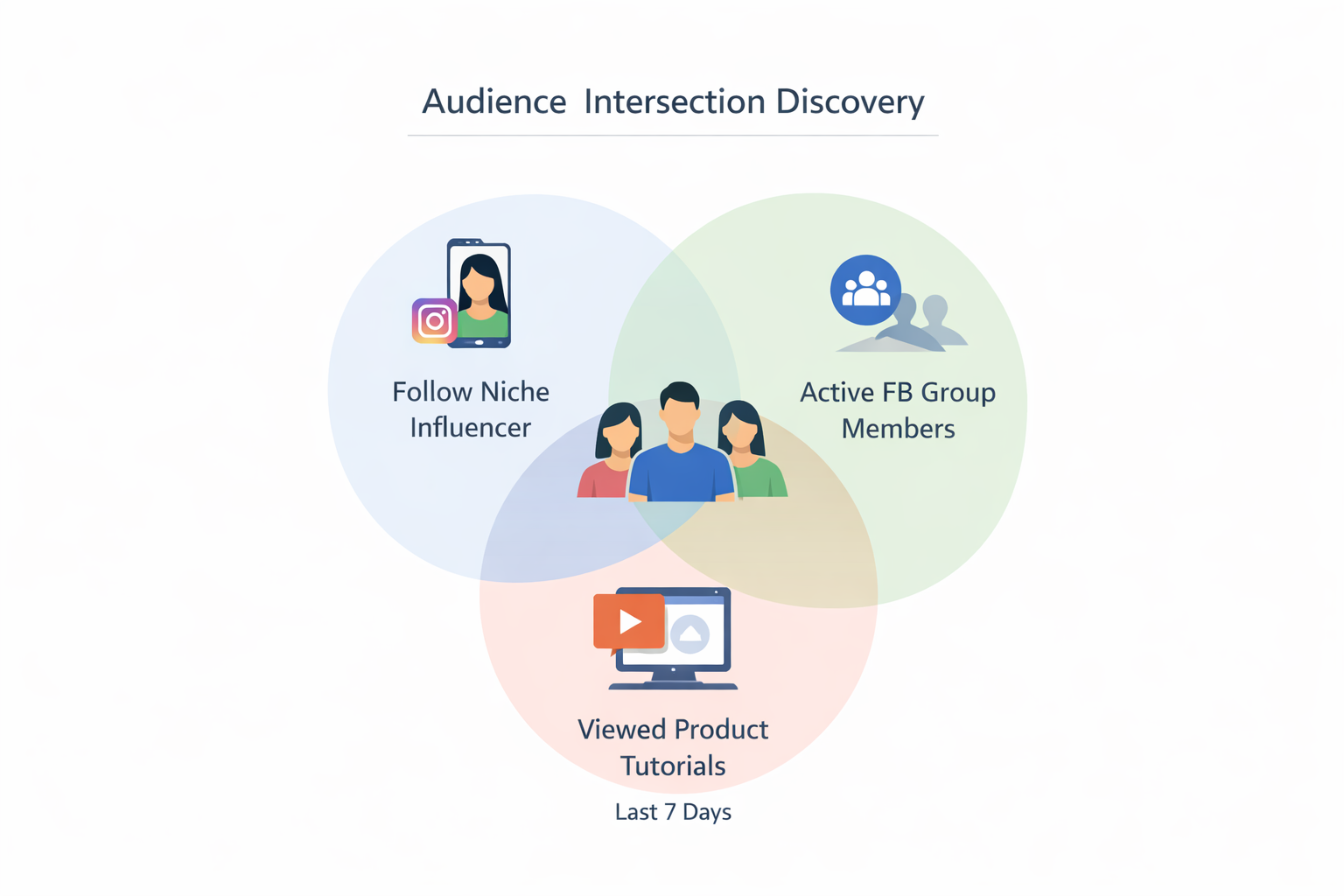
For example:
-
Yoga practitioners who follow “prenatal” or “postpartum” experts;
-
Solopreneurs who also belong to remote work Facebook groups;
-
Craft hobbyists who follow niche Etsy influencers and join tutorial-heavy communities.
These overlaps reveal people who are more than just interested — they’re in a mindset that aligns with your offer.
If you're unsure where to start, LeadEnforce’s interface allows you to stack multiple sources (groups + pages + follows) to identify these intersections. See how this works in practice with the Step-by-Step Guide to Retargeting with LeadEnforce.
Let Audience Fatigue Teach You Something
Audience fatigue isn’t just a signal to change creatives — it’s a window into audience quality.
If the same segment stops performing, that may indicate you’ve maxed out its potential. But the real insight lies in which parts of that audience fatigue fastest.
Split audiences by:
-
Recency (e.g., 7-day vs 30-day page visitors);
-
Type of group (e.g., active community vs content-only);
-
Depth of engagement (e.g., comment vs click vs video view).
Use these trends to prune or pivot. For example, if repeat exposure works for one group but not another, you’ve learned something about who’s just browsing and who’s ready to buy.
For more tips on how to interpret this kind of data, explore Why Audience Overlap Is Killing Your Facebook Ad Performance.
Social Signals Are the New Targeting Gold
In today’s privacy-restricted landscape, traditional interest targeting is less reliable. But network signals — who people follow, interact with, and trust — remain strong.
Targeting users who already follow your competitors or community leaders in your niche puts you closer to high-intent users. They’ve opted into certain values, aesthetics, or problems — which makes your job easier.
LeadEnforce helps identify and reach these clusters, even if Meta’s own tools don’t show them. With the right source selection, you can uncover hidden high-performing audiences that most advertisers miss.
Final Takeaways
The most effective audience strategies today are built on three ideas:
-
Behavior outperforms assumptions;
-
Networks outperform broad categories;
-
Tools like LeadEnforce outperform basic Meta targeting alone.
When you lean into these principles, you’ll:
-
Avoid wasted impressions on people who’ll never convert;
-
Unlock new segments based on real-world follow patterns;
-
Learn faster and scale smarter, with fewer surprises.
Stop targeting by hope and start discovering by insight.