Sometimes your Facebook or Instagram ads stop improving. This happens to most advertisers.
It doesn’t mean something is broken. It usually means your current ads have run their course. People may have seen them too often. Or your audience is no longer the right fit.
Instead of restarting everything, focus on small changes that fix what’s not working.
Step 1: Check If It’s a Real Plateau
Before you make changes, make sure the dip is not just a normal shift. Look at your data over the past 7 to 14 days. You want to see if the drop is part of a pattern.
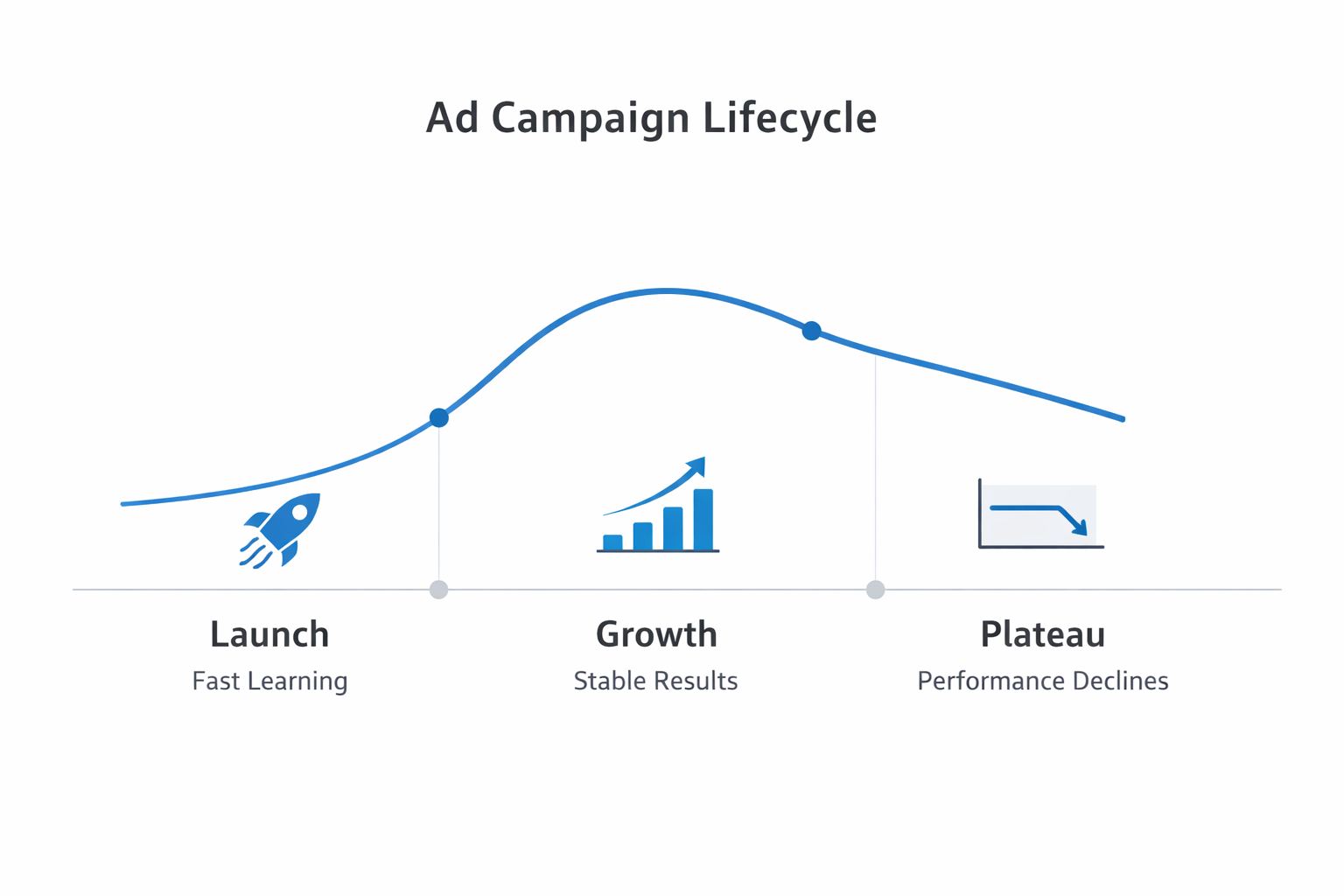
Here are signs you’re looking at a true performance plateau:
-
Your return is down but your ad spend is the same. You’re paying more, but getting less.
-
Fewer people are clicking your ads. Your click-through rate is going down.
-
Ad frequency is high. The same users are seeing the same ad too often.
-
More than one ad set is slowing down. It’s not just one bad ad — it’s happening across your account.
If you notice two or more of these at the same time, your ads likely need a refresh. These are common signs that your ads have stopped performing and need attention.
Step 2: Update Your Ad Creative
One of the biggest reasons for a slowdown is creative fatigue. People stop paying attention when they see the same ad over and over.
You don’t need a full rebrand. But changing a few things can make your ads feel new again.
Here’s how you can refresh your creative:
-
Try a different format. Switch from a single image to a video or carousel ad.
-
Change what you highlight. Focus on a new benefit or customer result.
-
Rewrite your ad text. Make your message clearer or shorter.
-
Show real results. Use a customer review, a before-and-after photo, or a quote.
Let’s say you sell air purifiers. If your usual ad talks about “clean air,” try showing a customer review that says, “I haven’t had allergies in two weeks.” That feels more personal — and more convincing.
To avoid performance drops from creative burnout, here’s how to spot and fix ad fatigue early.
Step 3: Fix Your Targeting
If your audience is too small or overused, performance will drop. You need to either expand your reach or target better.
Try adjusting your audience like this:
-
Combine interests and behaviors. Target people who follow fitness pages and also shop online.
-
Remove past buyers. Don’t keep showing ads to people who already purchased.
-
Use fresh data for lookalikes. Base them on recent customers, not old lists.
-
Target by group or account. For example, reach people who follow relevant Instagram accounts or are active in niche Facebook groups.
If you sell productivity tools, consider targeting followers of remote work or time management pages. They’re more likely to care — and you avoid guessing.
For more insight into why great creatives still fail without the right audience, read this breakdown on creative and targeting alignment.
Step 4: Improve What Happens After the Click
Sometimes your ad gets the click, but users don’t convert. This usually means something’s wrong with your landing page or offer.
Here’s what to check:
-
Does the page match the ad? If your ad says “Free Trial,” the page should clearly show that offer.
-
Is it easy to understand? People should know what you’re offering in five seconds or less.
-
Is it simple to act? Forms should be short, and the next step should be clear.
-
Does the page load fast? Slow mobile pages turn users away.
For example, if you’re offering a free course but your landing page talks too much or asks for a lot of details, people will leave. A short, clear message works better — especially on mobile.
To optimize the full user experience, make sure you’re also improving post-click performance — not just the ad itself.
Step 5: Adjust How Your Campaigns Are Set Up
Even if your ads are good, your campaign structure can hold them back. Sometimes Meta’s system can’t optimize properly because it doesn’t have enough flexibility.
Here’s what to try:
-
Use campaign budget optimization (CBO). Let Meta shift budget across ad sets based on what’s working.
-
Separate cold and warm traffic. Run one campaign for new users and another for people who already visited your site.
-
Test one thing at a time. Only change one part — like the headline — so you know what made the difference.
-
Use different creatives for each placement. Don’t show the same ad on Instagram Stories and Facebook Feed. Design for each one.
If you sell phone accessories, for example, run one campaign focused on people who viewed your page in the last 30 days, and another for new users showing a short demo video. It gives Meta more space to learn — and helps you scale.
Step 6: Reach New Audiences (Not Just Retarget)
Retargeting works well — but only for a while. If you don’t keep bringing in new people, your ad performance will slow down.
To grow your funnel, start with content or offers that build trust:
-
Offer something helpful. A free guide or quiz can bring in users without pressure to buy.
-
Share useful content. Post videos, how-tos, or real user stories.
-
Track small actions. Use video views or clicks as soft signals, then retarget users who engage.
For example, a pet brand might post a short video like “3 ways to calm an anxious dog” and then show a product ad to people who watched 75% of it. That’s more effective than jumping straight to a sale.
Step 7: Don’t Ignore Outside Factors
Sometimes your ads slow down because of things outside your control. Maybe it’s a seasonal dip. Maybe the market changed. Either way, you need to spot it early.
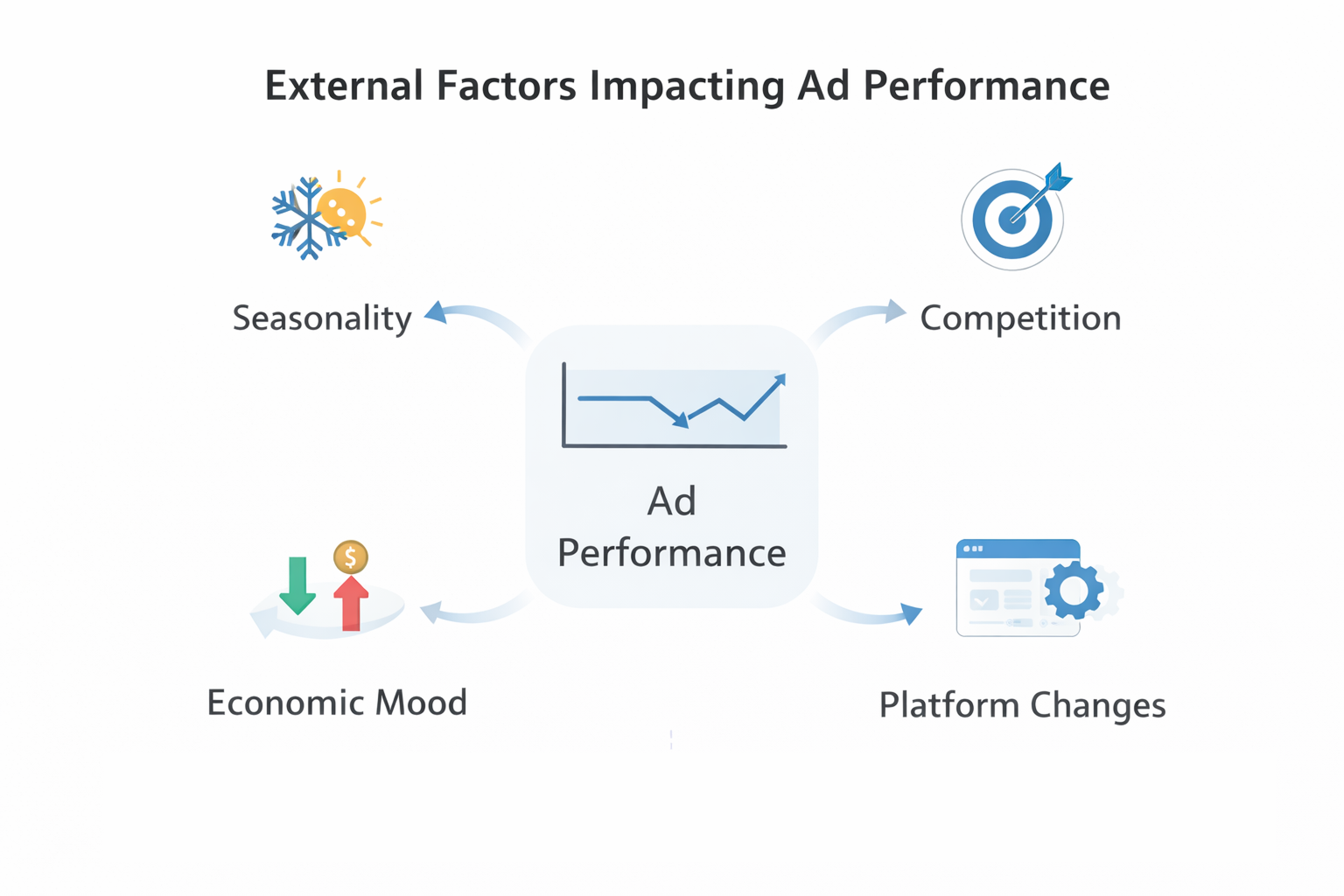
Watch out for these signs:
-
People are shopping less. After holidays, buying habits often change.
-
Your ad costs are rising. More competition or platform changes can raise your cost per result.
-
User behavior shifts. During uncertain times, people take longer to decide.
-
The platform made changes. Meta sometimes updates how ads are shown or who sees them.
If you notice these trends, consider lowering your budget for a while or changing your goal to engagement instead of sales. Then shift back when behavior improves.
Final Thoughts
When ads stop performing, you don’t need to panic. Instead, figure out what changed — and fix one thing at a time.
Start with your creative. Review your audience. Improve your landing page and campaign setup. Then expand to new users and keep an eye on the market.
Even small changes can get your ads moving forward.