Facebook Page promotion can be useful when you need speed. You can promote content, get visibility, send people to a destination, start conversations, or support a simple campaign without building everything from scratch.
The risk is that speed makes the wrong goal feel harmless.
A Page promotion goal that does not fit the campaign can create a misleading win: more likes, more clicks, more messages, or more traffic, but not more qualified demand. For marketers managing CPC, CPA, CAC, ROAS, and lead quality, that is not a small setup mistake. It changes what the campaign learns and who the budget reaches.
The Problem
The problem is not that Facebook Page promotion goals are bad. The problem is choosing a goal that does not match the campaign’s commercial purpose.
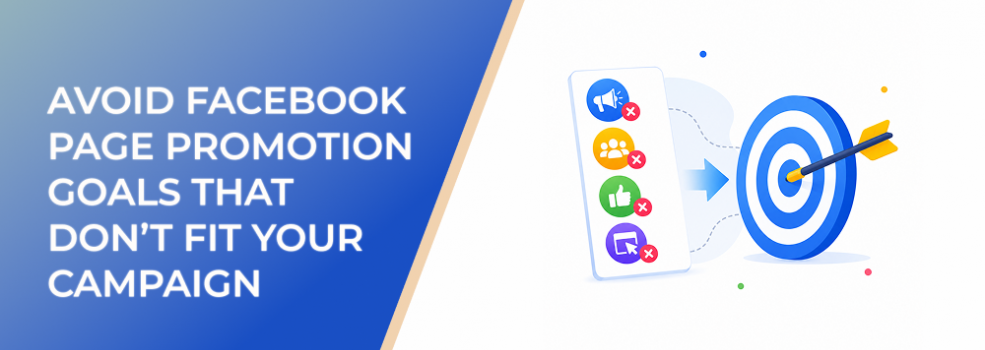
A goal is a signal. It tells Meta what type of behavior to prioritize. If the selected goal points toward low-value behavior, the campaign can optimize efficiently in the wrong direction.
That is why a Page promotion can look successful while still failing the business.
An engagement goal may produce reactions but not buyers. A traffic goal may produce clicks but not leads. A message goal may produce conversations but not qualified opportunities. A visibility-focused goal may expand reach but not create enough demand to justify spend.
The campaign is not necessarily broken. It may be doing exactly what it was asked to do.
Why This Problem Hurts Performance
A poor-fit goal hurts performance because it separates platform activity from business value.
This often shows up as low CPC with weak conversion rate, rising engagement with flat revenue, strong reach with no retargeting plan, or cheap leads that never become pipeline.
For agencies, it creates reporting friction. The campaign dashboard looks active, but the client asks why sales, bookings, or qualified leads did not improve.
For SMB owners, it creates wasted cash. A small budget spent on the wrong behavior leaves less room to test the right offer, audience, or creative.
For growth teams, it slows learning. If the campaign goal does not match the business question, the data cannot guide the next decision.
The cost is not only wasted spend. It is wasted signal.
Common Scenarios Where This Happens
A local gym promotes a New Year offer with a post engagement goal. The campaign gets comments and likes, but trial sign-ups stay low because the goal optimized for interaction, not action.
A B2B consultant promotes a thought-leadership post and expects discovery calls. The post gets attention, but the audience is not pushed toward a lead or message action.
An ecommerce brand promotes a product post for website visits because sales optimization feels too advanced. The campaign drives traffic, but the users behave like browsers instead of buyers.
An affiliate marketer boosts a high-engagement post to a broad audience. CPC looks attractive, but downstream conversion quality is weak because the audience came for content, not the offer.
An agency inherits a client’s Page promotions and sees several campaigns with different goals but no clear business logic. Some campaigns are optimized for engagement, others for traffic, and none are connected to CPA or lead quality.
Why the Problem Happens
Wrong Page promotion goals usually come from convenience, not strategy.
The first cause is interface bias. Page promotion tools are designed to make setup easy, so advertisers often select the goal that looks closest to the post rather than the campaign outcome.
The second cause is metric bias. Marketers are tempted by goals that generate fast, visible results. Engagement, reach, and clicks can accumulate quickly. Qualified leads, purchases, and revenue usually take more discipline to measure.
The third cause is funnel confusion. A top-of-funnel content post should not always be judged like a sales ad. But a sales offer should not be promoted with a goal that only proves people will react to the content.
The fourth cause is poor audience definition. When the audience is broad or low-intent, advertisers may blame the goal, creative, or budget without realizing the campaign is reaching the wrong people.
The Solution
The solution is to run a goal-fit check before launching any Page promotion.
Start with the business outcome. Are you trying to create awareness, website evaluation, qualified leads, messages, bookings, purchases, or retargeting audiences?
Then identify the funnel stage. Cold audiences may need education or awareness. Warm audiences may be ready for lead capture, messages, or sales. Retargeting audiences should usually be pushed toward a more concrete next step.
Next, define the action that proves progress. A good goal should create an action that matters. If the campaign needs appointments, comments are not enough. If the campaign needs product sales, website clicks are not enough. If the campaign needs pipeline, raw lead count is not enough.
Then define the quality check. For leads, that might be qualified lead rate or booked-call rate. For ecommerce, that might be purchase rate, AOV, or ROAS. For local services, that might be appointment show rate or quote quality.
Finally, decide whether Page promotion is the right tool. Use Page promotion for simple campaigns, fast content tests, local visibility, engagement validation, or lightweight traffic campaigns. Use Ads Manager when you need deeper control over conversion events, testing structure, placements, audience exclusions, or sales optimization.
A simple rule works well: if the campaign must prove revenue, pipeline, or qualified acquisition, do not choose a goal that only proves attention.
Risks and Considerations
The biggest risk is assuming a better goal will fix a weak campaign.
Goal fit matters, but it cannot compensate for a poor offer, unclear creative, slow sales follow-up, bad landing page, or low-quality conversion signal. If the audience does not understand the offer, the selected goal will not save the campaign.
Audience size is another risk. Very narrow audiences can improve relevance but limit delivery. Very broad audiences can scale reach but reduce quality. The right balance depends on budget, market size, and campaign purpose.
Avoid over-reliance on one channel or one promotion type. Page promotions can support testing and visibility, but performance marketing requires a broader view of funnel quality.
Compliance also matters. When building audiences and running ads, stay aligned with platform policies, consent expectations, and applicable privacy requirements.
Prerequisites and Dependencies
Before choosing a Page promotion goal, define the campaign’s ICP, offer, funnel stage, primary KPI, and quality metric.
You need a clear destination for the action. If the goal is traffic, the landing page must be relevant. If the goal is messages, someone must respond quickly. If the goal is leads, the form or intake process must qualify the right prospects. If the goal is sales, tracking and product economics must be clear enough to judge performance.
You also need a realistic budget. A small campaign can test message resonance or audience fit, but it may not produce enough conversions to judge full CAC or ROAS.
For LeadEnforce, you need relevant source communities, accounts, profiles, or data sources that match the campaign’s buyer intent.
Practical Recommendations
Do not launch a Page promotion until you can finish this sentence: “This goal fits because the campaign needs people to take this specific action.”
Reject goals that only create vanity activity. Engagement is useful when interaction is the objective. Traffic is useful when website behavior matters. Messages are useful when conversations can be handled and qualified. Leads are useful when the form and audience are built for quality, not just volume.
When performance looks weak, audit goal fit before changing creative. If the goal is wrong, new creative may simply attract more of the wrong behavior.
Use Page promotion for speed, but use goal discipline to protect budget.
Final Takeaway
Facebook Page promotion goals are useful only when they match the campaign’s real purpose.
The wrong goal can make performance look active while CPC, CPA, CAC, ROAS, and lead quality move in the wrong direction. The fix is to define the business outcome first, choose a goal that supports that outcome, and pair it with a relevant audience.
To build more relevant audiences before your next Page promotion test, join the free 7-day LeadEnforce trial period.
Related LeadEnforce Articles
- Boosted Posts vs Meta Ads: What Actually Drives Better CPA and ROAS — Explains why simple promotion formats can look efficient while limiting performance control.
- Should You Boost a Facebook Page Post? Performance Pros, Risks, and Better Uses — Helps advertisers decide when boosting a Page post is useful and when it risks misleading performance.
- When Facebook Page Ads Reach the Wrong Audience — Connects Page ad performance problems to weak audience quality and targeting mismatch.
- How to Stop Meta From Optimizing for the Wrong Result — Shows how the selected result can pull delivery toward low-value actions if the campaign signal is wrong.