Are your paid social campaigns underperforming — even with well-defined audience segments?
If you’re still relying on basic demographics like age, gender, or location to define your targeting, you may be leaving valuable insights on the table. These traditional filters help you reach the right people on the surface, but they don’t explain why someone clicks, converts, or ignores your ad altogether.
That’s why forward-thinking marketers are turning to behavioral clusters — a more intelligent and performance-driven way to segment audiences based on their actions, not just their attributes.
What Are Behavioral Clusters?
Behavioral clusters are groups of users segmented by how they behave, rather than who they are. Instead of relying solely on demographics or interests, behavioral segmentation focuses on identifying patterns in user actions across your digital ecosystem.
For example:
-
Users who frequently engage but never purchase.
-
Customers who return weekly and share your content.
-
Visitors who watch your video ads to the end but never click.
These clusters provide deeper, more actionable insights that allow advertisers to tailor messages with far greater precision.
If you're unfamiliar with behavioral targeting or struggling to implement it correctly, check out this guide on how behavioral targeting on Facebook can drive more qualified leads.
Why Behavioral Segmentation Outperforms Demographics
Demographic data is useful, but it's no longer sufficient. Two users with identical demographic profiles can behave very differently online.
Take an example: you're advertising a health and wellness product. You might target women aged 25–34 in urban areas. But within that group, you'll likely find:
-
Highly engaged fitness enthusiasts.
-
Beginners exploring wellness for the first time.
-
Users who browse frequently but never take action.
A single ad approach won’t resonate with all three. But when you understand behavioral differences, you can craft messaging that speaks directly to each group’s intent, mindset, and position in the buyer journey.
Need help defining your target audience beyond the basics? Here’s a step-by-step guide to building smarter audience strategies.
How to Build and Use Behavioral Clusters in Paid Social Campaigns
You don’t need complex machine learning models to start using behavioral segmentation. With the right framework — and a shift in perspective — you can begin identifying high-impact audience clusters today.
1. Identify Key Behaviors That Matter
Begin by defining a small set of high-value actions. These should reflect meaningful steps in your funnel, such as:
-
Clicking on specific ad formats (e.g., carousel vs. video).
-
Watching more than 75% of a video ad.
-
Initiating checkout without completing the purchase.
-
Returning to your site within a short time frame.
These behavioral signals indicate interest, intent, or friction — all of which can inform smarter segmentation.
2. Group Users Based on Shared Patterns
Using platform tools like Facebook Custom Audiences or third-party analytics, group users who show similar behavioral trends. Example clusters may include:
-
High-Intent Browsers: Users who revisit product pages but haven’t converted.
-
Video Engagers: Users who consistently watch a significant portion of video content.
-
Cart Abandoners: Shoppers who leave without completing a transaction.
-
Repeat Buyers: Customers with multiple purchases or high lifetime value.
If your ad sets start showing "limited delivery" due to overly narrow behavioral segments, you might run into the dreaded "Ad Set May Get Zero" status. Here's why that happens and how to fix it.
3. Develop Creative Strategies for Each Cluster
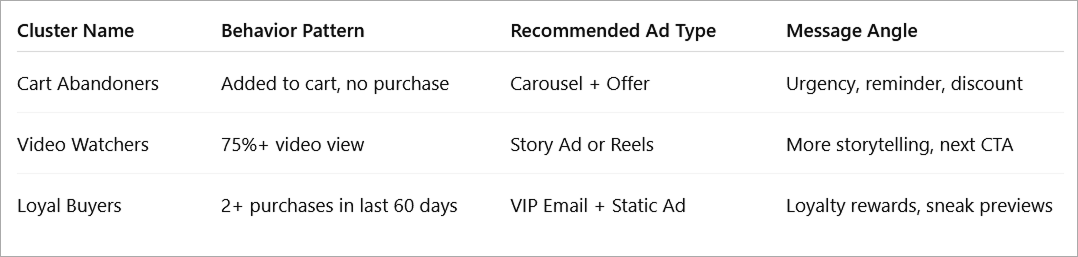
With clear behavioral insights, tailor your ad messaging and format to address what each audience cares about.
For instance:
-
Target cart abandoners with urgency messaging or limited-time offers.
-
Engage video watchers with longer-form storytelling or interactive polls.
-
Reward loyal buyers with exclusive access, loyalty perks, or referral incentives.
The goal is to match creative assets to behavioral intent — creating a more relevant and compelling user experience.
4. Measure, Optimize, and Adapt
Behavioral patterns are dynamic. Monitor campaign performance and evolve your clusters as new insights emerge. You may discover new high-value behaviors, such as:
-
Users who respond only to weekday morning ads.
-
Customers who always convert on mobile but not desktop.
Continuously refining your clusters ensures that your paid social strategy remains agile and performance-driven.
Platforms Already Leverage Behavior — You Should Too
Major platforms like Meta, TikTok, and YouTube already incorporate behavioral data into their ad delivery algorithms. However, relying solely on their automation can limit your strategic control.
By proactively creating behavioral clusters and feeding them into the ad platform, you guide the algorithm with better data. This results in more relevant targeting, reduced spend inefficiencies, and improved performance across the board.
New to Facebook targeting in general? This beginner-friendly overview of Facebook Ad Targeting covers key concepts you'll want to master before diving deeper.
Key Benefits of Behavioral Clustering
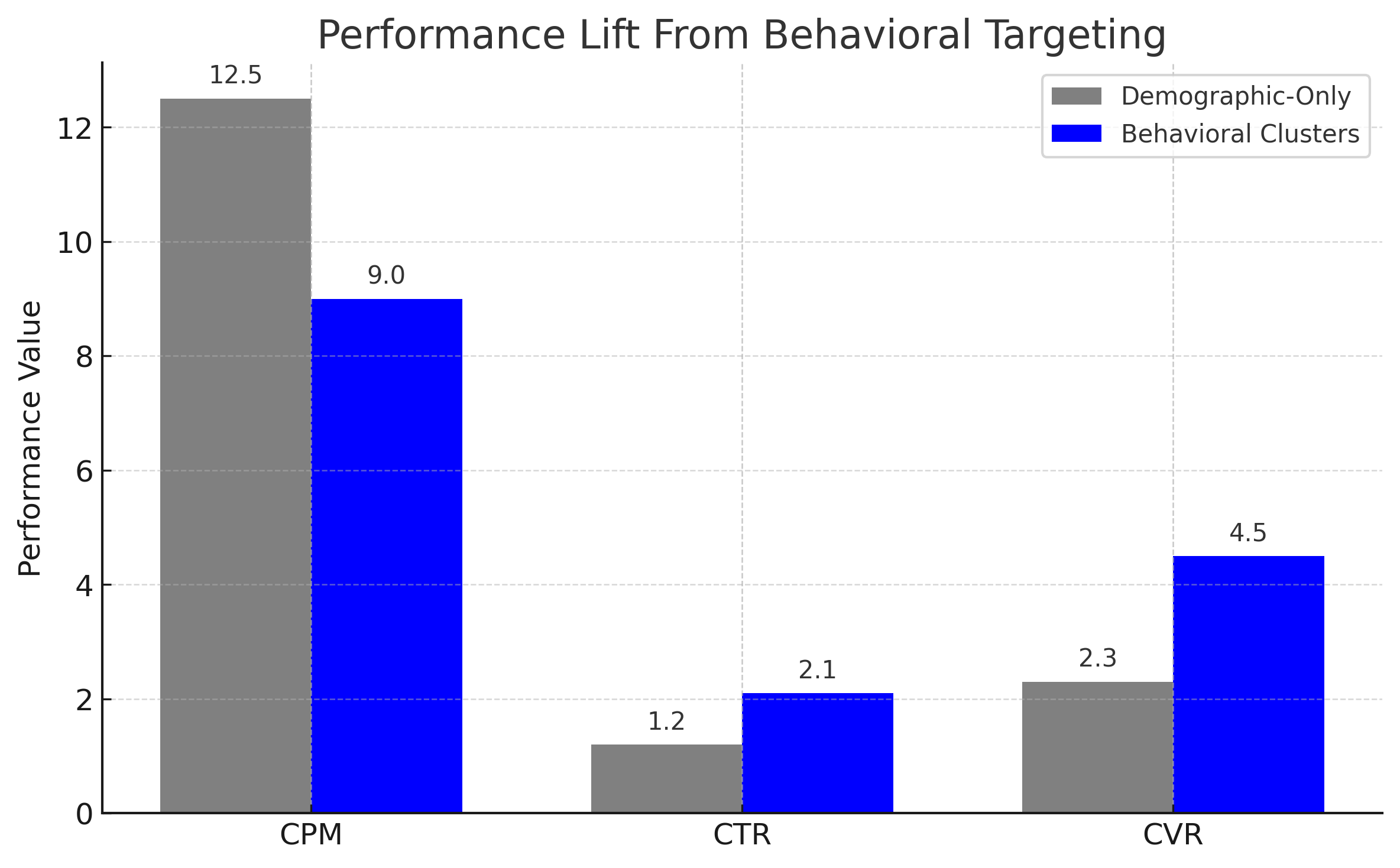
Advertisers who implement behavior-based segmentation often see measurable gains in campaign effectiveness. These include:
-
Higher conversion rates from more personalized messaging.
-
Lower cost per action (CPA) due to improved relevance.
-
Better remarketing performance with clearer intent signals.
-
Faster optimization cycles from clearer insights.
-
Increased lifetime value (LTV) by nurturing repeat customers.
Behavioral clusters can be applied across industries — from ecommerce and SaaS to lead generation and app installs.
Final Thoughts: Turn Insight Into Advantage
Smart segmentation isn’t just about narrowing down your audience. It’s about understanding how people engage, what motivates their actions, and how to meet them with the right message at the right time.
Behavioral clusters offer a more intelligent, adaptable, and effective way to approach paid social targeting.