Most advertisers use CPA (cost per acquisition) to measure and optimize their Facebook and Instagram ad campaigns. It’s simple and easy to track — how much did you pay to get a sale or lead?
But this method can be misleading. It only looks at the first purchase and ignores everything that happens after. What about customers who come back again and again? Or those who buy higher-priced products later?
If your business makes money beyond the first sale, you’ll get better results by optimizing for customer lifetime value (LTV) instead of CPA.
Here’s how that works — and how to start using LTV to make better decisions with your ad budget.
Why CPA isn't enough when you're playing the long game
Focusing only on CPA is like judging a book by its cover. You see how much it cost to get the customer — but not how much they’re actually worth.
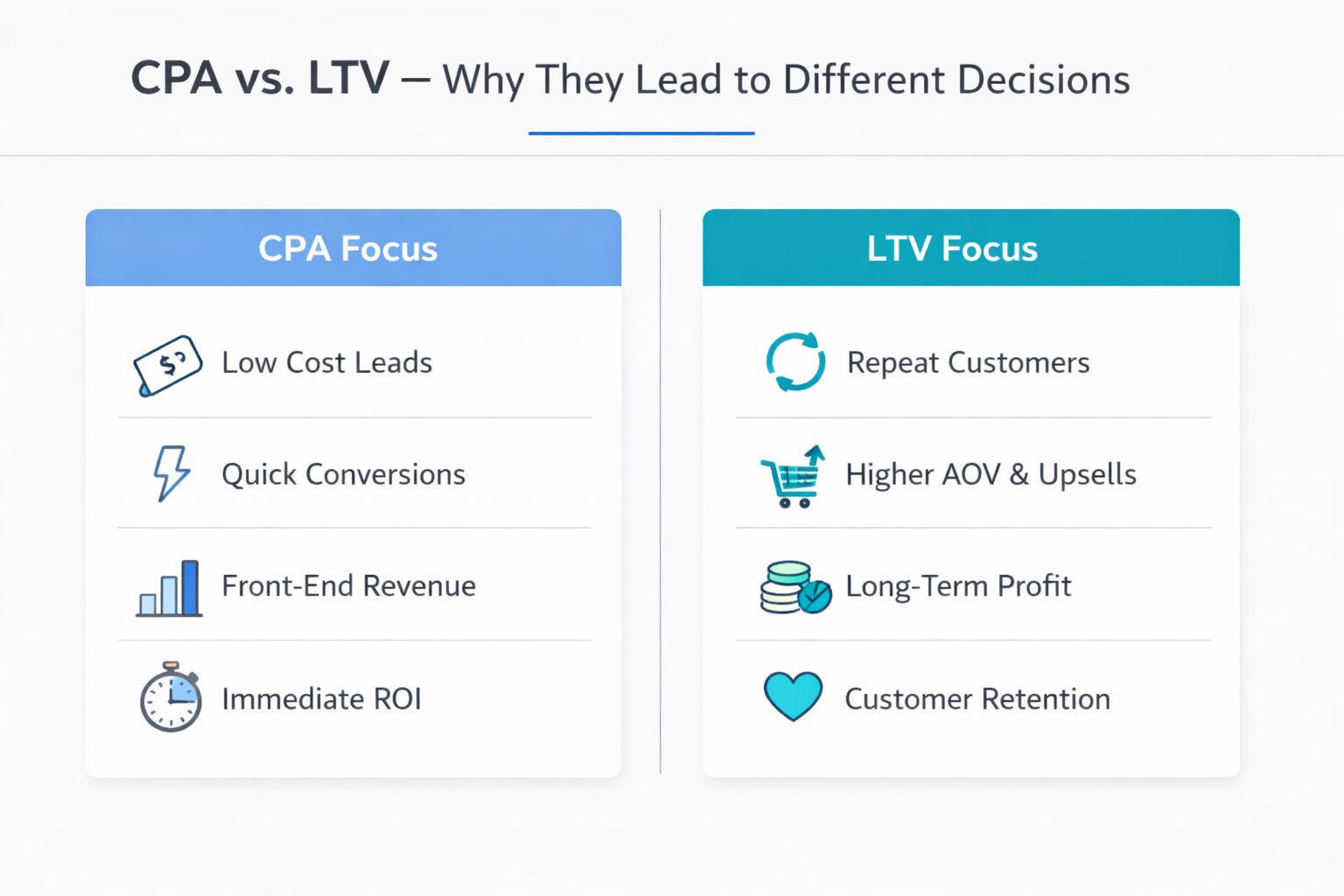
This can lead to bad decisions, such as:
-
Cutting campaigns that bring in valuable long-term customers;
-
Scaling cheap leads who never buy again;
-
Undervaluing audiences who need more time before converting.
Here’s a simple example:
-
Customer A costs $25 to acquire and buys once for $50.
-
Customer B costs $50 to acquire but spends $300 over the next 6 months.
With CPA bidding, you might turn off the ads that bring Customer B — even though they’re far more profitable.
This is why many advertisers now pair ROAS with LTV instead of treating them separately.
What is customer lifetime value?
Customer lifetime value (LTV) is how much a customer spends with your business over time. It includes:
-
The first purchase;
-
Any repeat purchases;
-
Upsells or subscriptions;
-
Average order value across time.
You don’t need a complex formula. Even a rough estimate is better than ignoring LTV altogether.
If you want a practical framework, check out Leveraging Customer Lifetime Value (LTV) for Facebook Ads Targeting.
How to estimate lifetime value from your own data
Start by looking at your past customers and breaking them into simple groups.
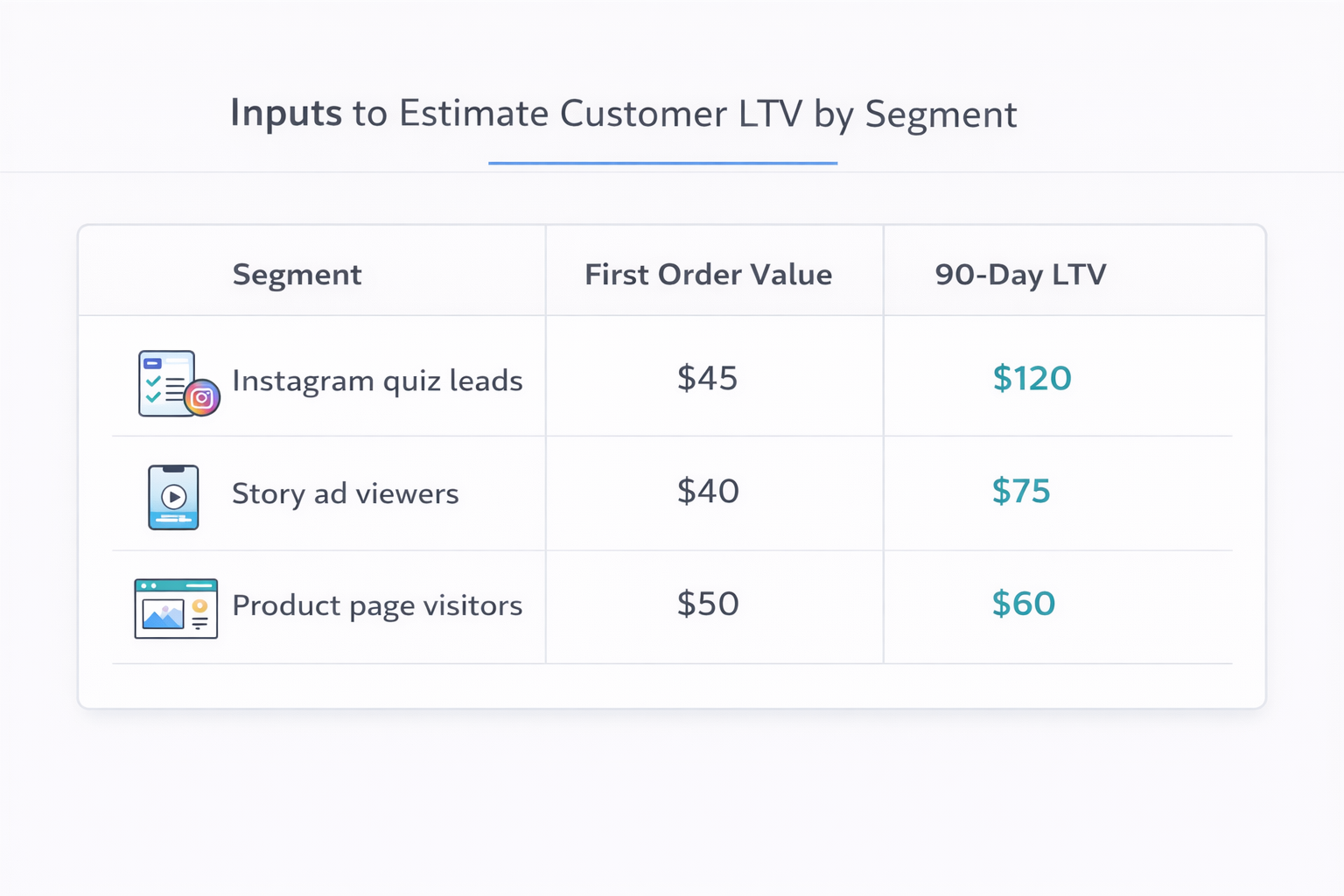
For example:
-
Customers who came from Instagram Stories ads;
-
Customers who signed up through a landing page quiz;
-
Buyers from different product categories.
Now ask:
1. How much did each group spend on their first order?
This gives you their initial value.
2. How many of them came back and bought again — and how soon?
Track this over 30, 60, or 90 days.
3. Did any of them upgrade, subscribe, or buy higher-priced items later?
This helps you compare different audiences and spot the ones with higher LTV — even if their initial CPA was higher.
Need help structuring this? See Lifetime Value Modeling for Ad Decisions.
You can use Shopify, Stripe, Google Analytics, or your CRM. A simple spreadsheet with customer IDs, dates, and order values is enough to start.
How to use LTV in your Facebook and Instagram campaigns
Once you know which customers are most valuable over time, you can change how you run your ads.
Here are some practical ways to do it:
1. Adjust your bidding strategy
Don’t panic if some ad sets have a higher CPA. If those audiences bring in customers with a higher LTV, it’s worth paying more upfront.
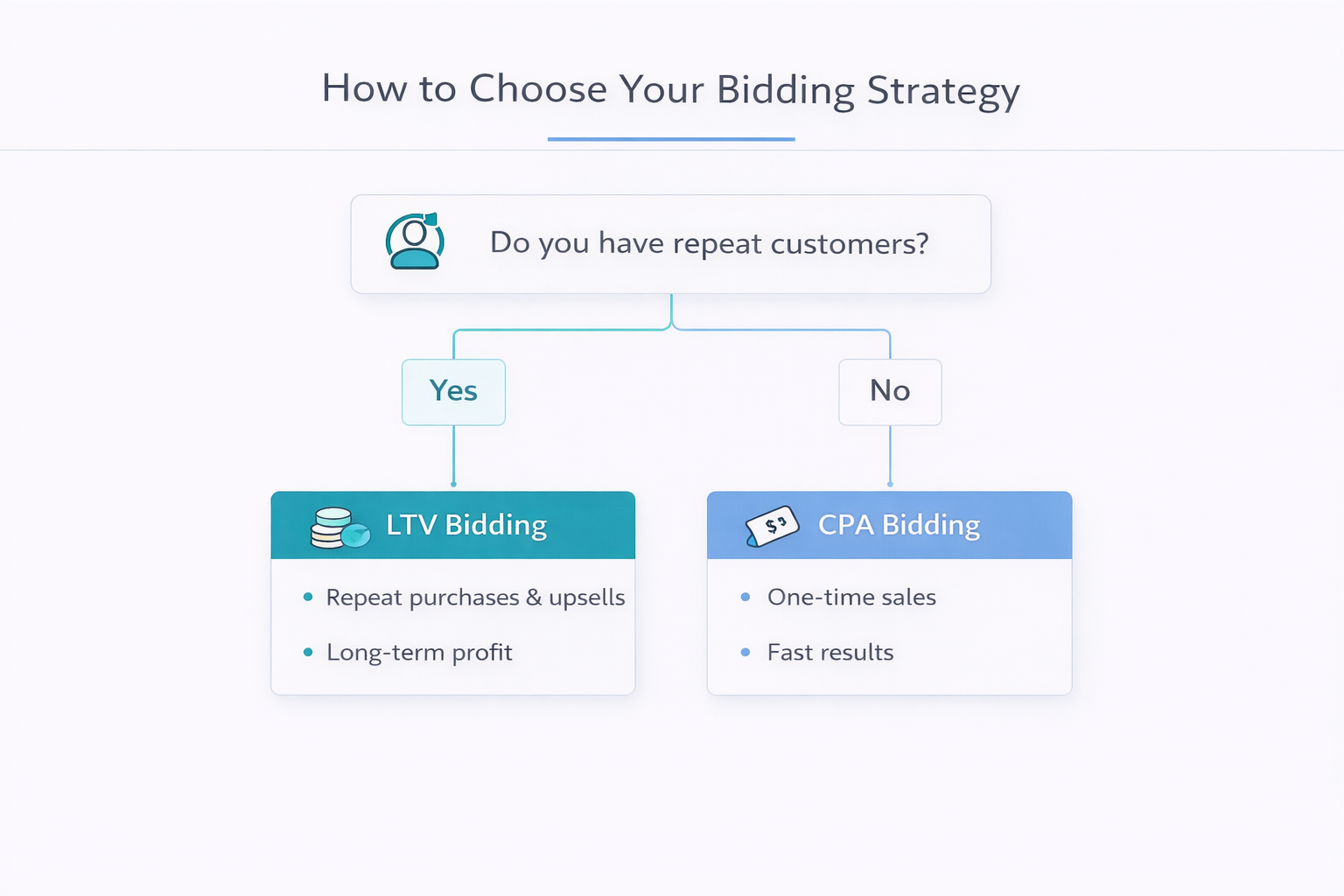
You can:
-
Use Meta’s value optimization instead of just conversions;
-
Manually raise bids on high-LTV audiences;
-
Set custom events like “buyer over $100” or “second purchase made” to track deeper success.
This tells the algorithm to look beyond the first sale.
2. Refine your targeting
Not all audiences are equal. Some bring in deal-hunters, others bring in loyal customers.
Instead of only targeting large interest groups, test more specific audiences, such as:
-
People who watched 75% of your longer-form product videos;
-
Visitors who checked your FAQ or pricing page before leaving;
-
Lookalikes of customers who made repeat purchases.
The goal is to reach people who behave like your best long-term buyers — not just those who click fast.
3. Change your creative approach
High-LTV customers often need more education and trust before they buy. But once they do, they stick around.
Instead of fast, discount-driven ads, try:
-
Explainer videos showing your product in action over time;
-
Customer stories about long-term use or real-life results;
-
Behind-the-scenes content showing what makes your product reliable or worth the price.
This builds trust and attracts customers who are in it for the long haul — not just the lowest price.
Bonus tips for using LTV to improve performance
Here are a few more ideas to make the most of your LTV strategy:
Track by cohort, not just channel
Instead of only looking at "Facebook vs. Instagram", track performance by campaign type, messaging, or product line. For example:
-
Do quiz leads have higher LTV than direct offers?
-
Are video viewers more loyal than blog readers?
Use these insights to double down on what works.
Don’t forget retention
You can’t grow LTV if you’re not keeping your customers.
Retention strategy is directly tied to lifetime value. For practical tips, read How to Improve E-commerce Customer Lifetime Value.
Make sure you're:
-
Sending post-purchase emails that educate and encourage repeat use;
-
Offering relevant upsells or bundles based on what they bought;
-
Collecting reviews and feedback to improve your product and messaging.
Test journey-based retargeting
Not every customer is ready to buy right away. If you retarget everyone with the same message, you may scare off high-value leads.
Instead, segment retargeting ads based on behavior:
-
Visitors who bounced quickly → show value-first content;
-
Visitors who viewed multiple pages → show testimonials or comparisons;
-
Cart abandoners → offer a soft reminder, not a hard sell.
A real-world example: selling beyond the first click
A small home fitness brand was stuck spending $35 per sale and making $50 back. That looked profitable on paper — but the margin was too small to scale.
They analyzed their returning customers and found:
-
Buyers from video tutorial ads had a 60% repeat purchase rate;
-
Email subscribers who joined through a quiz spent 3x more over 3 months;
-
People who clicked on ads about long-term results were more loyal.
They changed their targeting, updated creative to match long-term goals, and allowed for higher CPAs on those audiences.
As a result, revenue went up 40% in two months — even though their average CPA rose to $50. Why? Because those $50 customers were spending over $200.
Final takeaway: not all conversions are created equal
It’s easy to focus on getting the lowest CPA possible. But cheap clicks and quick conversions don’t always mean better results.
When you switch to lifetime value, you stop asking “What’s the cheapest way to get a sale?” and start asking “Which customers are actually worth the most?”
That mindset shift lets you:
-
Invest in smarter targeting;
-
Build better creative that speaks to real customers;
-
Grow your business with fewer dead-end conversions.
Your ad budget is an investment — and LTV helps you spend it where it counts.