Paid traffic is volatile. Auction pressure, creative fatigue, and policy shifts affect results weekly.
An evergreen lead generation system reduces that volatility. It creates consistent acquisition through structured audiences, stable offers, and controlled optimization.
This article explains how to design such systems inside Meta Ads.
What an Evergreen Lead Generation System Actually Is
An evergreen system is a campaign architecture that runs continuously. It attracts qualified leads without frequent restructuring.
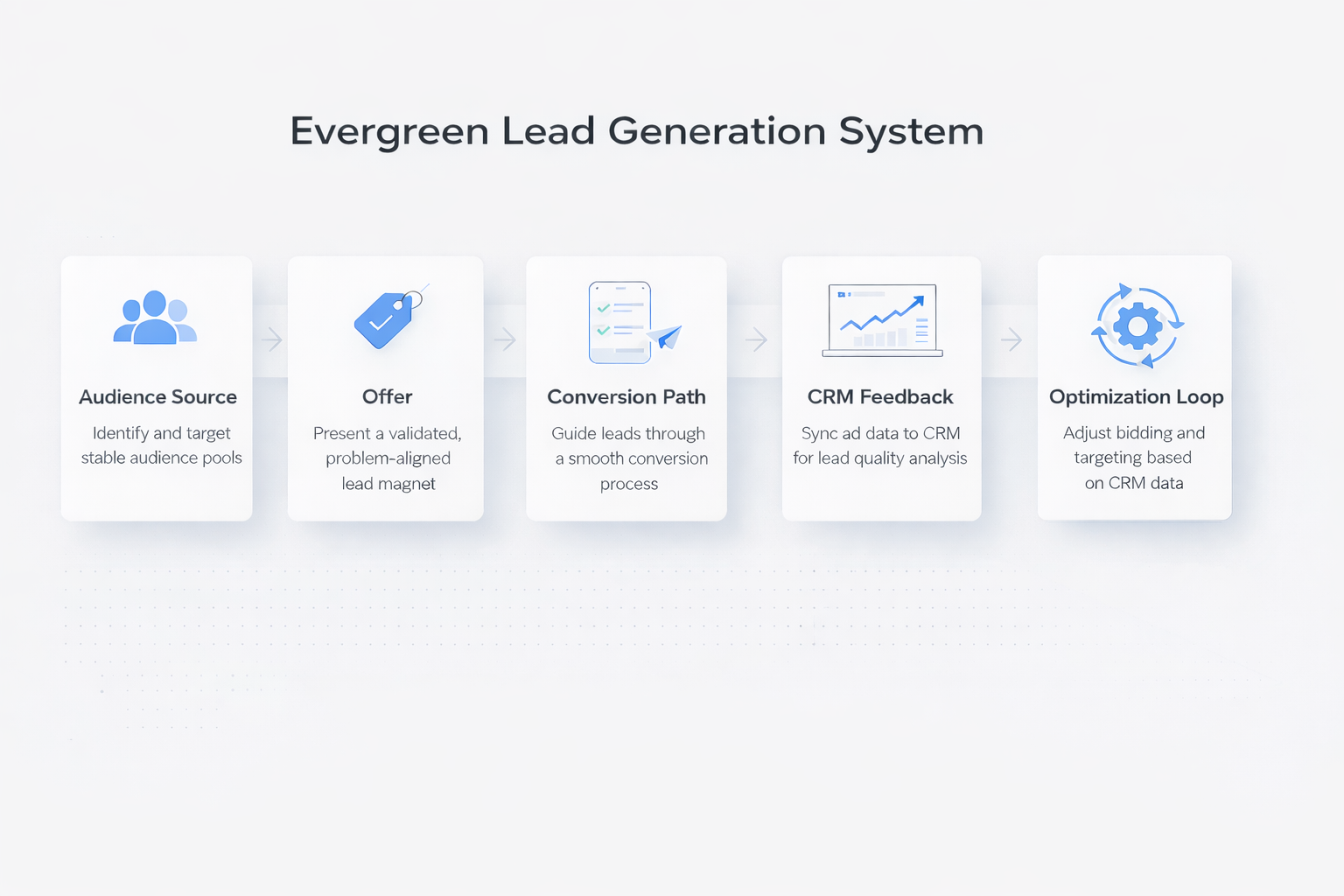
The system relies on stable inputs:
-
A defined audience source. This means you know exactly where your traffic comes from and can rebuild it anytime.
-
A validated offer. The offer already converts and does not depend on trends or short-term hooks.
-
A predictable conversion path. Users move from ad to form to follow-up without friction or confusion.
-
Clear optimization logic. You know which metric drives business results and optimize around it.
It is not a single campaign. It is a framework that can absorb budget changes and creative updates without collapsing.
Core Components of an Evergreen Meta Funnel
Consistent Audience Sources
Most advertisers rotate interests every month. This creates unstable learning conditions and resets performance patterns.
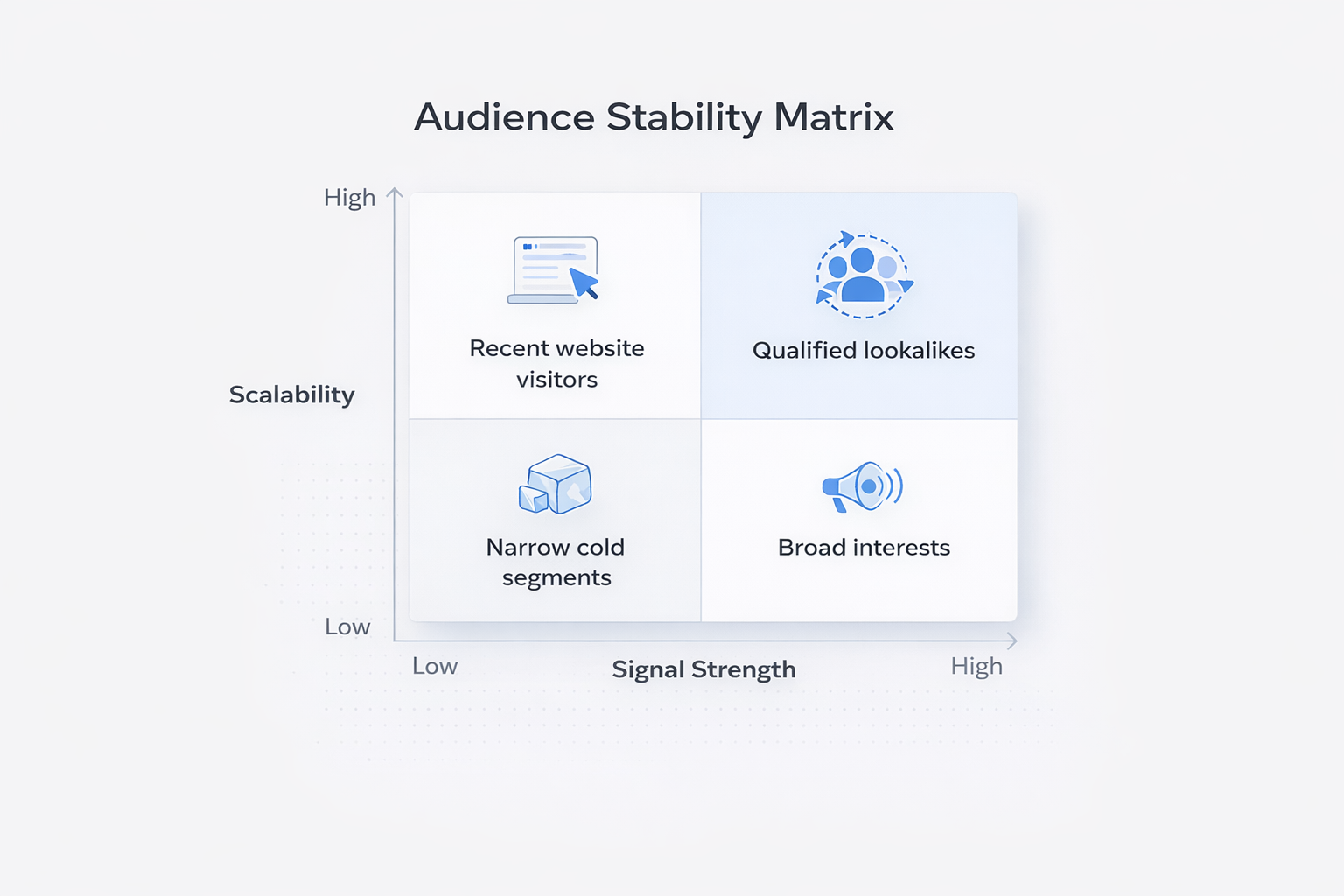
Evergreen systems rely on repeatable audience pools:
-
Custom audiences from website traffic with defined recency windows. For example, separate 7-day, 30-day, and 90-day visitors instead of merging them.
-
Engaged Instagram account audiences built from profile visits, saves, and video views. These users already show active intent.
-
Facebook group follower audiences sourced through structured targeting tools. Group members usually share a clear problem or niche interest.
-
Lookalikes built from high-quality lead lists, not all leads. Seed them with qualified or closed customers, not raw form submissions.
If you need a deeper breakdown of warm, cold, and custom audience logic, see The Complete Guide to Warm, Cold, and Custom Audiences in Meta Ads.
Predictability begins with audience quality. Stable inputs allow Meta’s delivery system to optimize without constant resets.
Offer Stability and Intent Filtering
Many funnels fail because offers change too often. Evergreen systems keep the core promise stable and refine the angle, not the structure.
A strong evergreen lead offer has:
-
Clear problem alignment. The message matches a specific pain point instead of a broad topic.
-
Narrow audience relevance. The offer speaks directly to one segment, not everyone at once.
-
Qualification friction that filters low-intent users. Small barriers protect your sales team from unqualified leads.
Replacing generic “Free Guide” messaging with a problem-specific workshop increases signal quality. Higher-quality leads send stronger feedback to the algorithm.
If lead quality remains inconsistent, review Lead Quality vs Lead Volume: What Facebook Advertisers Need to Know.
Controlled Creative Rotation
Creative fatigue is real, but constant replacement harms performance. An evergreen system rotates assets on a planned schedule.
Implement a rotation structure:
-
Maintain one control creative with proven performance. This acts as your benchmark.
-
Introduce one challenger at a time. Isolate variables so you know what changed.
-
Replace only underperforming variants after statistical confidence. Avoid reacting to small daily swings.
Inside Meta Ads Manager, monitor frequency and cost per qualified lead. Evaluate trends over several days, not single data points.
For a structured cadence approach, review Creative Refresh Cadence for Always-On Ads.
Campaign Structure for Evergreen Performance
One Objective, Clear Signal
Mixing objectives creates conflicting signals. Lead generation campaigns should optimize for the actual conversion event that matters to revenue.
Use:
-
Native Lead Form campaigns when friction must stay low. This works well for top-of-funnel offers.
-
Conversion campaigns with server-side tracking when qualification matters. This improves event accuracy and match quality.
-
Offline event tracking when sales close outside the platform. This connects real revenue to ad delivery.
Signal clarity improves delivery efficiency over time because the system receives consistent feedback.
Budget Allocation Logic
Budget instability breaks evergreen systems. Large shifts force the algorithm to relearn.
Instead:
-
Adjust budgets in increments under 20 percent per change. Smaller moves protect learning stability.
-
Scale only campaigns with stable cost per qualified lead. Do not scale based on cheap but low-quality leads.
-
Keep testing budgets separate from evergreen budgets. Testing should not disrupt proven campaigns.
If you need a structured scaling framework, review 5 Methods for Scaling Facebook Campaigns Safely.
Separating testing from scaling keeps the core acquisition engine stable.
Evergreen Audience Expansion Without Resetting Learning
Scaling often forces structural changes. That triggers new learning phases and unstable results.
Use layered expansion instead:
-
Add new lookalike tiers while preserving original seed audiences. Keep your strongest data source active.
-
Expand geographic targeting gradually. Add regions step by step instead of globally at once.
-
Introduce adjacent interest clusters without removing control sets. Compare performance before replacing anything.
This preserves data continuity and protects performance history.
Lead Quality Control Mechanisms
Evergreen does not mean static. Quality control must run continuously in the background.
Implement Micro-Qualification
Increase lead quality through subtle friction:
-
Add one intent-based question in native forms. For example, ask about timeline or budget.
-
Require company size selection for B2B offers. This helps filter freelancers from target accounts.
-
Filter disposable emails automatically. Remove low-value submissions before they reach sales.
Small filters reduce wasted follow-up and improve downstream metrics.
Track Beyond Cost Per Lead
Cost per lead is insufficient for system health. It measures volume, not business impact.
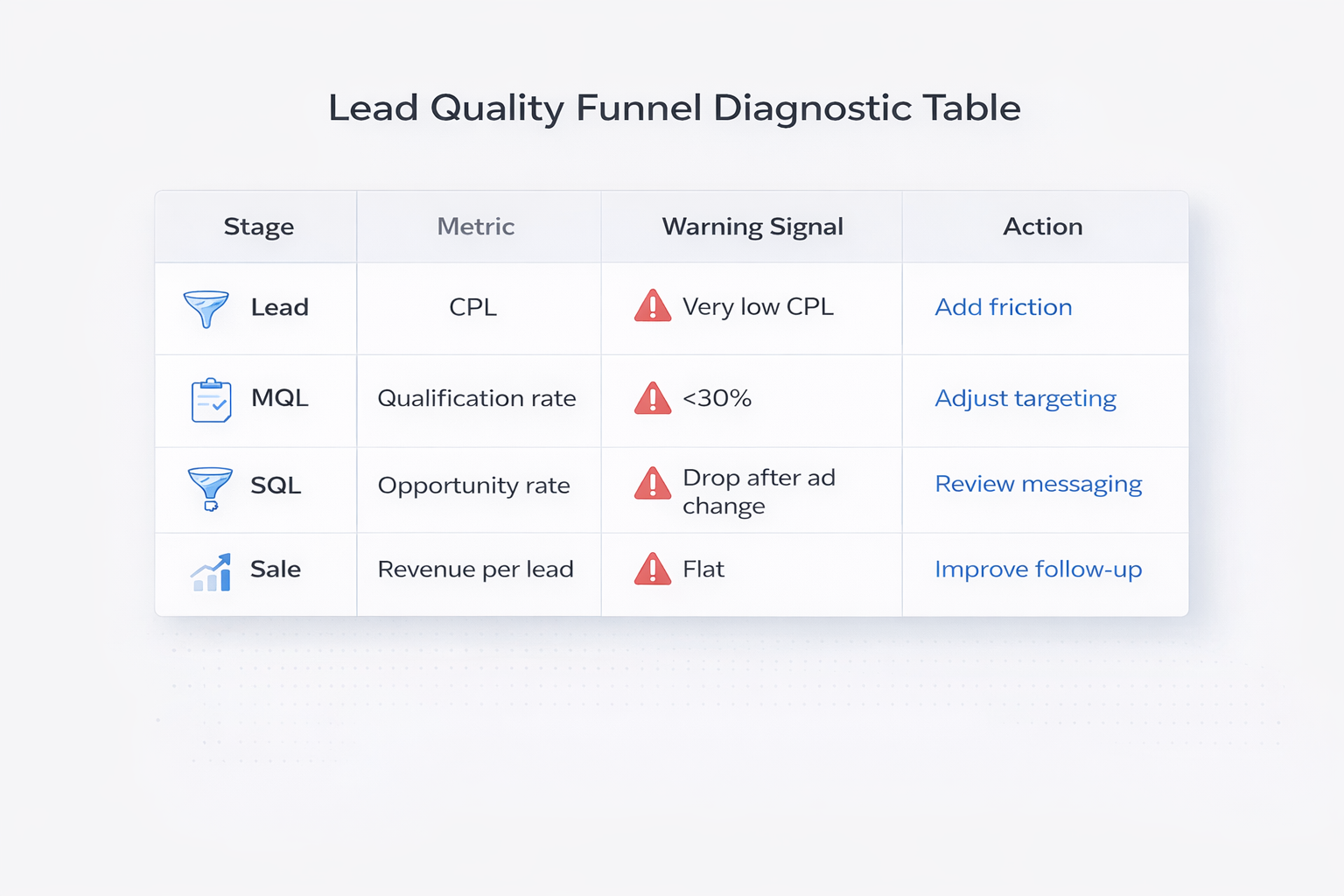
Monitor deeper metrics:
-
Cost per qualified lead. Define qualification clearly and apply it consistently.
-
Lead-to-opportunity rate. Measure how many leads enter your pipeline.
-
Revenue per lead over 30 days. Tie acquisition cost to actual income.
Connect campaign data to CRM outcomes so optimization reflects real performance.
Automation That Supports Stability
Automation must reinforce structure, not replace strategy. Rules should protect performance, not control it blindly.
Use automation rules to:
-
Pause ad sets when cost per qualified lead exceeds defined thresholds. Set realistic limits based on historical data.
-
Increase budget after consistent performance over several days. Require stability before scaling.
-
Alert teams when frequency crosses risk levels. High frequency often signals creative fatigue.
Automated guardrails reduce emotional decisions during short-term fluctuations.
Common Failures in Evergreen Systems
Many advertisers unintentionally break stable funnels by chasing short-term results.
Typical mistakes include:
-
Rebuilding campaigns instead of iterating within them. This erases performance history.
-
Testing multiple variables simultaneously. You cannot identify the true driver of change.
-
Scaling before verifying lead quality. Cheap leads often hide low conversion rates.
-
Ignoring audience overlap diagnostics. Competing ad sets increase internal auction pressure.
Evergreen systems require discipline and consistent execution.
Long-Term Optimization Framework
Evergreen systems evolve in controlled cycles. Improvement should follow a structured review process.
Use quarterly reviews to:
-
Refresh core creative angles while preserving offer structure. Update presentation, not positioning.
-
Rebuild lookalike seeds from highest-value customers. Feed the system stronger data.
-
Remove decayed audiences with low engagement rates. Keep only active and responsive pools.
Avoid weekly structural changes that disrupt learning. Small, deliberate improvements compound over time.
Final Perspective
Evergreen lead generation is structured consistency inside Meta Ads. It relies on stable inputs, clear signals, and disciplined scaling.
Advertisers who protect learning phases and measure real business outcomes build durable acquisition systems. Stability comes from process, not luck.