Cold audiences rarely convert after the first impression. They do not know your brand or trust your claims.
Many advertisers show sales ads too early. As explained in Why Facebook Ads Rarely Convert on the First Touch , users usually need multiple exposures before taking action.
Warming solves this problem step by step. It builds familiarity, trust, and buying intent before the offer appears.
Understanding Cold Audience Psychology on Meta
Cold users do not compare features immediately. They first decide whether you are relevant and credible.
Meta’s algorithm reacts to early engagement signals. These include video watch time, saves, comments, and profile visits.
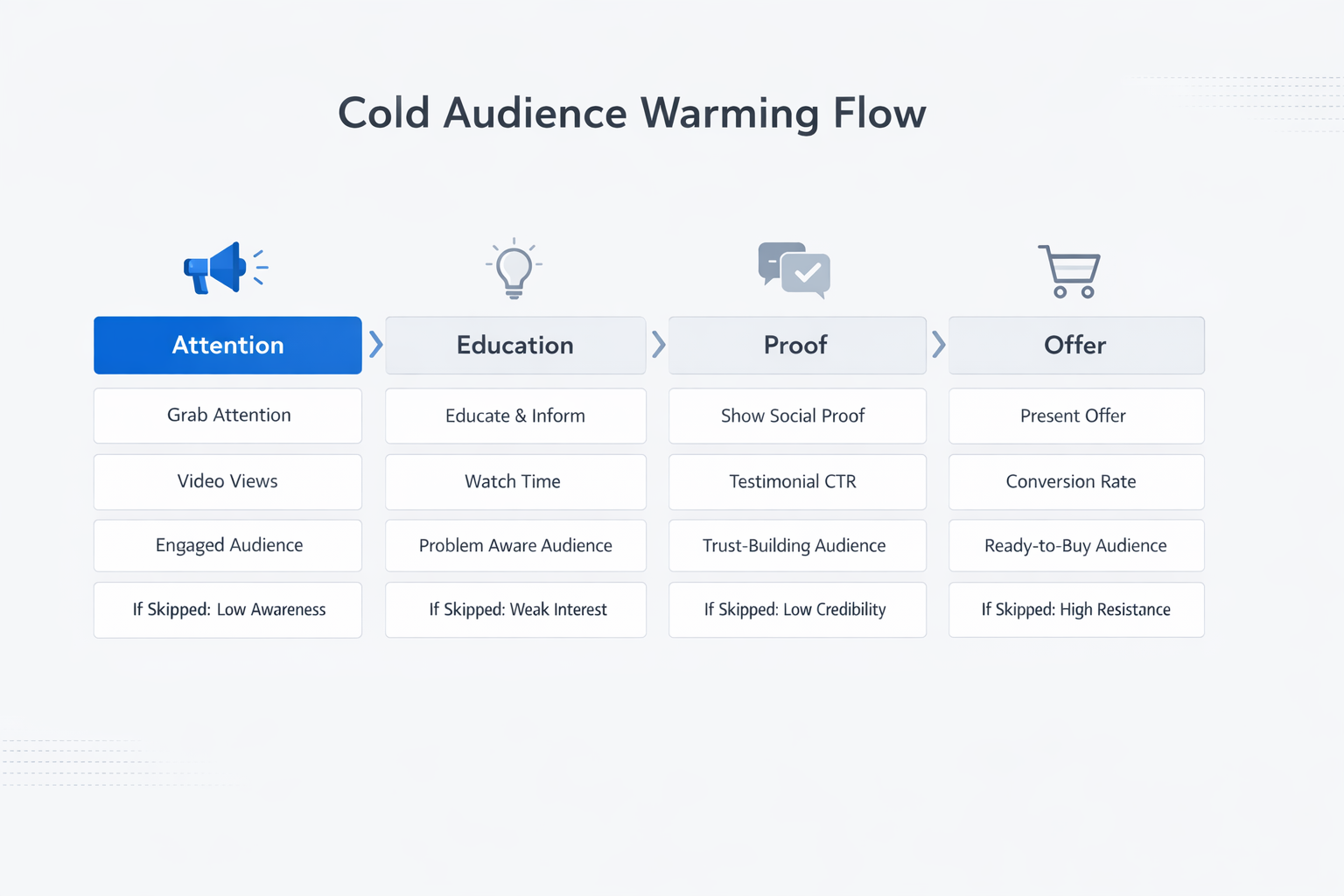
If your first ad pushes a hard offer, most users ignore it. As discussed in How to Align Ad Copy With Audience Awareness Levels, message depth must match buyer readiness.
Structured warming changes this dynamic. Each stage prepares the user for the next decision.
Stage 1: Attention Without Pressure
Use Pattern Interrupt Creative
Cold users scroll fast and filter content instantly. Your creative must stop the scroll without asking for commitment.
Effective interruption relies on:
-
Visual contrast against common feed content. Clean layouts or unusual framing break routine scrolling patterns.
-
Direct hooks that name a clear problem. Specific pain points outperform generic promises.
-
Curiosity built around an outcome. Hint at the result without revealing everything immediately.
Avoid heavy branding at this stage. Focus on the problem the audience already feels.
Optimize for Engagement, Not Conversion
Choose objectives that encourage interaction first. Engagement and video view campaigns collect stronger early signals.
Track metrics such as:
-
ThruPlay rate. This shows how many users watch your video to completion.
-
50 percent and 75 percent watch rate. These indicate real interest rather than passive scrolling.
-
Post saves and profile clicks. Saves signal future intent, and profile visits show deeper evaluation.
These actions build qualified retargeting pools. They also prepare for structured retargeting later, similar to the approach outlined in The Warm-Up Campaign: Prepping Cold Audiences for Better ROAS.
Stage 2: Problem Education and Belief Shifts
Introduce Insight-Based Content
After users engage, introduce educational content. Do not present pricing or limited offers yet.
Use content that reshapes how they see the problem:
-
Explain why common solutions fail. Break down typical mistakes and show why results stay weak.
-
Show the cost of ignoring the issue. Use practical examples that feel concrete and relatable.
-
Offer a simple self-check method. Help users identify whether the problem applies to them.
This stage builds authority naturally. It also filters out users who are not truly interested.
Segment by Behavior, Not Just Time
Many advertisers retarget anyone who watched 25 percent of a video. That method ignores the difference between light and deep interest.
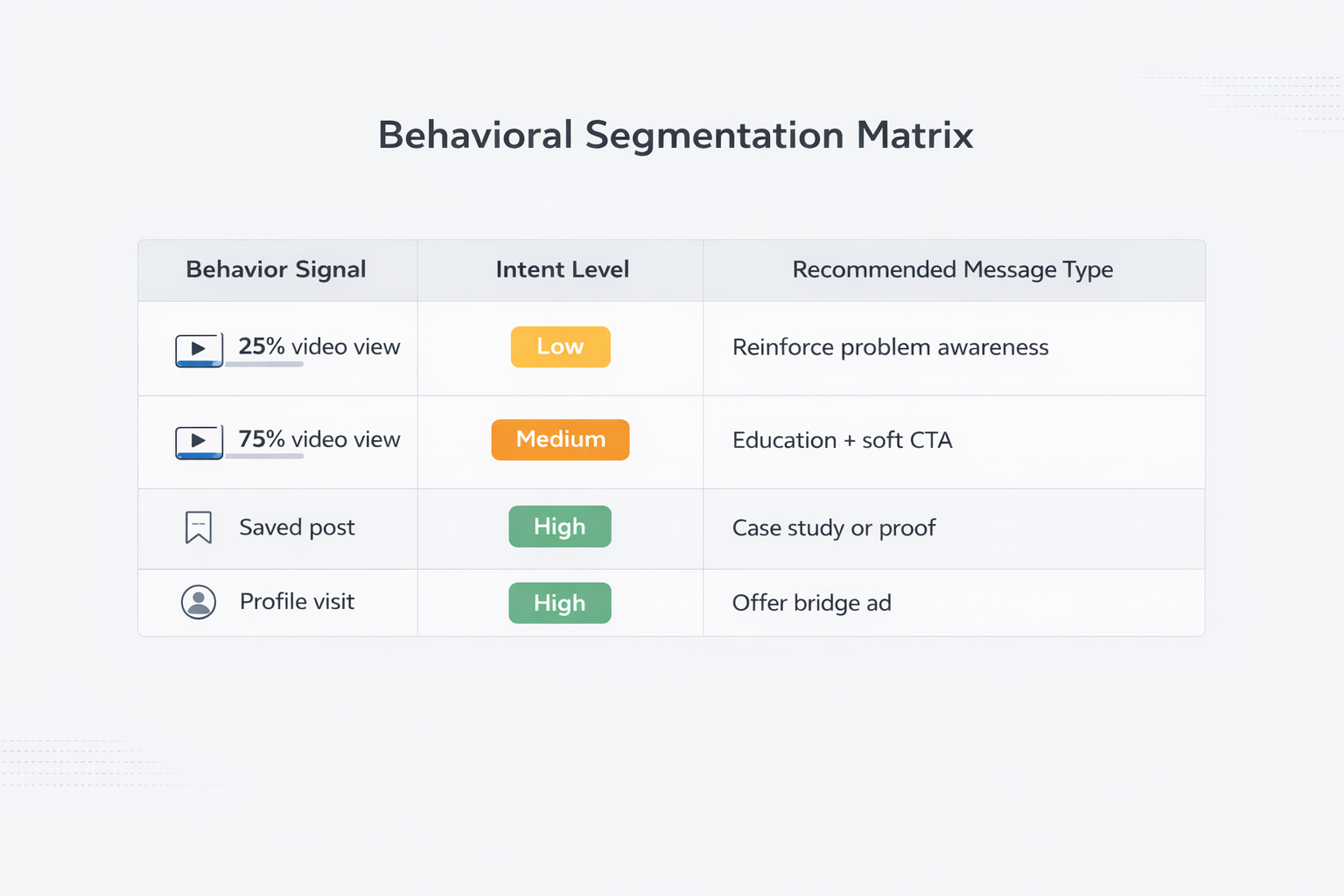
Instead, create segments such as:
-
75 percent video viewers. These users invested real attention and deserve stronger messaging.
-
Users who saved a post. Saving content often signals future buying intent.
-
Profile visitors in the last 14 days. These users actively evaluated your brand.
Each group should see different messaging. For deeper segmentation frameworks, review The Complete Guide to Warm, Cold, and Custom Audiences in Meta Ads.
Stage 3: Social Proof With Context
Match Proof to Prior Content
Social proof works best when it supports a specific claim. It loses power when shown without context.
If earlier ads focused on one pain point, show a case that solves that exact issue. Keep the structure clear and logical.
Use proof that includes:
-
The initial problem. Describe it clearly so readers recognize themselves in the situation.
-
The action taken. Explain what changed and why it mattered.
-
A measurable result. Share specific outcomes instead of vague praise.
Detailed proof increases trust. It also improves click-through rates and lowers hesitation.
Control Frequency Intentionally
As users move through stages, they see your ads more often. Too much repetition creates fatigue and negative reactions.
Monitor signals such as:
-
Frequency above 3.0 within seven days. High repetition reduces responsiveness.
-
Increasing negative feedback. Hides and reports indicate irritation.
-
Falling engagement rate. Declining interaction suggests creative fatigue.
If engagement drops while frequency rises, rotate creative. Maintain the same message but refresh visuals or hooks.
Stage 4: Offer Introduction With Friction Control
Bridge From Insight to Offer
The offer must feel like a natural next step. It should solve the problem already discussed.
Refer to earlier insights directly in the ad. Then position your product as the structured solution.
Ensure the landing page repeats the same message. Message continuity reduces confusion and protects conversion rates.
Use Soft Conversion Mechanisms
Even warmed audiences still evaluate risk. Reduce friction before asking for full commitment.
Use mechanisms such as:
-
Lead magnets aligned with the core problem. Offer practical value that connects to your solution.
-
Low-commitment trials. Let users experience benefits without long-term pressure.
-
Diagnostic quizzes. Personalization increases relevance and engagement.
These tools turn interest into identifiable leads. They also create stronger retargeting opportunities.
Leveraging Custom Audiences for Smarter Warming
Behavioral retargeting works best with precise audience structure. Broad warm audiences reduce message relevance.
Build custom audiences from:
-
Video viewers above 50 percent. These users demonstrated meaningful interest.
-
Instagram profile interactions. Profile visits show active evaluation.
-
Relevant Facebook group members. Group affiliation often reflects shared intent.
Exclude buyers and high-intent converters from early stages. This keeps messaging aligned with awareness level.
Audience structure directly affects performance lift. Many warming failures stem from weak segmentation rather than weak creative.
Creative Rotation Strategy for Long Warming Cycles
Long sales cycles require planned creative updates. Even strong ads lose impact over time.
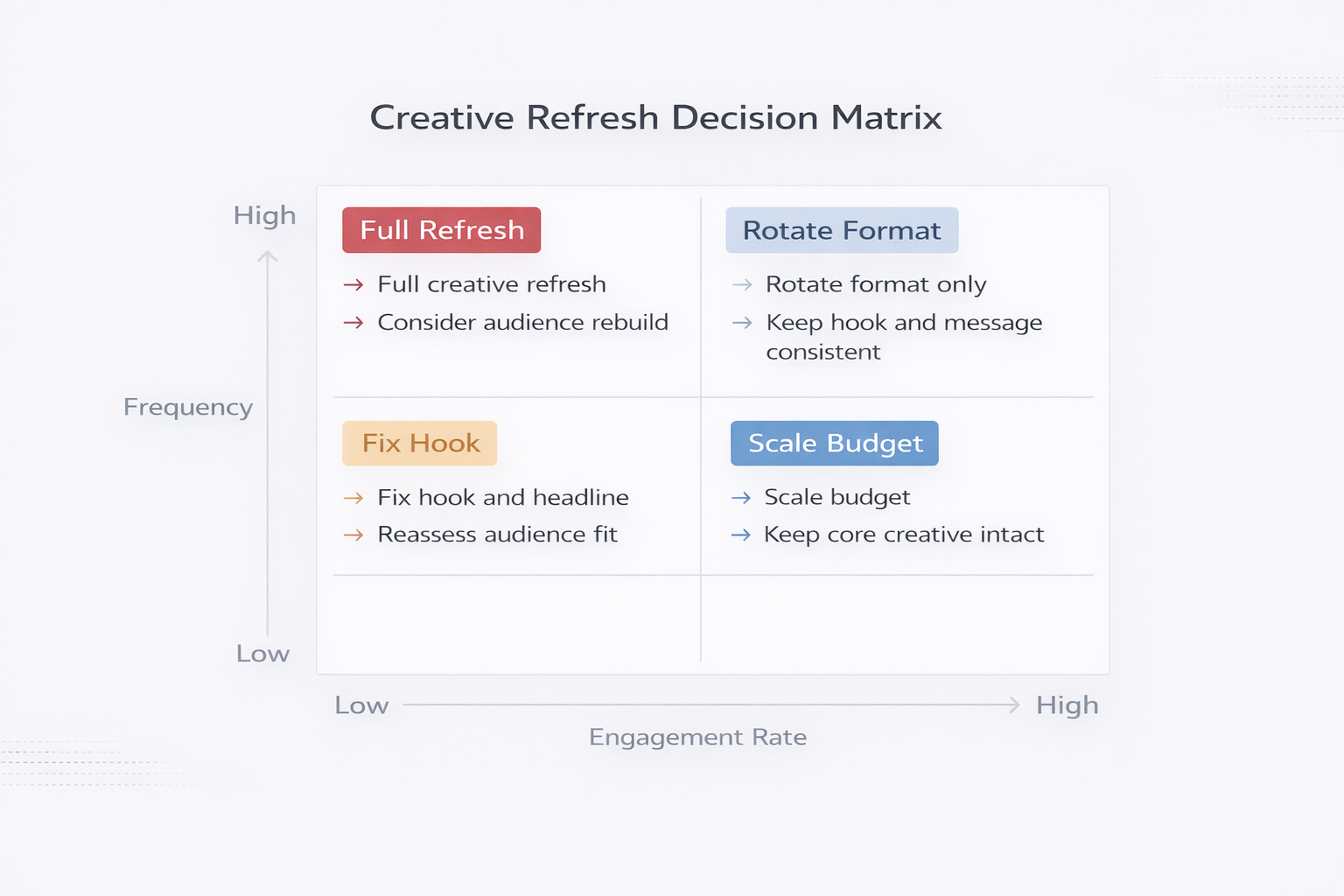
Rotate elements methodically:
-
Change the headline angle while keeping the same core insight.
-
Switch formats, such as from carousel to short video.
-
Adjust the opening hook in the first three seconds.
Keep the main belief shift consistent. Change surface elements to extend performance without resetting learning.
Measuring Warming Effectiveness Beyond ROAS
Cold audience warming should not be judged only by short-term return. Early stages influence later efficiency.
Track indicators such as:
-
Cost per engaged user. Lower costs signal strong early resonance.
-
Growth of high-intent retargeting pools. Larger qualified pools support stable scaling.
-
Conversion rate of warmed users versus cold traffic. A clear gap shows sequencing works.
If warmed audiences convert far better than cold traffic, the structure is effective. If not, adjust message progression before raising spend.
Common Mistakes That Reduce Conversion Lift
Many campaigns fail because of poor sequencing. Budget is rarely the core issue.
Common mistakes include:
-
Offering discounts before building value. This attracts price-sensitive users with low loyalty.
-
Retargeting all engagers with identical sales ads. Different behaviors require tailored messaging.
-
Ignoring landing page alignment. Mismatch reduces trust and increases bounce rate.
-
Allowing frequency to rise without creative refresh. Fatigue reduces engagement and brand perception.
Each mistake increases friction. Friction across stages lowers final conversion rates.
Conclusion
Cold audiences need structured exposure before direct selling. Sequenced warming builds trust and prepares users to buy.
When messaging aligns with awareness and behavior, conversions increase naturally. Cold traffic then becomes a predictable source of scalable growth.