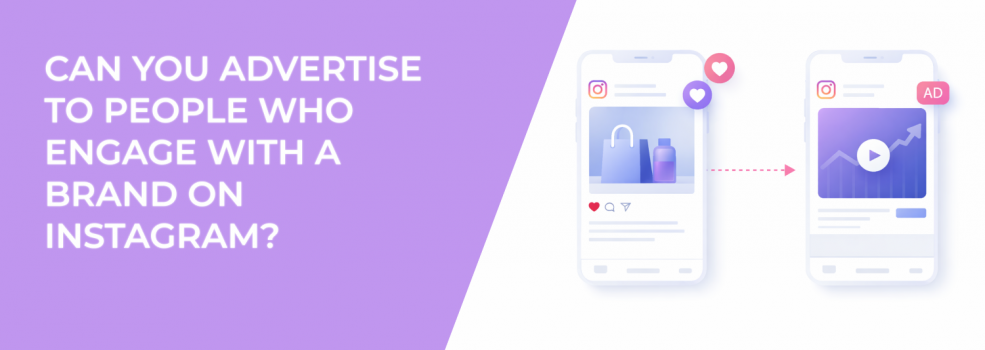
The short answer is yes — but the way Instagram engagement audiences actually work is often misunderstood at a structural level.
Most advertisers assume that “engaged users” behave like high-intent prospects. In reality, the signal is weaker, noisier, and highly dependent on how the engagement was generated in the first place. If you treat it like a bottom-of-funnel audience, performance will degrade quickly.
This article breaks down what you can really do with Instagram engagement audiences, how the system builds them, and where they tend to fail in real campaigns.
What Counts as “Engagement” on Instagram
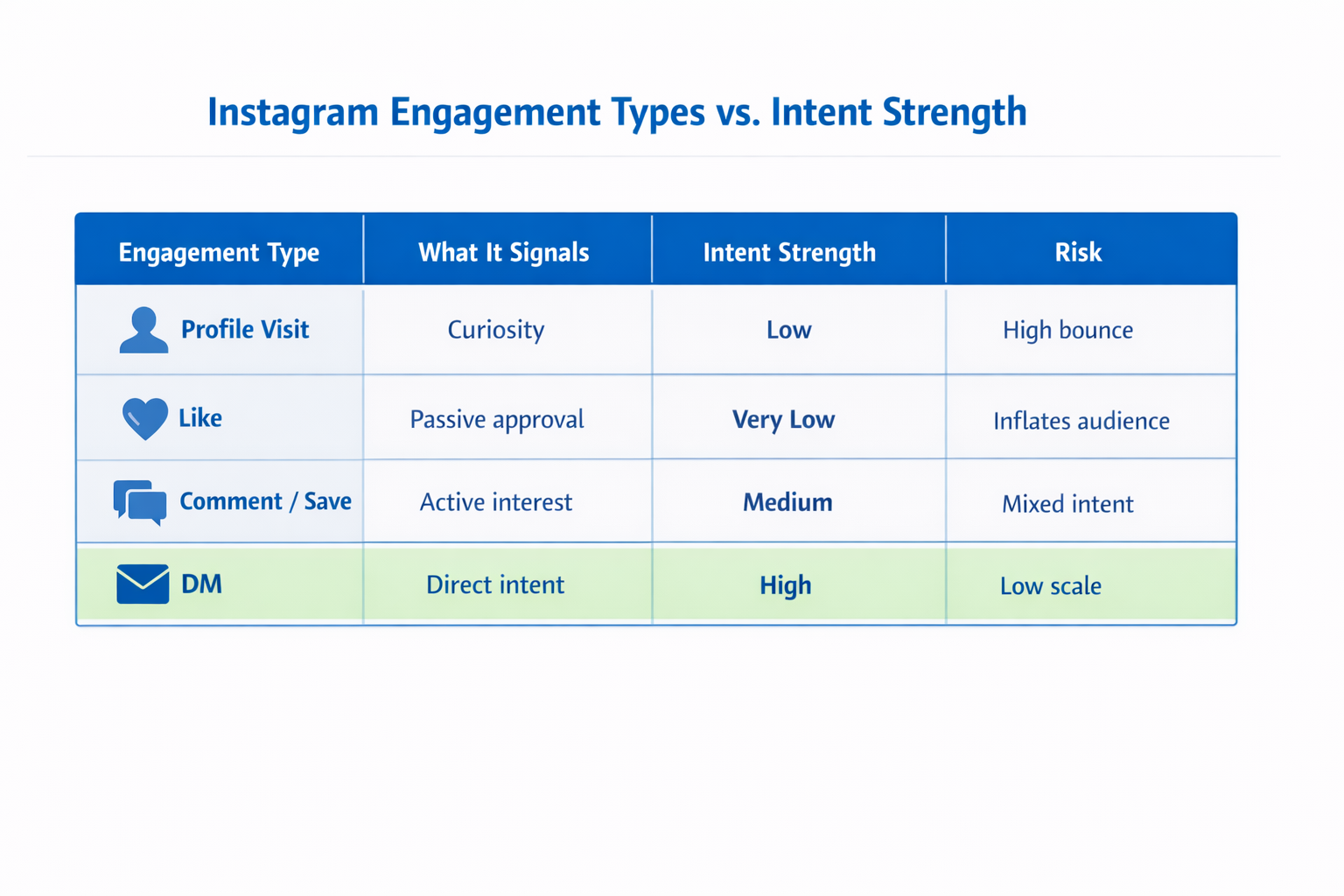
Instagram engagement audiences are built from specific in-platform actions tracked by Meta. These are not equal in intent, even though they are grouped under the same audience type.
You can target users who have:
-
Visited your Instagram profile, which often includes curiosity-driven clicks after seeing an ad or organic post. These users frequently have low intent and high bounce rates when retargeted.
-
Engaged with a post or ad, including likes, comments, saves, or shares. Saves and shares typically signal stronger interest than likes, but Meta does not allow you to isolate them directly.
-
Sent a message to your account, which is one of the strongest engagement signals because it implies active interest or a question about your offer.
-
Watched your videos or reels, where intent varies heavily depending on watch time and content type. A 3-second view is fundamentally different from a 75% completion, but they may still enter the same audience bucket.
From an Ads Manager perspective, all of these users are aggregated into selectable audiences, but the underlying behavioral quality varies significantly.
How Meta Actually Builds These Audiences
The system does not store engagement audiences as a clean list of “interested buyers.” It builds them dynamically based on event logs tied to your Instagram account.
Here’s what happens structurally:
-
Each interaction is logged as an event, tied to a user ID and timestamp. This includes passive actions like scrolling past a video and active ones like commenting.
-
Meta groups these events into audience pools, based on the criteria you select (e.g., “engaged with any post in the last 365 days”).
-
Recency heavily influences value, even though you can select long time windows. A user who engaged yesterday behaves very differently from someone who liked a post six months ago.
-
No inherent qualification layer exists, meaning the system does not distinguish between meaningful and accidental engagement unless you add filters externally.
This explains why engagement audiences often look large but underperform when used aggressively for conversion campaigns.
Why Engagement Audiences Often Underperform
A common pattern appears when teams scale retargeting based on Instagram engagement alone.
Performance starts strong, then declines quickly as spend increases.
This happens for a few structural reasons:
1. Signal dilution from low-intent actions
A large portion of engagement comes from lightweight interactions:
-
Likes from passive scrolling.
-
Profile visits triggered by curiosity.
-
Short video views with no follow-up behavior.
These users enter the same audience as higher-intent users, reducing overall quality.
2. Content-driven bias
The type of content you publish shapes who enters the audience.
For example:
-
Educational or thought-leadership content tends to attract professionals browsing casually.
-
Entertaining or viral content attracts broader, less relevant audiences.
-
Promotional content attracts fewer users but with higher intent.
If your engagement is driven by broad content, your retargeting pool inherits that mismatch — which is a common cause behind scenarios explained in Why Your Ads Get Clicks But No Sales: Fixing the Audience Misalignment.
3. Time window inflation
Selecting a 365-day engagement window increases audience size, but introduces stale users.
In practice:
-
Users older than 30–60 days rarely convert unless re-qualified.
-
Cost per conversion rises as the system tries to re-engage users who have lost context.
Shorter windows usually produce smaller but more efficient audiences.
4. No funnel progression built in
Engagement audiences do not reflect movement through your funnel.
A user who:
-
liked a post once, and
-
a user who messaged your team twice
can both exist in the same audience.
Without segmentation, your messaging becomes too generic to convert either effectively — which is why structured funnels like those described in Facebook Ads Funnel Strategy: From Audience Identification to Conversion consistently outperform flat retargeting setups.
When Instagram Engagement Targeting Works Well
Despite these limitations, engagement audiences can perform strongly when used in the right role.
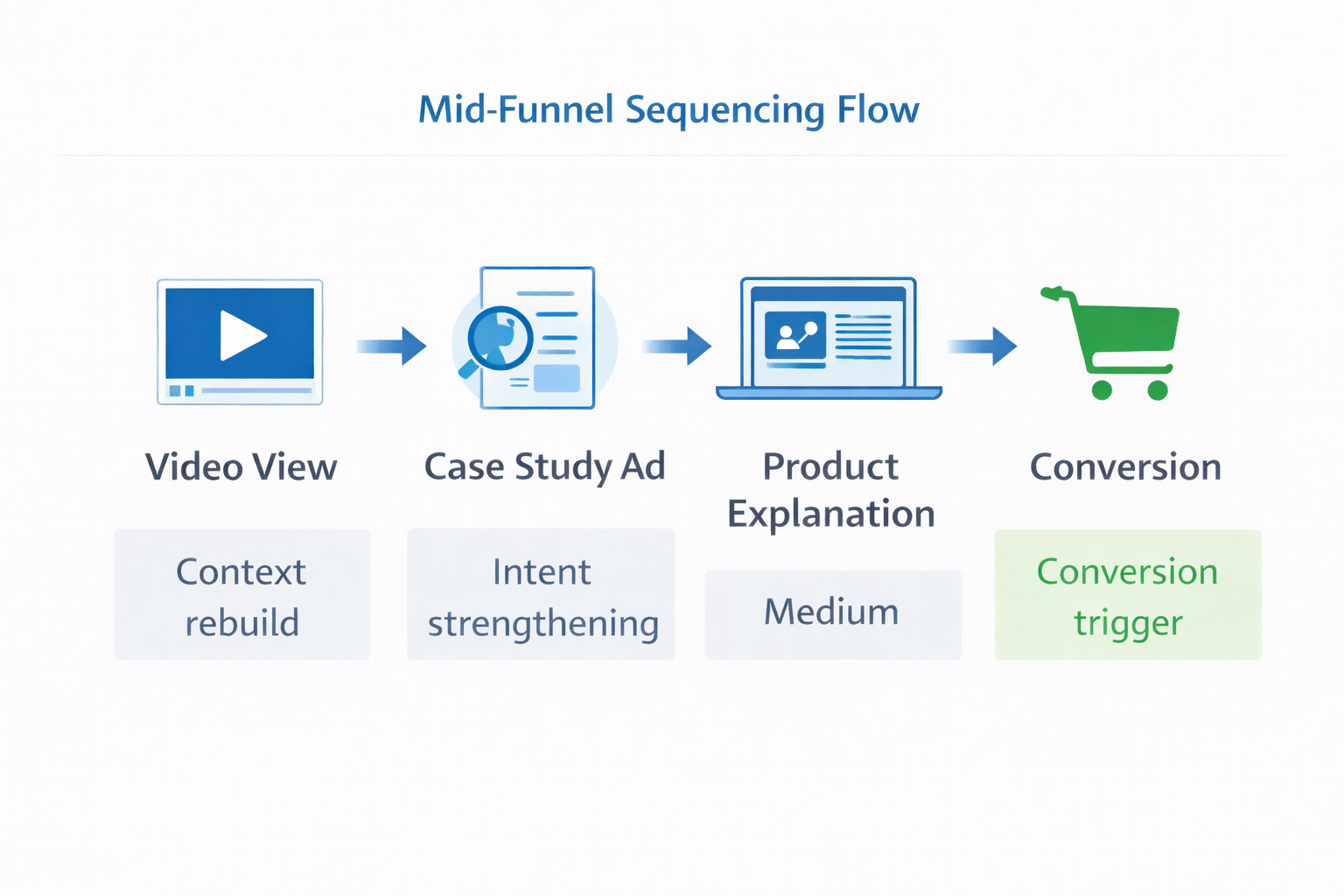
They are most effective in mid-funnel scenarios where the goal is to reintroduce context, not close the sale immediately.
Strong use cases include:
-
Re-engagement campaigns with context rebuilding, where you remind users what your product does before asking for a conversion.
-
Sequential messaging flows, where engagement is followed by a more specific offer or proof point.
-
Audience seeding for lookalikes, especially when combined with CRM-based filtering later.
A practical example:
If a user watched 50% of a product demo reel, showing them a case study or testimonial next often performs better than sending them directly to a demo form. This sequencing approach closely aligns with how How Retargeting Works on Facebook: Best Facebook Retargeting Strategies frames multi-step engagement.
How to Improve Engagement Audience Quality
The key is not just targeting engagement — it’s controlling how that engagement is generated and filtered.
1. Align content with qualification intent
Instead of optimizing for engagement volume, shape content to attract the right users.
For example:
-
Use niche pain points instead of broad educational topics.
-
Reference specific roles, industries, or use cases.
-
Introduce mild friction (e.g., technical language) to filter out irrelevant users.
This reduces audience size but improves downstream performance.
2. Segment by engagement type when possible
Even though Meta limits granularity, you can still create meaningful splits:
-
Video viewers vs profile visitors.
-
Messaging users vs passive engagers.
-
Short vs long engagement windows.
Each segment should receive tailored messaging aligned with their level of intent — a principle that directly impacts performance, as detailed in Maximizing ROI through Facebook Audience Segmentation.
3. Tighten recency windows
Instead of defaulting to 180–365 days, test shorter windows:
-
7–14 days for high-intent retargeting.
-
30–60 days for broader re-engagement.
You’ll often see:
-
lower CPM stability issues,
-
but higher conversion rates and lower CPA.
4. Combine with stronger signals
Engagement audiences improve significantly when layered with higher-quality data.
Examples:
-
Website visitors with engagement overlap.
-
CRM-qualified leads who also engaged on Instagram.
-
Users who both watched video content and clicked through to your site.
This creates a compound signal that better reflects real interest.
A Common Mistake: Treating Engagement as Intent
One of the most expensive mistakes is assuming engagement equals buying intent.
In Ads Manager, this usually shows up as:
-
high CTR but low conversion rate,
-
stable CPM but rising CPA,
-
frequency increasing without lift in results.
The system is doing its job — it’s finding people likely to engage again, not necessarily people ready to convert.
If you don’t adjust for that, performance stalls.
A More Effective Way to Use Engagement Audiences
Instead of asking “Can we retarget these users?”, the better question is:
What role should this audience play in the funnel?
A more effective structure looks like this:
-
Top of funnel: Broad targeting to generate initial engagement.
-
Mid funnel: Instagram engagement audiences used to reinforce positioning and filter interest.
-
Bottom of funnel: Website or CRM-based audiences used for conversion.
Engagement sits in the middle, not at the end.
Final Takeaway
You can absolutely advertise to people who engage with your brand on Instagram, but the raw audience is not inherently high quality.
Its performance depends on:
-
how the engagement was generated,
-
how recently it happened,
-
and how you segment and use it in your funnel.
If you treat engagement as a filtering layer rather than a conversion signal, it becomes a useful asset instead of a misleading one.