Creating an ad from a Facebook Page can feel simple. You choose a post, select a goal, set a budget, define an audience, and launch.
The problem is that the goal selection step is not just an admin choice. It tells Meta what type of result to pursue. A Page-created ad can move quickly, but if the selected goal does not match the business outcome, the campaign can spend budget on the wrong behavior from the first impression.
This affects SMB owners, agencies, startup marketers, B2B lead-gen teams, local advertisers, and ecommerce brands alike. The setup may look correct on the surface, but the campaign can still attract low-intent clicks, weak leads, casual engagement, or traffic that never converts.
The Problem
The main issue is choosing a Facebook Page ad goal because it is available, familiar, or recommended by the interface rather than because it fits the campaign objective.
Page-created ads often present simplified goal choices compared with a full Ads Manager build. That simplicity is useful, especially for quick promotion, but it can also hide strategic trade-offs.
A marketer may choose more engagement because the post is already getting likes. A local business may choose more website visitors because it wants bookings. A B2B team may choose messages because it sounds direct. But each goal trains delivery differently.
Meta’s broader campaign objective structure includes outcomes such as Awareness, Traffic, Engagement, Leads, App promotion, and Sales; the important point is not memorizing the labels but matching the selected goal to the result the business actually needs.
If the goal is wrong, the campaign may still “work” according to the dashboard while failing commercially.
Why This Problem Hurts Performance
A mismatched Page ad goal creates a measurement problem and an optimization problem.
The measurement problem is obvious: the report shows results that do not prove business value. You may see low CPC, high reach, or cheap engagement, but those metrics do not automatically mean better CPA, CAC, ROAS, lead quality, or conversion rate.
The optimization problem is more serious. Meta tries to find people likely to complete the action you selected. If you ask for engagement, the system looks for engagement-prone users. If you ask for traffic, it looks for click-prone users. If you ask for messages, it looks for people likely to start conversations.
Those are not always the same people who buy, book, request a quote, attend a demo, or become qualified leads.
That is how a campaign can generate activity while still wasting spend.
Common Scenarios Where This Happens
- A local service business promotes a post about a seasonal offer and chooses engagement because the post already has reactions. The campaign gets comments, but appointment requests barely move.
- An ecommerce store chooses website visits for a product post because it wants more people on the product page. CPC looks efficient, but add-to-cart and purchase rates stay weak.
- A B2B SaaS company runs a Page ad to drive demo interest and chooses messages without a clear response process. The campaign creates conversations, but the sales team receives vague questions instead of qualified opportunities.
- An agency uses a Page-created ad to test a client’s new offer. The goal is selected quickly to launch faster, but the test does not answer the real question: whether the offer can generate qualified demand.
- A startup promotes a founder video to a broad audience and chooses awareness. Reach grows, but there is no next-step audience or retargeting plan, so the learning value is limited.
Why the Problem Happens
This usually happens for four reasons.
First, Page ad creation is designed for speed. The interface makes advertising accessible, but performance marketers still need to think beyond the button.
Second, goal labels can sound similar. “More website visitors” may feel close to “more sales,” but traffic and sales are not the same outcome. “More engagement” may feel close to “more demand,” but likes and comments are not the same as buyer intent.
Third, marketers often choose the cheapest-looking result. Lower CPC or cheaper engagement can feel like a win, especially on small budgets. But cheap activity can increase real acquisition cost if it does not convert.
Fourth, the audience is often too broad or loosely defined. Even the right goal struggles when the ad reaches people who do not match the ICP, offer, or funnel stage.
The Solution
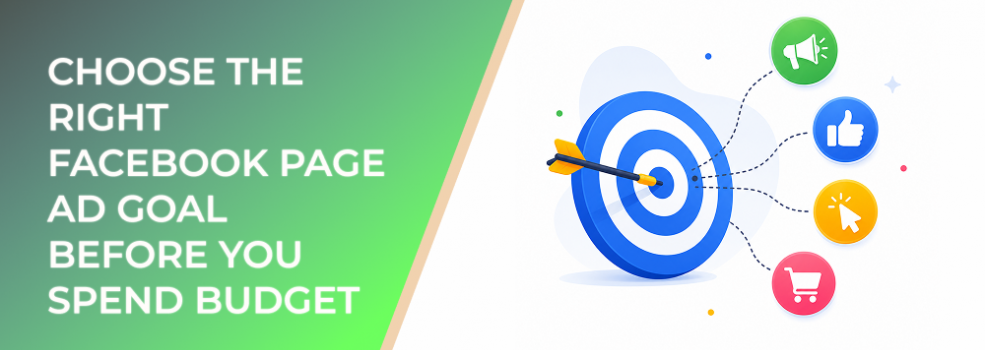
The solution is to choose the Page ad goal from the business outcome backward.
Before selecting any available goal, answer one question: what action would make this campaign worth funding?
- If the answer is visibility, choose a goal focused on reach, awareness, or Page/profile discovery. This makes sense for brand introduction, local visibility, event announcements, or early-stage demand generation.
- If the answer is conversation, choose messages or calls only when your team can respond quickly and qualify interest. Message volume is valuable only when conversations can turn into appointments, quotes, consultations, or sales.
- If the answer is website evaluation, choose website traffic only when the landing page has a clear next step. Traffic should feed a funnel, not just increase page views.
- If the answer is lead capture, use a lead-focused goal when the offer, form, and qualification standard are clear. Do not judge success only by CPL; judge by qualified lead rate, booked calls, pipeline, or close rate.
- If the answer is purchases or revenue, consider whether a simple Page-created ad is enough. For conversion-heavy campaigns, Ads Manager often gives better control over objective selection, conversion location, audience structure, creative testing, and optimization settings.
A practical rule: choose the shallowest goal only when the campaign’s purpose is shallow, such as visibility or engagement. Choose a deeper goal when the campaign must prove commercial value.
Risks and Considerations
Do not assume the available Page ad goal is the best goal just because it is easy to select.
Watch for poor audience fit, especially when promoting posts to broad interests. Check whether the audience is large enough to deliver but specific enough to remain relevant. Avoid relying on one channel or one campaign goal to prove the full customer journey.
Also evaluate offer strength. A weak offer will not become strong because the goal is correct. A poor landing page will not convert better because traffic is cheaper. A lead form without qualification can still generate low-quality contacts.
Finally, consider compliance and platform policy requirements. Audience creation, ad copy, landing pages, and targeting decisions should follow Meta policies and applicable privacy rules.
Prerequisites and Dependencies
For the goal selection process to work, you need a clear ICP, a defined campaign objective, and a measurable success metric.
You also need enough budget to generate directional learning. A tiny spend can help validate basic engagement, but it may not be enough to judge lead quality, CPA, or ROAS.
For website, lead, or sales goals, make sure the destination is ready. That means a relevant landing page, clear CTA, reliable conversion tracking where applicable, and a strong offer.
For LeadEnforce audiences, you need relevant source communities, Instagram profiles, Facebook groups, LinkedIn segments, or custom social-profile data that truly match the campaign goal.
Practical Recommendations
Start every Page ad by writing the business outcome in one sentence.
Then choose the available goal that most directly supports that outcome. If the available Page goal is too shallow for the result you need, move the campaign into Ads Manager rather than forcing a quick setup to do a performance campaign’s job.
Use engagement and awareness goals for content validation, market visibility, and early demand. Use traffic only when the landing page has a clear next step. Use messages or calls only when your team can handle response quality. Use lead or sales-focused setups when the business needs measurable pipeline or revenue.
Before scaling, compare platform results with business results. If CPC improves but CPA worsens, or lead volume rises while lead quality drops, revisit the goal before changing creative or budget.
Final Takeaway
Choosing the right Facebook Page ad goal is not about selecting the most convenient option in the setup flow. It is about giving Meta the right instruction for the business outcome you need.
Start with the result, match the goal to that result, then support the campaign with a relevant audience, clear offer, and measurable KPI.
To test more relevant audiences before you spend on your next Page-created campaign, join the free 7-day LeadEnforce trial period.
Related LeadEnforce Articles
- How to Start a Facebook Ad From Your Page Without Skipping Key Settings — Helps advertisers launch Page-created ads without overlooking the setup choices that affect performance.
- How to Choose the Right Facebook Ad Goal Before You Spend Budget — Expands on goal-first campaign planning and how objective choice affects CPC, CPA, lead quality, and ROAS.
- Facebook Ads Goals: How to Connect Campaign Setup to Revenue and Pipeline — Useful for connecting Page ad goals to business economics instead of surface-level metrics.
- What Meta’s Updated Ad Objectives Mean for Campaign Setup and Performance — Explains how Meta’s objective structure should be interpreted from a performance marketing perspective.