Advertising is a crucial aspect of any business, but when not executed properly, it can lead to wasted budgets and missed opportunities. One of the main reasons ads fail is the lack of focus in their creation and execution. A lack of focus in advertising campaigns can lead to miscommunication, inefficient targeting, and weak calls to action.
1. Unclear Target Audience
One of the most common mistakes in advertising is not defining the target audience clearly. When businesses fail to identify who they are speaking to, the message becomes diluted, and it’s harder to reach the right people. Inaccurate or vague targeting leads to ads that resonate with no one, which results in poor engagement and low conversion rates.
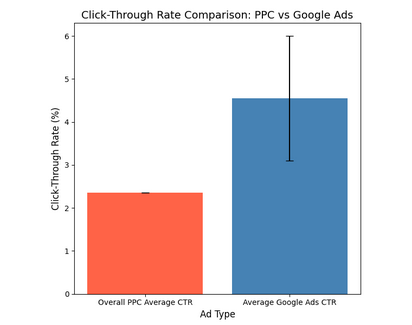
Average Click‑Through Rate (CTR) Comparison: Targeted Ads vs Global PPC Average
A study by HubSpot found that 63% of businesses struggle to identify their target audience accurately. Without proper targeting, businesses end up spending money on impressions that do not contribute to their goals.
Solution: Spend time defining your ideal customer. Research their demographics, behaviors, and preferences to build detailed buyer personas. This ensures your message reaches the right people at the right time.
2. Weak or Vague Messaging
Another common issue is unclear messaging. If your ad doesn’t communicate the core benefit or value proposition in a compelling way, the audience is likely to lose interest. This is particularly true in digital ads where people scroll quickly through content, and if the message isn’t immediately clear, they will simply move on.
According to WordStream, ads with a clear, concise message have a 3x higher click-through rate (CTR) compared to those that are unclear or overcomplicated.
Solution: Keep your messaging simple, focused, and directly aligned with the audience’s needs. Highlight the unique value proposition and make sure there’s a strong, actionable call to action (CTA).
3. Overcomplicating the Design
The design of an ad plays a huge role in its success. However, trying to incorporate too many elements can confuse the viewer. When ads have too many visuals, words, or actions, they risk overwhelming the audience, which can reduce the effectiveness of the ad. Ads need to be visually appealing yet minimal, drawing attention to the most important message.
A CXL Institute report highlighted that simple ads with clean designs outperform those with cluttered visuals by up to 40%.
Solution: Stick to a clear design with a single focal point. Use high-quality images and limit the amount of text to what’s essential. This helps your ad stand out and ensures the message is immediately understood.
4. Ignoring the Importance of Mobile Optimization
As mobile usage continues to rise, many businesses still make the mistake of not optimizing their ads for mobile devices. According to Statista, mobile internet traffic accounts for more than 54% of global website traffic. If your ads are not optimized for mobile, you risk losing a significant portion of your audience.
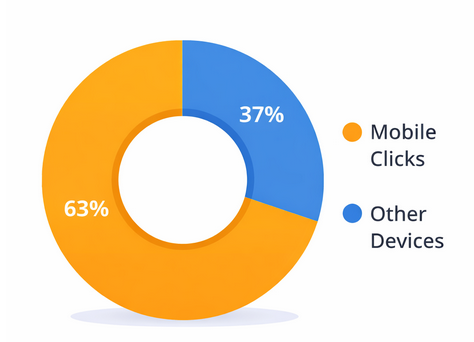
Share of Ad Clicks from Mobile Devices vs Other Devices
Solution: Ensure your ads are mobile-friendly by testing them on various devices. Consider aspects like load speed, responsive design, and easy-to-read text for users on smaller screens.
5. Not Testing and Iterating
A common mistake is not testing ad campaigns before launching them. Running ads without first testing them can result in ineffective strategies, wasting both time and money. Without proper testing, it’s impossible to know whether the ad will resonate with the target audience or drive the desired action.
A MarketingProfs study showed that businesses that A/B test their ads see 30% more success in conversion rates.
Solution: Always run A/B tests with different versions of your ads. Test elements like the headline, CTA, design, and targeting to see which combination performs best. This will allow you to refine your campaigns and improve overall effectiveness.
6. Ignoring Analytics and Data
Once your ads are running, it’s easy to become complacent and not pay enough attention to performance data. However, neglecting to track and analyze ad performance can lead to missed opportunities for optimization. Without tracking metrics like click-through rates, conversion rates, and return on ad spend (ROAS), you’re flying blind.
According to Smart Circle, 79% of digital marketers say they rely on analytics to measure the success of their campaigns, yet many still don’t adjust based on insights gathered.
Solution: Make sure to set up proper tracking for your ads and analyze the data regularly. Adjust your campaigns based on the performance metrics to continuously improve your advertising efforts.
7. Not Aligning Ads with the Sales Funnel
Ads should always be aligned with the different stages of the sales funnel. A common mistake is to use the same ad for awareness, consideration, and conversion stages, which can lead to a mismatch between what the audience needs at that moment and what the ad is offering.
A MarketingSherpa report found that companies with tailored ads for different funnel stages generate 2x more conversions than those with generic ads.
Solution: Develop ad campaigns that cater to each stage of the funnel. Awareness ads should focus on brand recognition, consideration ads should highlight benefits and features, and conversion ads should include strong CTAs with limited-time offers or promotions.
Conclusion
Lack of focus in advertising can cause wasted resources and missed opportunities. By clarifying your target audience, simplifying your messaging, improving design, and focusing on the customer journey, you can avoid these common pitfalls and create ads that are more effective and engaging. Always test, track, and refine your campaigns to ensure you’re achieving the best results possible.
Want to Learn More?
For further reading, check out these articles: