Social media advertising is a powerful tool, but with great power comes great responsibility—especially when it comes to setting the right expectations for what you can achieve. Understanding the intricacies of social media ads will help you create a strategy that aligns with your business goals and resources.
Setting unrealistic expectations for your campaigns can lead to disappointment, wasted budgets, and missed opportunities. To ensure your social media ads yield the best results, it’s crucial to have a clear understanding of what can be achieved, how to measure success, and how to avoid common pitfalls.
1. Understand Your Campaign Goals
The first step in setting realistic expectations is to define what you hope to achieve with your social media ads. Are you looking to drive sales, increase website traffic, or build brand awareness? Your goals will directly impact the type of ad campaign you create and the metrics you track.
According to a recent study, 73% of marketers state that increasing engagement is their top priority, while 65% are focused on driving traffic to their websites. Depending on your business objectives, the results you expect will vary. If you're aiming for brand awareness, a higher reach may be your primary metric. For direct sales or lead generation, a more targeted approach with a clear call-to-action is necessary.
2. Set Achievable Metrics
Once you’ve outlined your goals, it's time to set realistic metrics for success. Metrics such as click-through rates (CTR), conversion rates, and cost-per-click (CPC) are all indicators of how well your campaign is performing. But what are "realistic" benchmarks?
-
The average CTR for Facebook ads is around 0.90%. Anything higher is a good sign that your ad content resonates well with your target audience.
-
The average conversion rate across all industries is about 2.35%. Top-performing ads can see conversion rates of up to 5%.
-
A typical CPC on Facebook ads ranges from $0.50 to $2.00, depending on your industry and competition.
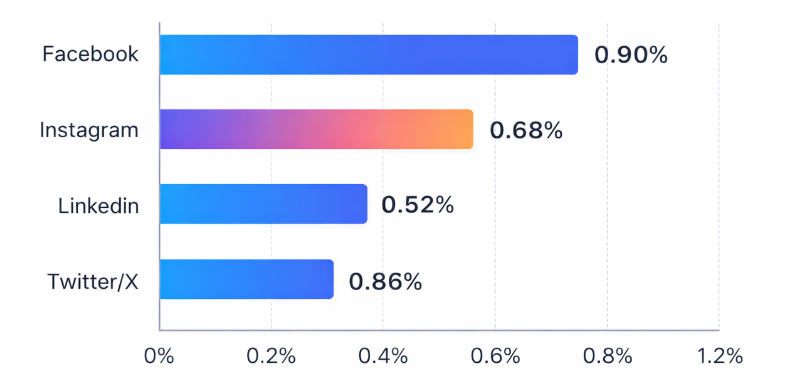
Platform Average Click‑Through Rates (CTR) for Social Media Ads
By comparing your campaign's performance against these industry benchmarks, you can get a sense of how well you're doing and adjust your strategy accordingly. Setting goals based on realistic figures will allow you to gauge performance without getting discouraged.
3. Budget Wisely
One of the most important factors in setting expectations is knowing how much you're willing to spend and how to allocate your budget across various platforms. Social media ads can be cost-effective, but without proper budgeting, they can quickly become an expensive endeavor.
It’s essential to test different ad formats, target audiences, and bidding strategies to find what works best. Starting with a modest budget, and then scaling up once you’ve identified effective strategies, ensures that you don’t waste resources on underperforming ads.
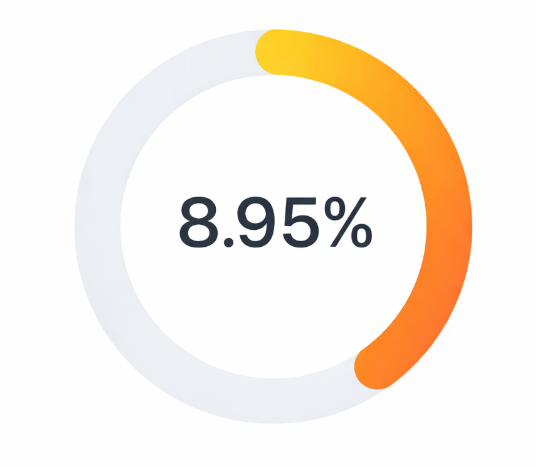
Average Conversion Rate for Facebook Ads by Industry
Remember that high-performing ads often require an investment of time and money to optimize. Expect to invest in creative testing, landing page optimization, and other efforts that contribute to better ad performance.
4. Recognize the Impact of Ad Fatigue
Over time, your audience may grow tired of seeing the same ads, leading to decreased engagement and lower performance. This phenomenon, known as "ad fatigue," is common, especially in campaigns with a long duration.
To combat ad fatigue, refresh your creative regularly. This can involve altering your ad visuals, tweaking the messaging, or experimenting with new formats. Rotating ads and targeting fresh segments of your audience can help maintain engagement and prevent performance from stagnating.
A recent survey showed that 50% of consumers feel that they are exposed to too many ads on social media. By keeping your ads fresh and relevant, you ensure that your audience remains interested and engaged.
5. The Importance of Testing and Optimizing
Success in social media ads doesn’t happen overnight. A/B testing is crucial for optimizing your campaigns and improving their performance. Test different ad copies, images, and call-to-action buttons to see what resonates best with your audience.
In fact, campaigns that continually test and optimize their ads see an average improvement in conversion rates of up to 20%. This process is not only about maximizing your ROI but also about learning what works and what doesn’t.
Conclusion
Setting realistic expectations for social media ads is all about understanding the landscape and making informed decisions based on data and industry benchmarks. By defining clear goals, setting achievable metrics, and managing your budget effectively, you can avoid the trap of unrealistic expectations and achieve sustainable success.
Remember, social media advertising is a long-term game, and success is built over time with consistent testing, optimization, and refinement.
Explore More Articles:
If you found this article helpful, you may also enjoy these related pieces: