A newsletter is more than a marketing channel. It's a direct line to your audience — no algorithms, no noise, just attention you own.
If you're running Facebook or Instagram ads and you're not using them to grow your email list, you're leaving long-term value on the table.
This article shows you how to use Meta ads to grow your newsletter fast — while still keeping lead quality high.
If you want a broader foundation first, this guide on how to use Facebook ads to build an email list is a useful starting point.
We’ll cover strategies, creative tips, campaign structure, and post-signup ideas that help you turn clicks into loyal readers.
Why Facebook ads are great for email list growth
Most people think of Facebook ads as a way to sell products or book demos. But they’re also effective for growing a newsletter audience — especially if your list is small, your brand is new, or growth has stalled.
Here’s why:
-
You control your growth: Unlike organic channels, you can scale when you want — no need to wait for virality or SEO.
-
People scroll for content: Meta users are in discovery mode. If your newsletter sounds useful, they’ll stop and read.
-
Smart targeting is built in: You can reach people based on interests, behaviors, and engagement — or even the exact Instagram accounts and Facebook groups they follow.
Instead of relying only on popups or blog CTAs, you can run direct campaigns that bring the right people onto your list fast.
This approach works best when audience quality matters more than raw volume, as explained in audience quality vs quantity.
The biggest mistakes (and how to fix them)
Even with a strong offer, Meta ads can burn budget if the setup is wrong. Here are common mistakes — and what to do instead.
1. Chasing leads, not readers
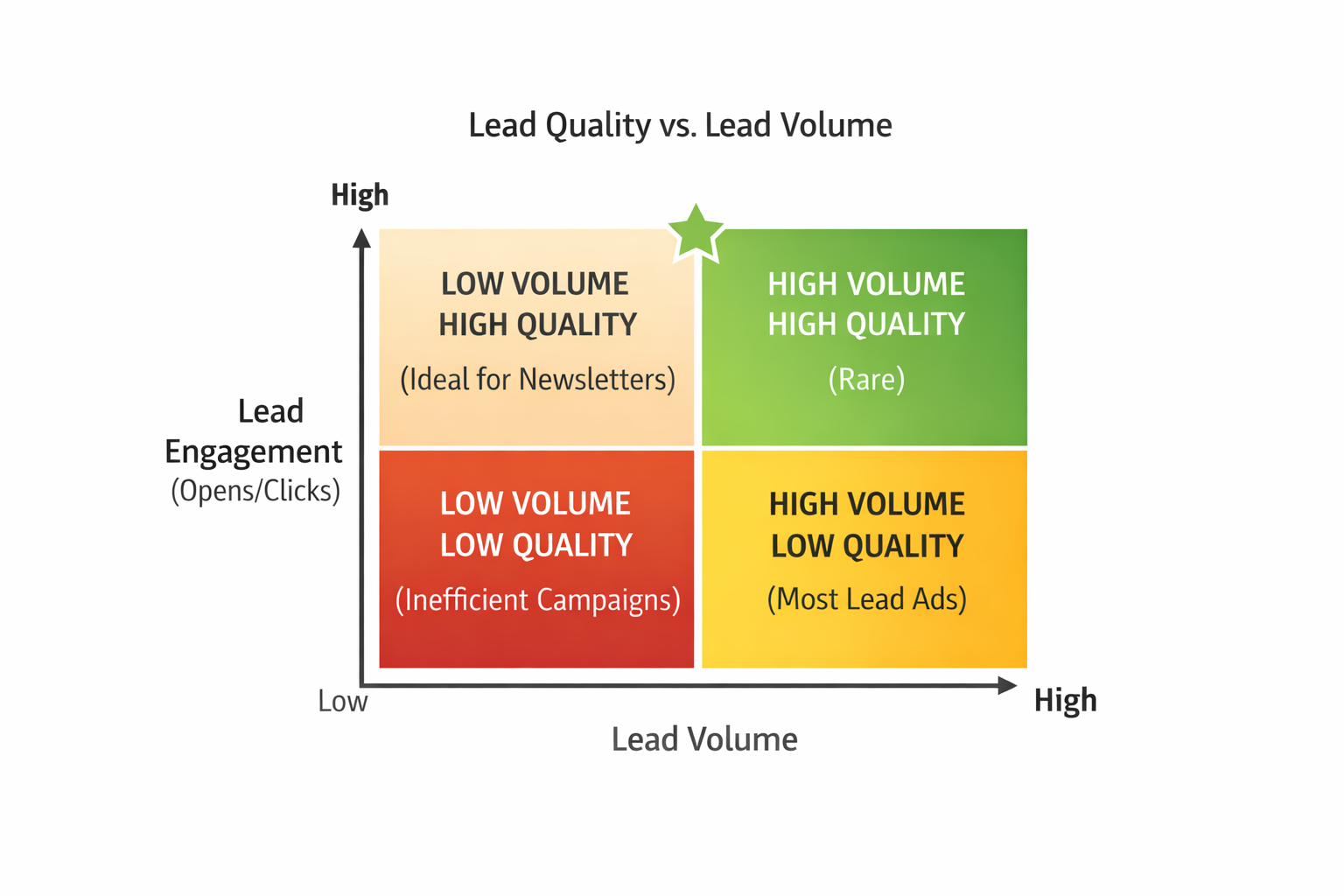
Many advertisers run lead form campaigns to collect emails. The problem is that many of these users never engage again.
What to do instead:
-
Use custom conversion events that track confirmed opt-ins, such as a welcome email click.
-
Pass engagement data back via Meta’s Conversion API or server-side tracking.
-
Optimize for actions tied to real newsletter behavior, not form submissions alone.
This shift helps avoid the issue covered in what causes Facebook lead ads to fail even when metrics look good.
The goal is not more emails. The goal is readers who stay.
2. Using broad or random targeting
Targeting “business” or “marketing” usually attracts low-intent clicks. Instead, define your ideal reader and target where they already spend attention.
| Targeting Type | Example | Quality Expectation |
|---|---|---|
| Broad Interest Targeting | “Marketing” interest | Low intent, high volume |
| Lookalike from all leads | Based on every form-fill | Mixed quality |
| Lookalike from active users | Based on top 25% openers | High intent |
| LeadEnforce Custom Audience | Followers of [niche IG pages] | Very high intent |
Smarter targeting examples:
-
Followers of niche Instagram creators in your space;
-
Members of relevant Facebook groups;
-
Lookalikes built from your most engaged subscribers.
If you rely on custom audiences heavily, this breakdown of custom vs lookalike audiences helps clarify when to use each.
3. Making your ad look like a lead-gen ad
If your ad looks like a form-first pitch, users scroll past it. The fix is simple: make the ad feel like content.
This idea is explored in detail in the anatomy of a lead-gen ad that doesn’t look like a lead-gen ad. A newsletter signup should feel like access, not a transaction.
What a good campaign structure looks like
Growing a newsletter profitably requires more than one campaign. A simple three-stage funnel works even on small budgets.
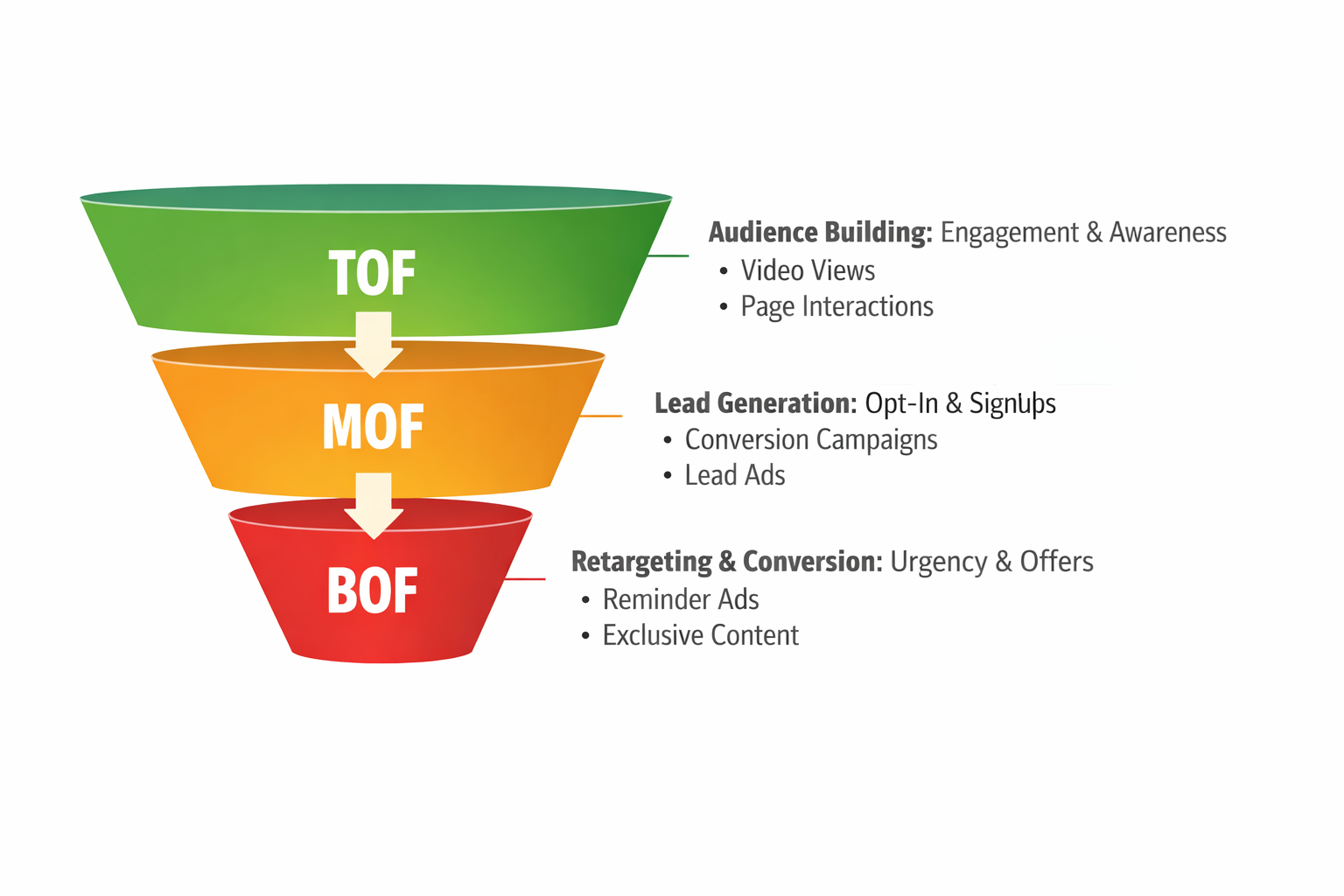
Top-of-funnel (TOF): Attract the right people
This stage builds awareness and warms audiences.
Best objectives:
-
Video views;
-
Engagement;
-
Traffic.
Use content pulled directly from your newsletter. A single strong insight often outperforms polished promos.
Don’t ask for emails here. Build familiarity first.
Middle-of-funnel (MOF): Ask for the signup
Now you invite people to subscribe.
Best objectives:
-
Conversions with an opt-in event;
-
Lead forms only if onboarding is immediate.
Landing pages should show examples of past issues.
This mirrors principles from what makes a landing page convert.
Bottom-of-funnel (BOF): Retarget warm users
Many users need a second or third touch.
Retarget:
-
Signup page visitors;
-
Ad engagers;
-
Relevant account followers.
Use urgency and specificity. Retargeting works best when it adds new context, not repetition, as outlined in retarget smarter: reinforce your message, don’t repeat it.
Ad creative that actually works for newsletters
Newsletter ads should feel like content previews. Three formats work consistently.
1. Carousel previews
Each card delivers one takeaway. The final card invites the signup.
This format aligns well with how carousel ads drive engagement, explained in how Instagram carousel ads improve engagement rates.
2. Screenshot testimonials
DMs, replies, or short quotes feel real and credible.
They often outperform designed creatives because they lower skepticism.
3. “This week’s issue” teasers
Tease one idea from the current send. Let curiosity do the work. This format turns your newsletter into a recurring content series, not a one-time offer.
What to do after someone signs up
Getting the email is the start, not the finish.
Segment by source
Track where subscribers came from. Meta-sourced readers often behave differently than organic ones. This makes it easier to evaluate true lead quality, a topic covered in lead quality vs lead volume.
Match onboarding to the ad
Your welcome email should continue the promise made in the ad. This connection between ads and email flows is detailed in combine Facebook lead ads and email for game-changing results.
Track long-term value
Focus on:
-
Open and click rates;
-
Engagement depth;
-
Downstream actions over time.
This prevents you from optimizing for cheap leads that never convert.
Final thoughts: make it feel like content, not a campaign
Facebook ads for newsletters work best when they don’t feel like marketing. You’re not collecting emails. You’re starting a habit.
Show what’s inside. Set expectations. Deliver value early. Great newsletters don’t sell the signup. They sell the next send.